

Passed May 29, 2018
1 co-sponsor
Total votes
29,417
all sessions
Attendance
88%
2,134 missed
Lower than 98% of chamber peers
With party
98%
of cast votes
Lower than 84% of chamber peers
Bipartisan score
1%
crosses aisle rarely
Higher than 90% of chamber peers
Sponsored
1,432
bills & resolutions
Lower than 83% of chamber peers
Committees
0
assignments
1,432 bills and resolutions
Sponsored bills
Total
1,432
Primary
144
Co-sponsor
1,288
This page
1,432
matching current filters
Passed May 29, 2018
1 co-sponsor
Relative to National Mental Health Awareness Month.
This measure would recognize May 2018 as National Mental Health Awareness Month in California to enhance public awareness of mental illness.
Signed into law May 29, 2018
1 co-sponsor
California Renewables Portfolio Standard Program: local publicly owned electric utilities: electrical corporations: geothermal, biogas, and biomass energy resources.
Under existing law, the Public Utilities Commission has regulatory authority over public utilities, including electrical corporations, while local publicly owned electric utilities are under the direction of their governing boards. The California Renewables Portfolio Standard Program requires the commission to establish a renewables portfolio standard requiring all retail sellers, as defined, to procure a minimum quantity of electricity products from eligible renewable energy resources, as defined, so that the total number of kilowatthours of those products sold to their retail end-use customers achieves 25% of retail sales by December 31, 2016, then incrementally increases for specified compliance periods to 33% of retail sales by December 31, 2020, 40% by December 31, 2024, 45% by December 31, 2027, and 50% by December 31, 2030. The program additionally requires each local publicly owned electric utility to procure a minimum quantity of electricity products from eligible renewable energy resources to achieve the procurement requirements established by the program. This bill would require that not less than an unspecified percentage of the incremental procurement requirements for each compliance period be satisfied with geothermal, biogas, or biomass energy resources procured on or after July 1, 2017, until either an unspecified percentage of the total electricity products procured to satisfy the overall procurement requirements are from those energy resources or December 31, 2030, whichever occurs first. The bill would require an unspecified portion of this increment to be procured from the Salton Sea Known Geothermal Resources Area. Under existing law, a violation of the California Renewables Portfolio Standard Program is a crime. Because the provisions of this bill would expand that program, a violation of these provisions would impose a state-mandated local program by expanding the definition of a crime. By placing additional requirements upon local publicly owned electric utilities, this bill would impose a state-mandated local program. The California Constitution requires the state to reimburse local agencies and school districts for certain costs mandated by the state. Statutory provisions establish procedures for making that reimbursement. This bill would provide that no reimbursement is required by this act for specified reasons. This bill would make legislative findings and declarations as to the necessity of a special statute for the Salton Sea Known Geothermal Resource Area.
In committee May 25, 2018
1 co-sponsor
Occupational safety and health: Valley Fever.
The California Occupational Safety and Health Act of 1973 provides the Division of Occupational Safety and Health within the Department of Industrial Relations with the power, jurisdiction, and supervision over all employment and places of employment necessary to enforce and administer all occupational health and safety laws,and standards and to protect employees. The Occupational Safety and Health Standards Board, an independent entity within the department, has the exclusive authority to adopt occupational safety and health standards within the state. Existing law requires every employer to comply with those standards. A violation of these standards and regulations under specific circumstances is a crime. This bill would require the board to adopt occupational safety and health standards for state public works projects to prevent and control coccidioidomycosis, more commonly known as Valley Fever. By expanding the definition of an existing crime, this bill would impose a state-mandated local program. The California Constitution requires the state to reimburse local agencies and school districts for certain costs mandated by the state. Statutory provisions establish procedures for making that reimbursement. This bill would provide that no reimbursement is required by this act for a specified reason.
In committee May 25, 2018
1 co-sponsor
Wood products.
(1) Existing law establishes the Department of Forestry and Fire Protection in the Natural Resources Agency. Existing law provides that a thriving in-state forest products sector provides public benefits, including employment opportunities in both rural and urban areas, and economic development for rural communities. This bill would require the department to develop the California Wood Innovations Small Grants Program to provide grants and low-interest loans or loan guarantees, upon appropriation by the Legislature for these purposes, to entities that expand the use of wood products and increase in-state wood product processing and manufacturing for projects to improve forest health and reduce greenhouse gas emissions, as provided. (2) The California Global Warming Solutions Act of 2006 designates the State Air Resources Board as the state agency charged with monitoring and regulating sources of emissions of greenhouse gases. The act authorizes the state board to include the use of market-based compliance mechanisms in regulating greenhouse gas emissions. Existing law requires all moneys, except for fines and penalties, collected by the state board from the auction or sale of allowances as part of a market-based compliance mechanism to be deposited in the Greenhouse Gas Reduction Fund. Existing law establishes the Governor's Office of Business and Economic Development, also known as "GO-Biz," in state government within the Governor's office. Existing law requires GO-Biz to serve the Governor as the lead entity for economic strategy and the marketing of California on issues relating to business development, private sector investment, and economic growth. This bill would provide that up to $20,000,000 may be available, upon appropriation, to GO-Biz for purposes of providing grants, loans, and loan guarantees for projects, approved by the department and the State Air Resources Board, that add capacity for the in-state processing and production of wood products from forest and vegetation management activities that are intended to reduce the risk and intensity of wildfires.
In committee May 25, 2018
0 co-sponsors
Emergency medical services: behavioral health facilities and sobering centers.
Existing law, the Emergency Medical Services System and the Prehospital Emergency Medical Care Personnel Act, establishes the Emergency Medical Services Authority, which is responsible for the coordination and integration of all state agencies concerning emergency medical services. Among other duties, the authority is required to develop planning and implementation guidelines for emergency medical services systems, provide technical assistance to existing agencies, counties, and cities for the purpose of developing the components of emergency medical services systems, and receive plans for the implementation of emergency medical services and trauma care systems from local EMS agencies. The act also authorizes each county to develop an emergency medical services program and requires local EMS agencies to plan, implement, and evaluate an emergency medical services system. Existing law requires local EMS agencies to be responsible for the implementation of advanced life support systems, limited advanced life support systems, and for the monitoring of specified training programs for emergency personnel. Existing law defines advanced life support as special services designed to provide definitive prehospital emergency medical care, as specified, at the scene of an emergency, during transport to an acute care hospital, during interfacility transfer, and while in the emergency department of an acute care hospital until responsibility is assumed by that hospital. Existing law makes it a crime to violate the act, or the rules or regulations adopted under the act. This bill would authorize a local emergency medical services agency to submit, as part of its emergency medical services plan, a plan to transport specified patients who meet triage criteria to a behavioral health facility or a sobering center, as defined. The bill would make conforming changes to the definition of advanced life support to include prehospital emergency care provided during transport to a behavioral health facility or a sobering center. The bill would authorize a city, county, or city and county to designate, and contract with, a sobering center to receive patients, and would establish standards that apply to sobering centers, as specified. This bill would also require the authority to adopt guidelines for the triage criteria and assessment procedures by July 1, 2020, and would require the authority to annually analyze the administration of the local plans and to issue certain reports, as specified. By expanding an existing crime, this bill would impose a state-mandated local program. The California Constitution requires the state to reimburse local agencies and school districts for certain costs mandated by the state. Statutory provisions establish procedures for making that reimbursement. This bill would provide that no reimbursement is required by this act for a specified reason.
In committee May 25, 2018
1 co-sponsor
Autism: sensory-friendly movie screenings.
This measure would declare the support of the Legislature for the expansion of sensory-friendly movie screenings and similar programs for people with autism, and would encourage families to attend a sensory-friendly movie screening during April 2018, which is National Autism Awareness Month.
Signed into law May 24, 2018
1 co-sponsor
Relative to the Armenian Genocide.
This measure would, among other things, designate the year 2018 as "State of California Year of Commemoration of the Anniversary of the Armenian Genocide of 1915–1923," would designate April 24, 2018, as "State of California Day of Commemoration of the 103rd Anniversary of the Armenian Genocide of 1915–1923," and would call upon the President of the United States and the United States Congress to formally and consistently reaffirm the historical truth that the atrocities committed against the Armenian people constituted genocide.
Signed into law May 24, 2018
1 co-sponsor
Relative to California Holocaust Memorial Day.
This measure would proclaim April 16, 2018, as California Holocaust Memorial Day and would urge all Californians to observe this day of remembrance for the victims of the Holocaust in an appropriate manner.
Signed into law May 24, 2018
1 co-sponsor
Ask Maddy
·
AI policy assistant
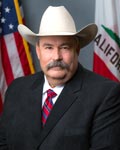
Ask Maddy about Frank Bigelow
Scope: CA
Hi! I can help you understand Frank Bigelow's legislative record. What would you like to know?
Try one of these
i
Maddy answers using official bill text and legislative records. Always verify before sharing.
Sources cited inline