

Existing law establishes the State Department of Public Health and prescribes its duties and organization. Existing law defines a "hate crime" as a criminal act committed, in whole or in part, because of actual or perceived characteristics of the victim, including, disability, gender, nationality, race or ethnicity, religion, and sexual orientation. This bill, upon appropriation by the Legislature and commencing on or before the later of either July 1, 2025, or one year after the date of the appropriation, would require the department to establish the Hate Crimes Intervention Program within the Injury and Violence Prevention Branch to implement evidence-based community interventions in conjunction with community leaders and organizations in communities that have been most impacted by hate crimes confirmed by the Department of Justice. Existing law, the California Fair Employment and Housing Act, establishes the Civil Rights Department within the Business, Consumer Services, and Housing Agency and sets forth its powers and duties relating to enforcement of civil rights laws and assistance to communities in resolving disputes, disagreements, or difficulties relating to discriminatory practices. This bill, upon appropriation by the Legislature and commencing on or before the later of either July 1, 2025, or one year after the date of the appropriation, would require the department to create and distribute statewide and regional radio, social media, and television campaigns for the purposes of discouraging discrimination. The bill would require the department to convene a working group to develop a plan to implement the campaigns above. The bill would exempt the working group from the Bagley-Keene Open Meeting Act.
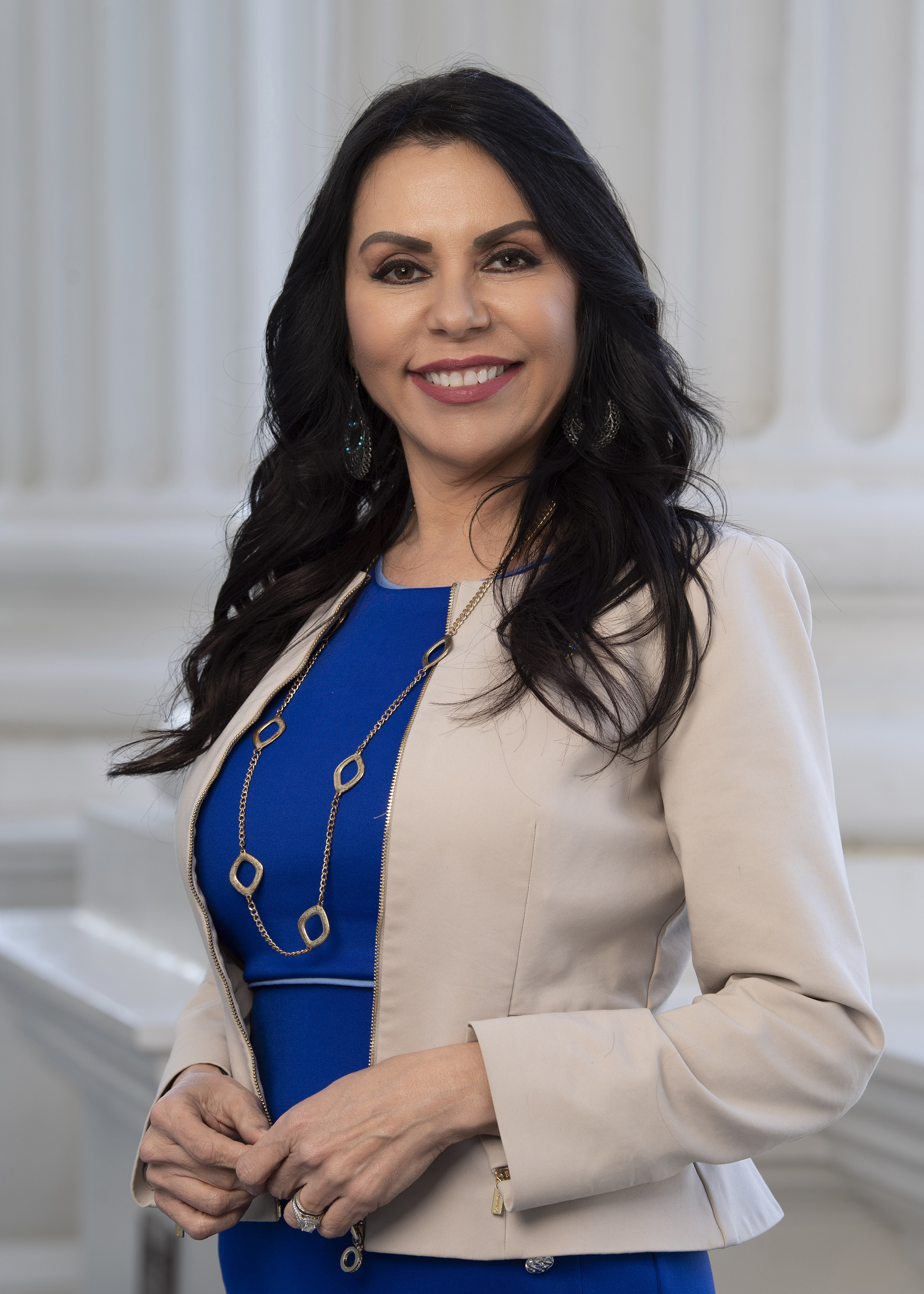
Asm. Blanca Rubio
Sponsored bills
Existing law establishes the jurisdiction of the juvenile court, which may adjudge a child to be a dependent of the court under certain circumstances, including when the child suffered, or there is a substantial risk that the child will suffer, serious physical harm or illness as a result of the failure or inability of their parent or guardian to adequately supervise or protect the child. Existing law requires the court to review the status of every dependent child in foster care periodically, but no less frequently than once every 6 months. Existing law subjects a minor between 12 and 17 years of age, inclusive, who violates any federal, state, or local law or ordinance to, and a minor under 12 years of age who is alleged to have committed specified serious offenses to, the jurisdiction of the juvenile court, which may adjudge the minor to be a ward of the court. Existing law generally provides for the placement of foster youth in various placement settings and governs the provision of child welfare services, as specified. Existing law requires county child welfare agencies and probation departments to develop and implement specific protocols to expeditiously locate any child or nonminor dependent missing from foster care, including, but not limited to, the timeframe for reporting missing youth and the individuals or entities entitled to notice that a youth is missing, and requires the social worker or probation officer to determine the primary factors that contributed to the child or nonminor dependent running away or otherwise being absent from care, among other things. This bill, the Luke Madrigal Act, would, among other things, additionally require the social worker or probation officer, when they receive information that a child receiving child welfare services is absent from foster care to, among other things, engage in ongoing and intensive due diligence efforts, as defined, to locate, place, and stabilize the child, request that the juvenile court schedule a hearing to review the placement and the ongoing and intensive due diligence efforts to locate and return the child, notify specified individuals whose whereabouts are known about the hearing, and prepare, submit, and serve a report at the hearing and any subsequent hearings describing their ongoing and intensive due diligence efforts to locate, place, and stabilize the child. The bill would require the court to consider the safety of the child receiving child welfare services who is absent from foster care to determine the extent of the activities and compliance of the county with the case plan in making ongoing and intensive due diligence efforts to locate and return the child to a safe placement, and to continue to periodically review their case at least every 30 calendars days, as specified. The bill would define "absent from foster care" to mean when the whereabouts of a child receiving child welfare services is unknown to the county child welfare agency or probation department or when the county child welfare agency or probation department has located the child receiving child welfare services in a location not approved by the court that may pose a risk to the child. The bill would also define "child receiving child welfare services" to include a child or nonminor dependent placed in a specified foster care placement or in the home of an emergency caregiver, and dependents, nonminor dependents, wards, and minors who have been taken into temporary custody pursuant to specified provisions and who are in foster care. By increasing the duties of county child welfare agencies and probation departments, this bill would create a state-mandated local program. The California Constitution requires the state to reimburse local agencies and school districts for certain costs mandated by the state. Statutory provisions establish procedures for making that reimbursement. This bill would provide that no reimbursement is required by this act for a specified reason.
Existing law establishes within the Department of Industrial Relations the Division of Labor Standards Enforcement and the Division of Occupational Safety and Health, with duties and powers, as prescribed. Existing law, the California Occupational Safety and Health Act of 1973, requires employers to comply with certain standards ensuring healthy and safe working conditions, as specified. The act charges the Division of Occupational Safety and Health with enforcement of the act, subject to oversight by the Chief of the Division of Occupational Safety and Health. The act excludes household domestic service from the definition of "employment." The act requires the chief, or a representative of the chief, to convene an advisory committee for the purposes of creating voluntary guidance and making recommendations to the department and the Legislature on policies the state may adopt to protect the health and safety of privately funded household domestic service employees, except publicly funded household domestic service and family daycare homes, as specified. The act requires the advisory committee to develop voluntary industry-specific occupational health and safety guidance relating to workplace hazards and the prevention or minimization of work-related injuries and illnesses. The act requires the advisory committee to make recommendations, as specified, on additional policies to protect the health and safety of household domestic service employees. Under specified circumstances, a violation of the act is a crime. Existing law requires the Division of Labor Standards Enforcement, upon appropriation of funding for this purpose, to establish and maintain an outreach and education program for the purpose of promoting awareness of, and compliance with, labor protections that affect the domestic work industry and fair and dignified labor standards in this industry and other low-wage industries. Existing law requires the Division of Labor Standards Enforcement to issue a competitive request to community-based organizations (CBOs) to provide education and outreach services in this connection and prescribes requirements for these organizations. Existing law makes CBOs responsible for developing and consulting with the Division of Labor Standards Enforcement regarding the core education and outreach materials, as specified. Existing law requires the Division of Labor Standards Enforcement and CBOs to meet at least biannually to coordinate efforts around outreach, education, and enforcement, including sharing information, in accordance with applicable privacy and confidentiality laws, that will shape and inform the overall enforcement strategy of the division regarding low-wage industries, including the domestic work industry. Existing law prohibits the Division of Labor Standards Enforcement from expending more than 5% of the budget allocation on the administration of the program. This bill would make CBOs responsible for developing and consulting with the Division of Occupational Safety and Health regarding the core education and outreach materials regarding health and safety standards, retaliation, and the division's workplace safety complaint and retaliation process, including specific issues that affect the domestic work industry differently. The bill would make CBOs responsible for all costs related to the development, printing, advertising, or distribution of the education and outreach materials. The bill would require the chief, representatives of the consultation services and enforcement branches of the Division of Occupational Safety and Health, and CBOs to meet periodically, as specified, to coordinate efforts around outreach, education, and enforcement. The bill would prohibit the Division of Labor Standards Enforcement and the Division of Occupational Safety and Health from expending more than 5% of the budget allocation on the administration of the program. This bill, for purposes of the California Occupational Safety and Health Act of 1973, commencing January 1, 2025, would narrow the exclusion of household domestic service from the definition of "employment" to exclude only publicly funded household domestic service and family daycare homes, as specified. The bill would require the Division of Occupational Safety and Health, by January 1, 2025, to adopt industry guidance to assist household domestic service employers on their legal obligations under existing occupational safety and health laws and regulations that apply to the work activity of household domestic service employees. The bill would require the guidance to be consistent with the voluntary industry guidelines established by the advisory committee. The bill would require a household domestic services employer, by January 1, 2025, to comply with, and adhere to, all applicable occupational safety and health regulations. The bill would require the Division of Occupational Safety and Health, if the division determines that additional industry-specific regulations are necessary, to propose those regulations to the standards board for its review, and would require the standards board to adopt regulations by January 1, 2026. By expanding the application of criminal penalties under the act to household domestic service employers, this bill would impose a state-mandated local program. The bill would make related legislative findings and declarations. The California Constitution requires the state to reimburse local agencies and school districts for certain costs mandated by the state. Statutory provisions establish procedures for making that reimbursement. This bill would provide that no reimbursement is required by this act for a specified reason.
Existing law, the Knox-Keene Health Care Service Plan Act of 1975, provides for the licensure and regulation of health care service plans by the Department of Managed Health Care, and makes a willful violation of the act a crime. Existing law provides for the regulation of health insurers by the Department of Insurance. Existing law requires a health care service plan contract issued, amended, delivered, or renewed on or after January 1, 2000, or an individual or group policy of disability insurance or self-insured employee welfare benefit plan to provide coverage for mammography for screening or diagnostic purposes upon referral by specified professionals. Under existing law, mammography performed pursuant to those requirements or that meets the current recommendations of the United States Preventive Services Task Force is provided to an enrollee or an insured without cost sharing. This bill would require a health care service plan contract, a policy of health insurance that provides hospital, medical, or surgical coverage, or a self-insured employee welfare benefit plan issued, amended, or renewed on or after January 1, 2025, to provide coverage without imposing cost sharing for, among other things, screening mammography and medically necessary diagnostic breast imaging, including diagnostic breast imaging following an abnormal mammography result and for an enrollee or insured indicated to have a risk factor associated with breast cancer, except as specified. The California Constitution requires the state to reimburse local agencies and school districts for certain costs mandated by the state. Statutory provisions establish procedures for making that reimbursement. This bill would provide that no reimbursement is required by this act for a specified reason.
Existing law makes it a crime to possess for sale or purchase for purpose of sale, transport, import, sell, furnish, administer, give away, manufacture, compound, convert, produce, derive, process, or prepare various controlled substances, including, among others, fentanyl, peyote, and various other opiates and narcotics. This bill, Alexandra's Law, would require the court to advise a person who is convicted of, or who pleads guilty or no contest to, the above crimes, as specified, of the danger of selling or administering illicit drugs and counterfeit pills and that, if a person dies as a result of that action, the defendant can be charged with homicide. The bill would require the court to read the advisory statement in a case in which the defendant exchanged a controlled substance containing fentanyl or its analogs for anything else of value, as specified. The bill would require the advisory statement to be included in a plea form, if used, and specified on the record. The bill would require that the fact the advisory was given be recorded in the abstract of conviction and would prohibit the advisement from being used as evidence in the prosecution of a minor in juvenile court.
Existing law, the Alcoholic Beverage Control Act, which is administered by the Department of Alcoholic Beverage Control, regulates the application, issuance, and suspension of alcoholic beverage licenses. Existing law provides for the licensure and regulation of craft distillers and prohibits issuance of a craft distiller's license to any person, or any officer, director, employee, or agent of a person, among others, who manufactures more than 150,000 gallons of distilled spirits per year within or without the state, as specified. Existing law, until January 1, 2024, authorizes a licensed craft distiller to directly ship distilled spirits manufactured or produced by the licensee at its premises to a consumer pursuant to specified requirements. This bill would extend, until January 1, 2025, the authorization for a licensed craft distiller to directly ship distilled spirits.
Existing law governs the determination of child custody and visitation in contested proceedings. Existing law requires the court, for purposes of deciding custody, to determine the best interests of the child based on certain factors, including the nature and amount of contact with both parents and, consistent with specified findings, requires the court's primary concern to be the health, safety, and welfare of the child. Existing law prohibits the ordering of family reunification services as part of a child custody or visitation rights proceeding. Existing law authorizes the court, upon making certain findings, to require the parent or parents, or any other party involved in a custody or visitation dispute, and the minor child to participate in outpatient counseling, as specified. This bill, Piqui's Law: Keeping Children Safe from Family Violence Act, would prohibit the court from ordering family reunification treatments, programs, or services, including, but not limited to, camps, workshops, therapeutic vacations, or educational programs that, as a condition of enrollment or participation, require or result in, among other things, the use of private youth transporters or private transportation agents, as specified, a no-contact order, or a transfer of physical or legal custody of the child. Existing law requires the Judicial Council to establish judicial training programs for individuals who perform duties in domestic violence matters. Existing law requires the training programs to include a domestic violence session in any orientation session for newly appointed or elected judges and an annual training session in domestic violence. Existing law requires the training programs to include instruction in all aspects of domestic violence, including, but not limited to, the detriment to children of residing with a person who perpetrates domestic violence. This bill would instead require the Judicial Council to establish judicial training programs for individuals, including judicial officers and referees, who perform duties in domestic violence or child custody matters, including, among other topics, child sexual abuse and coercive control, as specified. The bill would require the Judicial Council to submit an annual report on these training programs, commencing on or before January 1, 2025, to the Legislature and relevant policy committees, that includes the titles of the training courses being offered and the number of judicial officers that attended each training.