

Existing law defines "disabled veteran" for purposes of the Vehicle Code as, among other things, a person who, as a result of injury or disease suffered while on active service with the Armed Forces of the United States, has a disability that has been rated at 100% by the Department of Veterans Affairs. Existing law also defines a "disabled veteran" as a veteran who is unable to move without the aid of an assistant device. This bill would instead define a disabled veteran as a veteran who cannot walk without the use of an assistant device. The bill would expand the definition of "disabled veteran" to include a veteran who cannot walk 200 feet without stopping to rest, a veteran who is severely limited in the ability to walk because of an arthritic, neurological, or orthopedic condition, or a veteran who has visual acuity of 20/200 or less, among other conditions, as specified.
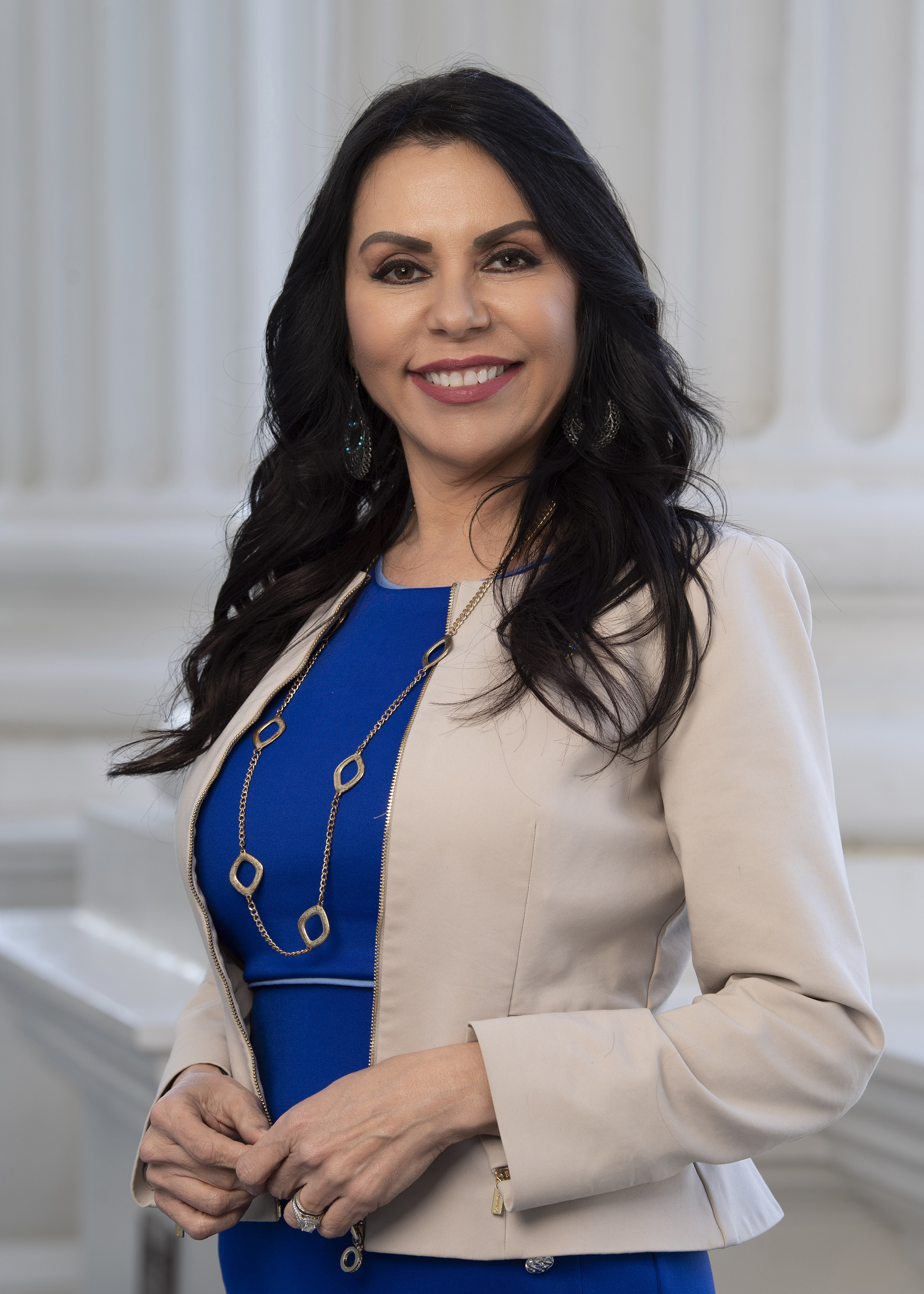
Asm. Blanca Rubio
Sponsored bills
Existing federal law, the Victims of Crime Act of 1984, creates the Crime Victims Fund and authorizes federal financial assistance to states for the purpose of supporting eligible crime victim assistance programs. Existing law creates various programs under the Office of Emergency Services related to crime prevention and education, including, among other things, programs concerning family violence prevention and domestic violence prevention. This bill would require the office to allocate funds, upon appropriation by the Legislature, to fill the gap in the federal Victims of Crime Act funding and to prioritize continuity and stability of crime victim services if the federal grant funding that is awarded to the office is 10% or more lower than the amount awarded in the prior year. The bill would require the office to regularly consult, collaborate with, and consider the recommendations regarding allocation of funding from the Victims of Crime Act Steering Committee.
Existing law authorizes a court to grant pretrial diversion to a defendant suffering from a mental disorder, on an accusatory pleading alleging the commission of a misdemeanor or felony offense, in order to allow the defendant to undergo mental health treatment. Existing law prohibits defendants charged with specified offenses, including murder, from being placed in this diversion program. This bill would add attempted murder to the list of charged offenses that prohibit a defendant from being placed in this diversion program.
Maddy summaryThis bill designates October 2024 as Menopause Awareness Month in California to highlight the health and societal impacts of menopause on women. It acknowledges that millions of women face symptoms that can affect their daily lives and work, noting that women of color are at higher risk for complications like premature menopause and heart disease. The resolution encourages the state to provide better health information and services to support women's well-being before, during, and after this transition. While the text outlines these goals, the bill itself is a formal recognition rather than a law that creates new funding or mandates specific programs.
Existing law requires the State Department of Social Services to establish and supervise a county or county consortia-administered program to provide cash assistance for aged, blind, or disabled legal immigrants who are not citizens who, due to their immigration status, are not eligible for the Supplemental Security Income/State Supplementary Program for the Aged, Blind, and Disabled, also known as SSI/SSP benefits. Under existing law, an individual is eligible for this program if their immigration status meets SSI/SSP eligibility criteria but they are not eligible for those benefits solely due to their immigration status, as specified. Existing law also requires any person who is found to be eligible by the department for federally funded SSI to apply for SSI benefits. This bill would expand eligibility for that program to aged, blind, and disabled individuals regardless of immigration status if the individual meets the eligibility criteria for the program and is not eligible solely due to their immigration status. This bill would exempt individuals who are not qualified immigrants, as specified, from having to apply for SSI in order to receive benefits. The bill would also delete several inoperative provisions. The bill would make the implementation of these substantive changes contingent upon an appropriation for its express purposes. By expanding county duties under the program, this bill would impose a state-mandated local program. The California Constitution requires the state to reimburse local agencies and school districts for certain costs mandated by the state. Statutory provisions establish procedures for making that reimbursement. This bill would provide that, if the Commission on State Mandates determines that the bill contains costs mandated by the state, reimbursement for those costs shall be made pursuant to the statutory provisions noted above.
This measure would proclaim the week of April 14, 2024 to April 20, 2024, to be Cities Week, and would encourage all Californians to be involved in their communities and be civically engaged with their local government.
This measure would join Asian and Pacific Islander communities throughout the state, nation, and world in celebrating April 13, 2024, to April 15, 2024, as the Songkran New Year Festival.
Maddy summaryThis bill is a House Resolution that formally recognizes May 2024 as Asian and Pacific Islander American Heritage Month in California. It directly affects the state legislature and the broader public by establishing an official period to honor the history and contributions of Asian and Pacific Islander communities. The resolution highlights the diverse backgrounds of these populations, their significant roles in California's development, and their ongoing achievements in various fields. By adopting this measure, the Assembly commends these communities for their accomplishments and acknowledges the hardships they have faced throughout history.