

Existing law requires the Governor to appoint every officer whose mode of appointment is not prescribed by law. Existing law also prescribes the manner of the Governor's appointment of those officers. This bill would require the office of the Governor, commencing January 1, 2026, to maintain on its internet website a list of every state board and commission that includes, for each state board or commission, the membership list, stated purpose, duties, meeting frequency, internet website, and vacancies in the membership. The bill would require the office of the Governor, on or before January 1, 2027, and annually thereafter, to create and publish on its internet website a report containing aggregate demographic information of appointments made by the office during the prior calendar year, as specified.
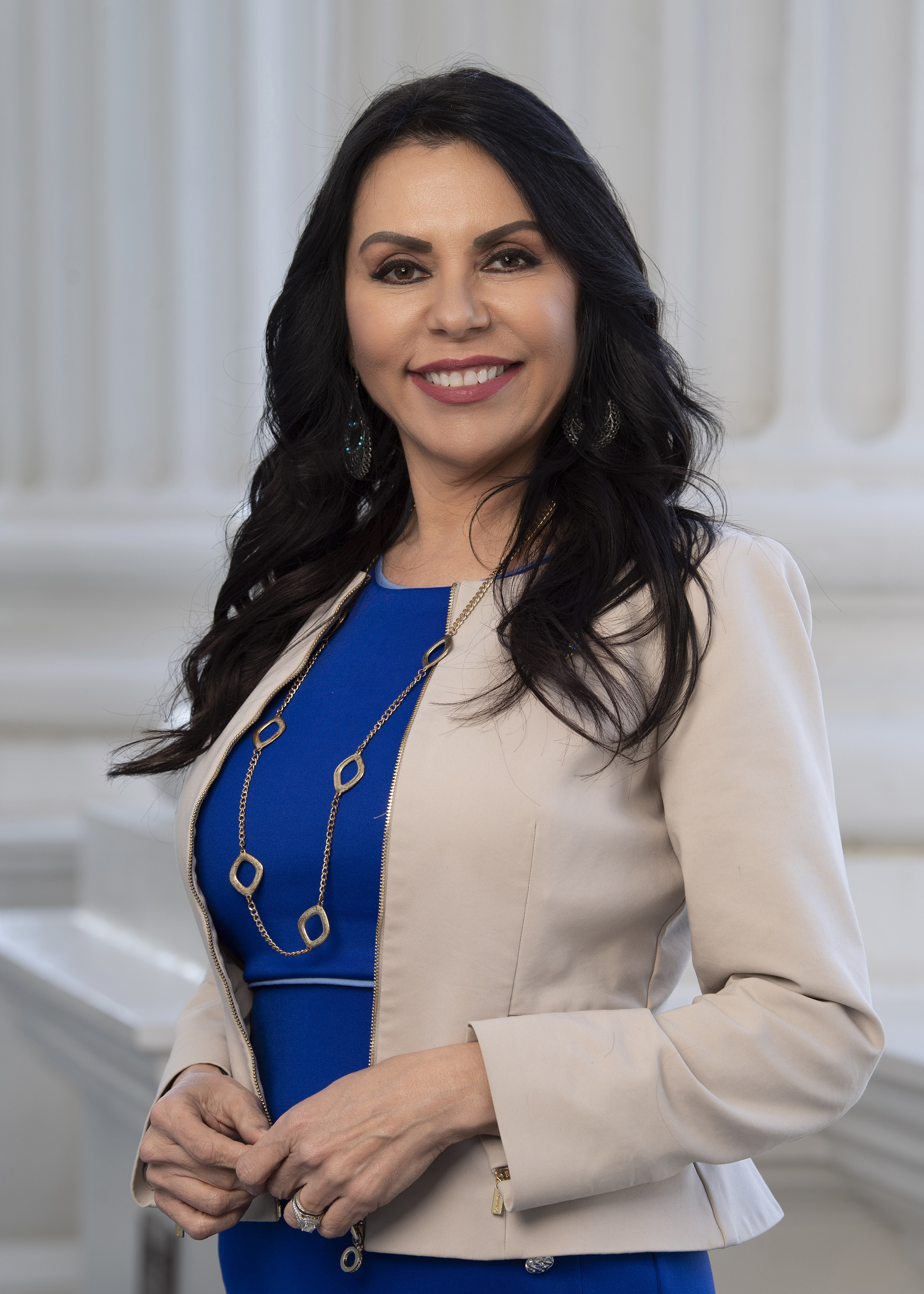
Asm. Blanca Rubio
Sponsored bills
Existing law authorizes a minor to consent to medical and other treatment under certain circumstances, including the diagnosis and treatment of sexual assault, medical care relating to the prevention or treatment of pregnancy, treatment of infectious, contagious, and communicable diseases, mental health treatment, and treatment for alcohol and drug abuse. Existing law establishes the jurisdiction of the juvenile court, which may adjudge a child to be a dependent or ward of the court under certain circumstances. Under existing law, if a minor has been, or has a petition filed with the court to be, adjudged a dependent child of the court, the court may authorize, or order that a social worker may authorize, medical and other care for the minor, as prescribed. Under existing law, a social worker may, without court order, authorize medical and other care for a minor in emergency situations, as specified. This bill would authorize a dependent child of the juvenile court who is 16 years of age or older to consent to receive medications for opioid use disorder from a licensed narcotic treatment program as replacement narcotic therapy without the consent of their parent, guardian, person standing in loco parentis, or social worker, and without a court order, only if, and to the extent, expressly permitted by federal law. The bill would authorize a dependent child of the juvenile court who is 16 years of age or older to consent to opioid use disorder treatment that uses buprenorphine at a physician's office, clinic, or health facility, by a licensed physician and surgeon or other health care provider, as specified, whether or not the minor has the consent of their parent, guardian, person standing in loco parentis, or social worker and without a court order. Existing law authorizes a social worker to inform a dependent child 12 years of age or older of their right to consent to receive specified health services, including, among other things, the diagnosis and treatment of sexual assault and medical care relating to the prevention or treatment of pregnancy. Existing law also authorizes a social worker to provide a dependent child with access to age-appropriate, medically accurate information about sexual development, reproductive health, and the prevention of unplanned pregnancies and sexually transmitted infections. This bill would instead authorize a social worker to inform a dependent child 10 years of age or older of their right to consent to receive those health services and would also authorize a social worker to inform a dependent child of their confidentiality rights regarding those services. The bill would additionally authorize a social worker to provide a dependent child with information on how to access reproductive and sexual health care services and to facilitate access to that care, as specified.
(1) Existing law requires state agencies, boards, and commissions, in the course of collecting demographic data as to the ancestry or ethnic origin of Californians, to use separate collection categories and tabulations for certain groups, as specified. Existing federal law imposes various requirements on the collection of demographic data, as provided. Existing law establishes the State Department of Public Health, which is responsible for various programs relating to the health and safety of people in the state. Existing law requires the State Department of Public Health to collect and report specified information, including data on violent deaths. This bill would require the department, on or after January 1, 2028, in the course of collecting demographic data as to the ancestry or ethnic origin of California residents for any report that includes rates for major diseases and leading causes of death, as specified, to use separate collection categories and tabulations for Hispanic or Latino groups using standardized federal race and ethnicity categories from the federal Office of Management and Budget's "Standards for Maintaining, Collecting, and Presenting Federal Data on Race and Ethnicity," as specified. The bill would require the department to use separate collection categories and tabulations for each major Latino group and Mesoamerican Indigenous nation, if that group or nation is not included in the standardized federal race and ethnicity categories, as specified. The bill would require the department, when collecting the preferred language of program participants, to include specified languages. Existing law requires state agencies, boards, and commissions to report, as specified, data on collection categories and tabulations for certain groups. Existing law requires the collected data to be made available to the public, except as specified, including, among other things, personal identifying information, which existing law deems confidential. Existing law requires state agencies to update their data collection to reflect additional certain groups as they are reported by the United States Census Bureau, as specified. This bill would require the department to include the collected data in every demographic report on ancestry, ethnic origins, or language of California residents that the department publishes or releases on or after July 1, 2029. The bill would require the department to make available to the public the collected data, except as specified, including, among other things, personal identifying information, which the bill would deem confidential. On or before July 1, 2029, and annually thereafter, the bill would require the department to report to the Legislature on the collected data and the methods used to collect that data. The bill would require the department to update its data collection to reflect additional Latino groups, Mesoamerican Indigenous nations, and Mesoamerican Indigenous language groups as they are reported by the United States Census Bureau, as specified. This bill would authorize the State Department of Public Health to continue to collect and report demographic data in the form that the data was submitted if the data was collected pursuant to federal programs or surveys, by other state entities, or by third-party entities, as specified. (2) Existing constitutional provisions require that a statute that limits the right of access to the meetings of public bodies or the writings of public officials and agencies be adopted with findings demonstrating the interest protected by the limitation and the need for protecting that interest. This bill would make legislative findings to that effect.
Existing law requires the governing board of any school district to give diligent care to the health and physical development of pupils. Existing law authorizes a school district, county office of education, and charter school to provide emergency naloxone hydrochloride or another opioid antagonist to school nurses or trained personnel who have volunteered, and authorizes school nurses or trained personnel to use naloxone hydrochloride or another opioid antagonist to provide emergency medical aid to persons suffering, or reasonably believed to be suffering, from an opioid overdose, as provided. This bill would prohibit school districts, county offices of education, and charter schools from prohibiting pupils in middle schools, junior high schools, high schools, or adult schools, while on a schoolsite or participating in school activities, from carrying fentanyl test strips or a federally approved opioid antagonist, as provided, for the emergency treatment of persons suffering, or reasonably believed to be suffering, from an opioid overdose.
Existing law requires the State Department of Education to incorporate age-appropriate materials relating to, among other things, genocide and the Holocaust into publications that provide examples of curriculum resources for teacher use, consistent with the subject frameworks on history and social science. Under existing law, the Legislature encourages the incorporation of survivor, rescuer, liberator, and witness oral testimony into the teaching of genocide and the Holocaust. This bill would establish the California Teachers Collaborative for Holocaust and Genocide Education, to be responsible for establishing a statewide teacher professional development program on genocide, including the Holocaust, for school district, county office of education, and charter school teachers. The bill would require the collaborative to consist of leading genocide and Holocaust education organizations and institutions, genocide survivors, educators, and community leaders. The bill would provide that the collaborative's mission is to ensure that genocide, including Holocaust, education is taught consistent with, among other things, the content standards, curriculum frameworks, and instructional materials adopted by the State Board of Education, in ways that are interdisciplinary and age-appropriate to pupils of different grade levels. The bill would prescribe the duties of the collaborative, including, among others, developing and providing curriculum resources on genocide and Holocaust education. The bill would authorize other duties of the collaborative, subject to available funding, including, among others, providing, as determined by the department, annual verbal or written reports to the department and the Legislature on the collaborative's achievement of its mission. The bill would make the implementation of these provisions contingent upon an appropriation.
Existing law classifies certain criminal offenses as a "violent felony" for the purposes of various provisions of the Penal Code, including sentencing enhancements for prior convictions, as well as numerous other provisions. Existing law includes among the list of violent felonies rape accomplished against a person's will by means of force, violence, duress, menace, or fear, or rape accomplished against the victim's will by threat of violent retaliation, but does not include rape of a person unable to give consent due to disability, intoxication, or unconsciousness, rape under false pretenses, or rape accomplished by threat of incarceration, arrest, or deportation. This bill would also include the rape of an intoxicated person wherein the defendant drugged the victim, as specified, in the list of violent felonies. By expanding the scope of an enhancement, this bill would impose a state-mandated local program. The California Constitution requires the state to reimburse local agencies and school districts for certain costs mandated by the state. Statutory provisions establish procedures for making that reimbursement. This bill would provide that no reimbursement is required by this act for a specified reason.
Existing law provides for various memorials and monuments on the grounds of the State Capitol. Existing law requires the Department of General Services to maintain state buildings and grounds. Existing law, the Apology Act for the 1930s Mexican Repatriation Program, makes findings and declarations regarding the unconstitutional removal and coerced emigration of United States citizens and legal residents of Mexican descent, between the years 1929 and 1944, to Mexico from the United States during the 1930s "Mexican Repatriation" Program. Existing law expresses the apology of the State of California to those individuals who were illegally deported and coerced into emigrating to Mexico and requires that a plaque to commemorate those individuals be installed and maintained by the Department of Parks and Recreation in an appropriate public place in the City or County of Los Angeles. This bill would authorize a nonprofit organization representing Mexican Americans or Mexican immigrants to enter into negotiations to plan, construct, and maintain a memorial to Mexican Americans and Mexican immigrants who were forcibly deported from the United States during the Great Depression, as provided. The bill would require the memorial to be located at an appropriate public place in the City or County of Los Angeles. The bill would require the nonprofit organization to enter into negotiations with the Department of General Services and the state agency with jurisdiction over the state property where the memorial is proposed, where applicable, if the nonprofit organization proposes to locate the memorial on state property. The bill would require the nonprofit organization to submit a plan for the memorial to the department and the applicable state agency for review and approval. The bill would require these provisions to be funded exclusively through private sources. This bill would, if the nonprofit organization proposes a site owned by the City of Los Angeles or the County of Los Angeles for location of the memorial, require the nonprofit organization to follow any procedures that the City of Los Angeles or the County of Los Angeles require to consider approving the proposed memorial. This bill would make legislative findings and declarations as to the necessity of a special statute for the City of Los Angeles and the County of Los Angeles.
(1) Existing law provides that a child may be adjudged to be a dependent of the juvenile court because of abuse or neglect and generally provides for the placement of dependent children in various foster care placement settings. Existing law requires the court to review the status of every dependent child in foster care no less frequently than once every 6 months and requires the county social worker to file a supplemental report as part of that review. This bill would additionally require the court, in conducting the periodic status review for a child or nonminor dependent who is not residing with their relatives, nonrelative extended family members, or in the case of an Indian child, their extended family members, or an Indian custodian, to determine whether the social worker has continued efforts, and in the case of an Indian child, the active efforts, to locate any relatives, extended family members, or nonrelative extended family members who could provide family support or possible placement of the child and the names of those relatives, extended family members, or nonrelative extended family members. The bill would also require the supplemental report for a child or nonminor dependent who does not reside with their relatives, nonrelative extended family members, or in the case of an Indian child, their extended family members, or an Indian custodian to additionally include the efforts, and in the case of an Indian child, the active efforts, and findings that the social worker has made to locate any relative, extended family members, or nonrelative extended family members who could provide family support or possible placement of the child or nonminor dependent and the name of those relatives, extended family members, or nonrelative extended family members. By imposing additional duties on county officials, the bill would impose a state-mandated local program. (2) Existing law requires the court to place a foster child in the home of a relative, if possible, unless the placement would not be in the best interest of the child. Existing law requires the court to take into consideration other specified factors in making a determination of the placement of a foster child. This bill would make a nonsubstantive change to correct an erroneous cross reference in that provision. (3) The California Constitution requires the state to reimburse local agencies and school districts for certain costs mandated by the state. Statutory provisions establish procedures for making that reimbursement. This bill would provide that no reimbursement is required by this act for a specified reason.
Existing law requires local educational agencies to identify, locate, and assess individuals with exceptional needs and to provide those pupils with a free appropriate public education in the least restrictive environment, with special education and related services as reflected in an individualized education program. Existing law requires, beginning not later than the first individualized education program to be in effect when a pupil is 16 years of age, or younger if determined appropriate by the individualized education program team, and updated annually thereafter, the individualized education program to include appropriate measurable postsecondary goals and transition services, as defined, needed to assist the pupil in reaching those goals. This bill would instead require an individualized education program, commencing July 1, 2025, to include measurable postsecondary goals and transition services, if determined appropriate by a pupil's individualized education program team, beginning when an individual with exceptional needs is starting their high school experience and not later than the first individualized education program to be in effect when the pupil is 16 years of age, as provided. By imposing additional requirements on local educational agencies in relation to individualized education programs, the bill would impose a state-mandated local program. The California Constitution requires the state to reimburse local agencies and school districts for certain costs mandated by the state. Statutory provisions establish procedures for making that reimbursement. This bill would provide that, if the Commission on State Mandates determines that the bill contains costs mandated by the state, reimbursement for those costs shall be made pursuant to the statutory provisions noted above.
(1) Existing federal law, the Victims of Crime Act of 1984, creates the Crime Victims Fund and authorizes federal financial assistance to states for the purpose of supporting eligible crime victim assistance programs. Existing law creates various programs under the Office of Emergency Services related to crime prevention and education, including, among other things, programs concerning family violence prevention and domestic violence prevention. This bill, the California Victims of Crime Act, would establish the California Crime Victims Fund in the State Treasury and would require that moneys deposited in the fund be continuously appropriated to the Office of Emergency Services to support crime victims services. The bill would require the Office of Emergency Services to seek advisement from the Victims of Crime Act Steering Committee on priorities for utilizing the funds and would require the Treasurer to provide an annual report to the Legislature on the amounts deposited into the fund. By continuously appropriating moneys to the Office of Emergency Services for the support of crime victim services, the bill would make an appropriation. (2) Existing law establishes the aggravated white-collar crime enhancement which imposes enhanced penalties against a person who commits 2 or more related felonies, a material element of which is fraud or embezzlement, that involve a pattern of related felony conduct, and the pattern of related felony conduct involves the taking or loss of more than $100,000, as specified. This bill would authorize a court to impose an additional fine, known as the corporate white collar criminal enhancement, against a corporation that is convicted of a misdemeanor or felony. The bill would authorize the court to determine the amount of the fine, but would set specified limits. The bill would require the court to consider certain factors when determining the amount of the fine, including, among other things, the nature and seriousness of the offense and the corporation's assets, liabilities, and net worth, as specified. The bill would require that any moneys collected under this provision be deposited into the California Crime Victims Fund. (3) The California Constitution entitles the victim of a crime to restitution. Existing law requires the court in each criminal case to order a convicted defendant to pay full restitution to the victim and a separate restitution fine, as specified. This bill would, if a corporation is convicted of a misdemeanor or felony offense, require the court to impose a separate and additional restitution fine, as specified. The bill would authorize the court to determine the amount of the restitution fine, but would impose specified maximums. The bill would require any moneys collected under this provision to be distributed to the California Crime Victims Fund and the prosecuting agency that brought the criminal prosecution, as specified.