

Existing federal law provides for allocation of federal funds through the federal Temporary Assistance for Needy Families (TANF) block grant program to eligible states. Existing law provides for the California Work Opportunity and Responsibility to Kids (CalWORKs) program, under which, through a combination of state and county funds and federal funds received through the TANF program, each county provides cash assistance and other benefits to qualified low-income families. Existing law requires children in a CalWORKs assistance unit for whom school attendance is compulsory, except individuals who are eligible for the Cal-Learn Program and children subject to a county school attendance project, to attend school. Under existing law, the needs of a child in the assistance unit who is 16 years of age or older are not considered in computing the specified grant of the family for any month in which the county is informed by a school district or a county school attendance review board that the child did not attend school, unless at least one of certain conditions is present, including that good cause for school nonparticipation exists at any time during the month. This bill would, among other things, commencing July 1, 2018, provide that a circumstance that shall constitute good cause includes, but is not limited to, the applicant or recipient is in a domestic violence situation that results in school nonparticipation or the failure to cooperate. Under existing law, the CalWORKs program provides that a homeless family that has used all available liquid resources in excess of $100 may be eligible for homeless assistance benefits to pay the costs of temporary shelter and is also entitled to receive an allowance for nonrecurring special needs, as provided. Existing law requires a family to be eligible for temporary and permanent homeless assistance benefits when homelessness is a direct result of, among others things, domestic violence by a spouse, partner, or roommate, and that this circumstance may be verified by a sworn statement by the victim. This bill would, commencing July 1, 2018, provide that a CalWORKs applicant who provides a sworn statement of past or present domestic abuse and who is fleeing his or her abuser is deemed to be homeless and is eligible for temporary homeless assistance, for a limited period of time, notwithstanding any income and assets attributable to the alleged abuser. The bill would require that the homeless assistance payments be granted immediately after the family's application, as specified. The bill would provide that housing search documentation would be required only under specified circumstances. Because this bill increases the scope of a crime, the bill would impose a state-mandated local program. This bill would also require all CalWORKs applicants and recipients to be informed verbally and in writing, and to the extent required by law, in the language understood by the applicant or recipient, of the availability of services designed to assist individuals to identify, escape, or stop future domestic abuse as well as to deal with the effects of domestic abuse. By increasing the duties of counties administering the CalWORKs program, this bill would impose a state-mandated local program. This bill would, commencing July 1, 2018, require the State Department of Social Services, during the annual budget process, to update the Legislature at hearings regarding the number of CalWORKs welfare-to-work recipients, aggregated by county, who have been identified as potential victims of domestic abuse, as specified. The bill would require the report to also include a list of counties that require domestic violence survivors to be offered specified waivers and a summary of actions taken by the department to address the specific and unique needs of survivors of domestic abuse. This bill would authorize the State Department of Social Services to implement and administer the above-described provisions through all-county letters or similar instructions until regulations are adopted, and would require the department to adopt emergency regulations and final regulations, as specified. This bill would incorporate additional changes to Section 11450 of the Welfare and Institutions Code, proposed by AB 236 and AB 607, that would become operative only if this bill and AB 236, this bill and AB 607, or all 3 bills are enacted and this bill is enacted last. Existing law continuously appropriates moneys from the General Fund to defray a portion of county costs under the CalWORKs program. This bill would instead provide that the continuous appropriation would not be made for purposes of implementing the bill. The California Constitution requires the state to reimburse local agencies and school districts for certain costs mandated by the state. Statutory provisions establish procedures for making that reimbursement. This bill would provide that with regard to certain mandates no reimbursement is required by this act for a specified reason. With regard to any other mandates, this bill would provide that, if the Commission on State Mandates determines that the bill contains costs so mandated by the state, reimbursement for those costs shall be made pursuant to the statutory provisions noted above.
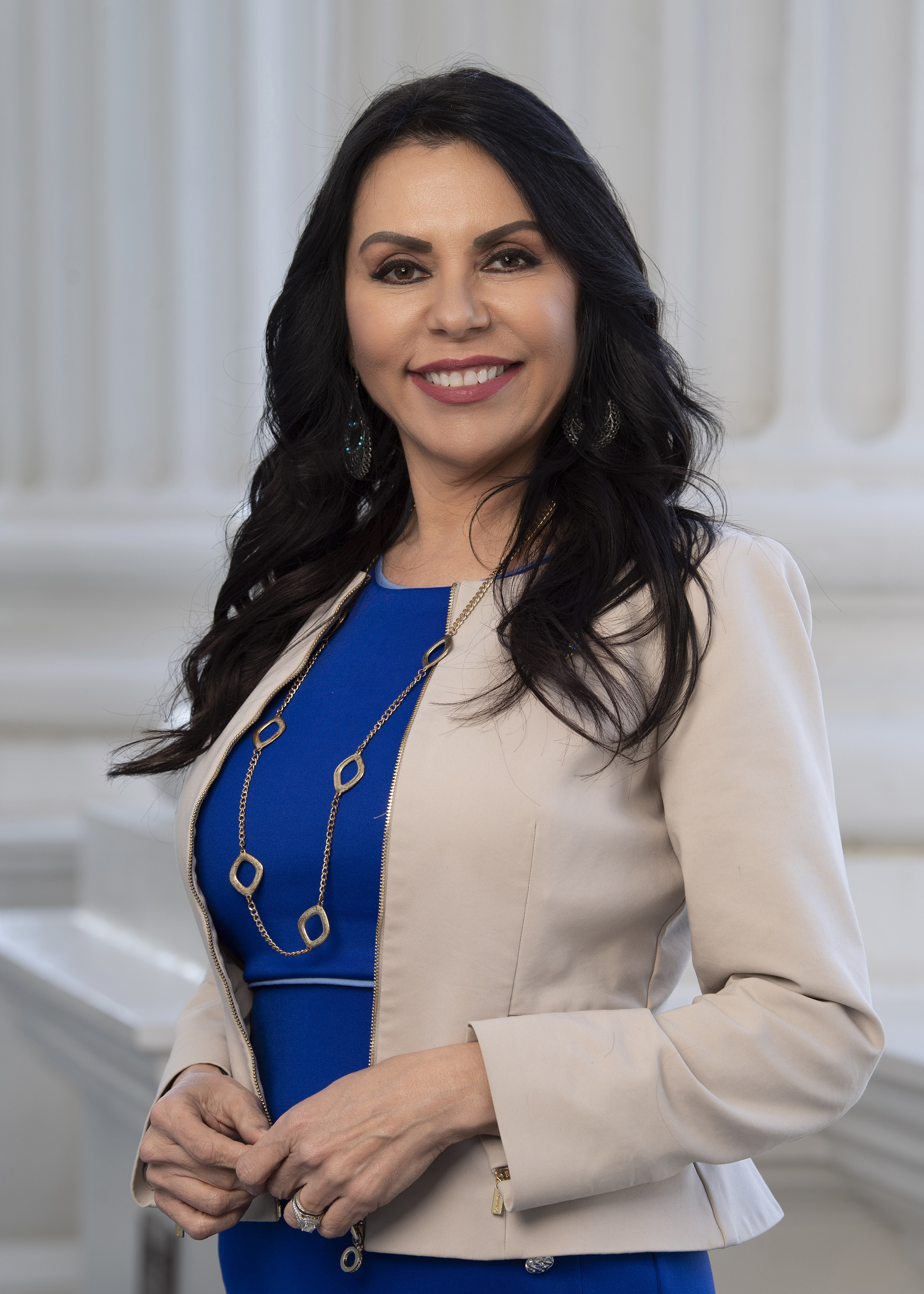
Asm. Blanca Rubio
Sponsored bills
Existing law, the Child Care and Development Services Act, requires the Superintendent of Public Instruction to administer child care and development programs that offer a full range of services for eligible children from infancy to 13 years of age, including California state preschool programs. The act requires families to meet certain requirements to be eligible for federal and state subsidized child development services. The act authorizes the Superintendent to enter into and execute local contractual agreements with any public or private entity or agency for the delivery of child care and development services. This bill would prohibit a contracting agency from expelling or unenrolling a child from a state preschool program because of a child's behavior unless the contracting agency has expeditiously pursued and documented reasonable steps to maintain the child's safe participation in the program and determines, in consultation with specified parties, that the child's continued enrollment would present a continued serious safety threat to the child or other enrolled children, and has referred the parents or legal guardians to other potentially appropriate placements, the local child care resource and referral agency, or any other referral service available in the local community. Existing law provides for the licensure, by the State Department of Social Services, of facilities that provide day care for children, including day care centers and family day care homes. Existing law authorizes the department to impose civil penalties for certain violations of the licensing requirements and their corresponding regulations. Existing law requires each licensed child day care facility to post various documents and provide various notices to parents in response to certain citations. Existing law provides that failure to comply with these requirements results in an immediate civil penalty. This bill would require the department to consider, in determining whether to issue a citation to or impose a civil penalty on a child day care facility that contracts with the State Department of Education, whether the child day care facility is in the process of complying with the procedure described above.
Existing law, unless the school district is granted an exemption, limits the amount of the combined assigned or unassigned ending fund balance contained in a school district's annual budget in any fiscal year immediately after a fiscal year in which a transfer is made into the Public School System Stabilization Account. Existing law establishes formulas for calculating the maximum amount allowable for school districts with less than 400,000 units of average daily attendance and for school districts with more than 400,000 units of average daily attendance, as specified. This bill would instead make that limitation applicable in a fiscal year immediately after a fiscal year in which the amount of moneys in the Public School System Stabilization Account is equal to or exceeds 3% of the combined total of General Fund revenues appropriated for school districts and allocated local proceeds of taxes, as specified, for that fiscal year. The bill would instead provide that the school district's budget shall not contain a combined assigned or unassigned ending general fund balance, as defined, in excess of 10% of those funds. The bill would exclude from the requirements of those provisions basic aid school districts, as defined, and small school districts, as defined. To the extent the bill would impose additional duties on school districts, the bill would impose a state-mandated local program. The bill would require the Superintendent of Public Instruction to notify school districts and county offices of education whenever the conditions specified above are met. The bill would also require the Superintendent to notify school districts and county offices of education when those conditions no longer exist. The California Constitution requires the state to reimburse local agencies and school districts for certain costs mandated by the state. Statutory provisions establish procedures for making that reimbursement. This bill would provide that, if the Commission on State Mandates determines that the bill contains costs mandated by the state, reimbursement for those costs shall be made pursuant to the statutory provisions noted above.
Existing law prohibits the release of any person on his or her own recognizance who is arrested for a new offense and who is currently on felony probation or felony parole or who has failed to appear in court as ordered, resulting in a warrant being issued, 3 or more times over the 3 years preceding the current arrest, and who is arrested for any felony offense or other specified crimes, including theft, until a hearing is held in open court before the magistrate or judge. This bill would further apply this prohibition to any offense involving domestic violence or any offense in which the defendant caused great bodily injury to another person, and would remove the prohibition as it pertains to an offense of theft. For all other new felony offenses, the bill would prohibit the release of a person on his or her own recognizance without a hearing in open court if the person has failed to appear in court 3 or more times over the 3 preceding years, unless the person is released under a court-operated pretrial release program or a pretrial release program with approval by the court.
Existing federal law provides for the allocation of federal funds through the federal Temporary Assistance for Needy Families (TANF) block grant program to eligible states. Existing law provides for the California Work Opportunity and Responsibility to Kids (CalWORKs) program under which, through a combination of state and county funds and federal funds received through the TANF program, each county provides cash assistance and other benefits to qualified low-income families. Under existing law, certain amounts are exempt from the calculation of family income for purposes of determining the amount of a grant under the CalWORKs program, including specified amounts of disability-based unearned income and earned income. This bill would exempt benefits and related allowances received through the United States Department of Veterans Affairs for education, training, vocation, or rehabilitation from consideration as income for purposes of determining eligibility for CalWORKs program benefits and calculating grant amounts for veterans and their spouses and dependents, under specified circumstances. By imposing additional duties on counties, this bill would impose a state-mandated local program. Existing law continuously appropriates moneys from the General Fund to defray a portion of county costs under the CalWORKs program. This bill would instead provide that the continuous appropriation would not be made for purposes of implementing the bill. The California Constitution requires the state to reimburse local agencies and school districts for certain costs mandated by the state. Statutory provisions establish procedures for making that reimbursement. This bill would provide that, if the Commission on State Mandates determines that the bill contains costs mandated by the state, reimbursement for those costs shall be made pursuant to the statutory provisions noted above.
Existing law establishes various programs that provide cash assistance and other benefits relating to health care, food, and housing, among other things, to qualified low-income families and individuals, including, among others, the California Work Opportunity and Responsibility to Kids (CalWORKs) program, the California Earned Income Tax Credit, Medi-Cal, CalFresh, the California Special Supplemental Nutrition Program for Women, Infants, and Children (WIC Program) , and the Emergency Housing and Assistance Program. This bill would establish the Lifting Children and Families Out of Poverty Task Force, for the purpose of submitting a report to the Legislature and the executive branch administration of the state, as specified, that recommends future comprehensive strategies to achieve the reduction of deep poverty among children and reduce the overall child poverty rate in the state. The bill would require the report to be completed by November 1, 2018. The bill would require the State Department of Social Services to invite and convene the task force and to assist the task force in carrying out its duties, as specified. The bill would repeal these provisions on January 1, 2020.
Under existing law, any person who intentionally interferes with any lawful business carried on by the employees of a public agency open to the public by obstructing or intimidating those attempting to carry on or transact business and refusing to leave, as specified, is guilty of a misdemeanor. This bill would make it an infraction to intentionally interfere with any lawful business carried on by the employees of a public agency open to the public by knowingly making a material misrepresentation of the law to those attempting to transact business with the agency and refusing to leave, as specified. By expanding the scope of a crime, this bill would impose a state-mandated local program. The California Constitution requires the state to reimburse local agencies and school districts for certain costs mandated by the state. Statutory provisions establish procedures for making that reimbursement. This bill would provide that no reimbursement is required by this act for a specified reason.
This measure would recognize September 11, 2017, as a day of solemn commemoration and extend the Legislature's deepest sympathies to the victims of the September 11, 2001 attacks.
Existing law provides for apprenticeship programs within the Division of Apprenticeship Standards, which is within the Department of Industrial Relations, sponsored by specific entities and employers, and requires the Chief of the Division of Apprenticeship Standards to perform various functions with respect to apprenticeship programs and the welfare of apprentices. This bill would require the Division of Apprenticeship Standards, in collaboration with the California Firefighter Joint Apprenticeship Committee (CAL-JAC) , to develop a statewide firefighter preapprenticeship program designed to recruit candidates from underrepresented groups. This bill would require the preapprenticeship program to meet specified objectives. This bill would also require CAL-JAC to deliver the pilot classes established by the preapprenticeship program using existing facilities and training models. This bill would require CAL-JAC to provide the program model to fire protection agencies, and would authorize a fire protection agency to then use that model and related resources to establish a local preapprenticeship program for recruiting candidates from underrepresented groups. This bill would reference an appropriation made in the Budget Act of 2017–18 to the division to establish the preapprenticeship program and would require the division to use those funds for specified purposes. This bill would declare that it is to take effect immediately as an urgency statute.
This measure would urge the Congress of the United States to not enact S. 446, H.R. 38, or any other similar "concealed carry reciprocity" legislation that would require the State of California to recognize the concealed carry standards of every other state.