

Passed Apr 30, 2018
1 co-sponsor
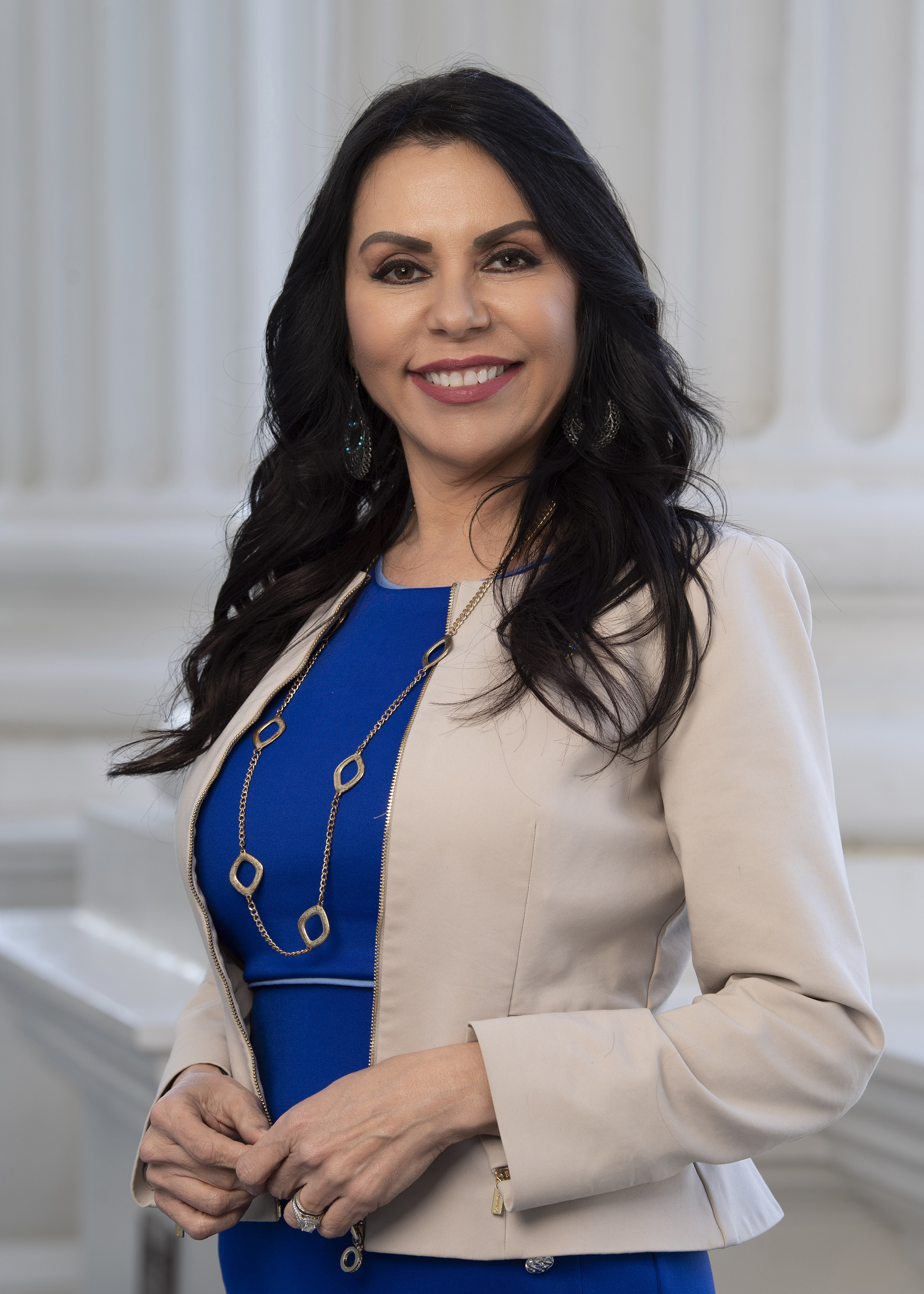
Asm. Blanca Rubio
Total votes
21,034
all sessions
Attendance
93%
1,310 missed
Near the chamber average
With party
99%
of cast votes
Near the chamber average
Bipartisan score
0%
crosses aisle rarely
Near the chamber average
Sponsored
2,345
bills & resolutions
Higher than 94% of chamber peers
Committees
7
assignments
2,345 bills and resolutions
Sponsored bills
Total
2,345
Primary
236
Co-sponsor
2,109
This page
2,345
matching current filters
Passed Apr 26, 2018
1 co-sponsor
Passed Apr 26, 2018
1 co-sponsor
Budget Deficit Savings Account.
Existing law establishes the various funds in the State Treasury, including the Special Fund for Economic Uncertainties. This bill would establish the Budget Deficit Savings Account in the State Treasury and would provide that funds in the reserve shall be available only for specified purposes, for appropriation by the Legislature in fiscal years in which there is a state budget deficit, as provided.
In committee Apr 26, 2018
1 co-sponsor
Vertical housing districts.
Existing law authorizes the legislative body of a city or a county to establish an enhanced infrastructure financing district to finance public capital facilities or other specified projects of communitywide significance, including, but not limited to, the acquisition, construction, or rehabilitation of housing for persons of low and moderate income for rent or purchase. This bill would authorize a city or county to designate a high-transit area as a vertical housing zone by adopting a resolution to that effect that contains specified information. The bill would authorize a taxing entity to agree to participate in an existing vertical housing zone by adopting a resolution to that effect. The bill would authorize the developer of a multifamily housing project that meets specified requirements located within that zone to submit an application for a housing zone project designation to the city or county or participating taxing entity. The bill would require the city or county to approve any application for designation so submitted if the project meets certain requirements, including that the project has obtained necessary entitlements and that it is not located within specified areas. The bill would provide that a developer that is granted an application pursuant to these provisions is entitled to receive excess property tax revenues from the city or county that formed the district, as well as from any participating taxing entities, for a period of 30 years following completion of the project, or for a period of 35 years if the project agrees to offer a specified amount of units at an affordable rate, as provided.
In committee Apr 25, 2018
1 co-sponsor
Relative to Women in Construction Week.
This measure would proclaim the week of March 4, 2018, through March 10, 2018, inclusive, as Women in Construction Week.
Signed into law Apr 24, 2018
1 co-sponsor
Passed Apr 23, 2018
1 co-sponsor
Expanded Polystyrene Food Service Packaging Recovery and Recycling Act.
The California Integrated Waste Management Act of 1989, administered by the Department of Resources Recycling and Recovery, generally regulates the disposal, management, and recycling of solid waste. Existing law requires all rigid plastic bottles and rigid plastic containers sold in the state to be labeled with a code that indicates the resin used to produce the rigid plastic bottle or rigid plastic container, and designates the number "6" as the code number for polystyrene resin. This bill would enact the Expanded Polystyrene Food Service Packaging Recovery and Recycling Act, which would authorize expanded polystyrene food service packaging (PFP) manufacturers and polystyrene resin producers to form or designate an organization consisting of PFP manufacturers and resin producers, to be known as the Expanded Polystyrene Food Service Packaging Recycling Organization. If the PFP manufacturers and resin producers form or designate a PFP Recycling Organization, the bill would require each PFP manufacturer or resin producer that formed or designated the organization that sells expanded polystyrene food service packaging or polystyrene resin in this state to pay to the PFP Recycling Organization the expanded polystyrene food service packaging assessment fee established by the PFP Recycling Organization. The bill would require the collected fees to be used by the organization to carry out the requirements of the act and for appropriate projects and programs that would further the purposes of the act, including awarding grants to specified entities for programs designed to increase community access to PFP recycling, to promote efforts to recycle PFP, and to reduce or abate litter from PFP. The bill would impose civil penalties on the PFP manufacturers or resin producers that formed or designated the PFP Recycling Organization that fail to remit the PFP assessment fee, as specified, and would authorize the department to expend the civil penalty moneys to support its duties under the act.
In committee Apr 23, 2018
1 co-sponsor
Passed Apr 20, 2018
1 co-sponsor
Gaming Policy Advisory Committee.
Existing law, the Gambling Control Act, provides for the licensure and regulation of various legalized gambling activities and establishments by the California Gambling Control Commission and the investigation and enforcement of those activities and establishments by the Department of Justice. Existing law requires the commission to establish a 10-member Gaming Policy Advisory Committee for the purpose of discussing matters of controlled gambling regulatory policy and other relevant gambling-related issues. The committee is composed of representatives of controlled gambling licensees and members of the general public in equal numbers. This bill would increase the membership of the committee from 10 to 12 members, and would instead require the committee to be composed of 5 representatives of controlled gambling licensees, 5 members of the general public, and 2 representatives from the Department of Justice.
In committee Apr 18, 2018
0 co-sponsors
Ask Maddy
·
AI policy assistant
Ask Maddy about Blanca Rubio
Scope: CA
Hi! I can help you understand Blanca Rubio's legislative record. What would you like to know?
Try one of these
i
Maddy answers using official bill text and legislative records. Always verify before sharing.
Sources cited inline