This measure would recognize the significance of Vesak Day to people of Buddhist faith and extend sincere best wishes to the state's Buddhist community in celebrating Vesak Day.
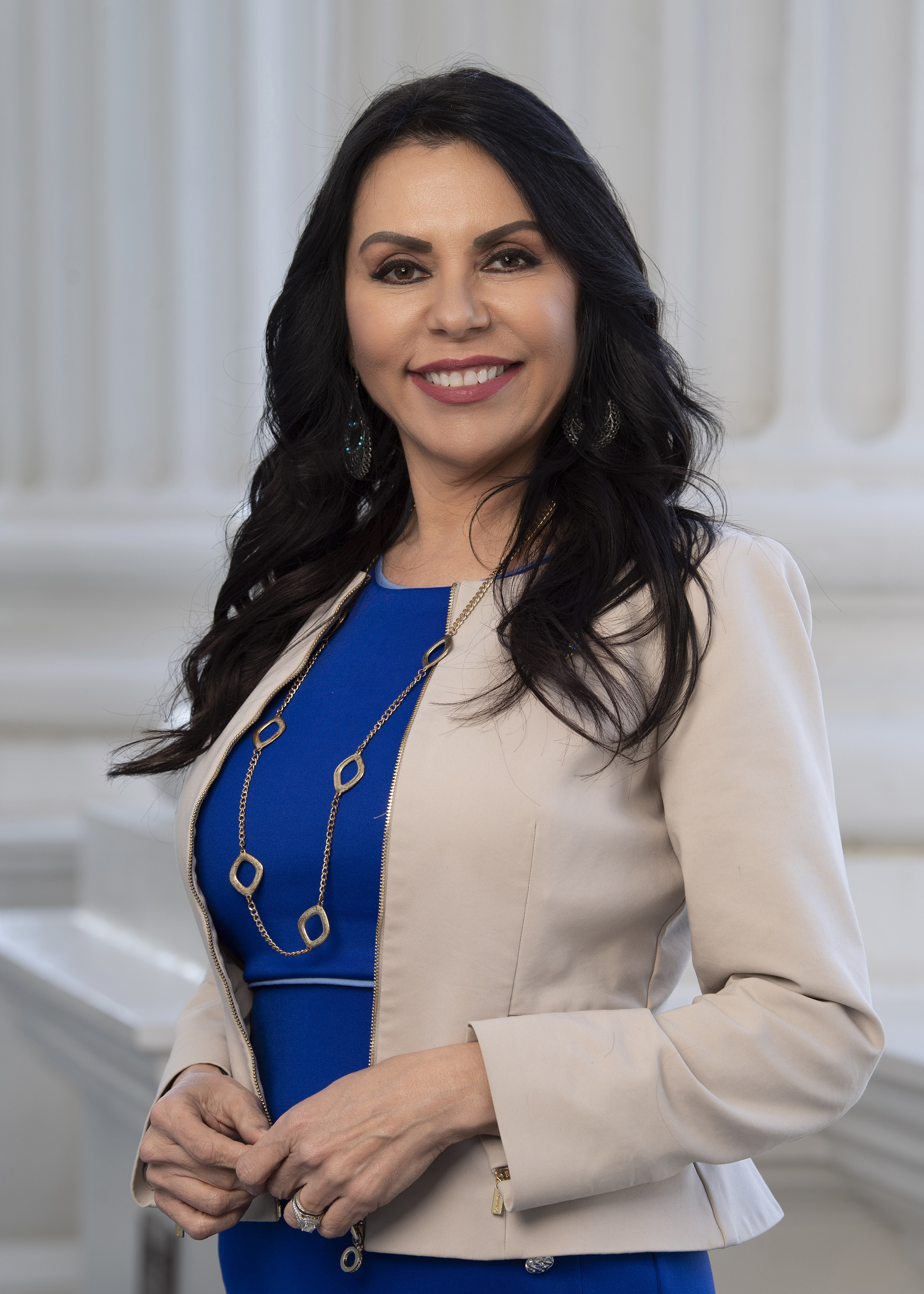
Asm. Blanca Rubio
Sponsored bills
Maddy summaryThis House Resolution recognizes May 17, 2026, as the International Day Against Homophobia, Biphobia, Interphobia, and Transphobia within the California Legislature. The measure formally acknowledges the ongoing discrimination faced by LGBTQ+ individuals globally and reaffirms the state's commitment to equality and civil rights. By adopting this resolution, the Assembly encourages all Californians to support inclusive practices and stand against hate toward the LGBTQ+ community.
Existing law requires, until January 1, 2033, a person who has been convicted on or after January 1, 2019, of driving a motor vehicle at any time when that person's driving privilege is suspended or revoked as a result of a conviction for driving while under the influence of an alcoholic beverage or any drug, as specified, to install for a period of time, as ordered by the court, an ignition interlock device (IID) on the vehicle they operate. Existing law specifies periods for which a person convicted of one or more prior violations of specified crimes is required to install an IID. A violation of the Vehicle Code is a crime punishable as an infraction, unless otherwise specified. This bill would require the Department of Motor Vehicles to establish, until January 1, 2033, a pilot program in the Counties of Los Angeles, San Diego, Fresno, Santa Clara, Shasta, Kern, and San Bernardino that would impose a similar requirement for persons convicted of specified driving offenses relating to excessive speed, reckless driving, and exhibitions of speed to install for a period of time, as ordered by the court, a certified active intelligent speed assistance device (ISA) on any vehicle the person operates, as specified. The bill would make the installation of an ISA discretionary for a first offender, as specified. The bill would make tampering with the ISA device, as specified, operating a motor vehicle not equipped with a device, or willfully failing to return the device to the vendor upon completion punishable as a misdemeanor. The bill would impose a fee schedule to be adopted by certified ISA manufacturers and their agents for the ISA and other related costs. The bill would impose specified notice requirements on ISA providers related to the fee schedule and instructions for applying for reduced device costs. The bill would make confidential all documents, records, information, or data maintained by an ISA provider related an offender, as specified. The bill would also require ISA providers to securely maintain all collected data and impose certain data sharing requirements. The bill would make related findings and declarations. By creating new crimes related to the ISA program, this bill would impose a state-mandated local program. The bill would require, by July 1, 2031, the department to report data to the Transportation Agency regarding the implementation and efficacy of the pilot program, as specified, and require the Transportation Agency to report to the Legislature on the outcomes of the pilot program by July 1, 2032. Existing constitutional provisions require that a statute that limits the right of access to the meetings of public bodies or the writings of public officials and agencies be adopted with findings demonstrating the interest protected by the limitation and the need for protecting that interest. This bill would make legislative findings to that effect. The California Constitution requires the state to reimburse local agencies and school districts for certain costs mandated by the state. Statutory provisions establish procedures for making that reimbursement. This bill would provide that no reimbursement is required by this act for a specified reason.

Maddy summaryThis bill designates the week of May 17 to May 24, 2026, as National Public Works Week throughout California to honor the contributions of public works professionals. It directly affects engineers, managers, and employees in government and the private sector who maintain essential infrastructure like transportation systems, water supplies, and public buildings. The resolution requests that the Governor issue a proclamation encouraging the public to observe the week with educational programs and activities that highlight the importance of these workers.
Existing law makes it a misdemeanor to, by force or threat of force, willfully injure, intimidate, interfere with, oppress, or threaten another person in the free exercise or enjoyment of a right or privilege secured by the Constitution or laws of this state or by the Constitution or laws of the United States, in whole or in part, because of one or more of specified actual or perceived characteristics of the victim, including disability, gender, religion, race, or sexual orientation. This bill would make it a crime for an elected or appointed official, under color of authority, to retaliate or exert political retribution, as defined, against a person for exercising a constitutionally protected right. The bill would make a violation of this crime punishable by forfeiture of office. The bill would specify that these provisions do not apply to the hiring or personnel decisions of elected or appointed officials that are relative to an employee or prospective employee of that elected or appointed official. By creating a new crime, the bill would impose a state-mandated local program. The California Constitution requires the state to reimburse local agencies and school districts for certain costs mandated by the state. Statutory provisions establish procedures for making that reimbursement. This bill would provide that no reimbursement is required by this act for a specified reason.

Existing law, the Alcoholic Beverage Control Act, provides for the issuance, suspension, revocation, and conditions upon licensure for the manufacture, distribution, and sale of alcoholic beverages. Existing law makes every person who sells, furnishes, gives, or causes to be sold, furnished or given away any alcoholic beverage to any person under 21 years of age guilty of a misdemeanor. Existing law also makes it unlawful for a person who is under the influence of any alcoholic beverage or drug, or the combined influence of both, to drive a vehicle and requires a court, when granting probation following conviction of a driving under the influence offense, to impose certain terms and conditions, including that the individual not drive a vehicle with any measurable amount of alcohol in their blood, among others. This bill would require everyone who sells or furnishes alcoholic beverages to first review bona fide evidence of majority and identity, as described. The bill would authorize a court when granting probation for certain driving under the influence offenses to prohibit the person from purchasing alcohol and would require the Department of Motor Vehicles to issue an identification card or driver's license with an appropriate designation on the face upon the receipt of an abstract of the record of a court. The bill would authorize the court to prohibit the purchase of alcohol when the offense occurred within 10 years of 2 or more driving under the influence offenses that resulted in conviction or certain other prior convictions, or if the conviction was for vehicular manslaughter, as specified. The bill would require a seller of alcoholic beverages to refuse to sell or serve someone subject to such an order. To the extent this bill would require a higher level of service from court staff who are county employees, the bill would impose a state-mandated local program. The California Constitution requires the state to reimburse local agencies and school districts for certain costs mandated by the state. Statutory provisions establish procedures for making that reimbursement. This bill would provide that, if the Commission on State Mandates determines that the bill contains costs mandated by the state, reimbursement for those costs shall be made pursuant to the statutory provisions noted above.
Existing law establishes various food assistance programs, including, among others, the federal Supplemental Nutrition Assistance Program (SNAP) , known in California as CalFresh, under which supplemental nutrition assistance benefits allocated to the state by the federal government are distributed to eligible individuals by each county. Existing law declares that it is the established policy of the state that every human being has the right to access sufficient affordable and healthy food. Existing law defines "food insecurity" to mean the occasional or constant lack of access to the food one needs to live a healthy life and the uncertainty of being able to acquire enough food to meet the needs of an individual or household due to insufficient money or other resources. This bill would require the State Department of Social Services to annually conduct a statewide survey to assess food insecurity in the state, modeled after a specified federal survey. The bill would require the first statewide food insecurity survey to be completed on or before July 1, 2028. The bill would require the department, on or before October 1, 2028, and annually thereafter, to make the results of the statewide food insecurity survey publicly available on its internet website. The bill would authorize the department to collaborate or contract with a public research institution or other external vendor to implement these provisions. The bill would prohibit the department from conducting a statewide food insecurity survey during a year in which a federal food security survey is conducted, as specified.
Under existing law, a person between 6 and 18 years of age who is not exempted by law is subject to compulsory full-time education. Existing law excludes a child under 6 years of age from the public schools, subject to specified exceptions. Existing law requires a school district maintaining a kindergarten to admit a child who will have their 5th birthday on or before September 1 of the school year. Existing law also requires a child who will have their 6th birthday on or before September 1 of the school year to be admitted to the first grade of an elementary school. Existing law authorizes a child who has been lawfully admitted to a public school kindergarten or a private school kindergarten in California and who is judged by the administration of the school district to be ready for first-grade work to be admitted to the first grade, as specified. This bill would require a public elementary school, including a charter school, to ensure that a child is not admitted to the first grade unless the child has completed one year of kindergarten if the child will have their 6th birthday (1) between July 1, 2028, and September 1, 2028, inclusive, for the 2028–29 school year, (2) between May 1, 2029, and September 1, 2029, inclusive, for the 2029–30 school year, (3) between March 1, 2030, and September 1, 2030, inclusive, for the 2030–31 school year, and (4) on or before September 1 for the 2031–32 school year and each school year thereafter, except for a child who has been lawfully admitted to a public school kindergarten or a private school kindergarten in California, but has not yet completed one school year, and is judged to be ready for first-grade work, as specified. By imposing additional duties on local educational agencies, the bill would impose a state-mandated local program. The California Constitution requires the state to reimburse local agencies and school districts for certain costs mandated by the state. Statutory provisions establish procedures for making that reimbursement. This bill would provide that, if the Commission on State Mandates determines that the bill contains costs mandated by the state, reimbursement for those costs shall be made pursuant to the statutory provisions noted above.
Existing law requires the State Department of Public Health to conduct a program of epidemiological assessments of the incidence of Parkinson's disease and establish a system for the collection of information determining the incidence of Parkinson's disease. Existing law encourages the department to convene a task force comprised of researchers with expertise in Parkinson's disease, advocates for patients with Parkinson's disease, and other individuals with relevant expertise to provide support and advice for the implementation and funding of the program. Existing law requires the director to establish a statewide system for the collection of information determining the incidence of Parkinson's disease. This bill would require the department to establish the California Epilepsy Program for the purposes of epidemiological assessments of the incidence and prevalence of epilepsy and seizures. The bill would require the department to convene an advisory panel comprised of specified individuals to provide support and advice for the implementation of the program. The bill would authorize the department to seek private or public funding and to spend those funds for the purposes of the program, and would authorize the department to contract with various entities for the purposes of collecting and collating data. The bill would require the department to analyze available data, to prepare and publish reports on its internet website as necessary, and to publish on its internet website a listing of agencies that offer services to individuals affected by epilepsy, as specified.
Maddy summaryThis bill designates April 2026 as Second Chance Month in California to raise awareness about opportunities for individuals reentering society after incarceration. The measure is a ceremonial proclamation that does not alter laws, allocate funding, or change government operations. Its primary purpose is to encourage public recognition of the challenges faced by formerly incarcerated people and to highlight available support resources during that specific month.