

Under existing law, the Franchise Tax Board collects and administers taxes imposed under the Personal Income Tax Law and the Corporation Tax Law. The California Department of Tax and Fee Administration collects and administers, among others, taxes imposed under the Sales and Use Tax Law, the Bradley-Burns Uniform Sales and Use Tax Law, and local laws imposed pursuant to the Transactions and Use Tax Law. Existing law sets forth various penalties, including penalties for the nonpayment or late payment of those taxes, and the failure to file or intentional filing of incorrect returns. Existing law established a tax amnesty program, conducted in 2005, for sales, use, personal income, and corporation tax liabilities due and payable for tax reporting periods or taxable years beginning before January 1, 2003. This bill would require the California Department of Tax and Fee Administration and the Franchise Tax Board to administer the California Tax Amnesty and Revenue Recovery Act, a tax amnesty program, as applicable, during the period beginning on September 1, 2022, and ending October 31, 2022, inclusive, for specified taxpayers with respect to penalties and fees for tax reporting periods beginning on or after January 1, 2020, and before January 1, 2021. The bill would require the applicant to the amnesty program to file the application under the penalty of perjury. By expanding the crime of perjury, the bill would impose a state-mandated local program. The California Constitution requires the state to reimburse local agencies and school districts for certain costs mandated by the state. Statutory provisions establish procedures for making that reimbursement. This bill would provide that no reimbursement is required by this act for a specified reason.
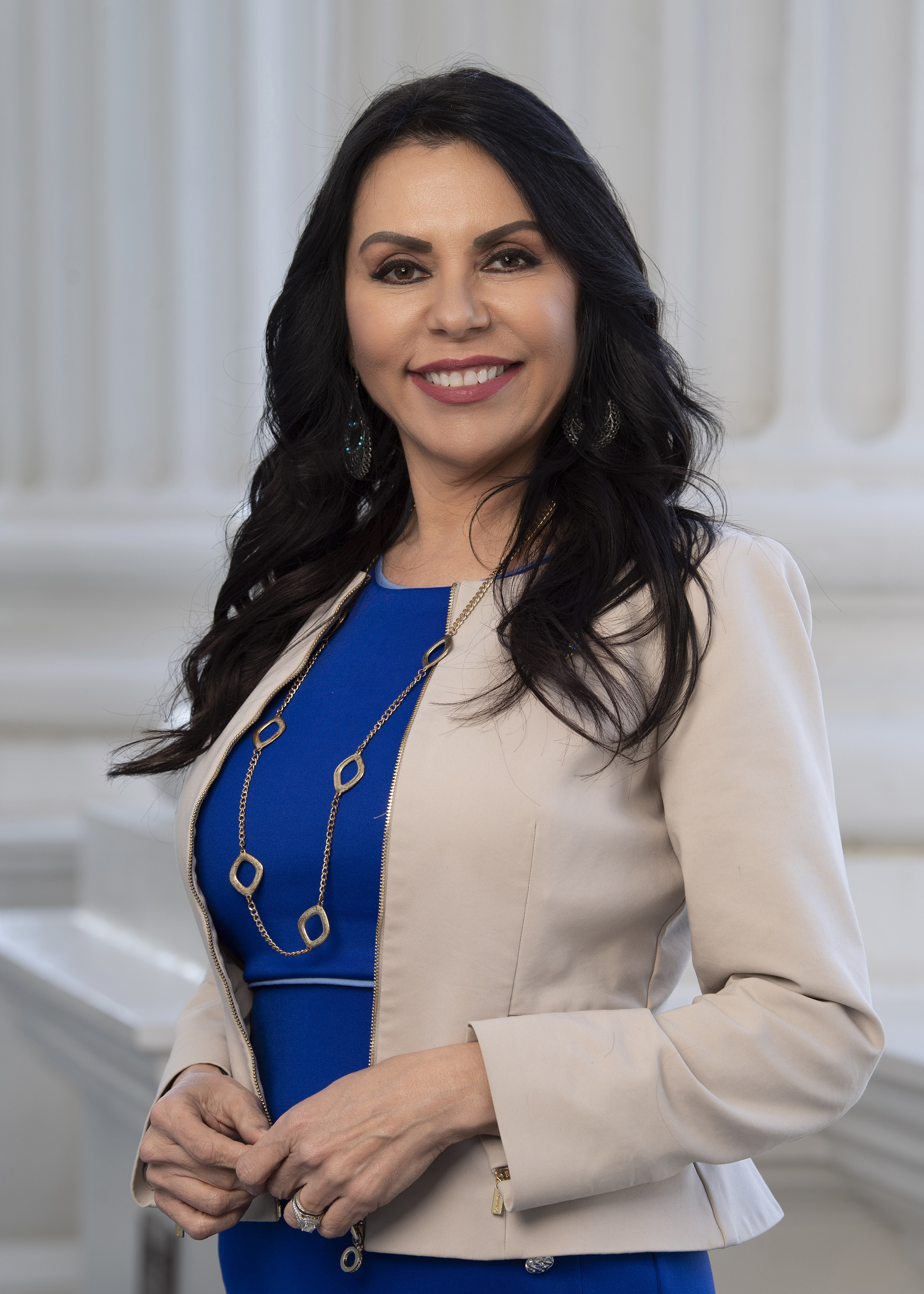
Asm. Blanca Rubio
Sponsored bills
Existing law establishes the Office of Small Business Advocate within the Governor's Office of Business and Economic Development for the purpose of advocating for the causes of small business and to provide small businesses with the information they need to survive in the marketplace. This bill, the Keep California Working Act, would establish the Keep California Working Grant Program. The act would require the Small Business Advocate to administer the program and award grants, as specified, to small businesses and nonprofit entities that meet specified criteria, including that the entity has experienced economic hardship resulting from the COVID-19 pandemic. The act would specify that grant money awarded pursuant to the program may be used only for specified purposes, including payroll costs, health care benefits, paid sick, medical, or family leave, and insurance premiums. The act would appropriate $2.6 billion dollars to the Office of Small Business Advocate for those purposes. The Personal Income Tax Law and the Corporation Tax Law, in conformity with federal income tax law, generally define "gross income" as income from whatever source derived, except as specifically excluded, and provide various exclusions from gross income. This bill would exclude from gross income, for state income tax purposes, the amount of a grant awarded pursuant to the Keep California Working Grant Program. Existing law requires a bill authorizing a new tax expenditure to contain, among other things, specific goals, purposes, and objectives that the tax expenditure will achieve, detailed performance indicators, and data collection requirements. The bill also would include additional information required for a bill authorizing a new tax expenditure. This bill would declare that it is to take effect immediately as an urgency statute.
Existing law classifies certain felonies as violent felonies for purposes of various provisions of the Penal Code. Existing law imposes an additional one-year term for a sexually violent felony and a 3-year term for a violent felony for each prior separate prison term served for a violent felony. This bill would additionally define felony hate crimes as a violent felony, as specified. By increasing the punishment for a crime, this bill would impose a state-mandated local program. The California Constitution requires the state to reimburse local agencies and school districts for certain costs mandated by the state. Statutory provisions establish procedures for making that reimbursement. This bill would provide that no reimbursement is required by this act for a specified reason.
(1) Existing law prohibits a person subject to a protective order, as defined, from owning, possessing, purchasing, or receiving a firearm or ammunition while that protective order is in effect and makes a willful and knowing violation of a protective order a crime. Existing law requires the court, when issuing the order with both parties present, to inform the parties of this information and to order the restrained person to relinquish any firearm in the person's immediate possession or control or subject to their immediate possession or control. Existing law specifies the means of relinquishment if the law enforcement officer serving the protective order does not request the immediate surrender of the firearm, including, surrender to law enforcement, or by selling the firearm to a licensed gun dealer. This bill would require a court to order the restrained person to relinquish ammunition and to notify the parties of how any firearms or ammunition still in the restrained party's possession are to be relinquished and how to submit a receipt to the court. The bill would require the court to review the file to determine whether the receipt has been filed and inquire as to whether the person has complied with the requirement. The bill would require violations of the firearms or ammunition prohibition to be reported to the prosecuting attorney in the jurisdiction where the order has been issued within 2 business days of the court hearing unless the restrained party provides a receipt showing compliance at a subsequent hearing or by direct filing with the clerk of the court. The bill would authorize the relinquishment to occur by transferring the firearm or ammunition or relinquishing them for storage if the firearm or ammunition is not immediately surrendered to law enforcement upon service of the protective order. This bill would also require the court, at a noticed hearing relating to a domestic violence protective order in family court or juvenile court, to consider information presented that the restrained person has possession or control of a firearm or ammunition. The bill would authorize the court, upon making this finding, to set a review hearing, as specified, to determine whether the person has possession or control of a firearm or ammunition in violation of the above provisions. Existing law requires a court, prior to a hearing on the issuance or denial of a protective order, to ensure that a search has been conducted to determine if the subject of the order has been convicted of a serious or violent felony, a misdemeanor conviction involving domestic violence, weapons, or other violence, has an outstanding warrant, is currently on parole or probation, has a registered firearm, or has a prior restraining order or a violation of a restraining order. Existing law requires the court to notify law enforcement officials if some of those conditions exist, including the person being on parole or probation or having an outstanding warrant. This bill, as part of the search, would require the court to make a written record as to whether the subject has relinquished the firearm. If evidence of compliance with the prohibition on firearms or ammunition is not provided, the bill would require the clerk of the court to notify law enforcement officials and would require those law enforcement officials to take all actions necessary to obtain any firearms or ammunition owned, possessed, or controlled and to address any violation of the order with respect to firearms or ammunition, as specified. By requiring additional duties of local law enforcement officials, this bill would impose a state-mandated local program. Existing law requires a family court to determine the best interest of the child for purposes of deciding child custody in proceedings for dissolution of marriage, nullity of marriage, legal separation of the parties, petitions for exclusive custody of a child, and proceedings under the Domestic Violence Prevention Act. Existing law establishes a rebuttable presumption that an award of sole or joint physical or legal custody of a child to a person who has perpetrated domestic violence is detrimental to the best interest of a child and establishes factors to be considered in rebutting that presumption, including that the perpetrator is restrained by a protective order and has, or has not, complied with that order. This bill, for purposes of rebutting the presumption, would require the court to also consider whether the person is a restrained person in possession or control of a firearm or ammunition in violation of the law. Existing law authorizes the court to issue an ex parte order determining the temporary custody and visitation of a minor child, on the conditions the court determines, to a party who has established a parent and child relationship with the child, based on the best interest of the child. Existing law authorizes the court to suspend or deny custody or visitation or to limit visitation or custody only to situations in which a 3rd person is present. This bill would require the court, in making that determination, to consider whether the party is a restrained person in possession or control of a firearm or ammunition. (2) Existing law requires a law enforcement agency to enter all firearms that have been reported stolen, lost, found, recovered, held for safekeeping, or under observation into the Automated Firearms System (AFS) . This bill would also require law enforcement to enter in all firearms that are relinquished as part of a domestic violence protective order. (3) Existing law specifies how firearms and ammunition may be transported and prohibits open or concealed carry in specified circumstances. Existing law requires a license to sell, lease, or transfer firearms. Existing law, the Safety for All Act of 2016, enacted by the voters as Proposition 63 at the November 8, 2016, General Election, requires a valid ammunition vendor license to sell more than 500 rounds of ammunition in any 30-day period. Proposition 63 authorizes amendments of its provisions by a vote of 55% of both houses of the Legislature if the amendments are consistent with, and further the purposes of, the act. This bill would exempt people who are complying with the firearms provisions of a protective order from those provisions, including amending Proposition 63 to exempt a person from the limitation on the sale of over 500 rounds of ammunition in a 30-day period in order to comply with the protective order. (4) This bill would incorporate additional changes to Section 3044 of the Family Code proposed by AB 1579 and AB 1171, to be operative only if this bill and AB 1579, AB 1171, or both are enacted and this bill is enacted last. The bill would also incorporate additional changes to Section 11108.2 of the Penal Code proposed by SB 715, to be operative only if this bill and SB 715 are enacted and this bill is enacted last. (5) The California Constitution requires the state to reimburse local agencies and school districts for certain costs mandated by the state. Statutory provisions establish procedures for making that reimbursement. This bill would provide that, if the Commission on State Mandates determines that the bill contains costs mandated by the state, reimbursement for those costs shall be made pursuant to the statutory provisions noted above.
(1) Existing law, the Alcoholic Beverage Control Act, is administered by the Department of Alcoholic Beverage Control and regulates the granting of licenses for the manufacture, distribution, and sale of alcoholic beverages within the state. The act requires the department to make and prescribe rules to carry out the purposes and intent of existing state constitutional provisions on the regulation of alcoholic beverages, and to enable the department to exercise the powers and perform the duties conferred upon it by the state constitution and the act, not inconsistent with any statute of this state. The act makes it unlawful for any person other than a licensee of the department to sell, manufacture, or import alcoholic beverages in this state, with exceptions. The department, pursuant to its powers and in furtherance of emergency declarations and orders of the Governor under the California Emergency Services Act regarding the spread of the COVID-19 virus, has established prescribed temporary relief measures to suspend certain legal restrictions relating to, among other things, the expansion of a licensed footprint, sales of alcoholic beverages to-go, and delivery privileges. This bill would authorize the department, for a period of 365 days following the end of the state of emergency proclaimed by the Governor on March 4, 2020, in response to the COVID-19 pandemic, to permit licensees to exercise license privileges in an expanded license area authorized pursuant to a COVID-19 Temporary Catering Authorization approved in accordance with the Fourth Notice of Regulatory Relief issued by the department, as specified. The bill would also authorize the department to extend the period of time during which the COVID-19 Temporary Catering Authorization is valid beyond 365 days if the licensee has filed a pending application with the department for the permanent expansion of their premises before the 365-day time period expires. The bill would make these provisions effective only until July 1, 2024, and repeal them as of that date. (2) The Planning and Zoning Law authorizes the legislative body of any city or county to adopt ordinances that regulate zoning within its jurisdiction, as specified. Under that law, variances and conditional use permits may be granted if provided for by the zoning ordinance. This bill would, to the extent that an outdoor expansion of a business to mitigate COVID-19 pandemic restrictions on indoor dining interferes with, reduces, eliminates, or impacts required parking for existing uses, require a local jurisdiction that has not adopted an ordinance that provides relief from parking restrictions for expanded outdoor dining areas to reduce the number of required parking spaces for existing uses by the number of spaces that the local jurisdiction determines are needed to accommodate an expanded outdoor dining area. Because the bill would require local officials to perform additional duties, the bill would impose a state-mandated local program. The bill would make these provisions operative on January 1, 2022, and repeal them on July 1, 2024. (3) Existing law, the California Retail Food Code, establishes uniform health and sanitation standards for, and provides for regulation by the State Department of Public Health of, retail food facilities. Existing law restricts satellite food service to limited food preparation in a fully enclosed permanent food facility that meets specified requirements. Existing law requires a permanent food facility, prior to conducting satellite food service, to submit to the enforcement agency written operating standards. This bill would, for a period of one year after the end of the state of emergency proclaimed by the Governor on March 4, 2020, related to the COVID-19 pandemic, or until January 1, 2024, whichever occurs first, authorize a permitted food facility within any local jurisdiction that is subject to retail food operation restrictions related to a COVID-19 public health response to prepare and serve food as a temporary satellite food service without obtaining a separate satellite food service permit or submitting written operating procedures. This bill would require the written operating procedures to be maintained onsite for review, upon request, by the local jurisdiction. (4) The California Constitution requires the state to reimburse local agencies and school districts for certain costs mandated by the state. Statutory provisions establish procedures for making that reimbursement. This bill would provide that no reimbursement is required by this act for a specified reason. (5) This bill would declare that it is to take effect immediately as an urgency statute.
The California Global Warming Solutions Act of 2006 designates the State Air Resources Board as the state agency responsible for monitoring and regulating sources of emissions of greenhouse gases, as well as implementing various regulatory and incentive programs to assist the state in reaching its greenhouse gas emissions reductions goals. Existing law, for example, establishes the Air Quality Improvement Program that is administered by the state board for purposes of funding projects related to, among other things, the reduction of criteria air pollutants and improvement of air quality. Pursuant to its existing statutory authority, the state board has established the Clean Vehicle Rebate Project, as a part of the Air Quality Improvement Program, to promote the production and use of zero-emission vehicles by providing rebates for the purchase of new zero-emission vehicles. This bill would require the state board to establish specified processes to assist the state in achieving its greenhouse gas emissions reduction goals, including a process to identify any overlap among its incentive programs, as defined, that share the same objectives and a process to define, collect, and evaluate data on the behavioral changes that result from each of its incentive programs. The bill would require the state board to use the information collected pursuant to these processes to refine the greenhouse gas emissions estimates for its incentive programs in its annual reports to the Legislature, its funding plans, or any long-term planning documents or reports. The bill would require the state board to develop a process to define, collect, and evaluate data that will translate to metrics demonstrating the socioeconomic benefits that result from each of its incentive programs, and to use this data to make funding and design recommendations in its annual reports to the Legislature or funding plans, as provided. The bill would require the state board to contract with the University of California or the California State University to collect the information necessary to better isolate greenhouse gas emission reductions and socioeconomic benefits ascribed to its incentive programs. The bill would make the requirement for the state board to perform these duties contingent upon appropriation by the Legislature and would require the state board to complete certain of these duties within 3 years of receiving an appropriation from the Legislature for these purposes.
(1) Under existing law, the Public Utilities Commission has regulatory authority over public utilities, including telephone corporations. Existing law requires the commission to develop, implement, and administer the California Advanced Services Fund (CASF) to encourage deployment of high-quality advanced communications services to all Californians that will promote economic growth, job creation, and the substantial social benefits of advanced information and communications technologies. Existing law authorizes the commission to impose a surcharge to collect $330,000,000 for deposit into the CASF beginning January 1, 2018, and continuing through the 2022 calendar year. Existing law specifies the amount of surcharge revenues to be deposited into each account within the CASF, subject to appropriation by the Legislature. This bill would authorize the commission to impose the surcharge to fund the CASF until December 31, 2032, as specified. Existing law requires the commission, until April 1, 2023, to annually report specified information to the Legislature, including the remaining unserved areas in the state, the status of the CASF balance, and the projected amount to be collected in each year. This bill would require the commission to report that information in perpetuity. This bill would authorize the commission to require each internet service provider, as defined, to report specified information regarding each free, low-cost, income-qualified, or affordable internet service plan advertised by the provider. (2) Existing law requires the commission to require interconnected Voice over Internet Protocol service providers to collect and remit surcharges on their California intrastate revenues in support of specified public purpose program funds. Existing law authorizes those providers to use certain methodologies to identify their intrastate revenues subject to the surcharge. This bill would repeal that authorization to use those methodologies. (3) Existing law establishes the deaf and disabled telecommunications program and requires the commission to establish a rate recovery mechanism through a surcharge not to exceed 12 of 1% uniformly applied to a subscriber's intrastate telephone service, other than one-way radio paging service and universal telephone service, until January 1, 2025, to allow providers of equipment and service pursuant to that program to recover their costs as they are incurred. This bill would revise those requirements to instead require the commission to administer a surcharge to collect revenues of up to $100,000,000 per year until January 1, 2025, subject to annual appropriation of moneys by the Legislature, to allow providers of equipment and service pursuant to the deaf and disabled telecommunications program to recover their costs as they are incurred. (4) Under existing law, a violation of the Public Utilities Act or any order, decision, rule, direction, demand, or requirement of the commission is a crime. Because certain of the above provisions would be part of the act and a violation of a commission action implementing this bill's requirements would be a crime, the bill would impose a state-mandated local program. The California Constitution requires the state to reimburse local agencies and school districts for certain costs mandated by the state. Statutory provisions establish procedures for making that reimbursement. This bill would provide that no reimbursement is required by this act for a specified reason. (5) This bill would become effective only if SB 4 of the 2021–22 Regular Session is enacted and takes effect on or before January 1, 2022. (6) This bill would declare that it is to take effect immediately as an urgency statute.
(1) Existing law requires a pupil to complete designated coursework while in grades 9 to 12, inclusive, in order to receive a diploma of graduation from high school. These graduation requirements include, among others, the completion of 3 years of courses in English and 3 years of courses in social studies, including one-year courses in United States history and geography and world history, culture, and geography, a one-semester course in American government and civics, and a one-semester course in economics. Existing law requires the Instructional Quality Commission to develop, and the State Board of Education to adopt, modify, or revise, a model curriculum in ethnic studies. Existing law also encourages each school district and charter school that maintains any of grades 9 to 12, inclusive, and that does not otherwise offer a standards-based ethnic studies curriculum to offer, beginning in the school year following the adoption of the model curriculum, a course of study in ethnic studies based on the model curriculum. This bill would add the completion of a one-semester course in ethnic studies, meeting specified requirements, to the graduation requirements commencing with pupils graduating in the 2029–30 school year, including for pupils enrolled in a charter school. The bill would expressly authorize local educational agencies, including charter schools, to require a full-year course in ethnic studies at their discretion. The bill would require local educational agencies, including charter schools, to offer an ethnic studies course commencing with the 2025–26 school year, as specified. The bill would authorize, subject to the course offerings of a local educational agency, including a charter school, a pupil to satisfy the ethnic studies course requirement by completing either (A) a course based on the model curriculum in ethnic studies developed by the commission, (B) an existing ethnic studies course, (C) an ethnic studies course taught as part of a course that has been approved as meeting the A–G requirements of the University of California and the California State University, or (D) a locally developed ethnic studies course approved by the governing board of the school district or the governing body of the charter school. The bill would prohibit a course that does not use ethnic studies content as the primary content through which the subject is taught from being used to satisfy the ethnic studies course requirement. The bill would require a pupil who completes a course described above to also accrue credit for coursework in the subject that the course is offered, including, if applicable, credit towards satisfying a course required for a diploma of graduation from high school. These provisions would become operative only upon an appropriation of funds by the Legislature for these purposes in the annual Budget Act or another statute. Because the bill would add new duties to local educational agencies, it would constitute a state-mandated local program. (2) The California Constitution requires the state to reimburse local agencies and school districts for certain costs mandated by the state. Statutory provisions establish procedures for making that reimbursement. This bill would provide that, if the Commission on State Mandates determines that the bill contains costs mandated by the state, reimbursement for those costs shall be made pursuant to the statutory provisions noted above.
(1) Existing law defines rape as an act of sexual intercourse accomplished with a person not the spouse of the perpetrator under certain circumstances, including where the victim is incapable of giving legal consent because of a mental disorder or developmental or physical disability, where the victim is not aware of the essential characteristics of the act due to the perpetrator's fraudulent representation that the act serves a professional purpose, and where the victim submits to the act under the belief that the perpetrator is someone known to the victim other than the perpetrator, and the perpetrator intentionally and fraudulently induces that belief. Existing law separately defines rape of a spouse as an act of sexual intercourse accomplished with the spouse of the perpetrator under similar circumstances as nonspousal rape, except that spousal rape does not include acts of sexual intercourse accomplished under the specific circumstances described above. This bill would repeal the provisions relating to spousal rape and make conforming changes, thereby making an act of sexual intercourse accomplished with a spouse punishable as rape if the act otherwise meets the definition of rape, except that sexual intercourse with a person who is incapable of giving legal consent because of mental disorder or developmental or physical disability would not be rape if the 2 people are married. By changing the definition of a crime, this bill would impose a state-mandated local program. (2) Existing law authorizes an employer to request from the Department of Justice records of all convictions or any arrest pending adjudication for specified offenses for a person who applies for a license, employment, or volunteer position, in which the person would have supervisory or disciplinary power over a minor and requires the employer to notify the parent or guardian of a child if a person with specified convictions will have supervisory or disciplinary power over that child. Existing law exempts certain convictions, including spousal rape, from that notification requirement. This bill would remove the exemption for spousal rape or any other felony conviction and would instead exempt only misdemeanor convictions from that notification. The bill would make numerous conforming changes. (3) This bill would incorporate additional changes to Section 1103 of the Evidence Code proposed by AB 939 to be operative only if this bill and AB 939 are enacted and this bill is enacted last. (4) This bill would incorporate additional changes to Section 3044 of the Family Code proposed by SB 320 and AB 1579 to be operative only if this bill and SB 320, AB 1579, or both, are enacted and this bill is enacted last. (5) This bill would incorporate additional changes to Section 13956 of the Government Code proposed by SB 299 to be operative only if this bill and SB 299 are enacted and this bill is enacted last. (6) The California Constitution requires the state to reimburse local agencies and school districts for certain costs mandated by the state. Statutory provisions establish procedures for making that reimbursement. This bill would provide that no reimbursement is required by this act for a specified reason.