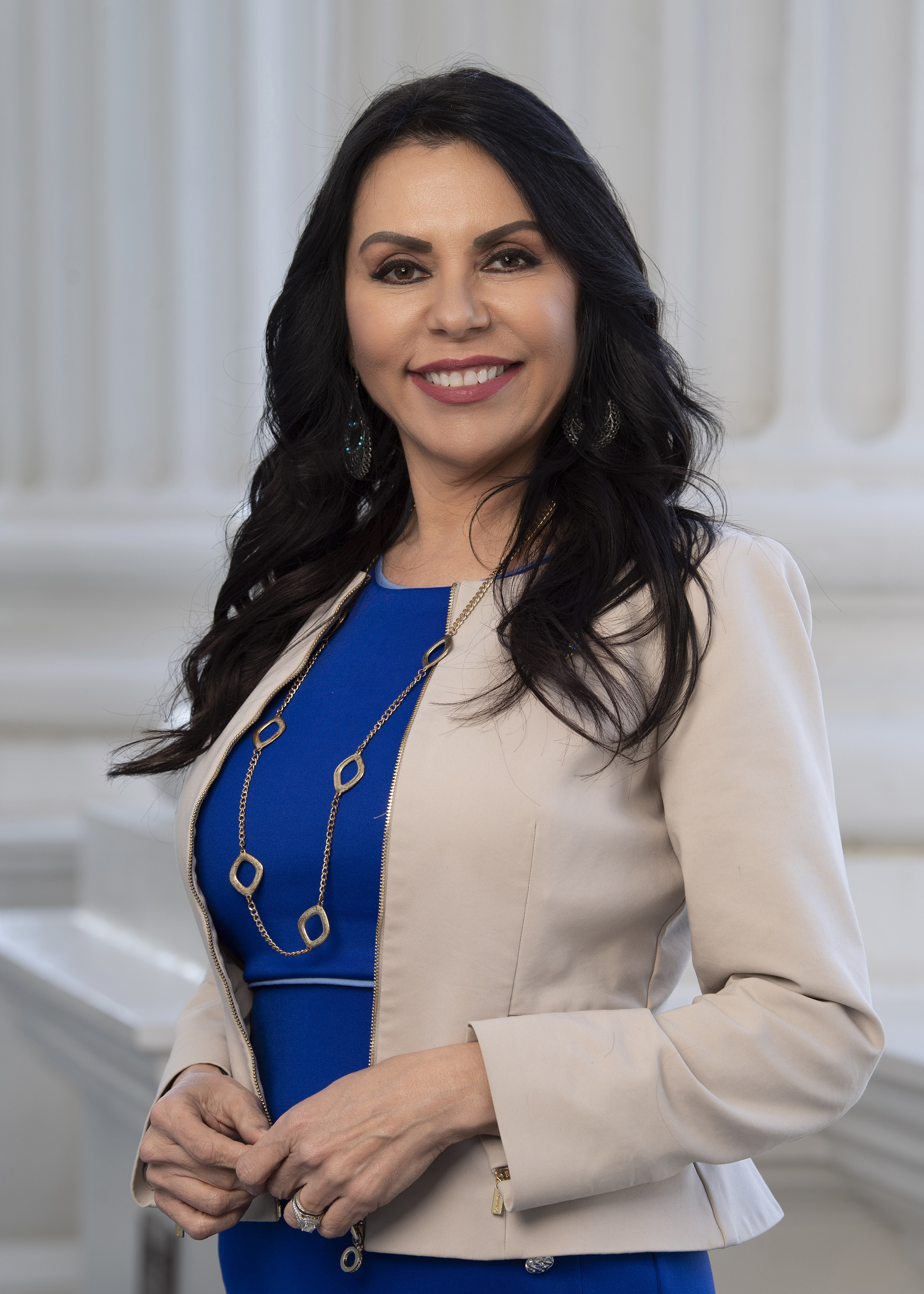
Photo of Blanca Rubio
D California Assembly · District 48 On the 2026 ballot

Asm. Blanca Rubio

Compare
Total votes
20,908
all sessions
Attendance
93%
1,294 missed
Near the chamber average
With party
99%
of cast votes
Near the chamber average
Bipartisan score
0%
crosses aisle rarely
Near the chamber average
Sponsored
1,471
bills & resolutions
Near the chamber average
Committees
7
assignments
1,471 bills and resolutions

Sponsored bills

Total
1,471
Primary
119
Co-sponsor
1,352
This page
1,471
matching current filters
Primary AB 1272
died · California Assembly · Lead sponsor
Park property.

Existing law provides for the acquisition of public park property and facilities and compensation for that transfer under specified circumstances. This bill would state the intent of the Legislature to enact subsequent legislation relating to park property.

died Feb 1, 2022 0 co-sponsors
Primary AB 1152
died · California Assembly · Lead sponsor
Postsecondary education: COVID-19 safety and liability.

Existing law establishes the California Community Colleges, under the administration of the Board of Governors of the California Community Colleges, the California State University, under the administration of the Trustees of the California State University, the University of California, under the administration of the Regents of the University of California, independent institutions of higher education, and private postsecondary educational institutions as the segments of postsecondary education in the state. This bill would state the intent of the Legislature to enact subsequent legislation that would create clarity on a standard of care on COVID-19 safety and a temporary and targeted limitation on COVID-19 liability at postsecondary educational institutions in the state as they work to reopen for in-person instruction.

died Feb 1, 2022 0 co-sponsors
Primary AB 1263
died · California Assembly · Lead sponsor
Solid waste: alcoholic beverages: imports.

The Alcoholic Beverage Control Act, administered by the Department of Alcoholic Beverage Control, regulates the granting of licenses for the manufacture, distribution, and sale of alcoholic beverages within the state. The act requires an out-of-state vendor shipping beer into the state to hold a certificate of compliance granted by the department, as prescribed. The act authorizes the department to suspend or revoke the certificate of compliance, as specified, if an out-of-state vendor, after obtaining the certificate, fails to submit a certain monthly report or fails to comply with a particular provision of the California Beverage Container Recycling and Litter Reduction Act. This bill would make nonsubstantive changes to those provisions.

died Feb 1, 2022 0 co-sponsors
Primary AB 222
Failed · California Assembly · Lead sponsor
Income taxes: net operating losses: active solar energy systems.

Existing law, the Personal Income Tax Law and Corporation Tax Law, in modified conformity with federal income tax laws, generally allows various deductions in computing the income that is subject to taxes imposed by those laws, including a deduction for a net operating loss, as specified. Existing law suspends the deduction for a net operating loss, as specified, for taxable years beginning on or after January 1, 2020, and before January 1, 2023. Existing law requires any bill authorizing a new tax expenditure to contain, among other things, specific goals, purposes, and objectives that the tax expenditure will achieve, detailed performance indicators, and data collection requirements. This bill, for taxable years beginning on and after January 1, 2023, would authorize a net operating loss carryback, as described, for a net operating loss or carryover of net operating loss for which a deduction was suspended as described above for a qualified taxpayer. The bill would define a "qualified taxpayer" as a taxpayer that was engaged in the business of owning, operating, or constructing active solar energy systems in the state and that completed a specified substantial sale of fixed assets or other property held or used in the regular course of their trade or business during the taxable year beginning on or after January 1, 2020, but before January 1, 2021. The bill also would include additional information required for any bill authorizing a new tax expenditure. This bill would take effect immediately as a tax levy.

Failed Feb 1, 2022 0 co-sponsors
Primary AB 837
Failed · California Assembly · Lead sponsor
Collection of tax: deployed military personnel.

Existing law requires the Franchise Tax Board to administer the levy and collection of taxes pursuant to the Personal Income Tax Law and the Corporation Tax Law and establishes procedures for the collection of delinquent taxes. This bill would prohibit the board from imposing a levy on salary or wages payable to or received by, or place a lien on a bank account of, a member of the Armed Forces of the United States on active duty while deployed away from the individual's permanent duty station.

Failed Feb 1, 2022 0 co-sponsors
Co-sponsor AB 60
Failed · California Assembly · Co-sponsor
Law enforcement.

(1) Existing laws defines persons who are peace officers and the entities authorized to appoint them. Existing law requires certain minimum training requirements for peace officers including the completion of a basic training course, as specified. Existing law prescribes certain minimum standards for a person to be appointed as a peace officer, including moral character and physical and mental condition, and certain disqualifying factors for a person to be employed as a peace officer, including a felony conviction. This bill would disqualify a person from being employed as a peace officer if that person has been convicted of, or has been adjudicated by a military tribunal as having committed an offense that would have been a felony if committed in this state. The bill would also disqualify any person who has been certified as a peace officer by the Commission on Peace Officer Standards and Training and has had that certification revoked by the commission. (2) Existing law establishes the Commission on Peace Officer Standards and Training to set minimum standards for the recruitment and training of peace officers and to develop training courses and curriculum. Existing law authorizes the commission to establish a professional certificate program that awards basic, intermediate, advanced, supervisory, management, and executive certificates on the basis of a combination of training, education, experience, and other prerequisites, for the purpose of fostering the professionalization, education, and experience necessary to adequately accomplish the general police service duties performed by peace officers. Existing law authorizes the commission to cancel a certificate that was awarded in error or obtained through misrepresentation or fraud, but otherwise prohibits the commission from canceling a certificate that has properly been issued. This bill would require the commission to create a certification program for specified peace officers. The bill would make all records related to the revocation of a peace officer's certification public. This bill would require a peace officer's certificate to be suspended, revoked, or canceled when the person is ineligible to be a peace officer or when the person has been subject to a sustained termination for serious misconduct, as defined, on or after January 1, 2022. The bill would make each law enforcement agency responsible for investigation, findings, and actions by the agency on allegations of serious misconduct and would give the commission access to the agency files. The bill would require the commission to be notified of and to review a peace officer's file after 3 allegations of serious misconduct within 5 years. The bill would establish the Peace Officer Standards Accountability Advisory Board, as specified, to make recommendations on the decertification of peace officers to the commission. The bill would require every law enforcement agency to notify the commission when a peace officer employed by that agency separates from employment. When a peace officer resigns or retires with a pending complaint, charge, or investigation of serious misconduct, the bill would require the law enforcement agency to complete the investigation into the serious misconduct within 90 days and report to the commission whether the complaint of serious misconduct was sustained, not sustained, unfounded, frivolous, or exonerated. The bill would require the commission to refer the files of peace officers whose termination for serious misconduct was sustained to the board to make a recommendation regarding the status of the officer's certificate and would require the commission to accept that recommendation or set forth the analysis and reasons for reaching a different result in writing. (3) Existing law requires law enforcement agencies to consider specified best practices when establishing policies and procedures for downloading and storing data from body-worn cameras, including, among other things, prohibiting the unauthorized use, duplication, or distribution of the data, and establishing storage periods for evidentiary and nonevidentiary data, as defined. This bill would make those requirements applicable to data obtained from unmanned aircraft systems. By imposing new requirements on local agencies, this bill would impose a state-mandated local program. The California Constitution requires the state to reimburse local agencies and school districts for certain costs mandated by the state. Statutory provisions establish procedures for making that reimbursement. This bill would provide that, if the Commission on State Mandates determines that the bill contains costs mandated by the state, reimbursement for those costs shall be made pursuant to the statutory provisions noted above.


Failed Feb 1, 2022 1 co-sponsor
Primary AB 244
Failed · California Assembly · Lead sponsor
Affordable housing cost study: housing plan addendum.

Existing law establishes various programs and funding sources to enable the development of affordable housing, including the low-income housing credit, the Building Homes and Jobs Act, the Veterans and Affordable Housing Bond Act of 2018, the Affordable Housing and Sustainable Communities Program, and the Multifamily Housing Program. Existing law charges various agencies with the administration of these programs, including the California Tax Credit Allocation Committee, the Department of Housing and Community Development, and the California Housing Finance Agency. This bill would require the California Tax Credit Allocation Committee, the Department of Housing and Community Development, the California Housing Finance Agency, and the California Debt Limit Allocation Committee to conduct an affordable housing cost study that measures the factors that influence the cost of building affordable housing, breaks down total development costs for affordable housing, and enables the state to maximize resources allocated for affordable housing. The bill would require the study to consider data from projects that have received funding from the various programs and funding sources described above. The bill would require the development of the cost study only as existing resources permit without restructuring funding priorities, or as private resources are made available. The bill would require the California Tax Credit Allocation Committee to publish the study by January 1, 2028. Existing law establishes the California Statewide Housing Plan, which is required to incorporate a statement of housing goals, policies, and objectives, as well as specified segments. Existing law requires the Department of Housing and Community Development to update and provide a revision of the California State Housing Plan to the Legislature every 4 years, as specified. This bill would also require the department to prepare and provide an annual addendum to the California Housing Plan to the Legislature by January 1, 2023, and each January 1, thereafter. The bill would require the addendum to identify specified information, including all of the financial resources the state possesses for the development of affordable housing and outcomes to measure the success of the state's investments in housing.

Failed Feb 1, 2022 0 co-sponsors
Co-sponsor AB 542
Failed · California Assembly · Co-sponsor
State parks: park entrance fees: waivers: 4th grade children.

Existing law gives control of the state park system to the Department of Parks and Recreation, and requires the Director of Parks and Recreation to promote and regulate the use of the state park system in a manner that conserves the scenery, natural and historic resources, and wildlife for the enjoyment of future generations. Existing law authorizes the department to collect fees, rents, and other returns for use of any state park system area, as provided. Existing law prohibits the department from collecting from any group of pupils in kindergarten or grades 1 to 12, inclusive, or their escorts, any fee, rental, or other return for use of any unit in the state park system when the group is visiting the area pursuant to a school outing or field trip under the direction of a school personnel, as provided. This bill would require the department to waive the day use entrance fees to a unit of the state park system for any child in the 4th grade, or the 4th grade equivalent, who holds a valid federally issued "Every Kid Outdoors" pass, as provided. The bill would require the department to post on its internet website information on how to obtain the federal "Every Kid Outdoors" pass, including a hyperlink to the federal program establishing the pass.

Failed Feb 1, 2022 1 co-sponsor
Primary AB 1006
Failed · California Assembly · Lead sponsor
Foster care: social worker turnover workgroup.

Existing law provides for the foster care system, which is overseen by the State Department of Social Services and administered by county welfare departments. Existing law generally provides for children placed in foster care to be assigned a social worker who meets regularly with the foster child and performs specified services on behalf of the child. This bill would require the department to convene a workgroup to examine the negative effects of high turnover of foster family agency social workers on foster youth and children and to identify measures to reduce foster family agency social worker turnover in order to improve permanency outcomes for foster youth and children. The bill would require that the working group include representatives from specified state agencies and stakeholders. The bill would require the department to submit specific recommendations to the Legislature on or before December 31, 2022.

Failed Feb 1, 2022 0 co-sponsors
Primary AB 703
Failed · California Assembly · Lead sponsor
Open meetings: local agencies: teleconferences.

Existing law, the Ralph M. Brown Act, requires, with specified exceptions, that all meetings of a legislative body of a local agency, as those terms are defined, be open and public and that all persons be permitted to attend and participate. The act contains specified provisions regarding the timelines for posting an agenda and providing for the ability of the public to observe and provide comment. The act allows for meetings to occur via teleconferencing subject to certain requirements, particularly that the legislative body notice each teleconference location of each member that will be participating in the public meeting, that each teleconference location be accessible to the public, that members of the public be allowed to address the legislative body at each teleconference location, that the legislative body post an agenda at each teleconference location, and that at least a quorum of the legislative body participate from locations within the boundaries of the local agency's jurisdiction. The act provides an exemption to the jurisdictional requirement for health authorities, as defined. Existing law, Executive Order No. N-29-20, suspends the Ralph M. Brown Act's requirements for teleconferencing during the COVID-19 pandemic, provided that notice requirements are met, the ability of the public to observe and comment is preserved, as specified, and that a local agency permitting teleconferencing have a procedure for receiving and swiftly resolving requests for reasonable accommodation for individuals with disabilities, as specified. This bill would remove the notice requirements particular to teleconferencing and would revise the requirements of the act to allow for teleconferencing subject to existing provisions regarding the posting of notice of an agenda, provided that the public is allowed to observe the meeting and address the legislative body directly both in person and remotely via a call-in option or internet-based service option, and that a quorum of members participate in person from a singular physical location clearly identified on the agenda that is open to the public and situated within the jurisdiction. The bill would require that, in each instance in which notice of the time of the teleconferenced meeting is otherwise given or the agenda for the meeting is otherwise posted, the local agency also give notice of the means by which members of the public may observe the meeting and offer public comment and that the legislative body have and implement a procedure for receiving and swiftly resolving requests for reasonable accommodation for individuals with disabilities, consistent with the federal Americans with Disabilities Act, as provided. This bill would declare the Legislature's intent, consistent with the Governor's Executive Order No. N-29-20, to improve and enhance public access to local agency meetings into the future, and considering the digital age, by allowing broader access through teleconferencing options. The California Constitution requires local agencies, for the purpose of ensuring public access to the meetings of public bodies and the writings of public officials and agencies, to comply with a statutory enactment that amends or enacts laws relating to public records or open meetings and contains findings demonstrating that the enactment furthers the constitutional requirements relating to this purpose. This bill would make legislative findings to that effect.

Failed Feb 1, 2022 0 co-sponsors
Showing 1,241 to 1,250 of 1,471 bills