

Passed Mar 21, 2022
1 co-sponsor
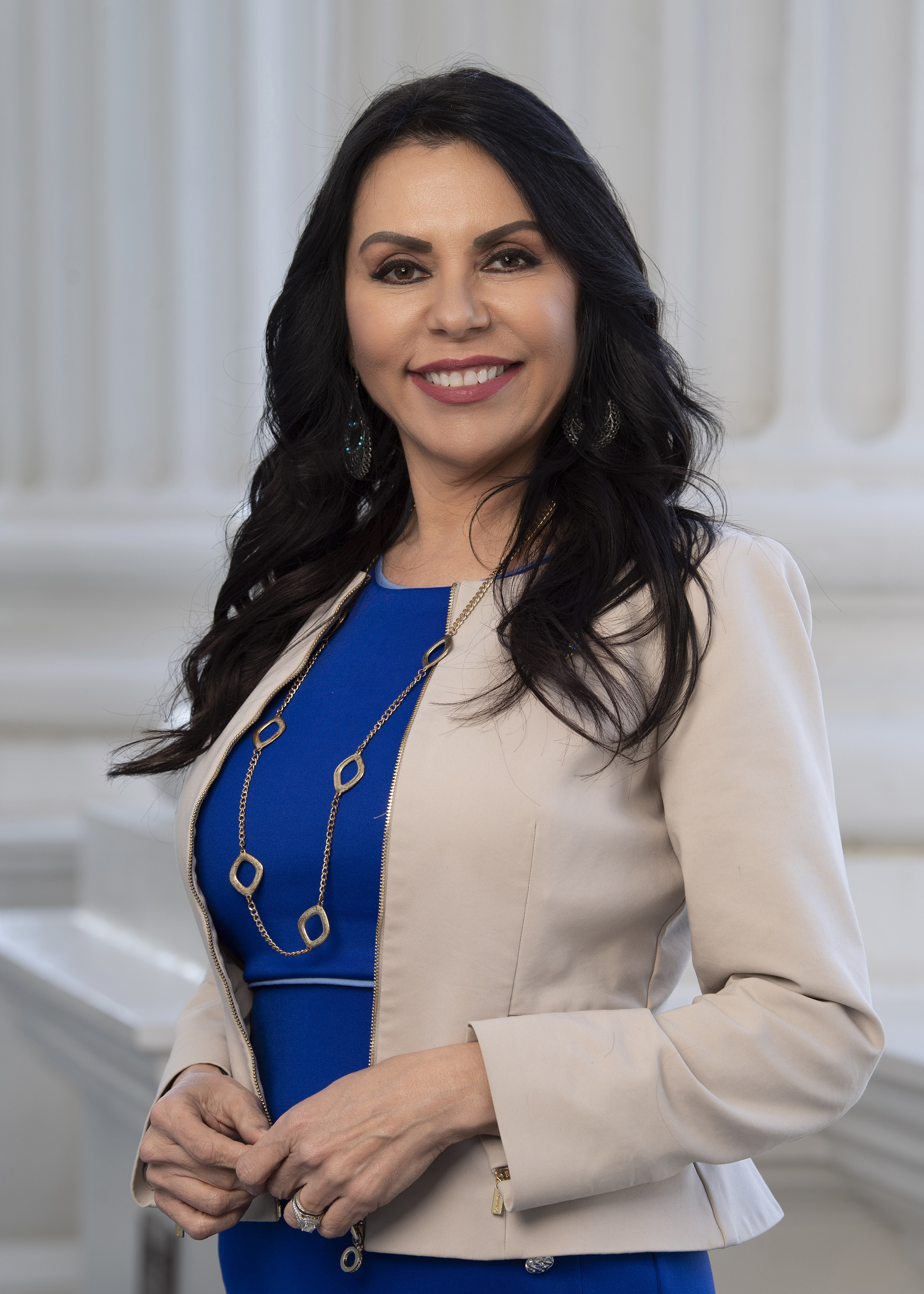
Asm. Blanca Rubio
Total votes
20,908
all sessions
Attendance
93%
1,294 missed
Near the chamber average
With party
99%
of cast votes
Near the chamber average
Bipartisan score
0%
crosses aisle rarely
Near the chamber average
Sponsored
1,471
bills & resolutions
Near the chamber average
Committees
7
assignments
1,471 bills and resolutions
Sponsored bills
Total
1,471
Primary
119
Co-sponsor
1,352
This page
1,471
matching current filters
Passed Mar 21, 2022
1 co-sponsor
Passed Mar 17, 2022
1 co-sponsor
Passed Mar 14, 2022
1 co-sponsor
Relative to Eating Disorders Awareness Week.
This resolution would designate the week beginning on February 21, 2022, as Eating Disorders Awareness Week.
Signed into law Mar 11, 2022
1 co-sponsor
Relative to Reverend Dr. Martin Luther King, Jr.
This measure would, among other things, honor the late civil rights pioneer and icon Reverend Dr. Martin Luther King, Jr. and commemorate Dr. Martin Luther King, Jr. Day.
Signed into law Mar 11, 2022
1 co-sponsor
Relative to Rose Ann Vuich Recognition Day.
This measure would proclaim January 27, 2022, as Rose Ann Vuich Recognition Day, in recognition of Senator Rose Ann Vuich as the first woman elected to the California State Senate, to honor Senator Vuich's service to the Senate, and to appropriately reflect the Senator's stature and legacy.
Signed into law Mar 11, 2022
1 co-sponsor
Relative to Teen Dating Violence Awareness and Prevention Month.
This measure would proclaim the month of February 2022 as Teen Dating Violence Awareness and Prevention Month, and would call upon the people of California to observe the month with programs and activities that raise awareness about the dynamics of teen dating violence and that support youth in learning the skills to have safe and healthy relationships.
Signed into law Mar 11, 2022
1 co-sponsor
Domestic violence: probation: sobriety-monitoring programs.
Existing law requires the court to impose specified conditions of probation for defendants convicted of domestic violence, including referral to a batterer's program in which participation in substance abuse counseling is a standard component for defendants who are chronic users or serious abusers of drugs and alcohol. If probation is granted in domestic violence cases, existing law authorizes the probation department or the court to make provisions for a defendant to receive alcohol and drug services using the defendant's own resources. This bill would require the court to order a person who is convicted of, and placed on probation for, a domestic violence offense to participate in a sobriety-monitoring program, as defined, as a term of probation if the offense was committed while the defendant was under the influence of drugs or alcohol, unless the court determines that the interests of justice would not be served by having the defendant participate in the program.
In committee Mar 10, 2022
0 co-sponsors
Tolls: exemption for privately owned emergency ambulances.
Existing law provides for the exemption of authorized emergency vehicles, as defined, from the payment of a toll or charge on a vehicular crossing, toll highway, or high-occupancy toll (HOT) lane and any related fines, when the authorized emergency vehicle is being driven under specified conditions, including, among others, the vehicle is displaying public agency identification and driven while responding to or returning from an urgent or emergency call. Existing law provides procedures for an operator of a toll facility and a public agency to resolve certain disputes relating to the nonpayment of tolls. Existing law allows for agreements between the owner or operator of a toll facility and a local emergency service provider that establish terms for the use of the toll facility by the emergency service provider. Existing law prohibits a person from operating a privately owned emergency ambulance unless licensed by the Department of the California Highway Patrol. This bill would generally modify the exemption to apply to the use of a toll facility, as defined, and would expand the exemption, dispute resolution procedures, and agreement provisions to include a privately owned emergency ambulance licensed by the Department of the California Highway Patrol. The bill would also make technical changes to these provisions.
In committee Mar 10, 2022
0 co-sponsors
Ask Maddy
·
AI policy assistant
Ask Maddy about Blanca Rubio
Scope: california
Hi! I can help you understand Blanca Rubio's legislative record. What would you like to know?
Try one of these
i
Maddy answers using official bill text and legislative records. Always verify before sharing.
Sources cited inline