

Existing law establishes the Department of Health Care Access and Information in the California Health and Human Services Agency. Existing law requires an organization that operates, conducts, owns, or maintains a health facility, each hospital, and each general acute care hospital and freestanding ambulatory surgery clinic to make and file with the office certain information regarding patients that is recorded on a Hospital Discharge Abstract Data Record, an Emergency Care Data Record, and an Ambulatory Surgery Data Record, respectively, as described. The information includes, among other things, the date of birth, race, date of services, and principal diagnosis of the patient. Existing law requires the department to disclose this information to certain entities, including, among others, any California hospital and tribal epidemiology centers, except as specified. Existing law prohibits those entities from disclosing that information except in response to a court order, search warrant, or subpoena, or as otherwise required or permitted by specified federal law. Existing law also requires the State Department of Public Health to establish a list of reportable communicable and noncommunicable diseases and conditions and specify the timeliness requirements related to the reporting of each disease and condition. Existing law also requires the State Department of Public Health to collect data on coccidioidomycosis cases from the California Reportable Disease Information Exchange (CalREDIE) system and any other electronic data system used by a local health department. This bill would require the State Department of Public Health to enter into a data sharing agreement with the California Tribal Epidemiology Center (CTEC) with access to the CalREDIE and the California Immunization Registry systems no later than January 1, 2023, and would prohibit the CTEC from disclosing the information, as described above.
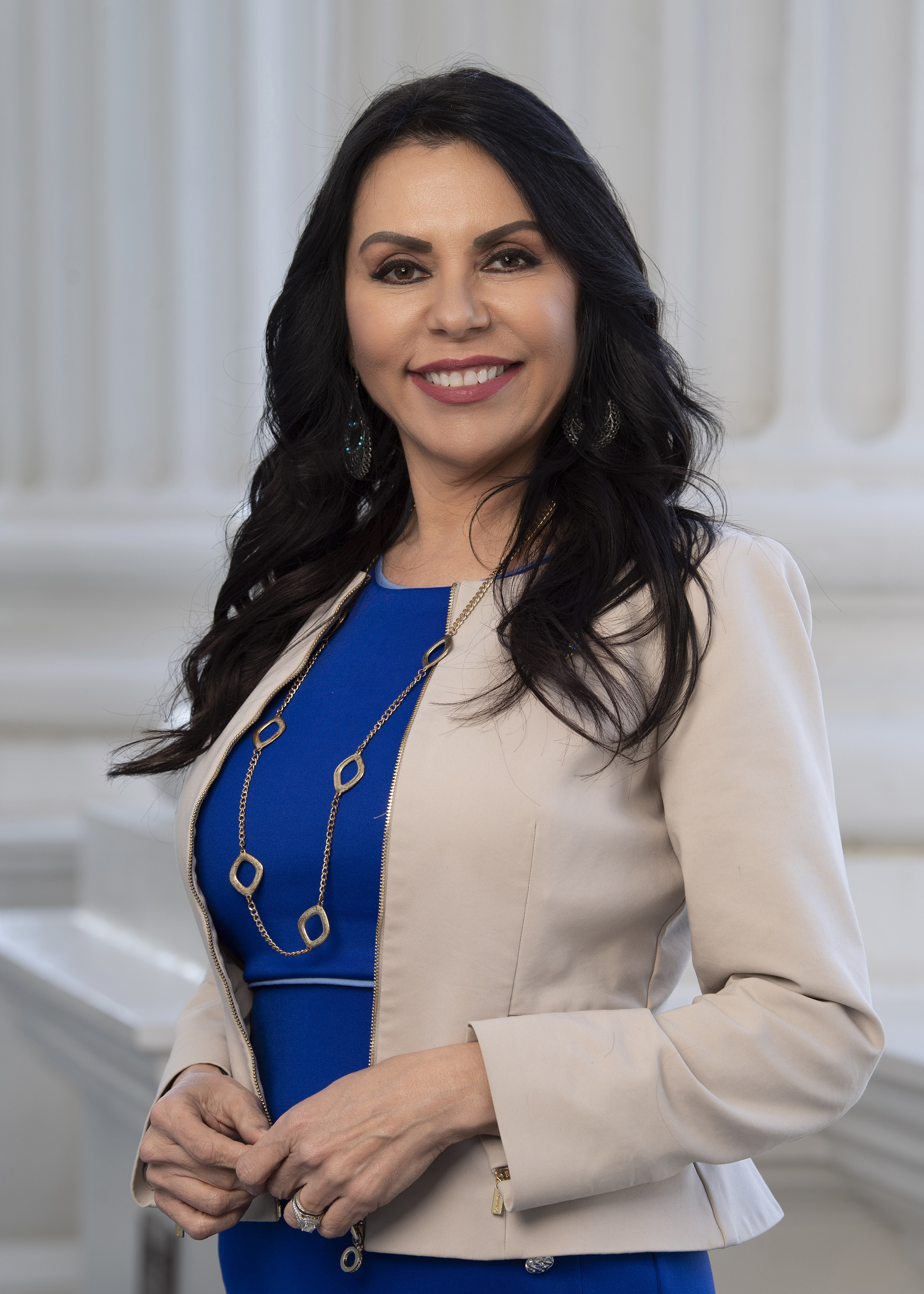
Asm. Blanca Rubio
Sponsored bills
Existing law establishes the Medi-Cal program, which is administered by the State Department of Health Care Services and under which qualified low-income individuals receive health care services. The Medi-Cal program is, in part, governed and funded by federal Medicaid program provisions. Under existing law, beginning no earlier than January 1, 2025, a child under 5 years of age is continuously eligible for Medi-Cal, including without regard to income, until the child reaches 5 years of age, subject to specified circumstances. Existing law makes this provision contingent on obtaining all necessary federal approvals, an appropriation, and a determination by the department that systems have been programmed to implement certain provisions. Existing law establishes the County Health Initiative Matching Fund, administered by the department, through which an applicant county, county agency, a local initiative, or a county organized health system that provides an intergovernmental transfer, as specified, is authorized to submit a proposal to the department for funding for the purpose of providing comprehensive health insurance coverage to certain children. For purposes of eligibility, existing law requires the child to meet specified citizenship and immigration status requirements, that their family income be at or below 317% of the federal poverty level or, at the option of the applicant, at or below 411% of the federal poverty level, and that the child not qualify for Medi-Cal with no share of cost or for other certain Medi-Cal programs. This bill would require, beginning no earlier than January 1, 2025, that the application also specify that the applicant will provide continuous eligibility for a child under the program until the child is 5 years of age if the child is not determined to be eligible for Medi-Cal during that time, except as specified. The bill would condition implementation of this provision on receipt of any necessary federal approvals, an appropriation, and a determination by the department, as described above. The bill would also remove the above-described reference to citizenship and immigration status requirements. Because counties are required to make Medi-Cal eligibility determinations, and to the extent that this bill would expand Medi-Cal eligibility, the bill would impose a state-mandated local program. The California Constitution requires the state to reimburse local agencies and school districts for certain costs mandated by the state. Statutory provisions establish procedures for making that reimbursement. This bill would provide that, if the Commission on State Mandates determines that the bill contains costs mandated by the state, reimbursement for those costs shall be made pursuant to the statutory provisions noted above.
This measure would celebrate the history and culture of cruising and encourage local officials and law enforcement to work with local car clubs to conduct safe cruising events.
This measure would proclaim December 8, 2022, as Latina Equal Pay Day in California, in recognition of the need to eliminate the gender gap in earnings by women and to promote policies to ensure equal pay for all.
This measure would urge the President and the Congress of the United States to amend specified provisions of the federal Social Security Act to allow recipients of disabled adult child benefits under the act to continue to receive those benefits upon marriage.
This measure, among other things, would declare the last week of September 2022, and each year thereafter, as Sacramento-San Joaquin Delta Week, with the purpose of expanding the acknowledgment of the Sacramento-San Joaquin Delta region's contributions to a higher quality of life for all Californians.
This measure would designate a specified portion of State Route 710 in the City of Long Beach as the Long Beach International Gateway Bridge. The measure would request the Department of Transportation to determine the cost for appropriate signs showing this special designation and, upon receiving donations from nonstate sources covering that cost, to erect those signs.
This measure would recognize October 12, 2021, as the 20th anniversary of the enactment of the exemption from nonresident tuition for qualified students during the 2001–02 Regular Session. The measure would also call on the United States Congress to pass the American Families Plan and provide financial resources for undocumented students through the budget reconciliation process, and to adopt comprehensive immigration reform.
This measure would affirm the Legislature's support for expanding Social Security and requests California Representatives in Congress to support expanding Social Security by voting in favor of the Social Security 2100 Act: A Sacred Trust.