

Existing law establishes the California Department of Aging within the California Health and Human Services Agency. Existing law authorizes the department to make specified funds available for nutrition projects serving the needs of individuals 60 years of age or over and their spouses, as specified. Existing law, the McCarthy-Kennick Nutrition Program for the Elderly Act of 1972, among other things, establishes the Nutrition Reserve Fund for the purpose of maintaining existing nutrition services and lending moneys to senior nutrition projects, as specified. Existing law requires the California Commission on Aging, with the approval of the Secretary of the California Health and Human Services Agency, to develop and submit to the federal government a state plan for implementing the federal Older Americans Act of 1965, as amended, by May 1 of each year. Existing law requires the state plan to include the establishment of projects that provide at least one hot meal per day for 5 or more days per week, as specified. This bill would instead require that the projects provide those meals either served hot or made available for to-go pickup for reheating at home by eligible individuals.
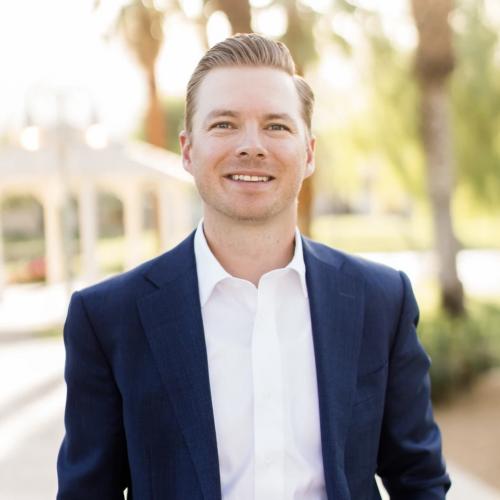
Asm. Greg Wallis
Sponsored bills
Existing law regulates public utilities, including electrical and gas corporations. The Public Advocate's Office of the Public Utilities Commission is established as an independent office within the Public Utilities Commission to represent and advocate on behalf of the interests of public utility customers and subscribers within the jurisdiction of the commission. This bill would request the office to establish, by January 1, 2026, a program to, upon request of the Legislature, analyze legislation that would establish a mandated requirement or program or otherwise affect electrical or gas ratepayers, as specified. The bill would request the office to develop and implement conflict-of-interest provisions that would prohibit a person from participating in an analysis for which the person knows or has reasons to know that the person has a financial interest. The bill would require the commission, on June 15 of each year, to assess an annual fee on all large electrical and gas corporations, as defined, to fund the projected costs incurred by the office in implementing the bill, not to exceed $2,000,000 annually, divided evenly among each large electrical and gas corporation, as specified, for deposit into the Energy Programs Benefit Fund, which would be established by the bill. The bill would continuously appropriate the moneys in the fund to the office to support the work of the office in providing analyses under the bill. The bill would repeal these provisions on January 1, 2030. This bill would include a change in state statute that would result in a taxpayer paying a higher tax within the meaning of Section 3 of Article XIIIA of the California Constitution, and thus would require for passage the approval of 23 of the membership of each house of the Legislature.
The California Environmental Quality Act (CEQA) requires a lead agency, as defined, to prepare, or cause to be prepared, and certify the completion of an environmental impact report on a project that it proposes to carry out or approve that may have a significant effect on the environment or to adopt a negative declaration if it finds that the project will not have that effect. The CEQA also requires a lead agency to prepare a mitigated negative declaration for a project that may have a significant effect on the environment if revisions in the project would avoid or mitigate that effect and there is no substantial evidence that the project, as revised, would have a significant effect on the environment. The CEQA exempts certain projects from its requirements, including actions necessary to prevent or mitigate an emergency. Existing law prohibits an electrical corporation from beginning the construction of a line, plant, or system, or extensions of those facilities without first having to obtain from the Public Utilities Commission a certificate that the present or future convenience and necessity require or will require the construction. Existing law specifies that the certificate is not required for the extension, expansion, upgrade, or other modification of existing electrical transmission facilities. This bill would, for electrical infrastructure projects, as defined, designate the commission as the lead agency for purposes of the CEQA, would require the commission to prescribe procedures for the preparation of the appropriate environmental review document for those projects, and would specify the manner in which the environmental review for those projects is to be conducted. The bill would repeal these provisions on January 1, 2035.
Existing law establishes a prima facie speed limit of 25 miles per hour when approaching or passing a school building or grounds contiguous to a highway or when the school grounds are not separated from the highway, as specified. Existing law authorizes a local authority, by ordinance or resolution, to reduce the prima facie speed limit based on an engineering and traffic survey, as specified. This bill would, until January 1, 2028, instead establish a prima facie speed limit of 25 miles per hour in a school zone, as defined, subject to specified conditions, including, among others, when a school speed limit sign states "when children are present" and children are present, as defined, and when a school speed limit sign states specific hours, as specified. The bill would, notwithstanding the above provision and until January 1, 2028, authorize a local authority, by ordinance or resolution, to determine and declare a prima facie speed limit of 20 miles per hour in a school zone. The bill would, beginning on January 1, 2028, establish a prima facie speed limit of 20 miles per hour in a school zone, subject to conditions similar to those described above. By establishing new prima facie speed limits in school zones that would require changes to local speed limit signs, this bill would impose a state-mandated local program. Existing law authorizes a local authority, by ordinance or resolution, to modify the prima facie speed limit based on distance from a school if the highways have a maximum of 2 traffic lanes and a maximum posted prima facie speed limit of 30 miles per hour immediately before and after the school zone, as specified. The bill would instead authorize a local authority, by ordinance or resolution, to determine and declare a prima facie speed limit of 15 miles per hour in a residence district on a highway with a posted speed limit of 30 miles per hour or slower in a school zone, or 25 miles per hour when approaching from a school zone at a distance of 500 to 1,000 feet, without the above-mentioned conditions, as specified. The bill would, for purposes of the above provisions, define "school zone" as an area of a highway within 500 feet of school grounds in any direction, unless otherwise posted, marked with appropriate signs giving notice of the area. Existing law defines a "speed trap," under certain circumstances, to mean, among other things, a particular section of a highway or state highway with a prima facie speed limit that is provided by law, as specified, if that prima facie speed limit is not justified by an engineering and traffic survey conducted within a certain specified time period, and enforcement of the speed limit involves the use of radar or another specified electronic device. Existing law exempts application of that definition to a local street, road, or school zone, senior zone, business activity district, or speed limit adopted by a local authority under certain conditions. This bill would change the definition of school zone for purposes of these provisions to conform with the definition of school zone described above. The California Constitution requires the state to reimburse local agencies and school districts for certain costs mandated by the state. Statutory provisions establish procedures for making that reimbursement. This bill would provide that, if the Commission on State Mandates determines that the bill contains costs mandated by the state, reimbursement for those costs shall be made pursuant to the statutory provisions noted above.
Maddy summaryThis California House Resolution condemns the July 13, 2024, assassination attempt on former President Donald J. Trump and calls for an end to political violence. The measure highlights the event where Trump was wounded while speaking at a rally in Butler, Pennsylvania, and notes that one attendee died and others were injured while trying to protect him. It urges the state to foster a political environment based on respectful discourse and nonviolence. The resolution is a formal statement of the Assembly's stance and does not create new laws or change existing policies.
This measure would recognize the importance of California Native American Day, celebrated this year on September 27, 2024, and the annual California Indian Cultural Awareness Conference, to the enhancement of awareness of California Indian culture.
Maddy summaryThis bill establishes Filipino American History Month to recognize the long-standing contributions of Filipinos to California and the United States. It directly affects state officials and the public by designating a specific month for commemoration and education. The resolution highlights historical milestones, including early Spanish-era interactions, the development of Filipino communities in cities like Stockton and San Francisco, and the significant roles Filipinos played in agriculture, shipbuilding, and military service during World War II. By formally acknowledging these events, the bill aims to promote awareness of Filipino American heritage within the state.
Maddy summaryThis bill designates November 22, 2024, as Kimchee Day in California to honor the traditional Korean dish and its cultural significance. It acknowledges the long history of kimchee, the contributions of Korean Americans, and the dish's recognized health benefits and growing popularity in the United States. The resolution directs the Assembly's Chief Clerk to send copies of the document to the author for distribution.
Maddy summaryThis bill is a House Resolution that formally recognizes Diwali as a significant cultural and religious holiday for Indian Americans and South Asian Americans in California. It acknowledges the festival's importance to Hindus, Sikhs, Buddhists, and Jains by highlighting its historical roots and the specific meanings it holds for each group. The resolution expresses the Assembly's respect for these communities and encourages Californians to participate in the celebration of lights on November 1, 2024. As a commemorative measure, the bill does not alter laws or funding but serves to officially honor the occasion within the state legislature.
Maddy summaryThis bill designates the week of June 3, 2024, as Sacramento Valley Ecosystem Awareness Week to highlight the region's unique natural and agricultural resources. The measure acknowledges the area's importance for migratory birds, endangered fish species, and rice farming while promoting efforts to restore local ecosystems. It expresses legislative support for the Floodplain Forward Coalition, a group working to improve water management and environmental health in the valley. The resolution serves as a formal recognition of these ecological values rather than creating new laws or funding.