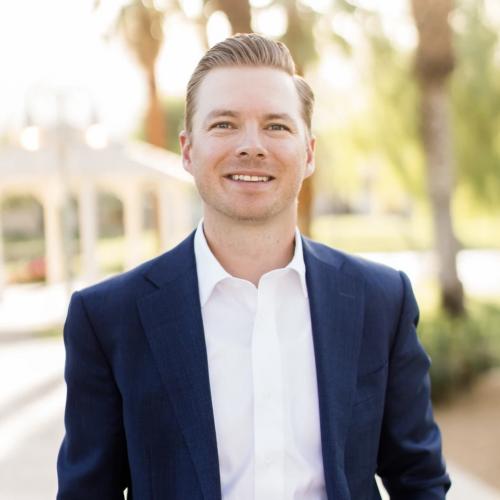
Photo of Greg Wallis
R California Assembly · District 47 On the 2026 ballot

Asm. Greg Wallis

Compare
Total votes
9,235
all sessions
Attendance
89%
894 missed
Lower than 85% of chamber peers
With party
95%
of cast votes
Near the chamber average
Bipartisan score
3%
crosses aisle rarely
Near the chamber average
Sponsored
870
bills & resolutions
Higher than 95% of chamber peers
Committees
11
assignments
870 bills and resolutions

Sponsored bills

Total
870
Primary
81
Co-sponsor
789
This page
870
matching current filters
Co-sponsor HR 67
Passed · California Assembly · Co-sponsor
Relative to All California Day.

Maddy summaryHR 67 designates November 9 as "All California Day" to celebrate California's shared history and cultural ties with Baja California and Baja California Sur. The resolution encourages community events and cultural celebrations across the state to honor this interconnected heritage, including contributions from Indigenous peoples and Mexican heritage communities. As a ceremonial resolution (not a binding law), it has no direct regulatory or financial impact on any specific group or policy. The measure was adopted by the California Assembly on September 4, 2025.

Passed Sep 4, 2025 1 co-sponsor
Co-sponsor HR 58
Passed · California Assembly · Co-sponsor
Relative to California Promotoras Month.

Maddy summaryThis House Resolution (HR 58) declares October 2025 as "California Promotoras Month" to formally recognize the work of promotoras - community health workers who serve as cultural brokers and connect underserved communities (particularly Latino populations) to essential services like health, housing, and disaster response. It acknowledges their role in improving community resilience and access to resources, while highlighting the need for better support, training, and equitable compensation for this workforce. The resolution is symbolic and does not create new laws, funding, or programs; it solely aims to raise awareness and honor promotoras' contributions through a designated month of recognition.

Passed Sep 4, 2025 1 co-sponsor
Co-sponsor HR 70
Passed · California Assembly · Co-sponsor
Relative to Direct Support Professional Recognition Week.

Maddy summaryThis is a symbolic resolution, not a substantive bill. It designates September 7-13, 2025, as "Direct Support Professional Recognition Week" in California. The resolution acknowledges direct support professionals who assist Californians with intellectual and developmental disabilities (IDD) through the state's Lanterman Act system, which serves over 450,000 residents. It formally recognizes their role in enabling community inclusion and independence but does not create new policies, funding, or legal obligations.

Passed Sep 4, 2025 1 co-sponsor
Co-sponsor HR 71
Passed · California Assembly · Co-sponsor
Relative to National Fried Rice Day.

Maddy summaryThis symbolic resolution recognizes September 20, 2025, as National Fried Rice Day in California, highlighting the dish's cultural significance to Asian American communities and its connection to California's rice-growing economy (noting the state's status as the second-largest rice producer). It has no legal effect or policy changes - it serves solely to celebrate culinary traditions and community diversity. The resolution was adopted by the California Assembly with no opposing votes.

Passed Sep 4, 2025 1 co-sponsor
Co-sponsor HR 65
Passed · California Assembly · Co-sponsor
Relative to Filipino American History Month.

Maddy summaryThis House Resolution designates a month as Filipino American History Month in California. It recognizes the historical contributions of Filipino Americans to the state, including early settlement (dating to 1587), agricultural labor, community building (such as "Little Manila" in Stockton), and military service during World War II. As a symbolic resolution, it does not create new laws, policies, or direct effects on any specific group.

Passed Sep 2, 2025 1 co-sponsor
Co-sponsor SB 70
Passed · California Senate · Co-sponsor
Public contracts: Small Business Procurement and Contract Act.

The Small Business Procurement and Contract Act permits a state agency or the California State University to award a contract for goods, services, or information technology with an estimated value between $5,000 and $250,000 to a certified small business, including a microbusiness and a disabled veteran business enterprise, without complying with specified competitive bidding requirements. This bill would increase the maximum estimated value of a contract for goods, services, or information technology awarded pursuant to the act from $250,000 to $350,000. Commencing January 1, 2028, and biennially thereafter, the bill would require the Director of General Services to conduct a review of that maximum value, and would authorize the director to adjust that value to reflect changes in the California Consumer Price Index.

Passed Aug 29, 2025 1 co-sponsor
Co-sponsor SB 74
Passed · California Senate · Co-sponsor
Office of Land Use and Climate Innovation: Infrastructure Gap-Fund Program.

Existing law establishes the Office of Land Use and Climate Innovation in the Governor's office for the purpose of serving the Governor and the Governor's cabinet as staff for long-range planning and research and constituting the comprehensive state planning agency. Existing law authorizes a local agency to finance infrastructure projects through various means, including by authorizing a city or county to establish an enhanced infrastructure financing district to finance public capital facilities or other specified projects of communitywide significance that provide significant benefits to the district or the surrounding community. This bill would require the office, upon appropriation by the Legislature, to establish the Infrastructure Gap-Fund Program to provide grants to local agencies for the development and construction of infrastructure projects, as defined, facing unforeseen costs after starting construction. The bill would authorize the office to provide funding for up to 20% of a project's additional projected cost, as defined, after the project has started construction, subject to specified conditions, including, among other things, that the local agency has allocated existing local tax revenue for at least 45% of the initially budgeted total cost of the infrastructure project. When applying to the program, the bill would require the local agency to demonstrate challenges with completing the project on time and on budget and how the infrastructure project helps meet state and local goals, as specified. The bill would require the office to develop guidelines to implement the program that establish the criteria by which grant applications will be evaluated and funded. The bill would make these provisions operative on January 1, 2030.

Passed Aug 29, 2025 1 co-sponsor
Co-sponsor SB 712
Passed · California Senate · Co-sponsor
Smog check: motor vehicles: exemption.

Existing law establishes a motor vehicle inspection and maintenance (smog check) program that is administered by the Department of Consumer Affairs. The smog check program requires inspection of motor vehicles upon initial registration, biennially upon renewal of registration, upon transfer of ownership, and in certain other circumstances. Existing law exempts specified vehicles from being inspected biennially upon renewal of registration, including, among others, all motor vehicles manufactured prior to the 1976 model year. Existing law also exempts from specified portions of the smog test, both biennially and at transfer, a collector motor vehicle that is insured as a collector motor vehicle, is at least 35 model years old, complies with the exhaust emissions standards for that motor vehicle's class and model year as prescribed by the department, and that passes a functional inspection of the fuel cap and a visual inspection for liquid fuel leaks. This bill would, commencing on January 1, 2027, additionally fully exempt from the smog check requirements, both biennially and at transfer, a motor vehicle that was manufactured prior to the 1981 model year, has been assigned a special identification plate indicating that it is a historical vehicle, and is insured as a collector motor vehicle, as specified. The bill, beginning January 1, 2028, would expand this exemption by one model year, every year, for 5 years. The bill would be known, and may be cited as, Leno's Law.

Passed Aug 29, 2025 1 co-sponsor
Co-sponsor AB 61
Passed · California Assembly · Co-sponsor
Electricity and natural gas: legislation imposing mandated programs and requirements: third-party review.

Existing law vests the Public Utilities Commission with regulatory authority over public utilities, including electrical corporations and gas corporations. The Public Advocate's Office of the Public Utilities Commission is established as an independent office within the commission to represent and advocate on behalf of the interests of public utility customers and subscribers within the jurisdiction of the commission. This bill would require the office to establish, by January 1, 2027, a program to, upon request of the Legislature, analyze legislation that would establish a mandated requirement or program or otherwise affect electrical or gas ratepayers, as specified. The bill would require the office to develop and implement conflict-of-interest provisions to prohibit a person from participating in an analysis for which the person knows or has reasons to know that the person has a material financial interest. The bill would repeal these provisions on January 1, 2032.

Passed Aug 29, 2025 1 co-sponsor
Co-sponsor AB 1227
Passed · California Assembly · Co-sponsor
Wildfire safety: fuels reduction projects.

Existing law, the California Emergency Services Act, authorizes the Governor to declare a state of emergency during conditions of disaster or extreme peril to persons or property. Existing law authorizes the Governor, during a state of emergency, to suspend any regulatory statute, or statute prescribing the procedure for conduct of state business, or the orders, rules, or regulations of any state agency, if the Governor determines and declares that strict compliance with any statute, order, rule, or regulation would in any way prevent, hinder, or delay the mitigation of the effects of the emergency. Under the authority of the California Emergency Services Act, on March 1, 2025, Governor Gavin Newsom issued a proclamation of a state of emergency that suspends applicable state statutes, rules, regulations, and requirements that fall within the jurisdiction of boards, departments, and offices within the California Environmental Protection Agency or the Natural Resources Agency to the extent necessary for expediting critical fuels reduction projects, as provided. The proclamation requires an individual or entity desiring to conduct a critical fuels reduction project to request the secretary of the appropriate agency to make a determination that the proposed project is eligible for the suspension and requires the California Environmental Protection Agency and the Natural Resources Agency to maintain on their respective internet website a list of all suspensions approved. This bill would, on or before January 31, 2026, require the California Environmental Protection Agency and the Natural Resources Agency to each report to the Legislature information on the implementation of the above-described proclamation of emergency, as provided. The California Environmental Quality Act (CEQA) requires a lead agency, as defined, to prepare, or cause to be prepared, and certify the completion of an environmental impact report on a project that it proposes to carry out or approve that may have a significant effect on the environment or to adopt a negative declaration if it finds that the project will not have that effect. CEQA also requires a lead agency to prepare a mitigated negative declaration for a project that may have a significant effect on the environment if revisions in the project would avoid or mitigate that effect and there is no substantial evidence that the project, as revised, would have a significant effect on the environment. CEQA exempts from its requirements certain projects. This bill would, until January 1, 2028, exempt from CEQA critical fuels reduction projects conducted in communities located in very high fire hazard severity zones, as provided. The bill would require the lead agency to hold a noticed public meeting to hear and respond to public comments before determining that a project is exempt and would require the lead agency to provide notice of the public meeting on its internet website at least 30 days before the public meeting. The bill would require the lead agency, if it determines that a project is not subject to CEQA and approves or carries out that project, to file a notice of exemption with the Office of Land Use and Climate Innovation and with the clerk of the county in which the project will be located. Because a lead agency would be required to determine whether a project qualifies for this exemption, the bill would impose a state-mandated local program. The California Constitution requires the state to reimburse local agencies and school districts for certain costs mandated by the state. Statutory provisions establish procedures for making that reimbursement. This bill would provide that no reimbursement is required by this act for a specified reason.


Passed Aug 29, 2025 1 co-sponsor
Showing 271 to 280 of 870 bills
Previous 1 27 28 29 87 Next