

Passed Feb 8, 2024
1 co-sponsor
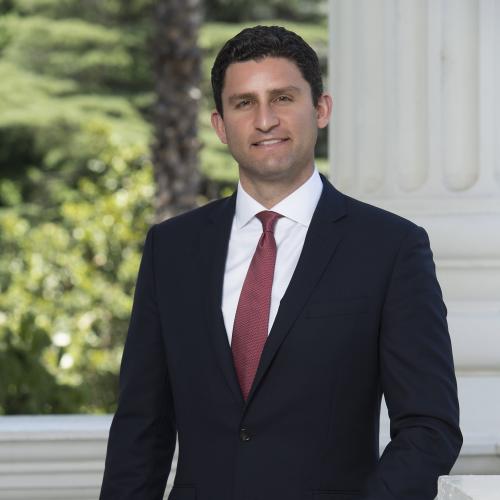
Asm. Jesse Gabriel
Total votes
20,973
all sessions
Attendance
94%
986 missed
Near the chamber average
With party
99%
of cast votes
Higher than 96% of chamber peers
Bipartisan score
0%
crosses aisle rarely
Lower than 98% of chamber peers
Sponsored
1,612
bills & resolutions
Near the chamber average
Committees
5
assignments
1,612 bills and resolutions
Sponsored bills
Total
1,612
Primary
259
Co-sponsor
1,353
This page
1,612
matching current filters
Corporations for the prevention of cruelty to animals: enforcement of laws.
Existing law authorizes the formation of nonprofit corporations under the Nonprofit Public Benefit Corporation Law by 20 or more persons for the prevention of cruelty to animals. Existing law authorizes a corporation, or human officer thereof, to proffer a complaint against any person, before any court or magistrate having jurisdiction, for the violation of any law relating to or affecting animals and to aid in the prosecution of the offender before a court or magistrate. This bill would authorize a corporation, or humane officer thereof, proffering a complaint under existing law to bring it as a civil action to obtain specific or injunctive relief to enforce laws relating to or affecting animals. This bill would also make legislative findings and declarations in support of its provisions.
died Feb 1, 2024
0 co-sponsors
Pupil health: mental health screenings.
Existing law requires the governing board of a school district to give diligent care to the health and physical development of pupils and authorizes the governing board of a school district to employ properly certified persons for this purpose. Existing law requires a school of a school district or county office of education and a charter school to notify pupils and parents or guardians of pupils no less than twice during the school year on how to initiate access to available pupil mental health services on campus or in the community, or both, as provided. This bill would require a school district, county office of education, state special school, or charter school that serves pupils in grades 6 to 12, inclusive, to, in consultation with school and community stakeholders, school-employed mental health professionals, and behavioral health experts, and before an unspecified school year, adopt a policy on universal mental health screening of pupils for youth behavioral disorders, as defined, in grades 6 to 12, inclusive, as provided. To the extent the bill would impose additional duties on local educational agencies, the bill would impose a state-mandated local program. The California Constitution requires the state to reimburse local agencies and school districts for certain costs mandated by the state. Statutory provisions establish procedures for making that reimbursement. This bill would provide that, if the Commission on State Mandates determines that the bill contains costs mandated by the state, reimbursement for those costs shall be made pursuant to the statutory provisions noted above.
Failed Feb 1, 2024
0 co-sponsors
Sentencing enhancements: property loss.
State law, repealed as of January 1, 2018, required a court to impose an additional term of imprisonment, as specified, on any person who takes, damages, or destroys any property in the commission or attempted commission of a felony, as specified. This bill would, until January 1, 2028, authorize the court, if a person takes, damages, or destroys property in the commission or attempted commission of a felony, with the intent to cause that taking, damage, or destruction, to impose an additional term of imprisonment of up to 2 years if the property loss exceeds $275,000, an additional term of imprisonment of up to 3 years if the property loss exceeds $1,750,000, or an additional term of imprisonment of up to 4 years if the property loss exceeds $4,400,000. Existing law provides for enhanced penalties against a person who commits 2 or more related felonies, a material element of which is fraud or embezzlement, that involve a pattern of related felony conduct, and the pattern of related felony conduct involves the taking or loss of more than $100,000. Existing law makes the additional punishment, if it involves the taking or loss of more than $500,000, a term of 2, 3, or 5 years in the state prison. Existing law, until January 1, 2018, due to an obsolete cross-reference to the repealed provisions described above, made the additional punishment, if it involves a taking or loss of more than $100,000 but less than $500,000, punishable by 2 years in the state prison if the loss was more than $200,000, and one year if the loss was less than that. This bill would remove that obsolete cross-reference and make that additional punishment equal to 2 years in the state prison. Because this bill would increase the penalty for existing felonies, it would impose a state-mandated local program. The California Constitution requires the state to reimburse local agencies and school districts for certain costs mandated by the state. Statutory provisions establish procedures for making that reimbursement. This bill would provide that no reimbursement is required by this act for a specified reason.
Failed Feb 1, 2024
0 co-sponsors
Department of General Services: drone cybersecurity.
Existing law requires the Department of General Services to perform a variety of duties in connection with the acquisition of goods and services by state agencies, and requires the department to issue rules and regulations in administering its duties. This bill would require the department, in consultation with the Chief of the Office of Information Security, to adopt rules and regulations, by January 1, 2025, to ensure that each unmanned aircraft and unmanned aircraft system used by a government entity, as defined, in part, to include local governmental entities, for any purpose meets appropriate safeguards to ensure the confidentiality, integrity, and availability of any data collected, transmitted, or stored by that unmanned aircraft or unmanned aircraft system, as specified; and to specify requirements for a comprehensive plan to be adopted by a government entity to discontinue the use of noncompliant aircraft and systems, as specified. This bill would, beginning on the date the department adopts the rules and regulations, authorize a government entity to use unmanned aircraft or unmanned aircraft systems it did not previously use only if that aircraft or system complies with those rules and regulations. The bill would, by July 1, 2025, require a government entity that uses a noncompliant aircraft or system to submit to the department a comprehensive plan for discontinuing its use, as specified. By January 1, 2026, the bill would, with certain exceptions, require any government entity to cease the use of unmanned aircraft or unmanned aircraft systems not in compliance with these regulations. The bill would require the regulations to apply to unmanned aircraft operated under contract between a government entity and a third party, as provided. By requiring these regulations to apply to local governmental agencies, this bill would establish a state-mandated local program. The bill would include findings that changes proposed by this bill address a matter of statewide concern rather than a municipal affair and, therefore, apply to all cities, including charter cities. The California Constitution requires the state to reimburse local agencies and school districts for certain costs mandated by the state. Statutory provisions establish procedures for making that reimbursement. This bill would provide that, if the Commission on State Mandates determines that the bill contains costs mandated by the state, reimbursement for those costs shall be made pursuant to the statutory provisions noted above.
died Feb 1, 2024
0 co-sponsors
Electric vehicle charging infrastructure: local publicly owned electric utilities.
Existing law vests the Public Utilities Commission (PUC) with regulatory jurisdiction over public utilities, including electrical corporations, while local publicly owned electric utilities are under the direction of their governing board. Under its existing regulatory authority, the PUC adopted a resolution establishing, for electrical corporations, an average service energization time for electric vehicle charging infrastructure of 125 business days, except as provided, and requiring electrical corporations to provide certain information to the PUC regarding service energization time for electric vehicle infrastructure projects. This bill would require each electrical corporation, consistent with the commission resolution, to achieve a 125-business-day average service energization target starting from when a customer submits an application for service to the energization of an electric vehicle charging infrastructure project, except as provided. The bill would establish, for local publicly owned electric utilities, an average service energization time for electric vehicle charging infrastructure of 125 business days, and would require local publicly owned electric utilities to annually report certain information to the State Energy Resources Conservation and Development Commission (Energy Commission) regarding the service energization time for electric vehicle charging infrastructure projects. The bill would require the PUC and the Energy Commission, in consultation with electrical corporations and local publicly owned electric utilities, to jointly host an annual public workshop to review and evaluate the information submitted by electrical corporations under the PUC's resolution and the information submitted by local publicly owned electric utilities, as required by the bill, and to revise, if needed, the average service energization time for electric vehicle charging infrastructure. Existing law establishes the Clean Transportation Program, which is administered by the Energy Commission, to provide competitive grants, revolving loans, loan guarantees, loans, or other appropriate funding measures to develop and deploy innovative technologies and alternative and renewable fuels in the marketplace. Existing law specifies that alternative and renewable fuel infrastructure, fueling stations, and equipment are eligible for funding under the program. This bill would require the Energy Commission, in providing financial assistance under the Clean Transportation Program or other programs for the installation of electric vehicle charging infrastructure, to give preference to projects that receive permits from a local jurisdiction that has established expedited electric vehicle charging permitting processes. By imposing additional duties on local publicly owned electric utilities, this bill would impose a state-mandated local program. The California Constitution requires the state to reimburse local agencies and school districts for certain costs mandated by the state. Statutory provisions establish procedures for making that reimbursement. This bill would provide that no reimbursement is required by this act for a specified reason.
Failed Feb 1, 2024
0 co-sponsors
Firearms: California Do Not Sell List.
Existing law makes possession of a firearm by certain classes of persons, including a convicted felon, a person convicted of specified misdemeanors, a person has been found mentally incompetent to stand trial, a person has been found not guilty of specified crimes by reason of insanity, or a person has been placed under conservatorship, a crime. Existing law additionally makes it a crime to sell or give possession of a firearm to these classes of persons prohibited from owning a firearm. Existing law requires the Department of Justice, upon submission of firearm purchaser information by a licensed firearm dealer, to examine its records to determine whether a potential firearm purchaser is prohibited by state of federal law from possessing, receiving, owning, or purchasing a firearm. Existing law requires the department to participate in the National Instant Criminal Background Check System. This bill would require the Department of Justice to develop and launch a secure Internet-based platform to allow a person who resides in California to voluntarily add their own name to the California Do Not Sell List. The bill would require the department to ensure that information on the list is uploaded and reflected in the National Instant Criminal Background Check System. The bill would make it a crime, punishable as a misdemeanor, to transfer a firearm to a person who is validly registered on the California Do Not Sell List. By creating a new crime, this bill would impose a state-mandated local program. This bill would allow a person, after a specified period of time, to request removal from the list. The bill would require the State Department of Public Health to create and distribute informational materials about the California Do Not Sell List to general acute care hospitals and acute psychiatric hospitals. The bill would specify that a person presenting in a general acute care hospital or acute psychiatric hospital who is at a substantially elevated risk of suicide should be presented with these informational materials. The bill would specify that any suicide hotline maintained or operated by an entity funded in whole or in part by the state should generally inform callers on how to access the California Do Not Sell List Internet-based platform. The bill would provide that its provisions are severable. The California Constitution requires the state to reimburse local agencies and school districts for certain costs mandated by the state. Statutory provisions establish procedures for making that reimbursement. This bill would provide that no reimbursement is required by this act for a specified reason.
Failed Feb 1, 2024
0 co-sponsors
Electric vehicle charging stations.
Existing law requires the State Energy Resources Conservation and Development Commission, working with specified state entities, to prepare a statewide assessment of the electric vehicle charging infrastructure needed to support the levels of electric vehicle adoption required to meet the goals of putting at least 5,000,000 zero-emission vehicles in service by 2030 and of reducing emissions of greenhouse gases to 40% below 1990 levels by 2030. This bill would require the commission to submit to the Legislature, no later than July 1, 2025, a report assessing the suitability of gasoline stations for conversion into electric vehicle charging stations and identifying potential financial incentives and regulatory barriers for gasoline stations to convert to electric vehicle charging stations.
Failed Feb 1, 2024
0 co-sponsors
Domestic violence protective orders: possession of a firearm.
(1) Existing law prohibits a person subject to a protective order, as defined, from owning, possessing, purchasing, or receiving a firearm or ammunition while that protective order is in effect. Existing law makes a violation of that prohibition with regard to purchasing or receiving a firearm or ammunition punishable by imprisonment in the county jail for up to one year, by imprisonment in the state prison for 16 months or 2 or 3 years, or by a fine not exceeding $1,000, or by both that imprisonment and fine. Existing law makes a violation of that prohibition with regard to owning or possessing a firearm or ammunition punishable by imprisonment in the county jail for up to one year, or by a fine not exceeding $1,000, or by both that imprisonment and fine. After notice and hearing, this bill would, for protective orders, as specified, issued on or after July 1, 2024, prohibit a person subject to the protective order from owning, possessing, purchasing, or receiving a firearm or ammunition within 3 years after the expiration of the order and make a violation of these provision a crime. The bill would require a court, if they find that the person willfully violated that prohibition within 3 years after the expiration of the order, to impose the maximum fine allowed under existing law. (2) Existing law allows a search warrant to be issued upon various grounds, including when the property or things to be seized include a firearm, if the prohibited firearm is possessed, owned, in the custody of, or controlled by a person against whom a specified protective order has been issued, and the person is served with the order and fails to relinquish the firearm as required by law. This bill would expand the grounds for the search warrant to include a person who is subject to any civil or criminal protective order that includes a prohibition on owning, possessing, or having custody or control of a firearm. (3) Existing law requires the Judicial Council to provide notice on all protective orders issued within the state and requires a restraining order requiring a person to relinquish a firearm or ammunition to state on its face that the respondent is prohibited from owning, possessing, purchasing, or receiving a firearm or ammunition while the protective order is in effect. This bill would require the Judicial Council to also include a statement in the notice that the firearm and ammunition prohibition extends for 3 years after the expiration of the protective order that is issued on or after July 1, 2024. The bill would require a restraining order to include a similar statement. By creating new crimes, this bill would create a state-mandated local program. The California Constitution requires the state to reimburse local agencies and school districts for certain costs mandated by the state. Statutory provisions establish procedures for making that reimbursement. This bill would provide that no reimbursement is required by this act for a specified reason.
Failed Feb 1, 2024
0 co-sponsors
Nurse-to-patient staffing ratios: annual report.
Existing law requires the State Department of Public Health to adopt regulations establishing minimum, specific, and numerical licensed nurse-to-patient ratios by licensed nurse classification and by hospital unit for all specified health facilities. Existing law requires that the ratios establish the minimum number of registered and licensed nurses to be allocated, and requires additional staff to be assigned in accordance with documented patient classification systems. This bill would require the department to conduct an annual review of its enforcement of the regulations and submit a report to the Legislature on an annual basis. The bill would require the review and report to include data regarding the number of reports received by the department of alleged violations of the applicable regulations, investigative steps taken in response to the reports, and the outcome of investigations, as well as a complete list of complaints specific to nurse ratio and staffing violations and whether they were found to be substantiated or unsubstantiated. The bill would require the department, at least every 2 years and in advance of submitting the first report, to hold a public hearing to receive input from direct care nurses and to invite input from other stakeholders. The bill would require the input from the hearing to be summarized and included in the following report. The bill would also require the report to include a plan to implement the suggestions from the hearing or an explanation of why the suggestions were rejected.
Vetoed Jan 29, 2024
0 co-sponsors
Ask Maddy
·
AI policy assistant
Ask Maddy about Jesse Gabriel
Scope: CA
Hi! I can help you understand Jesse Gabriel's legislative record. What would you like to know?
Try one of these
i
Maddy answers using official bill text and legislative records. Always verify before sharing.
Sources cited inline