

(1) Existing law authorizes a city, county, or city and county auditor or controller to maintain a whistleblower hotline to receive calls from persons who have information regarding fraud, waste, or abuse by local government employees, as specified. Existing law authorizes the auditor or controller to refer calls received on the whistleblower hotline to the appropriate government authority for review and possible investigation. During the initial review of a call, existing law requires the auditor, controller, or other appropriate governmental agency to hold in confidence information disclosed through the whistleblower hotline, as specified. Upon receiving specific information that an employee or local government has engaged in an improper government activity, existing law authorizes a city or county auditor or controller to conduct an investigative audit of the matter, as specified. Existing law requires the identity of the individual or individuals reporting the improper government activity and the subject employee or employees to be kept confidential, except as specified. Existing law defines "fraud, waste, or abuse" to mean any activity by a local agency or employee that is undertaken in the performance of the employee's official duties, as described, that is in violation of any local, state, or federal law or regulation relating to, among other things, corruption. This bill would also authorize a city, county, or city and county auditor or controller to maintain a whistleblower hotline to receive calls from persons who have information regarding improper governmental activity, and would recast information regarding fraud, waste, or abuse by local government employees as improper governmental activity. The bill would instead authorize a city or county auditor or controller, or auditor's or controller's designee, to conduct an investigative audit of the matter upon receiving specific information that an employee or local government has engaged in a fraud, waste, or abuse or improper governmental activity, as specified. The bill would also require the identity of the individual or individuals reporting the fraud, waste, or abuse and the subject employee or employees to be kept confidential, except as specified. The bill would expand the above-described duties and authorizations to the auditor's or controller's designee, as specified. The bill would revise the definition of "fraud, waste, or abuse" to also define "improper governmental activity," and expand the scope of those terms to include activity by a local agency, employee, or contractor or subcontractor. (2) Existing law, the California Whistleblower Protection Act, prohibits an employee from directly or indirectly using or attempting to use the official authority or influence of the employee to interfere with a person's rights to disclose improper activity. The act requires the California State Auditor to administer these provisions and to investigate and report on improper governmental activities. The act defines "improper governmental activity" to mean an activity by a state agency or by an employee that is, among other things, undertaken in the performance of the employee's duties and that meets specified criteria, including that it is in violation of any state or federal law or regulation, including, among other things, corruption. This bill would specify that the list of violations of any state or federal law or regulation within the definition of an "improper governmental activity" also includes the misuse of state expenditures, including allocations, loans, or grants. The act requires the California State Auditor to create the means for the submission of allegations of improper governmental activity by, among other things, electronic submission through an internet website portal, as specified, and requires the auditor to create an alternative system for submission to an independent investigator of allegations of improper governmental activity engaged or participated in by employees of the California State Auditor's Office, as specified. The act requires the independent investigator to conduct those investigations, as specified, and to, if the independent investigator determines it to be appropriate, report that information to the Attorney General, specified policy committees of the Senate and Assembly, and other authorities, as specified. This bill would require the independent investigator to, as described above, also report information to the Assembly and Senate budget committees and the Joint Committee on Legislative Audit. The act requires the California State Auditor to, after investigating an allegation and finding that a state agency or employee may have engaged or participated in an improper governmental activity, prepare an investigative report and send a copy of the report to, if appropriate, the Attorney General, specified policy committees of the Senate and Assembly, and other authorities, as specified. This bill would require the California State Auditor to, if appropriate, also send a copy of the report to the Assembly and Senate budget committees and the Joint Committee on Legislative Audit. Existing law authorizes a city, county, or city and county auditor or controller who is elected to office to maintain a whistleblower hotline to receive calls from persons who have information regarding specified conduct by local government employees, and requires a city, county, or city and county auditor or controller who is appointed by, or is an employee of, a legislative body or the government agency that is governed by the city, county, or city and county, to obtain approval of that legislative body or the government agency prior to establishing the whistleblower hotline. This bill would authorize a city, county, or city and county auditor or controller to identify a designee within the office responsible for the maintenance of the whistleblower hotline as described above. Existing constitutional provisions require that a statute that limits the right of access to the meetings of public bodies or the writings of public officials and agencies be adopted with findings demonstrating the interest protected by the limitation and the need for protecting that interest. This bill would make legislative findings to that effect.
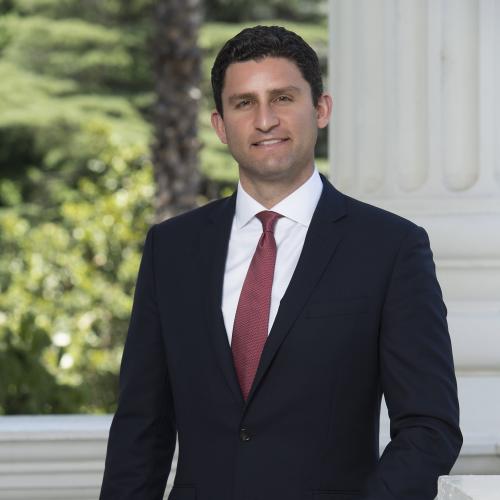
Asm. Jesse Gabriel
Sponsored bills
Under existing law, the State Department of Public Health adopted regulations that establish minimum, specific, and numerical licensed nurse-to-patient ratios by licensed nurse classification and by hospital unit within a general acute care hospital, among other health facilities. Existing regulations require licensed nurse-to-patient ratios to represent the maximum number of patients assigned to one licensed nurse at any one time, and define "assigned" to mean the licensed nurse has responsibility for the provision of care to a particular patient within their scope of practice. This bill would require the department, when transmitting to a general acute care hospital the action to be taken on a substantiated violation of the regulation establishing licensed nurse-to-patient ratios, to simultaneously transmit the same information to the person who filed the claim of the violation and their collective bargaining agent or representative, if any. The bill would further require the department, if the action to be taken does not include a fine, to simultaneously transmit a statement of the reasoning for not imposing a fine to the person who filed the claim of the violation and their collective bargaining agent or representative, if any. The bill would require the statement to discuss, among other things, the investigatory steps taken by the department to investigate the claim of the violation and any mitigating evidence relied upon by the department to justify the decision not to impose a fine.
Under existing law, the Department of Justice is responsible for carrying out several functions related to the sale, delivery, and transfer of firearms, including maintaining a centralized list of all persons licensed to sell firearms and inspecting firearms. The California Constitution establishes the Attorney General as the chief law officer of the state and makes it the duty of the Attorney General to see that the laws of the state are uniformly and adequately enforced. This bill would establish, within the Department of Justice, the Office of Gun Violence Prevention. The bill would require the office to advise the Attorney General on, among other things, gun violence prevention-related matters and the effectiveness of certain gun violence prevention laws and programs. The bill would require the office to consult with specified stakeholders and, on or before July 1, 2026, issue a public report on achieving sustained gun violence reduction, including addressing new legislation and improvements to statutory implementation. The bill would require the office to make its report publicly available and transmit copies to the public safety committees of both houses of the Legislature and the Governor's office, within 60 days of the report's completion.
Existing law defines a "hate crime" as a criminal act committed, in whole or in part, because of actual or perceived characteristics of the victim, including, among other things, race, religion, disability, and sexual orientation. Existing law requires the Commission on Peace Officer Standards and Training, in consultation with specified subject-matter experts, to develop a course of instruction that trains law enforcement on, among other things, indicators of hate crimes and techniques, responses to hate crime waves against certain groups, including Arab and Islamic communities, and methods to handle incidents of hate crimes in a noncombative manner. This bill would require instruction to include identifying when a gun violence restraining order is appropriate to prevent a hate crime and the procedure for seeking a gun violence restraining order. The bill would additionally require instruction on responses to hate crime waves against specified groups, including the LGBTQ and Jewish communities. Existing law allows a court to issue a gun violence restraining order prohibiting and enjoining a named person from having custody or control of any firearms or ammunition if the person poses a significant danger of causing personal injury to themselves or another by having custody or control of a firearm or ammunition. Existing law establishes a civil restraining order process to accomplish that purpose, including authorizing the issuance of an ex parte order, as specified. Existing law requires specified law enforcement agencies to develop, adopt, and implement policies and standards relating to gun violence restraining orders. Existing law requires these policies to include, among other things, standards and procedures for requesting and serving an ex parte gun violence restraining order or procedures on the responsibility of officers to attend gun violence restraining order hearings. This bill would revise the above-described policies and standards to include, among other things, an officer's obligation to diligently participate in the evidence presentation process at hearings and the procedure for storing firearms surrendered in compliance with a gun violence restraining order. The bill would require law enforcement agencies, as specified, to make information about the standards and policies available to all officers. By imposing additional duties on local agencies, this bill would create a state-mandated local program. The California Constitution requires the state to reimburse local agencies and school districts for certain costs mandated by the state. Statutory provisions establish procedures for making that reimbursement. This bill would provide that, if the Commission on State Mandates determines that the bill contains costs mandated by the state, reimbursement for those costs shall be made pursuant to the statutory provisions noted above.
Existing law requires every law enforcement agency to develop, adopt, and implement written policies and standards for officers' responses to domestic violence calls. Existing law requires each law enforcement agency to develop an incident report form that includes, among other things, a notation of whether the officer or officers who responded to the domestic violence call found it necessary, for the protection of the peace officer or other persons present, to inquire of the victim, the alleged abuser, or both, whether a firearm or other deadly weapon was present at the location, and, if there is an inquiry, whether that inquiry disclosed the presence of a firearm or other deadly weapon. This bill would additionally require a law enforcement agency to include in the incident report form a space for officers to document whether a firearm or deadly weapon was removed from the location of the domestic violence call. By increasing the reporting duties on local law enforcement agencies, this bill would create a state-mandated local program. The California Constitution requires the state to reimburse local agencies and school districts for certain costs mandated by the state. Statutory provisions establish procedures for making that reimbursement. This bill would provide that, if the Commission on State Mandates determines that the bill contains costs mandated by the state, reimbursement for those costs shall be made pursuant to the statutory provisions noted above.
Existing law requires the Governor to create an Interagency Council on Homelessness, consisting of specified members. Among other goals, existing law requires the council to coordinate existing funding and applications for competitive funding. Existing law requires the council to create a statewide data system, which is known as the Homeless Data Integration System, that collects local data through the Homeless Management Information System, with a goal of matching data on homelessness to programs impacting homeless recipients of state programs. Existing law also requires the council to collect, compile, and make available to the public financial data provided to the council from all state-funded homelessness programs. Existing law defines state programs as any programs a California state agency or department funds, implements, or administers for the purpose of providing housing or housing-based services to people experiencing homelessness or at risk of homelessness, except as specified. This bill would additionally require the council to include the Governor's Tribal Advisor. The bill would remove the above-mentioned reference to competitive funding and would instead require the council to coordinate applications for funding. The bill would require council staff to develop and regularly maintain a strategic funding guide and a calendar of new or existing funding opportunities. The bill would require agencies and departments administering state programs to provide the council updated information on new or existing funding opportunities on a quarterly basis. The bill would also require council staff to collect fiscal and outcome data, as defined, from state agencies and departments administering state homelessness programs with a grantee or entity that is required to enter data elements on the individuals and families it serves into its local Homeless Management Information System, as specified. The bill would require the state agencies and departments to submit the fiscal and outcome data to council staff on or before February 1, 2027, and annually thereafter. The bill would require council staff to make the data publicly available on or before June 1, 2027, and annually thereafter. This bill would incorporate additional changes to Section 8257 of the Welfare and Institutions Code proposed by SB 1443 to be operative only if this bill and SB 1443 are enacted and this bill is enacted last.
Existing law establishes the Department of Housing and Community Development and requires it to administer various programs intended to promote the development of housing, including the Multifamily Housing Program, pursuant to which the department provides financial assistance in the form of deferred payment loans to pay for the eligible costs of development of specified types of housing projects. Existing law sets forth various general powers of the department in implementing these programs, including authorizing the department to enter into long-term contracts or agreements of up to 30 years for the purpose of servicing loans or grants or enforcing regulatory agreements or other security documents. Existing law, the Administrative Procedure Act, sets forth procedures a state agency is required to follow when adopting, amending, or repealing any regulation, including providing public notice and time for public comment, with exceptions for emergency regulations in the case of a situation that calls for immediate action to avoid serious harm to the public peace, health, safety, or general welfare. This bill would authorize a borrower to use any funds approved, reserved, or allocated by the department following the effective date of specified guidelines and for purposes of providing a loan under specified multifamily housing programs, including the Multifamily Housing Program, or any additional multifamily housing lending program that the department elects, for construction financing, permanent financing, or a combination of construction financing and permanent financing, as provided. The bill would require the department, by July 1, 2026, to adopt guidelines as emergency regulations to, among other things, implement these provisions. The bill would also require the department, by January 1, 2027, to adopt guidelines, in accordance with the rulemaking provisions of the Administrative Procedure Act, to, among other things, implement these provisions. The bill would authorize the department to charge fees, including, but not limited to, application and monitoring fees, to cover the enhanced administrative costs under the bill's provisions. The bill would specify that these provisions do not limit the eligible uses of funds otherwise authorized under any program administered by the department. The bill would specify that the implementation of its provisions are contingent upon appropriation by the Legislature of sufficient funds for specified purposes.
Existing law provides that in the case of a theft of any article of historical, interpretive, scientific, cultural, or artistic significance, a cause of action is not deemed to have accrued until the discovery of the whereabouts of the article by the aggrieved party, the aggrieved party's agent, or a law enforcement agency. Existing law requires a civil action against a museum, gallery, auctioneer, or dealer for the recovery of works of fine art that were unlawfully taken or stolen, including a taking or theft by means of fraud or duress, to be commenced within 6 years of the actual discovery by the claimant or their agent of the identity and whereabouts of the work of fine art and information or facts that are sufficient to indicate that the claimant has a claim for a possessory interest in the work of fine art. Existing federal law, the Holocaust Expropriated Art Recovery Act of 2016, establishes a statute of limitation for claims to recover artwork and other property, as defined, stolen or misappropriated by the Nazis between 1933 and 1945. This bill would provide that California substantive law shall apply in actions to recover fine art or an item of historical, interpretive, scientific, or artistic significance, including those covered by the Holocaust Expropriated Art Recovery Act of 2016, brought by a California resident or their heirs, as specified. This bill would also permit a California resident or a representative of the estate of a California resident, as specified, to bring an action for damages or to recover artwork or personal property, as defined, that was stolen or otherwise lost as the result of political persecution. The bill would permit such actions to be brought within six years of the discovery of relevant facts, as provided. This bill would also permit those who discovered relevant facts prior to the effective date of this bill, to bring such actions within 6 years of the discovery of the relevant facts or within 2 years of the effective date of this bill, whichever is later. The bill would permit a cause of action previously dismissed on specified grounds to be brought again under these provisions within 2 years of either the effective date of the bill or the entry of final judgment and the termination of all appeals, whichever is later. This bill would declare that it is to take effect immediately as an urgency statute.
Maddy summaryAssembly Concurrent Resolution 120 designates January 2024 as Positive Parenting Awareness Month in California. This measure does not change laws or allocate funding but instead encourages state agencies, communities, and organizations to focus on the importance of positive parenting strategies. The resolution highlights how supportive family environments can improve children's health and well-being while acknowledging the diverse forms families take in the state. It serves as a formal acknowledgment of existing programs and resources rather than creating new mandates or policies.
Maddy summaryThis bill officially designates the week of January 26 through February 2, 2024, as CalEITC Awareness Week to highlight the California Earned Income Tax Credit program. The measure aims to increase public knowledge about this refundable tax credit, which assists low-income working families in meeting basic needs like housing, food, and health care. By drawing attention to the program, the resolution seeks to inform residents that the credit is available to many households, including those led by non-citizens and families with young children. The text includes findings on poverty levels and the economic benefits of the credit but does not change any laws or funding.