

Existing law requires every employer to provide a reasonable amount of break time to accommodate an employee desiring to express breast milk for the employee's infant child and requires an employer to make reasonable efforts to provide the employee with the use of a room or other location, other than a toilet stall, in close proximity to the employee's work area for the employee to express milk in private. Existing law makes a violation of these provisions subject to a civil penalty and makes the Labor Commissioner responsible for enforcement. This bill would instead require an employer to make reasonable efforts to provide an employee with use of a room or other location, other than a bathroom, for these purposes. The bill would deem an employer to be in compliance with the requirement of providing a lactation location if the employer makes available a temporary lactation location that meets specified conditions, including that the temporary lactation location be used only for lactation purposes while an employee expresses milk. The bill would deem an agricultural employer to be in compliance with the requirement of providing a lactation location if the agricultural employer provides an employee with a private, enclosed, and shaded space, as specified. If the employer can demonstrate to the Department of Industrial Relations that this requirement would impose an undue hardship, the bill would require that employer to make reasonable efforts to provide a room or location for expressing milk that is not a toilet stall.
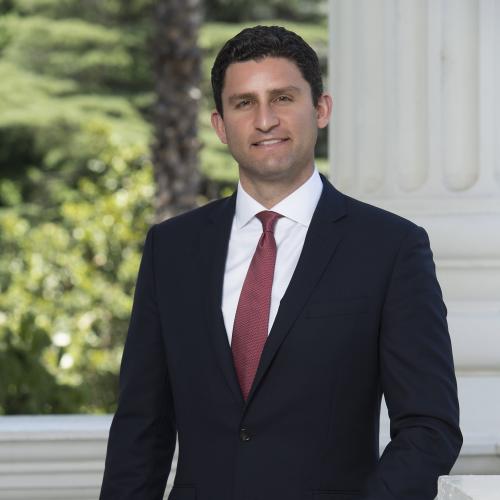
Rep. Jesse Gabriel
Sponsored bills
The California Fair Employment and Housing Act makes specified employment practices unlawful, including the harassment of an employee directly by the employer or indirectly by agents of the employer with the employer's knowledge. The act requires employers with 50 or more employees to provide at least 2 hours of prescribed training and education regarding sexual harassment, abusive conduct, and harassment based upon gender, as specified, to all supervisory employees within 6 months of their assumption of a supervisory position and once every 2 years, as specified. This bill would instead require an employer who employs 5 or more employees, including temporary or seasonal employees, to provide at least 2 hours of sexual harassment training to all supervisory employees and at least one hour of sexual harassment training to all nonsupervisory employees by January 1, 2020, and once every 2 years thereafter, as specified. The bill would require the Department of Fair Employment and Housing to develop or obtain 1-hour and 2-hour online training courses on the prevention of sexual harassment in the workplace, as specified, and to post the courses on the department's Internet Web site. The bill would also require the department to make existing informational posters and fact sheets, as well as the online training courses regarding sexual harassment prevention, available to employers and to members of the public in specified alternate languages on the department's Internet Web site.
Existing law requires employers to provide a reasonable amount of break time to employees desiring to express milk for the employee's infant child. Existing law also requires an employer to make reasonable efforts to provide the employee with the use of a room, or other location, other than a toilet stall, in close proximity to the employees' work area, for the employee to express milk in private. Existing law exempts an employer from the break time requirement if the employer's operations would be seriously disrupted by providing that time to employees desiring to express milk. Existing law subjects employers who violate these provisions to a civil penalty of $100 per violation and authorizes the Labor Commissioner to issue citations for those violations. Existing law prohibits an employer, who is required by law to give an employee a rest period during a workday, from requiring the employee to work during the rest period. Existing law requires an employer to pay the employee one additional hour of pay, at the employee's regular rate of compensation, for each rest period not provided. This bill would require an employer to provide a lactation room or location that includes prescribed features and would require an employer, among other things, to provide access to a sink and refrigerator in close proximity to the employee's workspace, as specified. The bill would require an employer to develop and implement a policy regarding lactation accommodation and make it available to employees, as specified. The bill would also require an employer to maintain records of requests for lactation accommodation for 3 years and to give the Labor Commission access to those records. The bill would provide that specified employers could seek an exemption from any of the requirements of these provisions if the employer could show that the requirement posed an undue hardship based on specified criteria. The bill would deem denial of reasonable break time or adequate space to express milk a failure to provide a rest period in accordance with state law. The bill would prohibit an employer from discharging, or in any other manner discriminating or retaliating against, an employee for exercising or attempting to exercise rights under these provisions and would establish specific additional remedies. The bill would require the Division of Labor Standards Enforcement to create a model lactation accommodation request form and to make it available for download from its Internet Web site by employees and employers. The bill would authorize the division to establish a model lactation accommodation policy and lactation accommodation best practices to provide guidance to employers.
The California Constitution grants the retirement board of a public employee retirement system plenary authority and fiduciary responsibility for investment of moneys and administration of the retirement fund and system. The California Constitution qualifies this grant of powers by reserving to the Legislature the authority to prohibit investments if it is in the public interest and the prohibition satisfies standards of fiduciary care and loyalty required of a retirement board. Existing law prohibits the boards of administration of the Public Employees' Retirement System and State Teachers' Retirement System from making investments in certain countries and in thermal coal companies, as specified, subject to the boards' plenary authority and fiduciary responsibility for investment of moneys and administration of the systems. This bill, upon the passage of a federal law that imposes sanctions on Turkey for failure to acknowledge the Armenian Genocide, would prohibit the boards of administration of the Public Employees' Retirement System and State Teachers' Retirement System from making additional or new investments, or renewing existing investments, of public employee retirement funds in an investment vehicle in Turkey that is issued by the government of Turkey or that is owned, controlled, or managed by the government of Turkey. The bill would require the boards to liquidate existing investments in Turkey in these types of investment vehicles within 6 months of the passage of a federal law imposing those sanctions on Turkey. The bill would require these boards, within one year of the passage of a federal law imposing those sanctions on Turkey, to make a specified report to the Legislature and the Governor regarding these actions. The bill would specify that its provisions do not require a board to take any action that the board determines in good faith is inconsistent with its constitutional fiduciary responsibilities to the retirement system. The bill would indemnify from the General Fund and hold harmless the present, former, and future board members, officers, and employees of, and investment managers under contract with, the boards, in connection with actions relating to these investments. The bill would repeal these provisions if a determination is made by the Department of State or the Congress of the United States, or another appropriate federal agency, that the government of Turkey has officially acknowledged its responsibility for the Armenian Genocide.
Existing law authorizes a court to grant pretrial diversion, for a period no longer than 2 years, to a defendant suffering from a mental disorder, on an accusatory pleading alleging the commission of a misdemeanor or felony offense, in order to allow the defendant to undergo mental health treatment. Existing law conditions eligibility on, among other criteria, a court finding that the defendant's mental disorder played a significant role in the commission of the charged offense. Existing law requires, if the defendant has performed satisfactorily in diversion, that the court dismiss the defendant's criminal charges, with a record filed with the Department of Justice indicating the disposition of the case diverted, that the arrest is deemed never to have occurred, and requires the court to order access to the record of the arrest restricted, except as specified. This bill would make defendants ineligible for the diversion program for certain offenses, including murder, voluntary manslaughter, and rape. The bill would authorize a court to require the defendant to make a prima facie showing that the defendant will meet the minimum requirements of eligibility for diversion and that the defendant and the offense are suitable for diversion, as specified. The bill would also require the court, upon request, to conduct a hearing to determine whether restitution is owed to any victim as a result of the diverted offense and, if owed, to order its payment during the period of diversion. The bill would provide that a defendant's inability to pay restitution due to indigence or mental disorder would not be grounds for denial of diversion or a finding that the defendant has failed to comply with the terms of diversion. The bill would also make technical changes.
(1) Existing law authorizes, during each school year, a person employed by a school district in a position requiring certification qualifications, and a person employed in an academic position by a community college district, to use his or her sick leave for purposes of parental leave for a period of up to 12 workweeks. Existing law requires, when a person employed in a position requiring certification qualifications in school districts that use a certain differential pay system or a person employed in an academic position in community college districts that use a certain differential pay system has exhausted all available sick leave and continues to be absent from his or her duties on account of parental leave, the amount deducted from the salary due to the employee for any of the remaining portion of the 12-workweek period in which the absence occurs to not exceed the sum that is actually paid, or that would have been paid, to a substitute employee or temporary employee employed to fill his or her position during his or her absence. Existing law additionally requires, when a person employed in a position requiring certification qualifications in school districts that use a certain other differential pay system or a person employed in an academic position in community college districts that use a certain other differential pay system has exhausted all available sick leave and continues to be absent from his or her duties on account of parental leave, that the person is compensated at no less than 50% of his or her regular salary for the remaining portion of the 12-workweek period of parental leave. This bill would instead require, regardless of the type of differential pay system used by the school district or community college district, a person employed in a position requiring certification qualifications and a person employed in an academic position to receive no less than 50% of his or her regular salary for the remaining portion of the 12-workweek period of parental leave. (2) Existing law authorizes, during each school year, a classified employee of a school district or community college district to use his or her sick leave for purposes of parental leave for a period of up to 12 workweeks. Existing law requires, when a classified employee of school districts and community college districts that use a certain differential pay system has exhausted all available sick leave and continues to be absent from his or her duties on account of parental leave, the amount deducted from the salary due to the classified employee for any of the remaining portion of the 12-workweek period in which the absence occurs to not exceed the sum that is actually paid to a substitute employee employed to fill his or her position during his or her absence. Existing law additionally requires, when a classified employee of school districts and community college districts that use a certain other differential pay system has exhausted all available sick leave and continues to be absent from his or her duties on account of parental leave, that the employee is compensated at no less than 50% of the employee's regular salary for the remaining portion of the 12-workweek period of parental leave. This bill would instead require, regardless of the type of differential pay system used by the school district or community college district, a classified employee to receive no less than 50% of his or her regular salary for the remaining portion of the 12-workweek period of parental leave.
Existing law prohibits manufacturers and contract testing facilities from using traditional animal testing methods within this state when an appropriate alternative test method has been scientifically validated and recommended by the Interagency Coordinating Committee on the Validation of Alternative Methods (ICCVAM) or other specified agencies. This bill would make it unlawful for a manufacturer to import for profit, sell, or offer for sale in this state, any cosmetic, as defined, if the cosmetic was developed or manufactured using an animal test that was conducted or contracted by the manufacturer, or any supplier of the manufacturer, on or after January 1, 2020, except as specified. The bill would specify that a violation of its provisions is punishable by an initial fine of $5,000 and an additional fine of $1,000 for each day the violation continues, and may be enforced by the district attorney or city attorney in the county or city in which the violation occurred, as specified. The bill would not apply to a cosmetic in its final form or to an ingredient, if the cosmetic or ingredient was sold in California or tested on animals before January 1, 2020, as specified. The bill would authorize cosmetic inventory in violation of the bill's provisions to be sold for a period of 180 days. The bill would prohibit a county or political subdivision of the state from establishing or continuing any prohibition on or relating to animal tests that is not identical to the prohibitions in the bill and that does not include the exemptions contained in the bill.
(1) Existing law prohibits a person from using or operating, or assisting in using or operating, a boat, aircraft, net, trap, line, or other appliance to take fish for commercial purposes unless the person holds a commercial fishing license issued by the Department of Fish and Wildlife. Existing law prohibits the taking of shark and swordfish for commercial purposes with drift gill nets except under a valid drift gill net shark and swordfish permit (DGN permit) issued to that person that has not been suspended or revoked and is issued to at least one person aboard the boat, except as provided. Existing law authorizes the Director of Fish and Wildlife to close the drift gill net shark and swordfish fishery if, after a public hearing, the director determines the action is necessary to protect the swordfish or thresher shark and mako shark resources and requires the director to reopen the fishery if he or she determines that the conditions that necessitated the closure no longer exist. Existing law authorizes a DGN permit to be transferred to another person under certain circumstances. Under existing law, a violation of these provisions is a crime. The California Ocean Protection Act creates the California Ocean Protection Trust Fund in the State Treasury and authorizes moneys deposited in the fund, upon appropriation by the Legislature, to be expended by the Ocean Protection Council for, among other things, grants or loans to public agencies, nonprofit corporations, or private entities for, or direct expenditures on, projects or activities that protect, conserve, and restore coastal waters and ocean ecosystems including through the acquisition from willing sellers of vessels, equipment, licenses, harvest rights, permits, and other rights and property, to reduce threats to ocean ecosystems and resources. This bill would require the department by March 31, 2020, to establish a voluntary permit transition program that includes specified conditions, including a condition that a permittee who voluntarily surrenders his or her DGN permit and shark or swordfish gill net or nets receive, to the extent that funds for the transition program are available, a specified payment, as prescribed. The bill would require the department to enter into an agreement with a fiscal agent, as defined, for the fiscal agent to receive state and nonstate funds for purposes of the transition program and, upon receipt of adequate funds, to make the payment to a participating permittee. If the department enters into an agreement with a fiscal agent that is a state entity, the bill would continuously appropriate any funds received from nonstate sources to that state entity for purposes of the transition program. The bill would require the Ocean Protection Council to use $1 million of an appropriation made to it in the Budget Act of 2018 for whale and sea turtle entanglement to fund the transition program. The bill would require the department to notify the Legislature within 10 days of the date that the fiscal agent receives $1 million from nonstate sources and secures $1 million through an agreement with the Ocean Protection Council. The bill would require a DGN permit issued pursuant to these provisions to be surrendered or revoked as of January 31 of the 4th year following the department's notification to the Legislature. Because a violation of this provision would be a crime, the bill would impose a state-mandated local program. The bill would, beginning March 31, 2019, prohibit the transfer of a DGN permit. The bill would provide that the provisions dealing with the drift gill net shark and swordfish fishery do not create or recognize a property right in fish expected to be caught using a DGN permit. (2) Existing law establishes a swordfish permit that authorizes a person holding that permit to take, possess aboard a boat, and land swordfish for commercial purposes using specified methods but not including use of a drift gill net. Existing law establishes a fee of $330 for a swordfish permit, as adjusted pursuant to the above-described index, but exempts the holder of a DGN permit from payment of that fee. This bill would also exempt any person who participates in the permit transition program established by the department from payment of the fee for a swordfish permit. (3) Existing law makes it unlawful to use fishing lines, including, but not limited to, troll lines and handlines more than 900 feet in length unless they are used as set lines, as specified. This bill would also exempt from this prohibition fishing lines more than 900 feet in length if they are used as part of deep-set buoy gear authorized under federal law. (4) The California Constitution requires the state to reimburse local agencies and school districts for certain costs mandated by the state. Statutory provisions establish procedures for making that reimbursement. This bill would provide that no reimbursement is required by this act for a specified reason.
Existing law authorizes the sheriff of a county or the chief or other head of a municipal police department of any city or city and county to issue a license to carry a concealed firearm to an applicant for that license if the applicant is of good moral character, good cause exists for issuance of the license, the applicant meets specified residency requirements, and the applicant has completed a specified course of training, acceptable to the licensing authority. Under existing law, the required course of training for an applicant must be no more than 16 hours and must cover firearm safety and laws regarding the permissible use of a firearm. This bill would require that the course of training be at least 8 but not be required to exceed 16 hours. The bill would require the course of training to include instruction on firearm handling and shooting technique and to also include a demonstration by the applicant of shooting proficiency and safe handling of each firearm the applicant will be licensed to carry and to include live-fire exercises conducted on a firing range. The bill would require a licensing authority to establish, and make available to the public, standards it uses when issuing licenses with regards to the live-fire shooting exercises it requires, as specified. By imposing additional requirements on local licensing authorities, this bill would create a state-mandated local program. The California Constitution requires the state to reimburse local agencies and school districts for certain costs mandated by the state. Statutory provisions establish procedures for making that reimbursement. This bill would provide that, if the Commission on State Mandates determines that the bill contains costs mandated by the state, reimbursement for those costs shall be made pursuant to the statutory provisions noted above.
Existing law prohibits the manufacture, importation, sale, transfer, or possession of any multiburst trigger activator. Existing law defines a multiburst trigger activator as either a device designed or redesigned to be attached to a semiautomatic firearm, which allows the firearm to discharge two or more shots in a burst by activating the device, or a manual or power-driven trigger activating device constructed and designed so that when attached to a semiautomatic firearm it increases the rate of fire of that firearm. This bill would include within that definition of "multiburst trigger activator" certain types of devices, including bump stocks and burst triggers.