

Existing law, the Donahoe Higher Education Act, designates the 3 segments of public postsecondary education in this state. These segments are the California State University, administered by the Trustees of the California State University, the University of California, administered by the Regents of the University of California, and the California Community Colleges, administered by the Board of Governors of the California Community Colleges. Existing law requires the trustees, authorizes the governing board of a community college district, and encourages the regents to designate as a "hunger free campus" each of their respective campuses that meets specified criteria, including the designation of an employee to help ensure that students have information relating to the CalFresh program. This bill would require each campus of the California State University and the California Community Colleges, and would request each campus of the University of California, to include on the internet website-based account for an enrolled student notification of, and a link to information on, specified public services and programs, including the CalFresh program, county or local housing resources, and county or local mental health services. The bill would authorize each of these institutions to use existing resources for these activities. By imposing additional duties on community college districts, this bill would impose a state-mandated local program. The California Constitution requires the state to reimburse local agencies and school districts for certain costs mandated by the state. Statutory provisions establish procedures for making that reimbursement. This bill would provide that, if the Commission on State Mandates determines that the bill contains costs mandated by the state, reimbursement for those costs shall be made pursuant to the statutory provisions noted above.
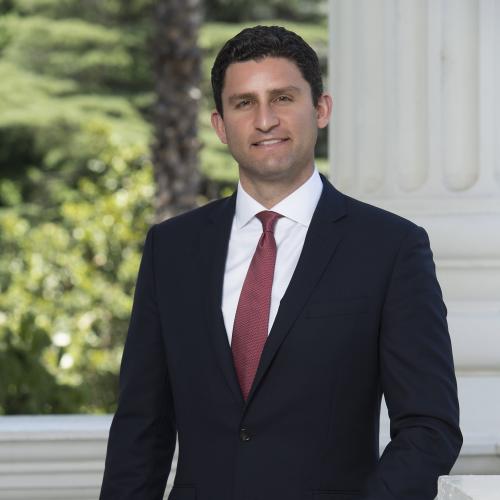
Asm. Jesse Gabriel
Sponsored bills
Under existing law, the Public Utilities Commission has regulatory authority over public utilities, including telephone corporations. Existing law, with specified exceptions, directs the commission to require any call identification service offered by a telephone corporation, or by any other person or corporation that makes use of the facilities of a telephone corporation, to allow the caller to withhold, on an individual basis, the display of the caller's telephone number from the telephone instrument of the individual receiving the call. However, existing law prohibits a caller from withholding the display of the caller's business telephone number when that number is being used for telemarketing purposes. Existing federal law, the Truth in Caller ID Act of 2009, with certain exceptions, makes it unlawful for any person within the United States, in connection with any telecommunications service or internet protocol enabled voice service, to cause any caller identification service to knowingly transmit misleading or inaccurate caller identification information with the intent to defraud, cause harm, or wrongfully obtain anything of value. This bill would prohibit a caller from entering, or causing to be entered, false government information into a caller identification system with the intent to mislead, cause harm, deceive, or defraud the recipient of the call. The bill would prohibit a person or entity from making a call knowing that false government information was entered into the caller identification system with the intent to mislead, cause harm, deceive, or defraud the recipient of the call. The bill would make the violation of these prohibitions subject to a civil penalty of up to $10,000 for each violation. The bill would authorize a city attorney, district attorney, or the Attorney General to bring an action to enforce the bill's prohibitions and, if in investigating a complaint over the unlawful use of an automatic dialing announcing device the commission determines that a violation of these prohibitions may have occurred, the bill would require the commission to give notice of the potential violation to the district attorney for the county in which the call was received and to the Attorney General. The bill would provide that its requirements and remedies are in addition to any other applicable law prohibiting the same or similar activity.
The California Constitution grants the retirement board of a public employee retirement system plenary authority and fiduciary responsibility for investment of moneys and administration of the retirement fund and system. The California Constitution qualifies this grant of powers by reserving to the Legislature the authority to prohibit investments if it is in the public interest and the prohibition satisfies standards of fiduciary care and loyalty required of a retirement board. Existing law prohibits the boards of administration of the Public Employees' Retirement System and the State Teachers' Retirement System from making investments in certain countries and in thermal coal companies, as specified, subject to the boards' plenary authority and fiduciary responsibility for investment of moneys and administration of the systems. This bill, upon the passage of a federal law that imposes sanctions on the government of Turkey for failure to officially acknowledge its responsibility for the Armenian Genocide, would prohibit the boards of administration of the Public Employees' Retirement System and the State Teachers' Retirement System from making additional or new investments, or renewing existing investments, of public employee retirement funds in an investment vehicle in the government of Turkey that is issued by the government of Turkey or that is owned by the government of Turkey. The bill would require the boards to liquidate existing investments in the government of Turkey within 18 months of the passage of the above-described federal law. The bill would require these boards to make specified reports to the Legislature and the Governor regarding these actions within one year of the passage of a federal law imposing those sanctions on the government of Turkey and on or before January 1, 2024. The bill would specify that its provisions do not require a board to take any action that the board determines in good faith is inconsistent with its constitutional fiduciary responsibilities to the retirement system. The bill would indemnify from the General Fund and hold harmless the present, former, and future board members, officers, and employees of, and investment managers under contract with, the boards, in connection with actions relating to these investments. The bill would repeal the above-described prohibited investment and reporting provisions on January 1, 2025, or if a determination is made by the board, the Department of State, the Congress of the United States, or another appropriate federal agency that the government of Turkey has officially acknowledged its responsibility for the Armenian Genocide, whichever occurs first.
Under existing law, a person injured in the course of employment is generally entitled to receive workers' compensation on account of that injury. Existing law provides that, in the case of certain state and local firefighting personnel and peace officers, the term "injury" includes various medical conditions that are developed or manifested during a period while the member is in the service of the department or unit, and establishes a disputable presumption in this regard. This bill would provide, only until January 1, 2025, that in the case of certain state and local firefighting personnel and peace officers, the term "injury" also includes post-traumatic stress that develops or manifests itself during a period in which the injured person is in the service of the department or unit. The bill would apply to injuries occurring on or after January 1, 2020. The bill would prohibit compensation from being paid for a claim of injury unless the member has performed services for the department or unit for at least 6 months, unless the injury is caused by a sudden and extraordinary employment condition.
The Political Reform Act of 1974 provides for the comprehensive regulation of campaign financing, including the use of campaign funds for specific expenditures. The act prohibits the use of campaign funds to pay for professional services not directly related to a political, legislative, or governmental purpose. This bill would authorize the use of campaign funds to pay for childcare expenses resulting from a candidate engaging in campaign activities, as specified. This bill would incorporate additional changes to Section 89513 of the Government Code proposed by SB 71 to be operative only if this bill and SB 71 are enacted and this bill is enacted last. The Political Reform Act of 1974, an initiative measure, provides that the Legislature may amend the act to further the act's purposes upon a 23 vote of each house of the Legislature and compliance with specified procedural requirements. This bill would declare that it furthers the purposes of the act.
This measure would condemn regulations recently adopted by the Department of Homeland Security to prescribe how a determination of inadmissibility for a person who is not a citizen or national is made based on the likelihood that the person will become a public charge. This measure would also urge the federal government to repeal the new regulations.
Existing law specifies various terms and conditions that apply to all persons who hire dwelling units located within this state, including tenants, lessees, boarders, lodgers, and others. Existing law defines a "dwelling unit" for these purposes as a structure or part of a structure that is used as a home, residence, or sleeping place by one person who maintains a household or by 2 or more persons who maintain a common household. This bill would authorize a tenant to temporarily permit the occupancy of their dwelling unit by a person who is at risk of homelessness, as defined, regardless of the terms of the lease or rental agreement, with the written approval of the owner or landlord of the property, and subject to extension under certain circumstances. The bill would authorize an owner or landlord to adjust the rent payable under the lease during the time the person who is at risk of homelessness is occupying the dwelling unit, as compensation for the occupancy of that person, and would require the terms regarding the rent payable in those circumstances to be agreed to in writing by the owner or landlord and the tenant. The bill would establish the rights and obligations of the person at risk of homelessness, the tenant, and the owner applicable under these circumstances. These conditions would include making the tenant liable for the actions of the person at risk of homelessness to the extent those actions are subject to the terms of the lease or property agreement and requiring a written agreement between the parties. The bill would require that the landlord give 7 days' notice to the tenant in order to evict a person at risk of homelessness from the unit, unless specified exceptions apply. The bill would also give the tenant an opportunity to cure any violations cited by the landlord for evicting the person at risk of homelessness. The bill would provide that occupancy by a person at risk of homelessness is not permissible if the addition of another person in the dwelling unit would violate the building's occupancy limits or other applicable building standards. The bill would not apply to any federally funded or assisted low-income housing. The bill would repeal these provisions on January 1, 2024.
This measure would proclaim October 2, 2019, as Energy Efficiency Day in California and would urge Californians to join in supporting California's climate and clean energy goals by continuing to support and increase energy efficiency efforts in the state now and in the future.
This measure would proclaim the month of September 2019 as Childhood Cancer Awareness Month in California and state the commitment of the Legislature to support efforts to find cures for, and achieve prevention of, childhood cancer.
This measure would state that the Legislature strongly and unequivocally supports the existing fuel economy and greenhouse gas emissions standards, the preservation of California's authority to enact stricter air pollution standards pursuant to its federal Clean Air Act waiver, and the enactment of a voluntary agreement between the State Air Resources Board and automobile manufacturers that preserves California's status as a leader in the fight for clean air; will consider any and all appropriate actions to maintain and enact vehicle emissions standards for the protection of public health, California residents, and the economy; supports any and all appropriate actions that enhance longstanding protections for the public's health, California residents, and the economy; and strongly urges the President and Vice President of the United States, the Secretary of the United States Department of Transportation, and the Administrator of the United States Environmental Protection Agency to reject the Safer Affordable Fuel-Efficient Vehicles Proposed Rule for Model Years 2021–2026.