

Passed Feb 4, 2021
1 co-sponsor
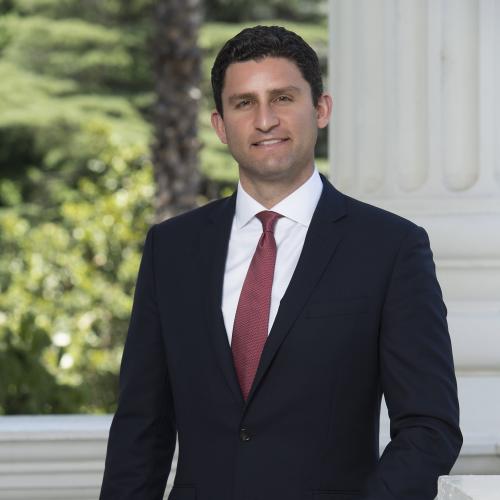
Asm. Jesse Gabriel
Total votes
20,973
all sessions
Attendance
94%
986 missed
Near the chamber average
With party
99%
of cast votes
Near the chamber average
Bipartisan score
0%
crosses aisle rarely
Near the chamber average
Sponsored
1,612
bills & resolutions
Higher than 98% of chamber peers
Committees
5
assignments
1,612 bills and resolutions
Sponsored bills
Total
1,612
Primary
259
Co-sponsor
1,353
This page
1,612
matching current filters
Passed Feb 4, 2021
1 co-sponsor
Passed Feb 4, 2021
1 co-sponsor
Passed Jan 25, 2021
1 co-sponsor
Peace officers: use of force.
Existing law authorizes a peace officer to make an arrest pursuant to a warrant or based upon probable cause, as specified. Under existing law, an arrest is made by the actual restraint of the person or by submission to the custody of the arresting officer. Existing law authorizes a peace officer to use reasonable force to effect the arrest, to prevent escape, or to overcome resistance. Existing law requires law enforcement agencies to maintain a policy on the use of force, as specified. Existing law requires the Commission on Peace Officer Standards and Training to implement courses of instruction for the regular and periodic training of law enforcement officers in the use of force. This bill would prohibit a law enforcement agency from authorizing the use of a carotid restraint or a choke hold, as defined. By requiring local agencies to amend use of force policies, this bill would impose a state-mandated local program. The California Constitution requires the state to reimburse local agencies and school districts for certain costs mandated by the state. Statutory provisions establish procedures for making that reimbursement. This bill would provide that, if the Commission on State Mandates determines that the bill contains costs mandated by the state, reimbursement for those costs shall be made pursuant to the statutory provisions noted above.
Signed into law Sep 30, 2020
1 co-sponsor
Police use of force.
Existing law requires law enforcement agencies to maintain a policy on the use of force, as specified. Existing law requires the Commission on Peace Officer Standards and Training to implement courses of instruction for the regular and periodic training of law enforcement officers in the use of force. Existing law requires law enforcement agencies to report to the Department of Justice, as specified, any incident in which a peace officer is involved in a shooting or use of force that results in death or serious bodily injury. This bill would create a division within the Department of Justice to, upon the request of a law enforcement agency, review the use-of-force policy of the agency and make recommendations, as specified. This bill would require a state prosecutor to investigate incidents of an officer-involved shooting resulting in the death of an unarmed civilian, as defined. The bill would make the Attorney General the state prosecutor unless otherwise specified or named. The bill would authorize the state prosecutor to prepare a written report, and would require the state prosecutor to post any reports made on a public internet website. The bill would require, commencing July 1, 2023, the Attorney General to operate a Police Practices Division within the department to review, upon the request of a local law enforcement agency, the use of deadly force policies of that law enforcement agency and make recommendations, as specified. The bill would require the department to implement these provisions subject to an appropriation for this purpose.
Signed into law Sep 30, 2020
1 co-sponsor
CalWORKs: postsecondary education.
Existing law establishes the California Work Opportunity and Responsibility to Kids (CalWORKs) program, under which each county provides cash assistance and other benefits to qualified low-income families using federal, state, and county funds. Existing law requires a recipient of CalWORKs to participate in welfare-to-work activities as a condition of eligibility. Existing law authorizes a student who, at the time they are required to participate in the program, is enrolled in any undergraduate degree or certificate program that leads to employment to continue in that program if they are making satisfactory progress in that program, the county determines that continuing in the program is likely to lead to self-supporting employment for that recipient, and the welfare-to-work plan reflects that determination. A person may meet their welfare-to-work requirements by taking part in a self-initiated education or training program, but if a recipient does not complete a specified number of hours of classroom, laboratory, or internship activities, the county human services agency is required to have the recipient participate in concurrent work activities, as specified. Existing law requires that necessary supportive services, including childcare and transportation costs, be available to every welfare-to-work participant in order to participate in the program activity to which they are assigned. This bill would require that specified CalWORKs eligible individuals participating in a full time or part time educational activity at a publicly funded postsecondary educational institution and making satisfactory progress, as specified, receive a standard payment of $175 to $500 per semester or quarter, which may be provided, in whole or in part, in the form of a book voucher, or reimbursement for verified actual expenses for the purpose of paying costs associated with attending the postsecondary educational institution. The bill would exempt an applicant or recipient who is enrolled in a specified educational plan or program and making satisfactory progress from participating in specified work activities, would revise applicable assessment requirements, and would entitle an applicant to the payment or reimbursement and other necessary supportive services. The bill would define "full time" and "making satisfactory progress" for purposes of these provisions. By imposing a higher level of service on county employees, the bill would impose a state-mandated local program. This bill would authorize the State Department of Social Services to implement these provisions by all-county letter or similar instruction until regulations are adopted and would require emergency regulations to be adopted by January 1, 2023. The bill would authorize the initial adoption and one readoption of emergency regulations and would require final regulations to be adopted on or before the expiration of the emergency regulations. The California Constitution requires the state to reimburse local agencies and school districts for certain costs mandated by the state. Statutory provisions establish procedures for making that reimbursement. This bill would provide that, if the Commission on State Mandates determines that the bill contains costs mandated by the state, reimbursement for those costs shall be made pursuant to the statutory provisions noted above. Existing law continuously appropriates moneys from the General Fund to defray a portion of county costs under the CalWORKs program. This bill would instead provide that the continuous appropriation would not be made for purposes of implementing the bill.
Signed into law Sep 30, 2020
1 co-sponsor
Postsecondary education: student financial aid: satisfactory academic progress.
(1) Existing law establishes the University of California, the California State University, the California Community Colleges, independent institutions of higher education, as defined, and private postsecondary educational institutions, as defined, as the segments of postsecondary education in this state. Existing law establishes the Student Aid Commission as the primary state agency for the administration of state-authorized student financial aid programs available to students attending all segments of postsecondary education. These student financial aid programs include the Cal Grant Program, the Chafee Educational and Training Vouchers Program, the Willie L. Brown, Jr. Community Service Scholarship Program, the California State Work-Study Program, the Middle Class Scholarship Program, and the California DREAM Loan Program, all of which require, for a student to qualify for aid, that the student make satisfactory academic progress as determined by the institution attended by the student. This bill would require that determinations of "satisfactory academic progress" by the institutions participating in these student aid programs consider homelessness, as specified, within the meaning of the federal McKinney-Vento Homeless Assistance Act as an extenuating circumstance for students who are otherwise unable to meet the requirements deemed to constitute "satisfactory academic progress" at the institutions, and that extenuating circumstance may be considered by the institutions to alter or excuse compliance with those progress requirements. (2) The California Community Colleges comprise 115 campuses throughout the state. The campuses of the California Community Colleges administer, among other programs, the Seymour-Campbell Student Success Act of 2012 and the Community Colleges Student Success Completion Grant program, both of which require, for a student to qualify for participation, that the student make satisfactory academic progress, as specified. This bill, with respect to the Seymour-Campbell Student Success Act of 2012, would require that the determination of satisfactory academic progress by the community college consider homelessness, as specified, within the meaning of the federal McKinney-Vento Homeless Assistance Act as an extenuating circumstance for students who are otherwise unable to meet the requirements deemed to constitute "satisfactory academic progress" at that community college, an extenuating circumstance that may be considered by the institution to alter or excuse compliance with those progress requirements. The bill, with respect to the Community Colleges Student Success Completion Grant Program, would require, to the extent consistent with applicable federal standards, that the criteria applied by the community college for determining satisfactory academic progress provide that homelessness, as specified, within the meaning of the federal McKinney-Vento Homeless Assistance Act is an extenuating circumstance for students who are otherwise unable to meet the requirements deemed to constitute "satisfactory academic progress" at that community college. The bill would authorize the community college, if allowed by federal standards, to consider that extenuating circumstance to alter or excuse compliance with those progress requirements. To the extent that the bill would impose new duties on community college districts, it would constitute a state-mandated local program. (3) The California Constitution requires the state to reimburse local agencies and school districts for certain costs mandated by the state. Statutory provisions establish procedures for making that reimbursement. This bill would provide that, if the Commission on State Mandates determines that the bill contains costs mandated by the state, reimbursement for those costs shall be made pursuant to the statutory provisions noted above.
Signed into law Sep 29, 2020
0 co-sponsors
Firearms: gun violence restraining orders.
Existing law allows a court to issue an order restraining an individual from possessing a firearm for the duration of the order. Existing law allows the court to issue a temporary emergency gun violence restraining order on an ex parte basis if the possession of a firearm by the subject of the petition poses an immediate and present danger. Existing law requires a law enforcement officer who requests a temporary emergency gun violence restraining order to take certain steps, including filing a copy of the order with the court as soon as practicable after issuance. This bill would instead require the law enforcement officer to file a copy of the order with the court as soon as practicable, but not later than 3 court days, after issuance. Under existing law, a person who owns or possesses a firearm or ammunition with the knowledge that they are prohibited from doing so by a gun violence restraining order is guilty of a misdemeanor and shall be prohibited from having custody or control of, owning, purchasing, possessing, or receiving, or attempting to purchase or receive, a firearm or ammunition for a 5-year period, commencing upon the expiration of the existing gun violence restraining order. This bill would specify that this offense also applies to persons who are subject to certain gun violence restraining orders, as described, issued by an out-of-state jurisdiction. This bill would state that its provisions are severable. By expanding the application of an existing crime, this bill would impose a state-mandated local program. The California Constitution requires the state to reimburse local agencies and school districts for certain costs mandated by the state. Statutory provisions establish procedures for making that reimbursement. This bill would provide that no reimbursement is required by this act for a specified reason.
Signed into law Sep 29, 2020
0 co-sponsors
Fire prevention: wildland-urban interface wildfire risk model: model use guidelines.
Existing law requires the Director of Forestry and Fire Protection to classify lands within state responsibility areas into fire hazard severity zones and, by regulation, to designate fire hazard severity zones and assign each zone a rating reflecting the degree of severity of fire hazard that is expected to prevail in the zone. This bill would require the Department of Forestry and Fire Protection, by July 1, 2022, to develop a wildland-urban interface wildfire risk model to determine the risk for a community or parcel in a local responsibility area or state responsibility area and guidelines for the proper use of the model, as provided. The bill would require the department to establish, and consult with, an advisory workgroup, with specified members, to develop the model. The bill would require the department to update the model and guidelines when fire hazard severity zones are revised. This bill would also make a revision to the provision relating to the purpose of the fire hazard severity zones provisions. This bill would make the implementation of these provisions contingent upon an appropriation by the Legislature in the annual Budget Act or another statute for these purposes. This bill would also repeal these provisions relating to the wildland-urban interface wildfire risk model and the guidelines and the revisions to the provisions relating to the purpose of the fire hazard severity zones on January 1, 2025.
Vetoed Sep 29, 2020
1 co-sponsor
Ask Maddy
·
AI policy assistant
Ask Maddy about Jesse Gabriel
Scope: california
Hi! I can help you understand Jesse Gabriel's legislative record. What would you like to know?
Try one of these
i
Maddy answers using official bill text and legislative records. Always verify before sharing.
Sources cited inline