

(1) Existing law, the Alcoholic Beverage Control Act, is administered by the Department of Alcoholic Beverage Control and regulates the granting of licenses for the manufacture, distribution, and sale of alcoholic beverages within the state. The act requires the department to make and prescribe rules to carry out the purposes and intent of existing state constitutional provisions on the regulation of alcoholic beverages, and to enable the department to exercise the powers and perform the duties conferred upon it by the state constitution and the act, not inconsistent with any statute of this state. The act makes it unlawful for any person other than a licensee of the department to sell, manufacture, or import alcoholic beverages in this state, with exceptions. The department, pursuant to its powers and in furtherance of emergency declarations and orders of the Governor under the California Emergency Services Act regarding the spread of the COVID-19 virus, has established prescribed temporary relief measures to suspend certain legal restrictions relating to, among other things, the expansion of a licensed footprint, sales of alcoholic beverages to-go, and delivery privileges. This bill would authorize the department, for a period of 365 days following the end of the state of emergency proclaimed by the Governor on March 4, 2020, in response to the COVID-19 pandemic, to permit licensees to exercise license privileges in an expanded license area authorized pursuant to a COVID-19 Temporary Catering Authorization approved in accordance with the Fourth Notice of Regulatory Relief issued by the department, as specified. The bill would also authorize the department to extend the period of time during which the COVID-19 Temporary Catering Authorization is valid beyond 365 days if the licensee has filed a pending application with the department for the permanent expansion of their premises before the 365-day time period expires. The bill would make these provisions effective only until July 1, 2024, and repeal them as of that date. (2) The Planning and Zoning Law authorizes the legislative body of any city or county to adopt ordinances that regulate zoning within its jurisdiction, as specified. Under that law, variances and conditional use permits may be granted if provided for by the zoning ordinance. This bill would, to the extent that an outdoor expansion of a business to mitigate COVID-19 pandemic restrictions on indoor dining interferes with, reduces, eliminates, or impacts required parking for existing uses, require a local jurisdiction that has not adopted an ordinance that provides relief from parking restrictions for expanded outdoor dining areas to reduce the number of required parking spaces for existing uses by the number of spaces that the local jurisdiction determines are needed to accommodate an expanded outdoor dining area. Because the bill would require local officials to perform additional duties, the bill would impose a state-mandated local program. The bill would make these provisions operative on January 1, 2022, and repeal them on July 1, 2024. (3) Existing law, the California Retail Food Code, establishes uniform health and sanitation standards for, and provides for regulation by the State Department of Public Health of, retail food facilities. Existing law restricts satellite food service to limited food preparation in a fully enclosed permanent food facility that meets specified requirements. Existing law requires a permanent food facility, prior to conducting satellite food service, to submit to the enforcement agency written operating standards. This bill would, for a period of one year after the end of the state of emergency proclaimed by the Governor on March 4, 2020, related to the COVID-19 pandemic, or until January 1, 2024, whichever occurs first, authorize a permitted food facility within any local jurisdiction that is subject to retail food operation restrictions related to a COVID-19 public health response to prepare and serve food as a temporary satellite food service without obtaining a separate satellite food service permit or submitting written operating procedures. This bill would require the written operating procedures to be maintained onsite for review, upon request, by the local jurisdiction. (4) The California Constitution requires the state to reimburse local agencies and school districts for certain costs mandated by the state. Statutory provisions establish procedures for making that reimbursement. This bill would provide that no reimbursement is required by this act for a specified reason. (5) This bill would declare that it is to take effect immediately as an urgency statute.
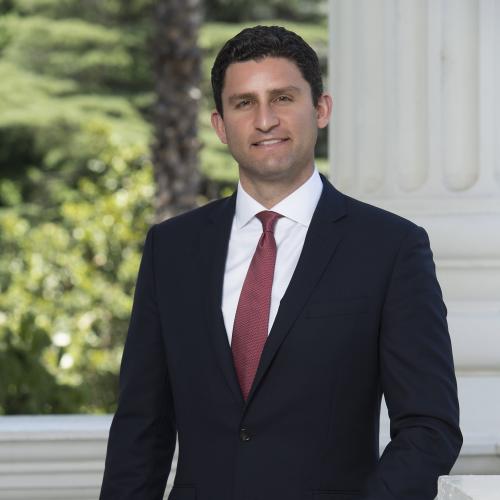
Asm. Jesse Gabriel
Sponsored bills
(1) Existing law establishes various default speed limits for vehicles upon highways, as specified. Existing law authorizes state and local authorities to adjust these default speed limits, as specified, based upon certain findings determined by an engineering and traffic survey. Existing law defines an engineering and traffic survey and prescribes specified factors that must be included in the survey, including prevailing speeds and road conditions. Existing law authorizes local authorities to consider additional factors, including pedestrian and bicyclist safety. This bill would authorize local authorities to consider the safety of vulnerable pedestrian groups, as specified. (2) Existing law establishes a prima facie speed limit of 25 miles per hour on any highway, other than a state highway, located in any business or residence district, as defined. Existing law authorizes a local authority to change the speed limit on any such highway, as prescribed, including erecting signs to give notice thereof. This bill would establish a prima facie speed limit of 25 miles per hour on state highways located in any business or residence district and would authorize the Department of Transportation (Caltrans) to change the speed limit on any such highway, as prescribed, including erecting signs to give notice thereof. (3) Existing law establishes a speed limit of 65 miles per hour on state highways, as specified. Existing law authorizes Caltrans to declare a speed limit on any such highway, as prescribed, of 60, 55, 50, 45, 40, 35, 30, or 25 miles per hour, including erecting signs to give notice thereof. Existing law also authorizes a local authority, on a section of highway, other than a state highway, where the speed limit is 65 miles per hour to declare a lower speed limit, as specified. This bill would additionally authorize Caltrans and a local authority to declare a speed limit of 20 or 15 miles per hour, as specified, on these highways. (4) Existing law authorizes a local authority, without an engineering and traffic survey, to declare a lowered speed limit on portions of highway, as specified, approaching a school building or school grounds. Existing law limits this authority to sections of highway meeting specified requirements relating to the number of lanes and the speed limit of the highway before the school zone. This bill would similarly authorize a lowered speed limit on a section of highway contiguous to a business activity district, as defined, and would require that certain violations be subject to a warning citation, for the first 30 days of implementation. (5) Existing law requires Caltrans, by regulation, to provide for the rounding up or down to the nearest 5 miles per hour increment of the 85th percentile speed of free-flowing traffic on a portion of highway as determined by a traffic and engineering survey. Existing law requires the Judicial Council to create and implement an online tool by June 30, 2024, for the adjudication of traffic infractions, among other things. This bill would authorize a local authority to further reduce the speed limit, as specified, and require that certain violations be subject to a warning citation, for the first 30 days of implementation. The bill would, in some circumstances, authorize the reduction of a speed limit beginning June 30, 2024, or when the Judicial Council has developed an online tool for adjudicating traffic infraction violations, whichever is sooner. The bill would require Caltrans to accordingly revise the California Manual on Uniform Traffic Control Devices, as specified. (6) Existing law defines a speed trap and prohibits evidence of a driver's speed obtained through a speed trap from being admissible in court in any prosecution against a driver for a speed-related offense. Existing law deems a road where the speed limit is not justified by a traffic and engineering survey conducted within the previous 7 years to be a speed trap, unless the roadway has been evaluated by a registered engineer, as specified, in which case the speed limit remains enforceable for a period of 10 years. Existing law exempts a school zone, as defined, from certain provisions relating to defining a speed trap. This bill would extend the period that a speed limit justified by a traffic and engineering survey conducted more the 7 years ago remains valid, for purposes of speed enforcement, if evaluated by a registered engineer, as specified, to 14 years. This bill would also exempt a senior zone and business activity district, as defined, from those provisions.
Existing law defines a "hate crime" as a criminal act committed, in whole or in part, because of actual or perceived characteristics of the victim, including, among other things, race, religion, disability, and sexual orientation. Existing law requires the Commission on Peace Officer Standards and Training (POST) to develop guidelines and a course of instruction and training for law enforcement officers addressing hate crimes. Existing law requires state law enforcement agencies to adopt a framework or other formal policy created by POST regarding hate crimes. Existing law requires any local law enforcement agency that adopts or updates a hate crime policy to include specified information in that policy, including information on bias motivation. This bill would include a statement of legislative findings and declarations and require the basic course curriculum on the topic of hate crimes to be developed in consultation with subject matter experts, as specified. The bill would, subject to an appropriation of funds for this purpose in the annual Budget Act or other statute, require POST to update the basic course to include the viewing of a specified video course developed by POST. The bill would also require POST to make the video available via the online learning portal, and would require all peace officers to complete specified training materials no later than one year after the commission makes the updated course available. The bill would require POST to develop and periodically update an interactive course on hate crimes for in-service peace officers, and require officers to take the course every 6 years. This bill would also require any local law enforcement agency that adopts or updates a hate crime policy to include specified information on recognizing religion-bias hate crimes, and would require those policies to include the discriminatory selection of victims as a form of bias motivation.
Existing law requires the governing board of a school district to give diligent care to the health and physical development of pupils and authorizes the governing board of a school district to employ properly certified persons for this purpose. Existing law requires a school of a school district or county office of education and a charter school to notify pupils and parents or guardians of pupils no less than twice during the school year on how to initiate access to available pupil mental health services on campus or in the community, or both, as provided. This bill would require the State Department of Education to develop model referral protocols, as provided, for addressing pupil mental health concerns. The bill would require the department to consult with various entities in developing the protocols, including current classroom teachers, administrators, pupils, and parents. The bill would require the department to post the model referral protocols on its internet website. The bill would make these provisions contingent upon funds being appropriated for its purpose in the annual Budget Act or other legislation, or state, federal, or private funds being allocated for this purpose.
Under existing law, the Department of Consumer Affairs (department) , under the control of the Director of Consumer Affairs, is comprised of various boards that license and regulate various professions and vocations. Existing law requires an applicant seeking a license from a board within the department to meet specified requirements and to pay certain licensing fees. Existing law requires a board within the department to issue, after appropriate investigation, certain types of temporary licenses to an applicant if the applicant meets specified requirements, including that the applicant supplies evidence satisfactory to the board that the applicant is married to, or in a domestic partnership or other legal union with, an active duty member of the Armed Forces of the United States who is assigned to a duty station in this state under official active duty military orders and the applicant submits an application to the board that includes a signed affidavit attesting to the fact that the applicant meets all of the requirements for a temporary license and that the information submitted in the application is accurate, to the best of the applicant's knowledge. Under existing law, some of the funds within the jurisdiction of a board consist of revenue from fees that are continuously appropriated. Existing law authorizes a board to adopt regulations necessary to administer these provisions. This bill, on and after January 1, 2023, would expand the requirement to issue temporary licenses to practice a profession or vocation to include licenses issued by any board within the department, except as provided. The bill would require an applicant for a temporary license to provide to the board documentation that the applicant has passed a California law and ethics examination if otherwise required by the board for the profession or vocation for which the applicant seeks licensure. The bill would require a board to issue a temporary license within 30 days of receiving the required documentation if the results of a criminal background check do not show grounds for denial and would require a board to request the Department of Justice to conduct the criminal background check and to furnish the criminal background information in accordance with specified requirements. The bill would specifically direct revenues from fees for temporary licenses issued by the California Board of Accountancy to be credited to the Accountancy Fund, a continuously appropriated fund. The bill would require, if necessary to implement the bill's provisions, a board to submit to the department for approval draft regulations necessary to administer these provisions. The bill would exempt from these provisions a board that has a process in place by which an out-of-state licensed applicant in good standing who is married to, or in a domestic partnership or other legal union with, an active duty member of the Armed Forces of the United States is able to receive expedited, temporary authorization to practice while meeting state-specific requirements for a period of at least one year or is able to receive an expedited license by endorsement with no additional requirements superseding those for a temporary license, as described above. The bill would make conforming changes. By expanding the scope of the crime of perjury, the bill would impose a state-mandated local program. The bill's expansion of the requirement to issue temporary licenses would result in revenues from fees for certain licenses being deposited into continuously appropriated funds. By establishing a new source of revenue for those continuously appropriated funds, the bill would make an appropriation. Existing law provides that these temporary licenses shall expire 12 months after issuance, upon issuance of an expedited license, or upon denial of the application for expedited licensure by the board, whichever occurs first. Existing law authorizes the immediate termination of a temporary license upon a finding that the temporary licenseholder failed to meet the requirements for temporary licensure or provided substantively inaccurate information that would affect the person's eligibility for temporary licensure. This bill, on and after July 1, 2023, would instead provide that these temporary licenses are nonrenewable and shall expire 12 months after issuance, upon issuance or denial of a standard license, upon issuance or denial of a license by endorsement, or upon issuance or denial of an expedited license, whichever occurs first. The bill, on and after July 1, 2023, would also require the board to revoke a temporary license if the board finds that the temporary licenseholder engaged in unprofessional conduct or any other act that is cause for discipline by the board. This bill would require the Department of Consumer Affairs to compile an annual report to the Legislature containing specified information relating to the professional licensure of veterans, servicemembers, and their spouses. The bill would also require the Department of Consumer Affairs and each board within the department to post specified information on their internet websites relating to licensure for military spouses, the availability of temporary licenses, and permanent licensure by endorsement or credential for out-of-state applicants. The bill would also require the Department of Real Estate to compile specified information on military, veteran, and spouse licensure into an annual report for the Legislature. Existing law, the Psychology Licensing Law, provides for the licensure and regulation of psychologists by the Board of Psychology. Existing law authorizes a psychologist certified or licensed in another state or Canadian province who has applied to the board for licensure to provide activities and services of a psychological nature without a valid license for a period not to exceed 180 days from the time of submitting their application or from the commencement of residency in the state, whichever occurs first, subject to specified conditions and requirements. This bill would also authorize a psychologist certified or licensed in another state or Canadian province who is married to, or in a domestic partnership or other legal union with, an active duty member of the Armed Forces of the United States and who has applied to the board for licensure to perform activities and services of a psychological nature without a valid license for a period not to exceed 12 months. The California Constitution requires the state to reimburse local agencies and school districts for certain costs mandated by the state. Statutory provisions establish procedures for making that reimbursement. This bill would provide that no reimbursement is required by this act for a specified reason. This bill would incorporate additional changes to Section 2946 of the Business and Professions Code proposed by SB 801 to be operative only if this bill and SB 801 are enacted and this bill is enacted last.
Existing law requires the State Department of Public Health to license and regulate health facilities, and requires the department to define specified bed classifications for health facilities, including general acute care, intermediate care, and specialized care, among others. Existing law generally authorizes the department or the Department of Health Care Access and Information to permit program flexibility as to various prescribed standards relating to a health facility's physical plant or staffing as long as statutory requirements are met and the program flexibility has prior written approval. A person who violates specified licensing provisions related to these health facilities is guilty of a crime. This bill would additionally require any program flexibility granted by the department or the Department of Health Care Access and Information to not jeopardize the health, safety, and well-being of patients. The bill would specifically authorize the department to grant a critical care unit program flexibility request pursuant to a prescribed procedure that includes, among other things, a requirement that, on and after January 1, 2023, the department post a critical care unit program flexibility request on the department's publicly accessible internet website and solicit public comment on the request. On and after January 1, 2023, the bill would also require a health facility that submits a critical care unit program flexibility request to also post its critical care unit program flexibility request form and immediately notify affected employees, as specified. The bill would require the department to post on its internet website specified information, including a list of health facilities with approved critical care unit program flexibility, on or before February 1, 2023. This bill would incorporate additional changes to Section 1276 of the Health and Safety Code proposed by SB 637 to be operative only if this bill and SB 637 are enacted and this bill is enacted last.
Existing law generally regulates the transfer and possession of firearms. Existing law defines a firearm as a device, designed to be used as a weapon, from which a projectile is expelled through a barrel by force of an explosion or other form of combustion. Existing law also defines a firearm precursor part as a component of a firearm that is necessary to build or assemble a firearm and is either an unfinished handgun frame or an unfinished receiver, as specified. Existing law authorizes an immediate family member of a person or a law enforcement officer to request that a court, after notice and a hearing, issue a gun violence restraining order against that person, prohibiting the subject of the petition from having in their custody or control, or owning, purchasing, possessing, or receiving, a firearm or ammunition, as specified. Under existing law, a violation of a gun violence restraining order is a crime. Existing law permits a person to seek a restraining order to protect against domestic violence, as specified. Existing law prohibits a person subject to that restraining order from owning, possessing, purchasing, or receiving a firearm, and makes a violation of that prohibition a crime. The bill would, on and after July 1, 2022, define a firearm, for the purpose of the specified gun violence and domestic violence restraining order provisions, to include a frame or receiver of the weapon or a firearm precursor part. By expanding the scope of existing crimes, this bill would impose a state-mandated local program. The California Constitution requires the state to reimburse local agencies and school districts for certain costs mandated by the state. Statutory provisions establish procedures for making that reimbursement. This bill would provide that no reimbursement is required by this act for a specified reason.
Existing law prohibits a person from engaging in a motor vehicle exhibition of speed on a highway or aiding or abetting in a motor vehicle exhibition of speed on any highway. Upon conviction, existing law punishes a person by imprisonment in a county jail for not more than 90 days, by a fine of not more than $500, or by both that fine and imprisonment. This bill would, commencing July 1, 2025, additionally authorize the court to order the privilege to operate a motor vehicle suspended for 90 days to 6 months and restrict the person's operation of a motor vehicle for the purposes of their employment, as specified. The bill would require the court to consider a person's hardships, as specified, when deciding to either suspend or restrict a driver's license. The bill would require the Department of Motor Vehicles to suspend or restrict a driver's license as ordered by the court.
Existing law, the Mental Health Services Act (MHSA) , an initiative measure enacted by the voters as Proposition 63 at the November 2, 2004, statewide general election, establishes the continuously appropriated Mental Health Services Fund to fund various county mental health programs and requires counties to spend those funds on mental health services, as specified. The MHSA requires counties to establish a program designed to prevent mental illnesses from becoming severe and disabling and authorizes counties to use funds designated for prevention and early intervention to broaden the provision of those community-based mental health services by adding prevention and early intervention services or activities. Existing law authorizes the MHSA to be amended by a 23 vote of the Legislature if the amendments are consistent with, and further the purposes of, the MHSA. This bill would amend the MHSA by including in the prevention and early intervention services authorized to be provided, prevention and early intervention strategies that address mental health needs, substance misuse or substance use disorders, or needs relating to cooccurring mental health and substance use services. By authorizing a new use for continuously appropriated funds, this bill would make an appropriation. The bill would state the finding and declaration of the Legislature that this change is consistent with, and furthers the intent of, the MHSA.
Existing law establishes the California Community Colleges, under the administration of the Board of Governors of the California Community Colleges, the University of California, under the administration of the Regents of the University of California, and the California State University, under the administration of the Trustees of the California State University, as the 3 segments of public postsecondary education in this state. Under existing law, the board of governors appoints the Chancellor of the California Community Colleges to serve as the chief executive officer of that segment, the trustees appoint the Chancellor of the California State University to serve as the chief executive officer of that segment, and the regents appoint the President of the University of California to serve as the chief executive officer of that segment. Existing law requires, by September 1, 2019, the Office of the Chancellor of the California Community Colleges, in collaboration with the Academic Senate for the California Community Colleges, to develop a consistent policy to award military personnel and veterans who have an official Joint Services Transcript course credit for California Intersegmental General Education Transfer Curriculum, California State University General Education Breadth, or local community college general education requirements, as specified. Existing law also requires the office of the chancellor and the academic senate to review and adjust this uniform policy to align it with policies of other public postsecondary educational institutions. Existing law further requires, by December 31, 2020, each community college district to have a policy consistent with the policy developed by the chancellor, and requires each community college campus to post on its internet website the most recent policy. This bill would require the Office of the Chancellor of the California State University, in collaboration with the Academic Senate of the California State University, and request the University of California, to develop, by September 1, 2022, a consistent policy to award military personnel and veterans who have an official Joint Services Transcript course credit in a course taught at the campus where the student matriculates with subject matter similar, or equivalent, subject to academic and faculty review, to that of the student's military education, training, and service. The bill would also require that each campus of the California State University, and request that the University of California, have in effect, by December 31, 2023, a policy consistent with the respective policies developed by the Office of the Chancellor of the California State University and the University of California and post on its internet website the most recent policy adopted pursuant to the bill.