

Under existing law, the State Water Resources Control Board and the 9 California regional water quality control boards regulate water quality and prescribe waste discharge requirements in accordance with the federal national pollutant discharge elimination system (NPDES) permit program established by the federal Clean Water Act and the Porter-Cologne Water Quality Control Act. Existing law requires each regional board to formulate and adopt water quality control plans for all areas within the region, as provided. Existing law authorizes the imposition of civil penalties for violations of certain waste discharge requirements and requires that penalties imposed pursuant to these provisions be deposited into the Waste Discharge Permit Fund, to be expended by the state board, upon appropriation by the Legislature, for specified purposes related to water quality. For violations of certain other waste discharge requirements, including the violation of a waste discharge requirement effluent limitation, existing law imposes specified civil penalties, the proceeds of which are deposited into the continuously appropriated State Water Pollution Cleanup and Abatement Account, which is established in the State Water Quality Control Fund. This bill would create within the Waste Discharge Permit Fund the Waterway Recovery Account, the Citizen Monitoring Account, the Community Capacity Building Account, and the Stormwater Innovation Account, and, subject to future legislation, would annually transfer from the annual proceeds of the State Water Pollution Cleanup and Abatement Account, subject to a future legislative act, the following amounts: 30% to the Waterway Recovery Account; 5% to the Citizen Monitoring Account, but in no instance less than $250,000; 10% to the Community Capacity Building Account, but in no instance less than $500,000; and 5% to the Stormwater Innovation Account. The bill would require moneys in the Waterway Recovery Account to be distributed by the state board, upon appropriation by the Legislature, to each regional board on a pro rata basis to expend on specified purposes, including, among others, restoration projects that improve water quality. The bill would provide that moneys in each of the other 3 accounts created by the bill are available for the state board to expend, upon appropriation by the Legislature, for the following purposes: for the Citizen Monitoring Account, to fund a specified state board program to increase water quality monitoring or to establish a priority water-contact recreation site monitoring program; for the Community Capacity Building Account, to create and fund a community capacity program to increase disadvantaged and tribal community participation in state board outreach and regulatory processes; and for the Stormwater Innovation Account, for specified activities relating to stormwater best management practices.
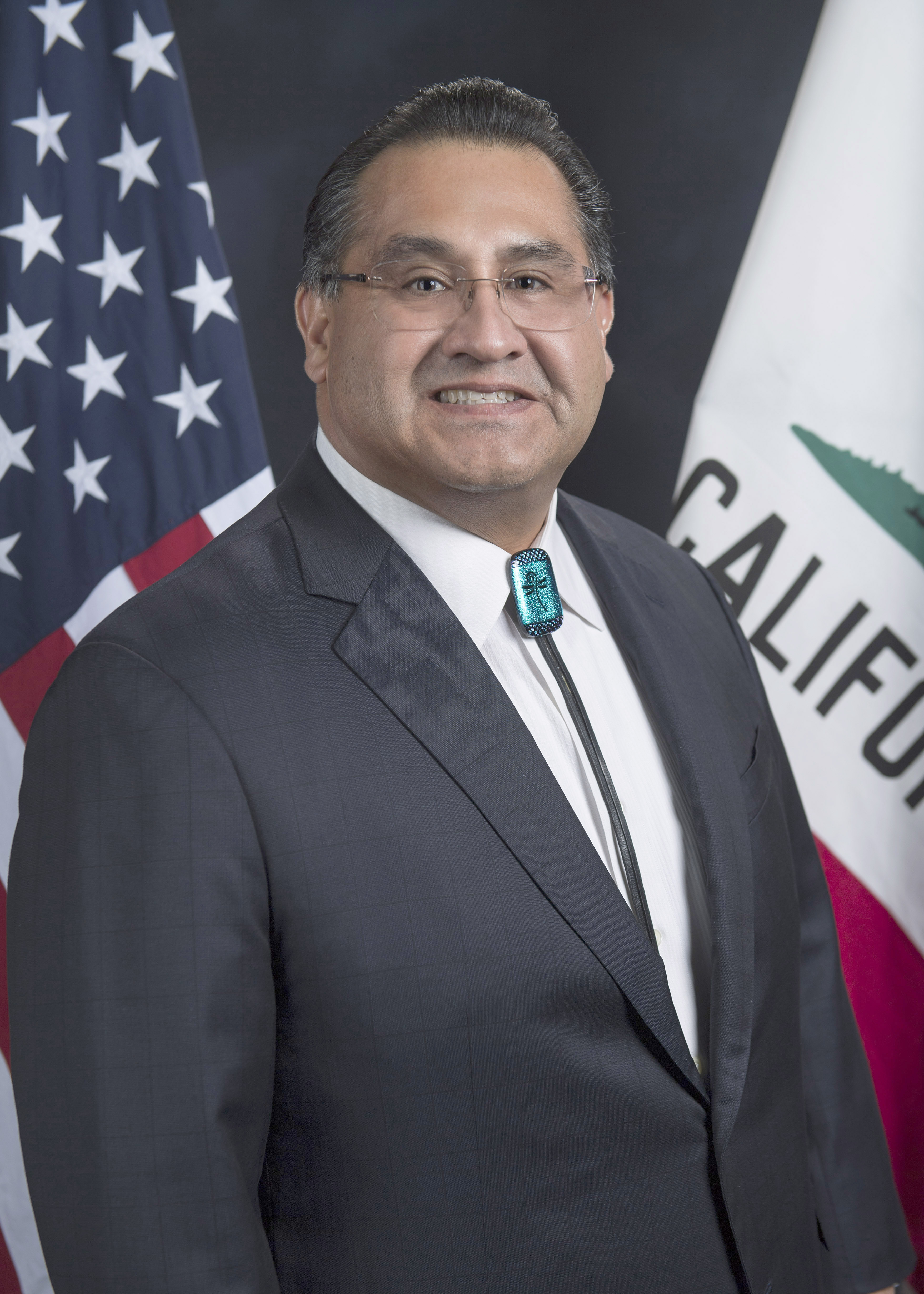
Asm. James Ramos
Sponsored bills
Existing law requires the Department of Motor Vehicles to issue a driver's license to an applicant when the department determines that the applicant is lawfully entitled to a license. Existing law allows an in-person applicant for a driver's license or identification card to request the word "VETERAN" be printed on the face of the driver's license or identification card, subject to certain requirements, including, among others, verification of veteran status, as specified, and payment of a $5 fee, which the department is authorized to increase by regulation, in an amount not to exceed $15, as specified. This bill would allow an applicant for a driver's license or identification card, who served for another country in military operations that supported the United States during the Vietnam War and later became a naturalized citizen, to request a "NON-US VIETNAM VETERAN" designation on their driver's license or identification card, subject to certain requirements, including verification of military service for a foreign country during the Vietnam War and payment of a $5 fee, which the department is authorized to increase by regulation, in an amount not to exceed $15, as specified. This bill would authorize the department to consult with the Department of Veterans Affairs to determine the proof necessary to verify an applicant's veteran status.
Existing law establishes the segments of the public postsecondary education system in the state, including the University of California administered by the Regents of the University of California, the California State University administered by the Trustees of the California State University, and the California Community Colleges administered by the Board of Governors of the California Community Colleges. The Donahoe Higher Education Act prohibits campuses of those segments from charging mandatory systemwide tuition or fees to specified students who apply for a waiver, including a child of any veteran of the United States military who has a service-connected disability, has been killed in service, or has died of a service-connected disability, where the annual income of the child, including the value of any support received from a parent, does not exceed the national poverty level. This bill would instead require that the annual income of the child not exceed the area median income, as defined. The bill would also make nonsubstantive changes to provisions relating to this waiver of mandatory systemwide tuition and fees. To the extent these provisions would add additional duties on community college districts, the bill would impose a state-mandated local program. Existing law establishes various educational benefits for dependents of veterans who were killed during military service or are totally disabled, as specified. Existing law defines "dependant of a veteran" to include the spouse of a totally disabled veteran. Existing law prohibits a dependent of a veteran from receiving these educational benefits during the time the dependent is entitled to receive specified federal educational benefits or duplicate assistance from any other government source. This bill would instead include the spouse of a veteran with a disability rating of 70 percent or greater in the definition of "dependent of a veteran." The bill would repeal the provision prohibiting a dependent of a veteran from receiving those educational benefits, as specified. The California Constitution requires the state to reimburse local agencies and school districts for certain costs mandated by the state. Statutory provisions establish procedures for making that reimbursement. This bill would provide that, if the Commission on State Mandates determines that the bill contains costs mandated by the state, reimbursement for those costs shall be made pursuant to the statutory provisions noted above.
The Personal Income Tax Law imposes a tax on individual taxpayers measured by the taxpayer's taxable income for the taxable year, but excludes certain items of income from the computation of tax, including an exclusion for combat-related special compensation. This bill, for taxable years beginning on or after January 1, 2023, and before January 1, 2033, would exclude from gross income retirement pay received by a taxpayer from the federal government for service performed in the uniformed services, as defined, during the taxable year. The bill, for taxable years beginning on or after January 1, 2023, and before January 1, 2023, would also exclude from gross income annuity payments received by a qualified taxpayer, as defined, pursuant to a United States Department of Defense Survivor Benefit Plan during the taxable year. The bill would make related findings and declarations. Existing law requires any bill authorizing a new tax expenditure to contain, among other things, specific goals, purposes, and objectives that the tax expenditure will achieve, detailed performance indicators, and data collection requirements. This bill also would include additional information required for any bill authorizing a new tax expenditure. The bill would require the Franchise Tax Board and the Department of Veterans Affairs to provide any data requested by the Legislative Analyst to write the report, and would make taxpayer information received by the Legislative Analyst subject to limitation on the collection and use of that information. By expanding the scope of a crime, this bill would impose a state-mandated local program. The California Constitution requires the state to reimburse local agencies and school districts for certain costs mandated by the state. Statutory provisions establish procedures for making that reimbursement. This bill would provide that no reimbursement is required by this act for a specified reason. This bill would take effect immediately as a tax levy.
Existing law requires the Governor to establish the California Interagency Council on Homelessness, formerly known as the Homeless Coordinating and Financing Council, and to appoint specified members of that coordinating council. Existing law requires agencies and departments administering state programs created on or after July 1, 2017, to collaborate with the council to adopt guidelines and regulations to incorporate core components of Housing First, as defined. Existing law establishes the goals of the council, which include identifying mainstream resources, benefits, and services that can be accessed to prevent and end homelessness in California. Existing law requires that the coordinating council be under the direction of an executive director, who is under the direction of the Business, Consumer Services, and Housing Agency, and staffed by employees of that agency. This bill would place the California Interagency Council on Homelessness under the jurisdiction of the Office of the Interagency Council on Homelessness, which the bill would establish within the Governor's office, under the control of a director, on or before September 30, 2023. The bill would require the Governor to appoint a director of the office to perform specified duties and responsibilities in connection with overseeing the work of the office. The bill would specify the primary purposes of the office, which would include coordinating homelessness programs, services, data, and policies. The bill would require state agencies and departments with representatives on the council, or workgroups established by the council, to report to and coordinate with the director of the office and would require the director to coordinate with the chairs of the council. The bill would require the office to serve the Governor as the lead entity for ending homelessness in California. The bill would require the office to fulfill various duties including convening a funding workgroup, comprised of council staff and staff working for agencies or departments represented on the council to accomplish specified goals, including, among others, aligning requests for proposals, all-county letters, and notices of funding proposals with standards following evidence-based housing and housing-based service models. The bill would require the documents and meetings of the funding workgroup to be confidential, as provided. The bill would also require the workgroup to coordinate with relevant state agencies and departments to reduce the risk of long-term homelessness by developing specific protocols and procedures to accomplish various goals, including connecting older adults to programs and services that assist independent living. The bill would also require the council, as part of its goals, to develop and implement a statewide strategic plan on homelessness that establishes measurable objective and strategies to enhance state-level accountability, coordination, and best practices. The bill would provide for the transfer of employees who are engaged in the performance of functions for the California Interagency Council on Homelessness, as well as the transfer of debts and liabilities of the Business, Consumer Services, and Housing Agency with respect to overseeing and supporting the council to the Office of the Interagency Council on Homelessness. The bill would require the Deputy Secretary on Homelessness within the Business, Consumer Services, and Housing Agency to be the director of the office, subject to appointment by the Governor and Senate confirmation. The bill would require all unexpended balances of appropriations and other funds available for use in connection with the council to be transferred to the office, as specified, upon appropriation by the Legislature for this purpose. The bill would make other related, conforming changes to these provisions. Existing constitutional provisions require that a statute that limits the right of access to the meetings of public bodies or the writings of public officials and agencies be adopted with findings demonstrating the interest protected by the limitation and the need for protecting that interest. This bill would make legislative findings to that effect.
This measure would respectfully memorialize the President of the United States and the Congress of the United States to take action to restore honor to Bernard B. James, and to take the necessary actions to ensure the treatment of Bernard B. James is rectified by a full exoneration, including having the military record of Bernard B. James cleared of any court judgment and less-than-honorable discharge.
This measure would designate a specified portion of Interstate Highway Route 405 in the County of Los Angeles as the Officer Tommy Scott Memorial Highway. The measure would request that the Department of Transportation determine the cost of appropriate signs showing this special designation and, upon receiving donations from nonstate sources covering that cost, erect those signs.