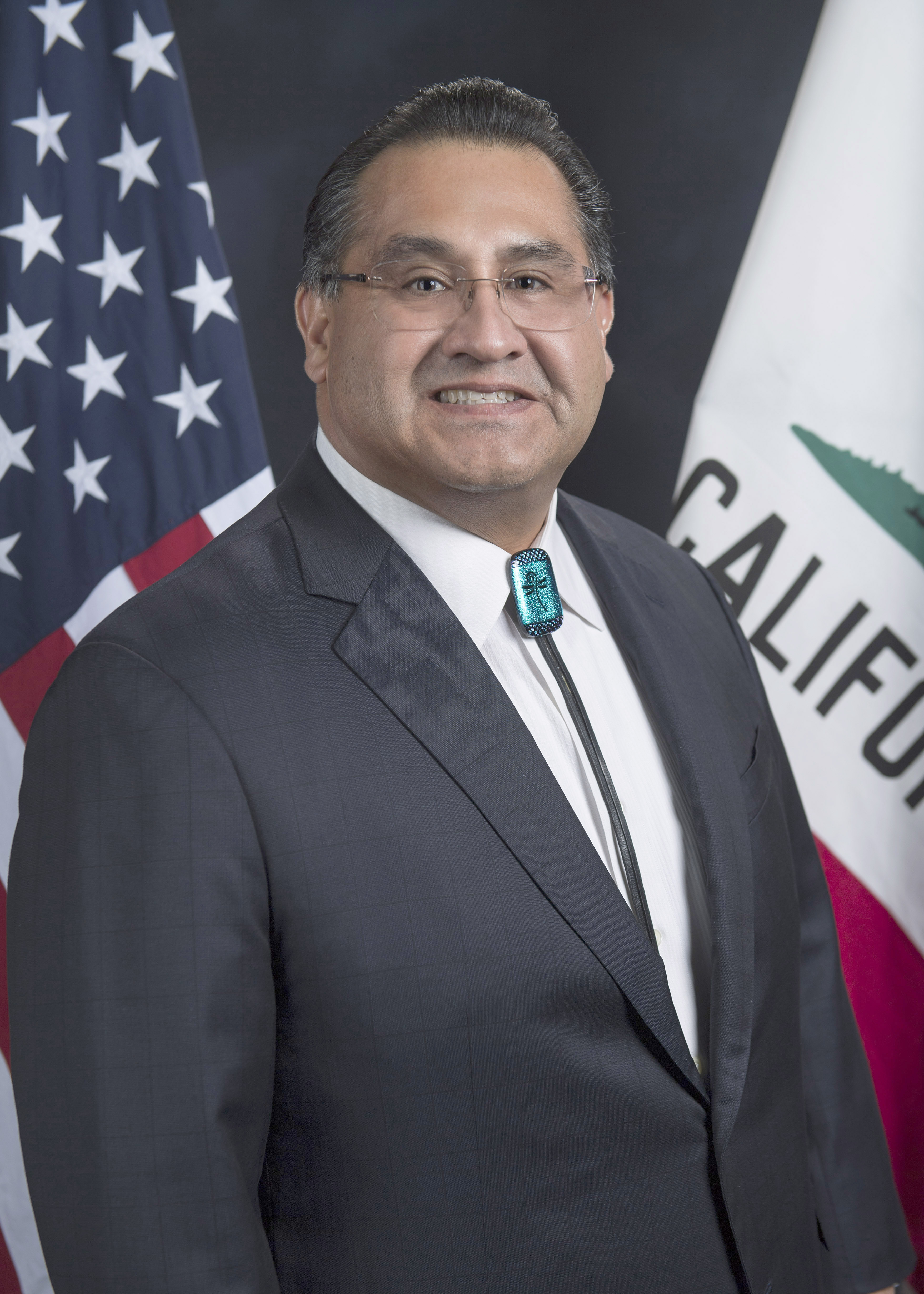
Photo of James Ramos
D California Assembly · District 45 On the 2026 ballot

Asm. James Ramos

Compare
Total votes
17,608
all sessions
Attendance
93%
1,027 missed
Near the chamber average
With party
99%
of cast votes
Near the chamber average
Bipartisan score
0%
crosses aisle rarely
Near the chamber average
Sponsored
1,475
bills & resolutions
Near the chamber average
Committees
8
assignments
1,475 bills and resolutions

Sponsored bills

Total
1,475
Primary
167
Co-sponsor
1,308
This page
1,475
matching current filters
Co-sponsor HR 100
Passed · California Assembly · Co-sponsor
Relative to Bike to School Day.

Maddy summaryThis bill designates May 17, 2024, as Bike to School Day in California to encourage students to ride bicycles or electric bikes to their schools. The resolution highlights the environmental, health, and recreational benefits of cycling while acknowledging the state's existing bike-friendly infrastructure and recent cycling events. It serves as a commemorative measure rather than a law that changes regulations or funding, and it directs the Assembly's Chief Clerk to distribute copies of the text for public awareness.

Passed May 20, 2024 1 co-sponsor
Co-sponsor HR 97
Passed · California Assembly · Co-sponsor
Relative to Harvey Milk Day.

Maddy summaryThis bill establishes April 27 as Harvey Milk Day to honor the first openly gay man elected to public office in a major U.S. city. The resolution recognizes Milk's legacy as a civil rights leader who fought against discrimination and advocated for LGBTQ+ visibility and unity among minority communities. It recounts key events in his life, including his assassination in 1978 and the subsequent legal proceedings against his killer. The measure serves as a commemorative acknowledgment of Milk's impact on California and national history rather than creating new laws or policies.

Passed May 20, 2024 1 co-sponsor
Primary AB 2478
In committee · California Assembly · Lead sponsor
Incarcerated persons: health records.

Existing law, the Confidentiality of Medical Information Act, prohibits a health care provider, a contractor, or a health care service plan from disclosing medical information, as defined, regarding a patient of the provider or an enrollee or subscriber of the health care service plan without first obtaining an authorization, except as specified. Existing law authorizes, among other things, mental health records to be disclosed by a county correctional facility, county medical facility, state correctional facility, or state hospital, as specified. Existing law requires, when jurisdiction of an inmate is transferred from or between the Department of Corrections and Rehabilitation, the State Department of State Hospitals, and county agencies caring for inmates, those agencies to disclose, by electronic transmission when possible, mental health records, as defined, regarding each transferred inmate who received mental health services while in custody of the transferring facility, as specified. Existing law requires mental health records to be disclosed to ensure sufficient mental health history is available for the purpose of satisfying specified requirements relating to parole and to ensure the continuity of mental health treatment of an inmate being transferred between those facilities. Existing law requires all transmissions made pursuant to those provisions to comply with specified provisions of state and federal law, including the Confidentiality of Medical Information Act. This bill would require, when jurisdiction of an inmate is transferred from or between a county correctional facility, a county medical facility, the State Department of State Hospitals, and a county agency caring for inmates, those agencies to disclose, by electronic transmission if possible, mental health records, as defined, regarding each transferred inmate who received mental health services while in custody of the transferring facility, as specified. The bill would require mental health records to be disclosed to ensure sufficient mental health history is available to ensure the continuity of mental health treatment of an inmate being transferred between those facilities. This bill would require all county behavioral health departments and contractors to establish and maintain a secure and standardized system for sharing inmate mental health records, as specified. The bill would require each county to prepare a report containing information about the effectiveness of the data sharing, the continuity of care measures, and an evaluation on the impact of inmate well-being, safety, and recidivism rates. The bill would require the report to be submitted to the Legislature on or before June 30, 2028. By imposing additional duties on local entities, the bill would impose a state-mandated local program. This bill would require all transmissions made pursuant to these provisions to comply with specified provisions of state and federal law, including the Confidentiality of Medical Information Act. The California Constitution requires the state to reimburse local agencies and school districts for certain costs mandated by the state. Statutory provisions establish procedures for making that reimbursement. This bill would provide that, if the Commission on State Mandates determines that the bill contains costs mandated by the state, reimbursement for those costs shall be made pursuant to the statutory provisions noted above.


In committee May 16, 2024 0 co-sponsors
Primary AB 2520
In committee · California Assembly · Lead sponsor
Housing: youth-specific processes and coordinated entry systems.

Existing law requires the Governor to create the Homeless Coordinating and Financing Council, renamed the California Interagency Council on Homelessness, to, among other things, identify mainstream resources, benefits, and services that can be accessed to prevent and end homelessness in California and to serve as a statewide facilitator, coordinator, and policy development resource on ending homelessness in California. Existing law establishes the Homeless Housing, Assistance, and Prevention Program, administered by the Business, Consumer Services, and Housing Agency, for the purpose of providing jurisdictions, as defined, with one-time grant funds to support regional coordination and expand or develop local capacity to address their immediate homelessness challenges, as specified. Existing law requires the council, upon appropriation, to distribute certain amounts, as specified, for purposes of the program. Existing law requires an applicant to submit an application containing specified information in order to apply for a program allocation. Existing law requires an applicant to prioritize finds received to specific programs, including to create youth-specific coordinated entry systems and improve assessment tools. This bill would require a continuum of care, upon appropriation and beginning with the 2026–27 fiscal year, to create or maintain a youth-specific process with their respective coordinated entry system, as specified, implement a youth-specific assessment tool, create a body or identify an existing body composed of youth with lived experience of homelessness that the continuum of care and other Homeless Housing, Assistance, and Prevention Program grantees must consult with regularly, and create an array of youth-specific housing inventory. The bill would require the continuum of care to document in their application how the housing assessment is youth-specific and their prioritization policy if the continuum of care states they already maintain a youth-specific coordinated entry system. The bill would also make findings and declarations related to youth-specific programs and the Homeless Housing, Assistance, and Prevention Program.

In committee May 16, 2024 0 co-sponsors
Primary AB 1772
In committee · California Assembly · Lead sponsor
Theft.

Existing law makes theft a crime, and distinguishes between grand theft and petty theft. Existing law makes the theft of money, labor, or property petty theft punishable as a misdemeanor, whenever the value of the property taken does not exceed $950. Under existing law, if the value of the property taken exceeds $950, the theft is grand theft, punishable as a misdemeanor or a felony. Existing law makes a first conviction for petty theft involving merchandise taken from a merchant's premises punishable by a mandatory fine and as a misdemeanor. This bill would require the Department of Justice to determine the number of misdemeanor convictions for a crime of theft for which the property was taken from a retail establishment during the Governor's declared state of emergency related to the COVID-19 pandemic, and to report that information to the Legislature on or before January 1, 2026.

In committee May 16, 2024 0 co-sponsors
Co-sponsor HR 83
Passed · California Assembly · Co-sponsor
Relative to Menopause Awareness Month.

Maddy summaryThis bill designates October 2024 as Menopause Awareness Month in California to highlight the health and societal impacts of menopause on women. It acknowledges that millions of women face symptoms that can affect their daily lives and work, noting that women of color are at higher risk for complications like premature menopause and heart disease. The resolution encourages the state to provide better health information and services to support women's well-being before, during, and after this transition. While the text outlines these goals, the bill itself is a formal recognition rather than a law that creates new funding or mandates specific programs.

Passed May 16, 2024 1 co-sponsor
Primary AB 2614
In committee · California Assembly · Lead sponsor
Water policy: California tribal communities.

(1) The Porter-Cologne Water Quality Control Act establishes a statewide program for the control of the quality of all the waters in the state and makes certain legislative findings and declarations. Existing law defines the term "beneficial uses" for the purposes of water quality as certain waters of the state that may be protected against quality degradation, to include, among others, domestic, municipal, agricultural, and industrial supplies. This bill would add findings and declarations related to California tribal communities and the importance of protecting tribal water use, as those terms are defined. The bill would add tribal water uses as waters of the state that may be protected against quality degradation for purposes of the defined term "beneficial uses." The bill would require any project or regulatory program subject to approval by the State Water Quality Control Board or a regional water quality control board, within a specified environmental review, and in any findings and declarations presented for state board or a regional board approval, to describe, with both quantitative and qualitative information, how the project or regulatory program will impact tribal water uses, and would require, on or before December 1, 2025, and every 2 years thereafter, the state board to publish a report on implementation of this provision on its internet website. (2) Existing law requires the state board to consult with and carefully evaluate the recommendations of concerned federal, state, and local agencies during the process of formulating or revising state policy for water quality control. This bill would additionally require the state board to consult and carefully evaluate the recommendations of concerned California tribal communities. (3) Existing law requires the state board to formulate and adopt state policy for water quality control. Existing law requires each regional board to formulate and adopt water quality control plans for all areas within the region and prohibits a water quality control plan, or a revision of the plan, adopted by a regional board from becoming effective unless it is approved by the state board. Existing law authorizes the state board to adopt certain water quality control plans. Existing law requires a regional board to establish water quality objectives in water quality control plans that in its judgment will ensure reasonable protection of beneficial uses and the prevention of nuisance and requires each regional board to consider specified factors in establishing water quality objectives. This bill would require, on or before January 1, 2026, the state board to incorporate water quality standards to achieve reasonable protection of tribal water uses into the water quality control plan for the San Francisco Bay and Sacramento-San Joaquin Delta watershed. This bill would add consultations with California tribal communities and environmental justice considerations as factors for a regional board to consider in establishing water quality control objectives. The bill would exempt adoption of tribal water uses within water quality control plans from the California Environmental Quality Act, and would require, on or before January 1, 2028, each regional board to adopt water quality standards to achieve reasonable protection of tribal water uses into water quality control plans. (4) Existing law requires the California Environmental Protection Agency and the Natural Resources Agency, on or before December 1, 2007, to enter into a memorandum of understanding for the purposes of establishing the California Water Quality Monitoring Council, which the state board is required to administer. Existing law requires the monitoring council to review existing water quality monitoring, assessment, and reporting efforts and to recommend specific actions and funding needs necessary to coordinate and enhance those efforts. Existing law requires the memorandum of understanding to describe the means by which the monitoring council shall formulate recommendations to reduce redundancies, inefficiencies, and inadequacies in existing water quality monitoring and data management programs and to ensure that water quality improvement projects financed by the state provide specific information necessary to track project effectiveness with regard to achieving clean water and healthy ecosystems. This bill would require, on or before December 1, 2025, the California Environmental Protection Agency and the Natural Resources Agency to amend the memorandum of understanding to incorporate participation from California tribal communities in the actions of the monitoring council, and would describe these potential methods of participation. The bill would require the memorandum of understating to include recommendations on how to achieve and maintain tribal water uses through state board and regional board regulatory actions and other programs, as specified. (5) Existing constitutional provisions require that a statute that limits the right of access to the meetings of public bodies or the writings of public officials and agencies be adopted with findings demonstrating the interest protected by the limitation and the need for protecting that interest. This bill would make legislative findings to that effect.

In committee May 16, 2024 0 co-sponsors
Co-sponsor ACR 137
Signed into law · California Assembly · Co-sponsor
Relative to Cities Week.

This measure would proclaim the week of April 14, 2024 to April 20, 2024, to be Cities Week, and would encourage all Californians to be involved in their communities and be civically engaged with their local government.

Signed into law May 14, 2024 1 co-sponsor
Co-sponsor ACR 171
Signed into law · California Assembly · Co-sponsor
Relative to Songkran New Year Festival.

This measure would join Asian and Pacific Islander communities throughout the state, nation, and world in celebrating April 13, 2024, to April 15, 2024, as the Songkran New Year Festival.

Signed into law May 14, 2024 1 co-sponsor
Co-sponsor HR 91
Passed · California Assembly · Co-sponsor
Relative to Asian and Pacific Islander American Heritage Month.

Maddy summaryThis bill is a House Resolution that formally recognizes May 2024 as Asian and Pacific Islander American Heritage Month in California. It directly affects the state legislature and the broader public by establishing an official period to honor the history and contributions of Asian and Pacific Islander communities. The resolution highlights the diverse backgrounds of these populations, their significant roles in California's development, and their ongoing achievements in various fields. By adopting this measure, the Assembly commends these communities for their accomplishments and acknowledges the hardships they have faced throughout history.

Passed May 13, 2024 1 co-sponsor
Showing 461 to 470 of 1,475 bills
Previous 1 … 46 47 48 … 148 Next