This measure would declare the month of June 2024 to be Portuguese Heritage Month and would recognize June 10 as the Day of Portugal and May 20 as the Day of the Azores.
Asm. James Ramos
Sponsored bills
Maddy summaryThis bill officially recognizes June 21, 2024, as the 2024 International Day of Yoga within the state of California. It does not create new laws or change existing regulations but serves as a formal acknowledgment of the global event. The measure is intended to highlight the history and benefits of yoga as a wellness practice.
This measure would designate the week of June 23, 2024, to June 29, 2024, inclusive, and every third week of June thereafter, as Roadside Assistance Worker Appreciation Week.
Existing law establishes the Adoption Assistance Program (AAP) , administered by the State Department of Social Services, to benefit children residing in foster homes by providing the stability and security of permanent homes. Existing law requires the department or the county, whichever is responsible for determining the child's AAP eligibility, to assess the needs of the child and the circumstances of the family, with the amount of a cash benefit being determined based on those factors. Existing law requires the department, county adoption agency, or licensed adoption agency to inform the prospective adoptive family regarding the county responsible for providing financial aid to the adoptive family in the determined amount. Under existing law, a child is eligible for AAP benefits if certain criteria are met, including, among others, that adoptive placement without financial assistance is unlikely because of certain special needs, and that it has been determined that the child cannot or should not be returned to the home of the child's parents as evidenced by any of certain circumstances. Under existing law, those circumstances include, among others, a court order terminating parental rights, a signed relinquishment, or, in the case of a tribal customary adoption, the court has given full faith and credit to a tribal customary adoption order, as specified. This bill would add, as a qualifying circumstance for purposes of those AAP benefits, a final order of adoption issued by the tribal court of the child's tribe, in the case of an Indian child who was a dependent of the juvenile court immediately prior to the transfer of the Indian child's case. The bill would authorize the department to implement the provisions relating to all of those qualifying circumstances through all-county letters or similar written instructions until regulations are adopted. Because the bill would expand the qualifying circumstances under the above-described criteria for AAP benefits, thereby creating new duties for counties, the bill would impose a state-mandated local program. The California Constitution requires the state to reimburse local agencies and school districts for certain costs mandated by the state. Statutory provisions establish procedures for making that reimbursement. This bill would provide that no reimbursement is required by this act for a specified reason.

Existing law, the Medical Practice Act, establishes the Medical Board of California and charges it with administrative and enforcement duties related to the provision of medical services under the act. Existing law establishes requirements for the delivery of medical services, including via telehealth by specified health care providers. A violation of the act is a crime. Under existing law, a "health care provider," for purpose of the act, includes a qualified autism service provider or a qualified autism service professional that is certified by a national entity, as specified. This bill would expand that definition of "health care provider" to also include a qualified autism service paraprofessional. By expanding the scope of a crime under the act, the bill would impose a state-mandated local program. The California Constitution requires the state to reimburse local agencies and school districts for certain costs mandated by the state. Statutory provisions establish procedures for making that reimbursement. This bill would provide that no reimbursement is required by this act for a specified reason.

The Personal Income Tax Law imposes a tax on individual taxpayers measured by the taxpayer's taxable income for the taxable year, but excludes certain items of income from the computation of tax, including an exclusion for combat-related special compensation. This bill, for taxable years beginning on or after January 1, 2024, and before January 1, 2034, would exclude from gross income retirement pay received by a taxpayer from the federal government for service performed in the uniformed services, as defined, during the taxable year. The bill, for taxable years beginning on or after January 1, 2024, and before January 1, 2034, would also exclude from gross income annuity payments received by a qualified taxpayer, as defined, pursuant to a United States Department of Defense Survivor Benefit Plan during the taxable year. The bill would make related findings and declarations. Existing law requires any bill authorizing a new tax expenditure to contain, among other things, specific goals, purposes, and objectives that the tax expenditure will achieve, detailed performance indicators, and data collection requirements. This bill also would include additional information required for any bill authorizing a new tax expenditure. The bill would require the Franchise Tax Board and the Department of Veterans Affairs to provide any data requested by the Legislative Analyst to write the report, as provided, and would make taxpayer information received by the Legislative Analyst subject to limitation on the collection and use of that information. By expanding the scope of a crime, this bill would impose a state-mandated local program. The California Constitution requires the state to reimburse local agencies and school districts for certain costs mandated by the state. Statutory provisions establish procedures for making that reimbursement. This bill would provide that no reimbursement is required by this act for a specified reason. This bill would take effect immediately as a tax levy.
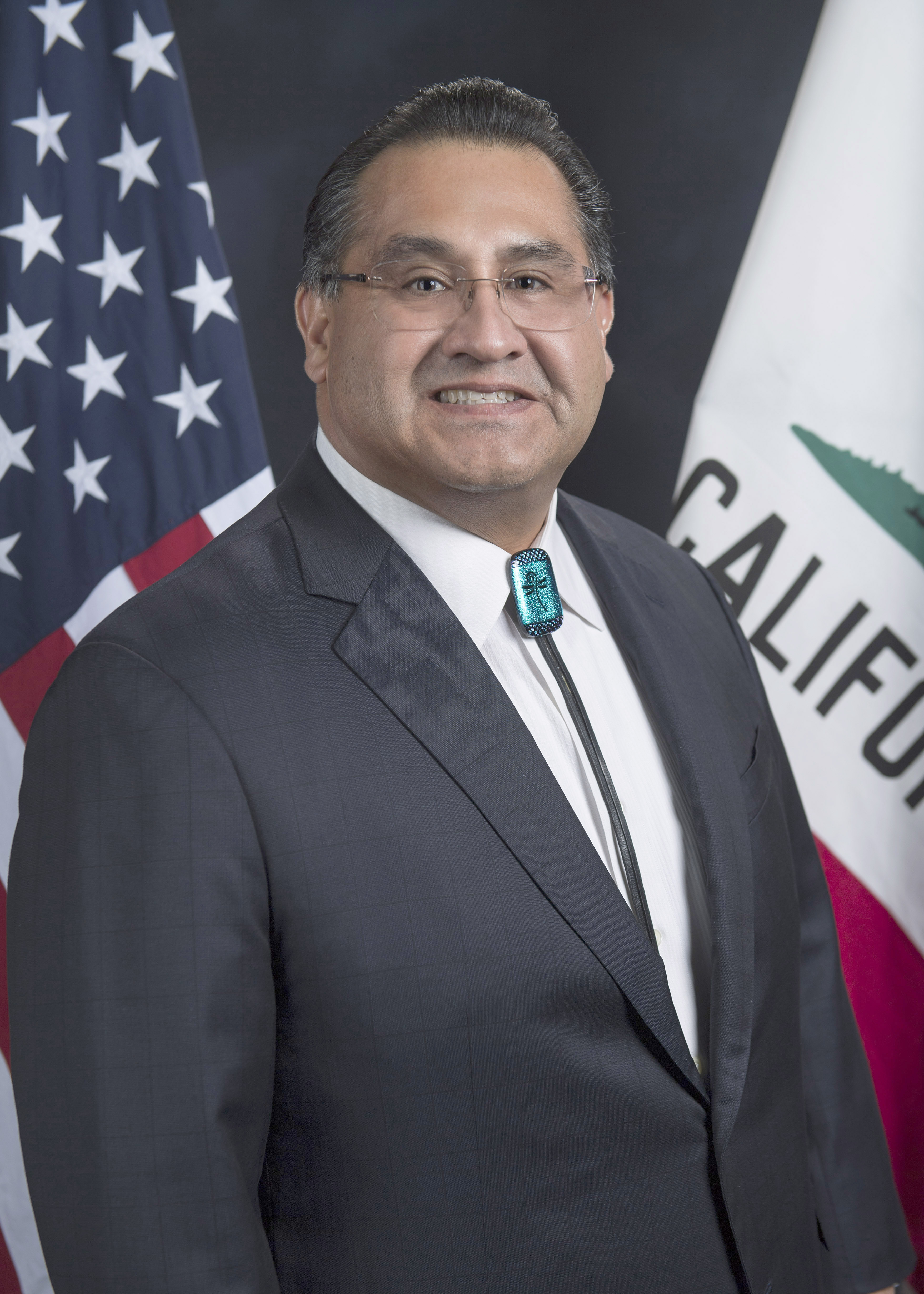
Existing law makes it a crime for a person to assault, among other people, a judge of any local, state, or federal court of record in retaliation for or to prevent the performance of their official duties, as specified. Existing law requires a county elections official to, upon application by a public safety officer, make confidential that officer's residence address, telephone number, and email address appearing on the affidavit of voter registration, as specified. Existing law requires, upon request of specified persons, including an active or retired judge, that the person's home address that appears in a record of the Department of Motor Vehicles be made confidential. This bill would additionally make it a crime for a person to assault a judge or former judge of a tribal court in retaliation for or to prevent the performance of their official duties, as specified. The bill would clarify that a tribal judge of a federally recognized California Indian tribe can request to make their records confidential pursuant to the above-described provisions. By expanding the scope of an existing crime, this bill would impose a state-mandated local program. Existing constitutional provisions require that a statute that limits the right of access to the meetings of public bodies or the writings of public officials and agencies be adopted with findings demonstrating the interest protected by the limitation and the need for protecting that interest. This bill would make legislative findings to that effect. The California Constitution requires the state to reimburse local agencies and school districts for certain costs mandated by the state. Statutory provisions establish procedures for making that reimbursement. This bill would provide that no reimbursement is required by this act for a specified reason.
Existing law requires each student to be classified as a resident or nonresident at the University of California, the California State University, or the California Maritime Academy, or at a California community college. Existing law requires a student classified as a nonresident to pay nonresident tuition, in addition to other fees required by the institution, except as provided. Existing law entitles a student to resident classification only for the purpose of determining tuition and fees if the student is a member of the Armed Forces of the United States stationed in the state, except as provided. This bill would entitle a student to resident classification only for the purpose of determining tuition and fees if the student is a member of a federally recognized Indian tribe, as defined, whose tribal land lies across the state border of California and Arizona, Nevada, or Oregon, and the student has a residence in the bordering state. If the Regents of the University of California, the Trustees of the California State University, or the Board of Governors of the California Community Colleges enter into an interstate tuition and fee agreement between (1) a respective campus that enrolls students who meet the criteria for resident classification and (2) an out-of-state regionally accredited public postsecondary institution located in the bordering state where those enrolled students reside, the bill would require those agreements to provide for reciprocal benefits for students whose tribal land lies across the state border of California and Arizona, Nevada, or Oregon, but whose residence is in California, as provided. To the extent the bill would require community college districts to exempt more students from nonresident tuition, the bill would impose a state-mandated local program. The California Constitution requires the state to reimburse local agencies and school districts for certain costs mandated by the state. Statutory provisions establish procedures for making that reimbursement. This bill would provide that, if the Commission on State Mandates determines that the bill contains costs mandated by the state, reimbursement for those costs shall be made pursuant to the statutory provisions noted above.
Maddy summaryThis California Assembly resolution encourages the U.S. Congress to pass legislation creating a National Infrastructure Bank to fund critical repairs and upgrades for roads, bridges, dams, and other public works. The bill cites reports from the American Society of Civil Engineers highlighting billions of dollars in investment gaps and poor conditions affecting California's transportation and water systems. It advocates for a financing model that uses existing federal debt rather than new taxes, aiming to stimulate the economy, create jobs, and prioritize projects in disadvantaged communities. The resolution formally requests that federal leaders adopt this approach to address the state's urgent infrastructure needs.
Maddy summaryThis California House Resolution condemns the July 13, 2024, assassination attempt on former President Donald J. Trump and calls for an end to political violence. The measure highlights the event where Trump was wounded while speaking at a rally in Butler, Pennsylvania, and notes that one attendee died and others were injured while trying to protect him. It urges the state to foster a political environment based on respectful discourse and nonviolence. The resolution is a formal statement of the Assembly's stance and does not create new laws or change existing policies.