

Existing law establishes the Law Enforcement Assisted Diversion (LEAD) pilot program, which is administered by the Board of State and Community Corrections, to improve public safety and reduce recidivism by increasing the availability and use of social service resources while reducing costs to law enforcement agencies and courts stemming from repeated incarceration. Existing law requires the board to award grants, on a competitive basis, to up to 3 jurisdictions to establish LEAD programs and requires the board to establish minimum standards, funding schedules, and procedures for awarding grants. This bill would rename the program as the Alternatives to Arrest (ATA) pilot program. The bill would require the board to additionally award a grant or grants to the agency administering qualifying programs in the City of Los Angeles and the County of Los Angeles, as well as in other jurisdictions to be identified by the board. Existing law allows a person to be referred to services through a program by a law enforcement officer as an alternative to arrest and through a social contact referral by a law enforcement officer if they believe the person is at high risk of arrest in the future for specified crimes relating to controlled substances and prostitution. Existing law requires those social contact referrals to meet specified criteria, including, among other things, verification that the individual has had prior involvement with low-level drug or prostitution activity and that the individual does not have a pending case in drug court or mental health court. This bill would remove these requirements for social contact referrals and instead authorize them if, absent probable cause to arrest, the officer believes the person would benefit from case management services and is at high risk of arrest in the future and the person expresses interest in voluntarily participating in the program. The bill would expand the offenses eligible for referral as an alternative to arrest to include, among other things, specified disorderly conduct crimes, shoplifting, or other violations identified by the local jurisdiction with agreement of the police chief or sheriff, the city attorney or district attorney, and the implementing public health or behavioral health agency administering case management services. Existing law requires the Board of State and Community Corrections to contract with a nonprofit research entity, university, or college to evaluate the effectiveness of the program, as specified. Existing law also authorizes the board to contract with experts for the purpose of providing technical assistance to participating jurisdictions. Existing law appropriated $15,000,000 from the General Fund for the program and authorized the board to spend up to $550,000 for the purposes of the evaluation contract and technical assistance. This bill would repeal those provisions and would require, upon appropriation by the Legislature for these programs, that the funds be granted to the entity responsible for LEAD or ATA in the City of Los Angeles and the County of Los Angeles and agencies in other jurisdictions to be identified by the board. The bill would authorize the board to spend a portion of those funds on contracts with experts on the implementation of ATA or similar programs in other jurisdictions for the purpose of providing technical assistance to participating jurisdictions, as specified. The bill would require local jurisdictions to commit to using these funds and local resources to support ATA or LEAD planning, implementation, and services and not supplant local resources that had been previously dedicated to ATA or LEAD programs and services. The bill would require the board to report to the Legislature on the effectiveness of the program on or before September 1, 2031.
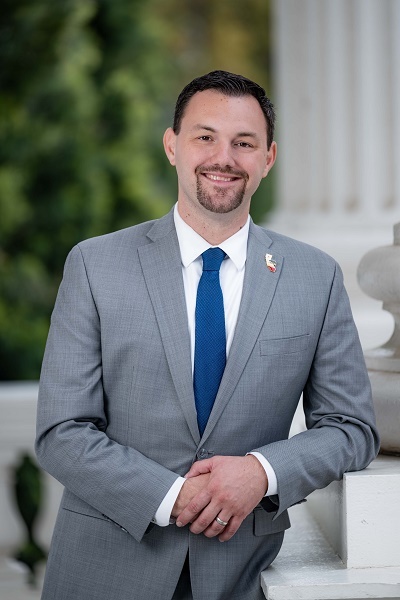
Rep. Nick Schultz
Sponsored bills
Existing law establishes the Transportation Agency, which has the power of general supervision over specified state entities. Existing law requires the agency to develop and report on legislative, budgetary, and administrative programs to accomplish comprehensive, long-range, coordinated planning and policy formation in the matters of public interest related to the agency. This bill would establish specified goals for the Climate Action Plan for Transportation Infrastructure (CAPTI) , consistent with state law.
Existing law establishes the Department of Housing and Community Development in the Business, Consumer Services, and Housing Agency. Existing law, the California Building Standards Law, establishes the California Building Standards Commission. Existing law requires the commission to approve and adopt building standards and to codify those standards in the California Building Standards Code. Existing law, the State Housing Law, establishes statewide construction and occupancy standards for buildings used for human habitation. Existing law, until January 1, 2033, requires the commission and the department, commencing with the next triennial edition of the code adopted after January 1, 2023, to research and develop, and authorizes the commission and the department to propose for adoption by the commission, mandatory building standards for the installation of electric vehicle charging stations in existing multifamily dwellings, hotels, motels, and nonresidential developments, as specified. This bill would authorize the commission, commencing with the first triennial edition of the code adopted after June 1, 2031, to adopt, approve, codify, and publish building energy standards for building electrical circuit features to enable a qualified plug-in photovoltaic system, as defined, to function as an energy source within the electrical circuit of a single-family residential dwelling, multiunit residential dwelling, or nonresidential development, that is constructed after that edition is adopted, as specified. The bill would, for purposes of that requirement, require the department to research, develop, and propose for adoption building standards for a qualified plug-in photovoltaic system to function as an energy source within the electrical circuit of a single-family residential dwelling, multiunit residential dwelling, or nonresidential development, as specified. The bill would require the commission and the department, in satisfying those requirements, to, among other things, consult with certain interested parties and invite the participation of the public at large in the development of those building energy standards through open consensus-based processes.
Under existing law, a court is authorized to suspend the driving privilege of a licensed driver convicted of a violation relating to the speed of vehicles or reckless driving for a period not to exceed 30 days for a first conviction, for a period not to exceed 60 days upon a 2nd conviction, and for a period not to exceed 6 months upon a 3rd or any subsequent conviction. This bill would, commencing on January 1, 2028, authorize a court, for a conviction of reckless driving, to suspend the driving privilege for a period not to exceed 60 days, and for a period of not less than 30 days and not to exceed 6 months when the offense occurred within 10 years of a separate reckless driving violation. The bill would require a court to suspend the driving privilege for a period of not less than 90 days and not to exceed one year if the offense occurred within 10 years of 2 or more separate reckless driving violations. Existing law authorizes a peace officer to arrest a person and seize the motor vehicle of the person if a peace officer determines that the person was engaged in a motor vehicle speed contest, reckless driving, or an exhibition of speed on a highway or in an offstreet parking facility. Existing law allows a vehicle seized under this provision to be impounded for up to 30 days. Existing law requires an impounding agency to release a motor vehicle to the registered owner or their agent prior to the conclusion of the impoundment period if, among other reasons, the person alleged to have been engaged in the motor vehicle speed contest was not authorized by the registered owner to operate the motor vehicle at the time of the commission of the offense, or if the registered owner was neither the driver nor a passenger of the motor vehicle or was unaware that the driver was using the motor vehicle to engage in the prohibited activities. If an impounding agency releases a motor vehicle to the registered owner or agent prior to the conclusion of the impoundment period, this bill would require the registered owner to provide evidence that the driver did not have authorization from the registered owner to operate the motor vehicle, as specified, or require the registered owner to submit a written, signed statement attesting that the registered owner was unaware that the driver was using the vehicle to engage in reckless driving. The bill would allow a registered owner or their agent to obtain their vehicle prior to the conclusion of the impoundment period based on the reason that the registered owner was not the driver or passenger of the motor vehicle or was unaware that the driver was engaging in reckless driving 3 times. The bill would prohibit a registered owner from using this reason to obtain the motor vehicle prior to the conclusion of the impoundment period for a 4th or any subsequent arrest that involves the same driver and vehicle. Existing law requires an impounding agency to release an impounded vehicle before the conclusion of the impound period if the charges against the driver are dismissed. This bill would prohibit the registered owner or driver of the vehicle from being charged any towing or storage fees if the vehicle is released for this reason.
Under existing law, a person sentenced to imprisonment in state prison or in a county jail for a felony offense, as specified, may, during that period of confinement, be deprived only of those rights as are reasonably related to legitimate penological interests. Existing law requires the Department of Corrections and Rehabilitation to provide inmates with accessible, functional voice communication services free of charge to the person initiating and the person receiving the communication. This bill would additionally require the department to provide inmates electronic messaging services as described above. The bill would prohibit staff at a department facility, if an incarcerated individual is authorized to possess and use a tablet or other device for voice communications, from disconnecting any communications conducted by the individual on the device based solely on the duration of the call.
Existing law, the Governor's Reorganization Plan No. 1 of 2025, beginning July 1, 2026, eliminates the Business, Consumer Services, and Housing Agency and instead establishes the Business and Consumer Services Agency and the California Housing and Homelessness Agency (agency) . Existing law requires the agency to coordinate with the California Health and Human Services Agency and the California Consumer Protection Agency on various state policies, including housing. This bill would require the agency to create a study on issues impacting pregnant people experiencing homelessness and report the results of the study, as well as recommendations to establish a PINK Alert, to the Legislature by July 1, 2028. The bill would require the recommendations to include how the PINK Alert can meet specified conditions, including that it be a system that nonprofits can opt in to in order to get notifications if there is a pregnant person in need of emergency housing or prenatal services.
Maddy summaryThis bill serves as a commemorative resolution to mark the 50th anniversary of the Surface Mining and Reclamation Act of 1975. It does not create new laws or alter existing regulations but instead formally acknowledges the milestone achievement of the original legislation. The measure is intended to honor the history of mining and land reclamation efforts established by the 1975 act.
This measure would acknowledge and celebrate 50 years of coastal protection and affirm the state's longstanding commitment to protecting its coastal waters, as specified.
Maddy summaryThis bill designates June 2026 as Men's Mental Health Month to raise awareness about mental health issues affecting men. The measure is a formal proclamation that does not change laws or allocate funding, but rather encourages public recognition of the topic. Once passed, it serves as an official declaration without imposing new requirements on individuals or organizations.
This measure would declare the month of June 2026 as Alzheimer's Disease and Brain Awareness Month, and would urge all Californians to commemorate the month of June 2026 as Alzheimer's Disease and Brain Awareness Month.