Maddy summaryThis bill designates Tuesday, April 21, 2026, as California Agriculture Day to honor the state's farmers, ranchers, and farmworkers. It highlights the agricultural sector's economic impact, its leadership in sustainable practices, and the significant role women play in the industry. The resolution also observes March 24, 2026, as National Agriculture Day and directs the Assembly Clerk to distribute copies of the text for public awareness.
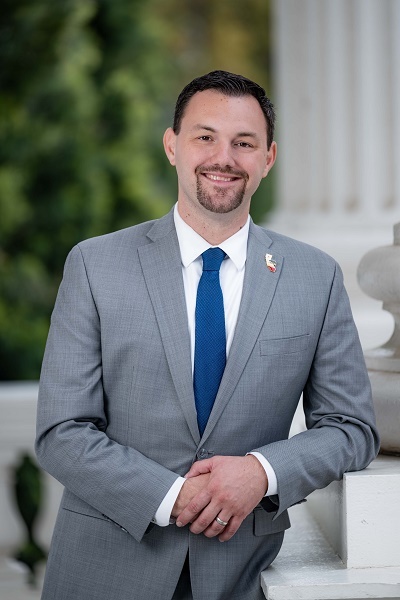
Asm. Nick Schultz
Sponsored bills
Maddy summaryThis House Resolution formally recognizes the events of 1915 to 1923 as the Armenian Genocide, stating that the Ottoman Empire and the Republic of Turkey systematically persecuted and killed over 1.5 million Armenians. The measure details how these actions included massacres, forced marches to death, and the displacement of survivors, while also noting the subsequent ethnic cleansing of other Christian groups in the region. It further highlights the historical role of Near East Relief in providing humanitarian aid to Armenians following the atrocities. As a commemorative resolution, this bill does not alter laws or budgets but serves to acknowledge the historical facts and honor the victims within the California Legislature.
Maddy summaryThis bill is a House Resolution that formally recognizes April 14 through April 16, 2026, as Khmer New Year in California. It acknowledges the cultural significance of this three-day celebration for the Cambodian community, which includes traditions like family gatherings, charitable acts, and religious ceremonies. The resolution calls on all Californians to participate in appropriate activities and programs related to the holiday. This measure serves as a commemorative recognition rather than establishing a legal public holiday or changing existing laws.
Maddy summaryThis bill designates the week of April 17 to April 23, 2026, as Cambodian Genocide Memorial Week in California. It aims to honor the survivors and descendants of the Cambodian people while remembering those who died during the Khmer Rouge regime between 1975 and 1979. The resolution calls on all Californians to observe this week by participating in appropriate activities and programs that recognize the tragedy and the resilience of the Cambodian community.
The Elder California Pipeline Safety Act of 1981 requires the State Fire Marshal to administer provisions regulating the inspection of intrastate pipelines that transport hazardous liquids. The act requires the State Fire Marshal to adopt hazardous liquid pipeline safety regulations in compliance with the federal law relating to hazardous liquid pipeline safety, as provided. The act authorizes the State Fire Marshal to exempt the application of those regulations to any pipeline, or portion thereof, when it is determined that the risk to public safety is slight and the probability of injury or damage remote. The act requires any new or replacement pipeline near environmentally and ecologically sensitive areas in the coastal zone to use best available technology based on a risk analysis conducted by the operator to reduce the amount of oil released in an oil spill to protect state waters and wildlife. A person who willfully and knowingly violates the act or a regulation issued pursuant to the act is, upon conviction, subject to a fine, imprisonment, or both a fine and imprisonment, as provided. This bill would make an application for a specified exemption pursuant to these provisions subject to a 60-day public comment period and, upon request of any interested person, require it to be considered at a public hearing. The bill would make a project that has received an exemption from the State Fire Marshal, as described above, subject to the California Environmental Quality Act. The bill would make any repaired pipeline near environmentally and ecologically sensitive areas in the coastal zone subject to the requirement to use best available technology based on a risk analysis conducted by an independent expert, rather than the operator, and require that analysis to address prevention, as well as reduction, of the amount of oil released in an oil spill, as described above, and make related changes. The bill would prohibit idled, inactive, or out-of-service hazardous liquid pipelines under the jurisdiction of the State Fire Marshal that have experienced a reportable incident, such as a hazardous liquid spill, from being reactivated or operated, unless specified conditions are met. The bill would require, for any idled, inactive, or out-of-service pipeline that has spilled 10,000 gallons or more of hazardous liquid, the operator to permanently abandon the pipeline by July 1, 2027, or within 6 months of the pipeline's most recent incident, and require the operator to restore the site to its natural condition no later than one year following permanent abandonment. By creating new crimes, the bill would impose a state-mandated local program. This bill would require the State Fire Marshal to require permanent abandonment of a pipeline if the best available technology is not achievable for a pipeline because of operational aspects, pipeline or regional conditions, or other factors. The bill would require the State Fire Marshal to suspend the operations of any pipeline that is not in compliance with the requirements to use best available technology no later than January 1, 2027. Existing law establishes the Geologic Energy Management Division in the Department of Conservation, under the direction of the State Oil and Gas Supervisor, who is required to supervise the drilling, operation, maintenance, and abandonment of oil and gas wells, as provided. A person who violates, fails, neglects, or refuses to comply with the oil and gas laws, or who fails, neglects, or refuses to furnish any report or record required pursuant to those laws, is guilty of a crime. This bill would require an operator seeking approval for a new well, production facility, or specified pipelines in the coastal zone to submit an oil leak detection and response plan, as specified, and obtain approval from the division before obtaining approval for the new well, production facility, or specified pipeline. By creating new crimes, the bill would impose a state-mandated local program. Existing law authorizes the Department of Parks and Recreation to grant permits and easements to an oil and gas lessee of the state for pipeline right-of-way purposes. This bill would prohibit any intrastate oil pipeline that has spilled 10,000 gallons or more of oil cumulatively since its construction from operating within 0.5 miles of a state park, a designated ecological reserve, as defined, or a wildlife area, as determined by the Fish and Game Commission. The California Constitution requires the state to reimburse local agencies and school districts for certain costs mandated by the state. Statutory provisions establish procedures for making that reimbursement. This bill would provide that no reimbursement is required by this act for a specified reason.

Maddy summaryThis bill designates April 14, 2026, as California Holocaust Memorial Day to honor the victims of the Holocaust and promote awareness of the tragedy. It urges all Californians to observe this day with appropriate remembrance activities, such as educational events or moments of reflection. The resolution also highlights the importance of combating antisemitism and other forms of hatred by remembering the historical events and the heroism shown during that time.
Maddy summaryThis House Resolution officially recognizes Vaisakhi as a significant cultural and religious observance for Sikh, Hindu, and Buddhist communities in California. The bill formally acknowledges the festival's historical roots as a harvest celebration and its modern importance for Sikhs, who mark the day with religious ceremonies and the initiation of new members into the Khalsa faith. By designating April 14, 2026, as the date for this recognition, the resolution encourages Californians to participate in the festivities and expresses respect for the diverse traditions associated with the holiday.
Existing law makes it a misdemeanor for any person to loiter in any public place with the intent to purchase commercial sex, as specified. Under existing law, intent is evidenced by acting in a manner and under circumstances that openly demonstrate the purpose of inducing, enticing, or soliciting prostitution, or procuring another to commit prostitution, as specified. This bill would instead provide that a person is guilty of the above-described crime only if they take a direct but ineffectual act that goes beyond planning or preparation towards commission of the crime that indicates a definite and unambiguous intent to purchase commercial sex. The bill would not require the act to be a completed communication.
Maddy summaryThis legislative resolution honors Major League Baseball Opening Day 2026 and celebrates the sport's deep historical and cultural significance within California. It acknowledges the state's status as home to five MLB teams and recognizes the contributions of players, coaches, staff, and fans to the community. The text expresses gratitude to team owners and executives for their investment in the franchises while pledging continued support for baseball in the state. Ultimately, the bill serves as a commemorative statement rather than enacting new laws or policy changes.
Maddy summaryThis House Resolution recognizes March 21, 2026, as the International Day of Nowruz in California to honor the Persian New Year celebrated by over 300 million people globally. The bill highlights Nowruz as a 3,000-year-old tradition symbolizing renewal, peace, and community unity that is observed by diverse groups including Afghan, Iranian, Armenian, and Jewish communities, as well as Americans of various backgrounds. By formally acknowledging this date, the resolution aims to celebrate cultural heritage and strengthen ties among different peoples within the state.