

Passed Feb 6, 2023
1 co-sponsor
Total votes
26,148
all sessions
Attendance
93%
1,567 missed
Near the chamber average
With party
98%
of cast votes
Near the chamber average
Bipartisan score
1%
crosses aisle rarely
Near the chamber average
Sponsored
2,145
bills & resolutions
Near the chamber average
Committees
13
assignments
2,145 bills and resolutions
Sponsored bills
Total
2,145
Primary
284
Co-sponsor
1,861
This page
2,145
matching current filters
Passed Feb 2, 2023
1 co-sponsor
Passed Feb 2, 2023
1 co-sponsor
Passed Jan 30, 2023
1 co-sponsor
Passed Jan 23, 2023
1 co-sponsor
Hydrofluorocarbon gases: sale or distribution.
Existing law requires, no later than January 1, 2018, the State Air Resources Board to approve and begin implementing a comprehensive short-lived climate pollutant strategy to achieve a reduction in statewide emissions of methane by 40%, hydrofluorocarbon gases by 40%, and anthropogenic black carbon by 50% below 2013 levels by 2030. Existing law provides, among other things, that certain federal prohibitions on the use of class I and class II substances shall apply, except as otherwise provided in state statute or regulation. Existing law requires the state board to expeditiously initiate a rulemaking to conform its regulations to any action by the United States Environmental Protection Agency to approve a previously prohibited hydrofluorocarbon blend for foam blowing pursuant to specified federal laws. This bill would prohibit a person from offering for sale or distribution, or otherwise entering into commerce in the state, bulk hydrofluorocarbons or bulk blends containing hydrofluorocarbons that exceed a specified global warming potential limit beginning January 1, 2025, and lower global warming potential limits beginning January 1, 2030, and January 1, 2033. The bill would specify that these provisions do not restrict the state board's authority to establish by regulation maximum allowable global warming potential levels for hydrofluorocarbons entered into commerce in the state below these maximum levels. The bill would require the state board to initiate a rulemaking requiring low and ultra-low global warming potential alternatives to hydrofluorocarbons in a sector unless it is not practicable for entities in the sector to comply with the requirement. The bill would require penalties collected for a violation of these prohibitions to be deposited in the Air Pollution Control Fund. Because a violation of these prohibitions would be a crime, this bill would impose a state-mandated local program. This bill would prohibit, beginning January 1, 2025, hydrofluorocarbons with a global warming potential greater than 750 that are not reclaimed from being used to replenish leaks or otherwise service stationary equipment owned or operated by the state. This bill would require the state board to post an assessment on its internet website by January 1, 2025, specifying how to transition the state's economy, by sector, away from hydrofluorocarbons and to ultra-low or no global warming potential alternatives no later than 2035, as specified. The California Constitution requires the state to reimburse local agencies and school districts for certain costs mandated by the state. Statutory provisions establish procedures for making that reimbursement. This bill would provide that no reimbursement is required by this act for a specified reason.
Signed into law Sep 30, 2022
1 co-sponsor
Theft: jurisdiction.
Under existing law, when a public offense is committed in part in one jurisdictional territory and in part in another jurisdictional territory, or the acts constituting or requisite to the consummation of the offense occur in 2 or more jurisdictional territories, the jurisdiction for the offense is in any competent court within either jurisdictional territory. This bill would establish the jurisdiction of a criminal action brought by the Attorney General for theft, organized retail theft, or receipt of stolen property as including the county where an offense involving the theft or receipt of the stolen merchandise occurred, the county in which the merchandise was recovered, or the county where any act was done by the defendant in instigating, procuring, promoting, or aiding in the commission of the offense. The bill would also, if multiple offenses of theft or other specified crimes all involving the same defendant or defendants and the same merchandise, or the same defendant or defendants and the same scheme or substantially similar activity, occur in multiple jurisdictions, establish that any of those jurisdictions is a proper jurisdiction for all of the offenses. The bill would extend jurisdiction to all associated offenses connected together in their commission to the underlying theft offenses.
Signed into law Sep 30, 2022
0 co-sponsors
The Qualified ABLE Program: tax-advantaged savings accounts.
Existing federal law, the Stephen Beck, Jr., Achieving a Better Life Experience Act of 2014 (ABLE Act) , encourages and assists individuals and families to save private funds for the purpose of supporting persons with disabilities to maintain their health, independence, and quality of life by excluding from gross income distributions used for qualified disability expenses by a beneficiary of a qualified ABLE program established and maintained by a state, as specified. Existing law establishes the Qualified ABLE Program, administered by the California ABLE Act Board, in this state for purposes of implementing the federal ABLE Act. Existing law requires the board to segregate the moneys coming into the ABLE program trust into 2 funds: the program fund, which is continuously appropriated, and the administrative fund, which is available upon appropriation by the Legislature. All moneys paid by designated beneficiaries or eligible individuals in connection with ABLE accounts are required to be deposited, as received, into the program fund, promptly invested, and accounted for separately. Existing law defines "ABLE account" and "designated beneficiary" for purposes of the act. Existing law prohibits acceptance of a contribution to an ABLE account that is not in cash or if the contribution would result in aggregate contributions exceeding a specified amount. Existing law authorizes, to the extent allowed under federal law, all amounts in the designated beneficiary's ABLE account to be transferred into the ABLE account of another designated beneficiary's account. Existing law requires the board to notify all designated beneficiaries of the potential tax consequences of transferring funds from one ABLE account to another, as specified. Under existing law, following the death of a designated beneficiary, and only after the department has received approval by the federal Centers for Medicare and Medicaid Services, the state is prohibited from seeking recovery under the Medi-Cal estate recovery provisions of any amount remaining in the designated beneficiary's ABLE account for any amount of medical assistance paid under the state's Medicaid plan, and prohibits the state from filing a claim for the payment under the ABLE Act. This bill would, among other things, instead authorize a change in the designated beneficiary of an ABLE account to take effect upon the death of the designated beneficiary, as specified. The bill would remove the requirement on the board to notify all designated beneficiaries of the potential tax consequences described above. This bill would also define "CalABLE account" for purposes of the act to mean an ABLE account established pursuant to those provisions and administered by the board. The bill would adjust the aggregate contribution limit on contributions to ABLE accounts. The bill also would provide that the above-described Medi-Cal estate recovery provisions apply to ABLE accounts and CalABLE accounts established prior to January 1, 2023, and to CalABLE accounts established on or after January 1, 2023, thereby limiting the application of the prohibition on the above-described Medi-Cal estate recovery provisions to CalABLE accounts for accounts established after January 1, 2023.
Signed into law Sep 30, 2022
0 co-sponsors
Community colleges: tutoring.
Existing law establishes the California Community Colleges, under the administration of the Board of Governors of the California Community Colleges, as one of the segments of public postsecondary education in this state. Under existing law, community college districts throughout the state have established campuses where they provide instruction to students. Existing law establishes a system through which state funds are apportioned to community college districts based on specified formulas. A provision of existing law identifies the noncredit community college courses and classes that are eligible for state apportionment funding. This bill would provide that supervised tutoring for foundational skills, and for degree-applicable and transfer-level courses, as authorized pursuant to regulations adopted by the board of governors by July 31, 2023, is eligible for state apportionment funding. This bill would incorporate additional changes to Section 84757 of the Education Code proposed by AB 2973 to be operative only if this bill and AB 2973 are enacted and this bill is enacted last.
Signed into law Sep 30, 2022
0 co-sponsors
Seymour-Campbell Student Success Act of 2012: matriculation: assessment.
(1) Existing law establishes the California Community Colleges, under the administration of the Board of Governors of the California Community Colleges, as one of the segments of public postsecondary education in this state. Existing law, the Seymour-Campbell Student Success Act of 2012, provides that the purpose of the act is to increase California community college student access and success by providing effective core matriculation services of orientation, assessment and placement, counseling, and other education planning services, and academic interventions. The act requires a community college district or community college to maximize the probability that students will enter and complete transfer-level coursework in English and mathematics within one-year. This bill would, among other things, instead require a community college district or community college to maximize the probability that students will enter and complete transfer-level coursework in English and mathematics within a one-year timeframe of their initial attempt in the discipline, and for a student with a declared academic goal, that the transfer-level coursework satisfies the English and mathematics coursework requirements of the intended certificate or associate degree, or a requirement for transfer within the intended major, within a one-year timeframe of their initial attempt in the discipline. By July 1, 2023, if a community college places and enrolls a student into transfer-level mathematics or English coursework that does not satisfy a requirement for the student's intended certificate or associate degree, or a requirement for transfer within the intended major, the bill would require the community college to verify the benefit of the coursework to the student, as specified. (2) The act requires community college districts or community colleges to use, in the placement of students into English and mathematics courses in order to achieve this goal, one or more of the following: high school coursework, high school grades, and high school grade point average. The act requires colleges to apply multiple measures in the placement of all students to ensure that either low performance on one measure may be offset by high performance on another measure or that the student can demonstrate preparedness based on any one measure and authorizes the Board of Governors of the California Community Colleges to establish regulations governing these and other measures, instruments, and placement models that achieve this goal. This bill would require that high school transcript data be used as the primary means for determining placement in transfer-level English and transfer-level mathematics courses and that self-reported high school information be used if there are issues with obtaining or using high school transcript data, as specified. The bill would limit the use of multiple measures and the enrollment into noncredit coursework by colleges in the placement and enrollment of students, as provided. The bill would require the board of governors to establish those placement regulations to achieve the placement goal. The bill would prohibit a community college district or community college from recommending or requiring students to enroll in pretransfer level English or mathematics coursework, except under specified circumstances. (3) This bill would require all new and continuing United States high school graduate students and those who have been issued a high school equivalency certificate, who plan to pursue a certificate, degree, or transfer program offered by a California community college, to be directly placed into, and, when beginning coursework in English or mathematics, enrolled in, transfer-level English and mathematics, as provided. By July 1, 2023, the bill would prohibit a community college district or community college from using specified factors as justification for placing a student in a pretransfer-level course. (4) This bill would require the office of the Chancellor of the California Community Colleges, beginning July 1, 2023, to make available on its internet website a dashboard containing multiyear data, beginning from 2015, and updated annually, containing data submitted to the chancellor's office by community colleges on student progression and completion of transfer-level English, mathematics, and English-as-a-second-language courses, disaggregated by college and subgroup, as provided. The bill would require, beginning December 1, 2024, and annually thereafter, the chancellor's office to inform certain legislative committees of the update to the dashboard, as specified. (5) To the extent this bill would impose additional duties on community college districts and community colleges, the bill would impose a state-mandated local program. (6) The California Constitution requires the state to reimburse local agencies and school districts for certain costs mandated by the state. Statutory provisions establish procedures for making that reimbursement. This bill would provide that, if the Commission on State Mandates determines that the bill contains costs mandated by the state, reimbursement for those costs shall be made pursuant to the statutory provisions noted above. (7) This bill would make Legislative findings and declarations, and state the intent of the Legislature, relative to these provisions.
Signed into law Sep 30, 2022
0 co-sponsors
Ask Maddy
·
AI policy assistant
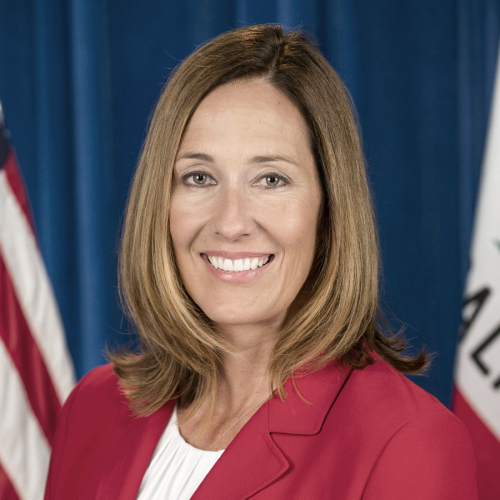
Ask Maddy about Jacqui Irwin
Scope: CA
Hi! I can help you understand Jacqui Irwin's legislative record. What would you like to know?
Try one of these
i
Maddy answers using official bill text and legislative records. Always verify before sharing.
Sources cited inline