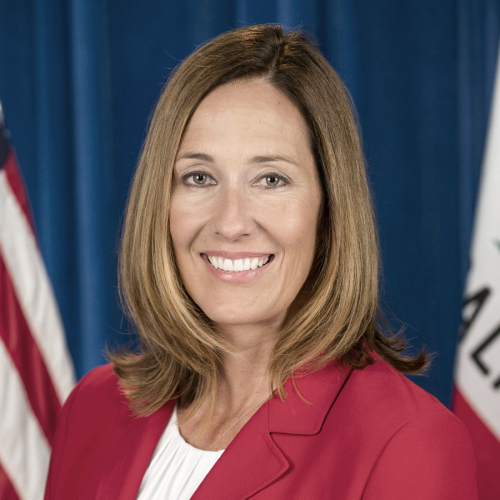
Signed into law
·
California Assembly
·
Lead sponsor
Charitable trusts: regulation and enforcement.
Existing law requires an individual or entity who for compensation solicits funds or property for charitable purposes to disclose that the solicitation is being conducted by a commercial fundraiser for a charitable purpose and the registered name of the commercial fundraiser. This bill would require the disclosures, if printed or if presented electronically, to be in at least 12-point type, and be clear and conspicuous. Existing law, the Supervision of Trustees and Fundraisers for Charitable Purposes Act, generally regulates charitable corporations, trustees, and other legal entities holding property for charitable purposes, commercial fundraisers for charitable purposes, and fundraising counsel for charitable purposes, among others, over which the state or the Attorney General has enforcement or supervisory powers. Existing law defines a commercial fundraiser for charitable purposes to mean any individual, corporation, unincorporated association, or other legal entity who, for compensation, engages in specified activities, including, among other things, soliciting funds, assets, or property in this state for charitable purposes. Existing law defines a fundraising counsel for charitable purposes to mean any individual, corporation, unincorporated association, or other legal entity who, for compensation, engages in specified activities including, among other things, planning, managing, or preparing material for the solicitation of funds, but who does not engage in specified activities, including, among other things, soliciting funds, assets, or property for charitable purposes. Existing law requires the Attorney General to establish and maintain a register of charitable corporations, unincorporated associations, and trustees subject to these provisions and of the particular trust or other relationship under which they hold property for charitable purposes. Existing law authorizes the Attorney General to bring any action against trustees or against any charitable corporation or director or officer thereof, to enforce a charitable trust, to impress property with a trust for charitable purposes, or to recover property or the proceeds thereof at any time within 10 years after the cause of action accrued. This bill would expand the definition of a commercial fundraiser for charitable purposes to include any individual, corporation, unincorporated association, or other legal entity that plans, manages, advises, counsels, consults, or prepares material for, or with respect to, the solicitation in this state of funds, assets, or property for charitable purposes, as specified. The bill would exclude from the definition of a commercial fundraiser for charitable purposes, a trustee, a charitable corporation, specified financial institutions, or an escrow agent or caging company, as defined, that receives or controls funds as a result of a solicitation for charitable purposes. The bill would list conditions in which a fundraising counsel for charitable purposes is deemed to receive or control funds, assets, or property. The bill would require an individual, corporation, unincorporated association, or other legal entity that does not meet the qualifications of fundraising counsel for charitable purposes to be deemed a commercial fundraiser for charitable purposes. This bill would authorize the Attorney General to bring an action for a violation of these provisions at any time within 10 years after the cause of action accrued. The bill would also authorize the Attorney General to bring an action for civil liability against a person who aids or abets a violation of these provisions at any time within 10 years after the cause of action accrued. Existing law provides that one who wrongfully detains a thing is an involuntary trustee thereof for the benefit of the owner, and that one who gains a thing by fraud, or other wrongful act is an involuntary trustee of the thing gained for the benefit of the owner. This bill would authorize the Attorney General to bring an action for a violation of these provisions at any time within 10 years after the cause of action accrued. This bill would also authorize the Attorney General to bring an action for civil liability against a person who aids or abets a violation of these provisions at any time within 10 years after the cause of action accrued. Existing law, the Nonprofit Corporation Law, sets forth standards of conduct for directors and officers of nonprofit public benefit corporations and provides that it is a crime for any director or officer of any corporation among other things, to knowingly engage in specified acts relating to fraud, to make materially false reports, to receive or acquire possession of the property of the corporation, or to falsify the books or accounts of the corporation. This bill would authorize the Attorney General to bring an action for a violation of these provisions at any time within 10 years after the cause of action accrued. The bill would also authorize the Attorney General to bring an action for civil liability against a person who aids or abets a violation of the standards of conduct for directors and officers of nonprofit public benefit corporations at any time within 10 years after the cause of action accrued.