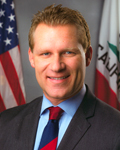
Photo of Chad Mayes
I California House · District 42

Rep. Chad Mayes

Compare
Total votes
16,300
all sessions
Attendance
89%
1,604 missed
Lower than 84% of chamber peers
With party
100%
of cast votes
Higher than 97% of chamber peers
Bipartisan score
0%
crosses aisle rarely
Lower than 100% of chamber peers
Sponsored
1,300
bills & resolutions
Near the chamber average
Committees
0
assignments
1,300 bills and resolutions

Sponsored bills

Total
1,300
Primary
95
Co-sponsor
1,205
This page
1,300
matching current filters
Co-sponsor AB 2051
Passed · California House · Co-sponsor
Pupil instruction: financial literacy: instructional materials: professional development.

Existing law requires the State Board of Education to adopt basic instructional materials for use in kindergarten and grades 1 to 8, inclusive, for governing boards of school districts in specified subjects and any other subject, discipline, or interdisciplinary area for which the state board determines the adoption of instructional materials to be necessary or desirable, and requires the governing board of each school district maintaining one or more high schools to adopt instructional materials for use in the high schools under its control, consistent with specified conditions. Existing law requires the adopted course of study for grades 1 to 6, inclusive, and for grades 7 to 12, inclusive, to offer instruction in specified areas of study, including social sciences. Existing law establishes the Instructional Quality Commission and requires the commission to, among other things, recommend curriculum frameworks to the state board. Existing law requires the state board, concurrently with, but not before, the next revision of textbooks or curriculum frameworks in the social sciences, health, and mathematics curricula, to ensure that these academic areas integrate components of, among other things, financial literacy. Notwithstanding that requirement on the state board, existing law requires the commission, when the history-social science curriculum framework is revised after January 1, 2017, to consider including age-appropriate information for kindergarten and grades 1 to 12, inclusive, regarding certain topics on financial literacy. This bill would require the Superintendent of Public Instruction, subject to an appropriation of one-time funds for this purpose in the annual Budget Act or another statute, to allocate funding for the purchase of standards-aligned instructional materials in financial literacy for kindergarten and grades 1 to 12, inclusive, and for professional development in that content, as provided. The bill would require the Superintendent to allocate these funds to school districts, county offices of education, charter schools, and the state special schools on the basis of an equal amount per unit of average daily attendance, as those numbers were reported at the time of the first principal apportionment for the 2019–20 fiscal year. The bill would require a school district, county office of education, charter school, or state special school to expend allocated funds for professional development or instructional materials in financial literacy that is aligned to the history-social science curriculum framework adopted by the state board and the financial literacy subject matter recommended considered by the commission, as provided.


Passed Aug 11, 2022 1 co-sponsor
Co-sponsor SB 1329
Passed · California Senate · Co-sponsor
Publicly available hydrogen-fueling stations: electric vehicle charging stations.

Existing law requires the State Air Resources Board, on or before June 30, 2014, and until January 1, 2024, to annually aggregate and make available specified information regarding hydrogen-fueled vehicles and, based on that information, evaluate the need for additional publicly available hydrogen-fueling stations, as specified, and report those findings to the State Energy Resources Conservation and Development Commission. Existing law requires the commission to allocate $20,000,000 annually to fund the number of publicly available hydrogen-fueling stations identified by the state board, not to exceed 20% of the moneys appropriated by the Legislature from the Alternative and Renewable Fuel and Vehicle Technology Fund, until there are at least 100 publicly available hydrogen-fueling stations in operation in the state. Existing law requires the commission and the state board, on an annual basis, to jointly review and report progress toward establishing a hydrogen-fueling network that provides the coverage and capacity to fuel vehicles requiring hydrogen fuel that are being placed into operation in the state. Existing law requires the commission and the state board to consider certain information while conducting this review and determine the remaining cost and timing to establish a network of 100 publicly available hydrogen-fueling stations in operation in the state and whether funding from the Clean Transportation Program remains necessary to achieve this goal. This bill would delete the requirement that the state board aggregate and make available specified information and report to the commission on or before June 30, 2014. The bill would instead require the state board, on or before June 30, 2023, and annually thereafter, to determine the number of publicly available hydrogen-fueling stations that are necessary to provide a publicly available hydrogen-fueling station network, taking into consideration the state board's 2020 Mobile Source Strategy and specified goals, recommendations, and data. The bill would delete the requirement that the commission allocate $20,000,000 annually to fund the number of publicly available hydrogen-fueling stations identified by the state board. The bill would instead require the commission to annually allocate from the moneys annually appropriated by the Legislature from the fund an amount determined appropriate by the commission to achieve the goal established by the state board of providing a publicly available hydrogen-fueling station network and to build the number of electric vehicle or "EV" charging stations estimated by the commission its biennial statewide assessment of electric vehicle charging infrastructure, as provided. The bill would require the commission to ensure that certain requirements are met regarding expenditures of the moneys allocated by the commission. The bill would require the commission and the state board, as part of their annual joint review and report, to determine the remaining cost and timing to establish a network of 200 statewide publicly available hydrogen-fueling stations, instead of 100 stations.

Passed Aug 11, 2022 1 co-sponsor
Co-sponsor AB 2532
Passed · California House · Co-sponsor
Scoping plan: state agency, board, and department compliance and implementation: reports.

The California Global Warming Solutions Act of 2006 designates the State Air Resources Board as the state agency charged with monitoring and regulating sources of emissions of greenhouse gases. The state board is required to approve a statewide greenhouse gas emissions limit equivalent to the statewide greenhouse gas emissions level in 1990 to be achieved by 2020 and to ensure that statewide greenhouse gas emissions are reduced to at least 40% below the 1990 level by 2030. The act requires the state board to prepare and approve a scoping plan for achieving the maximum technologically feasible and cost-effective reductions in greenhouse gas emissions and to update the scoping plan at least once every 5 years. The act requires the scoping plan to identify and make recommendations on direct emissions reduction measures, alternative compliance mechanisms, market-based compliance mechanisms, and potential monetary and nonmonetary incentives for sources and categories of sources that the state board finds are necessary or desirable to facilitate the achievement of the maximum feasible and cost-effective reductions of greenhouse gas emissions, as provided. This bill would require, on or before March 1, 2023, and on or before March 1 of each year thereafter, each state agency, board, or department to post on its internet website a report regarding its compliance with and efforts to implement any goal or recommendation related to that state agency, board, or department, as defined, that is identified by the state board in the scoping plan, including any scoping plan updates. The bill would require a state agency, board, or department to include specified information in its report, including, but not limited to, identification of all scoping plan goals or recommendations that the state agency, board, or department is charged with or responsible, in whole or in part, for implementing, a description of the state agency's, board's, or department's, efforts to implement each scoping plan goal or recommendation, and whether the state agency, board, or department has fully implemented each scoping plan goal or recommendation. The bill would require, for each scoping plan goal or recommendation that is not fully implemented, a state agency, board, or department to describe in detail why the scoping plan goal or recommendation has not been fully implemented and the steps necessary for the state agency, board, or department to fully implement the goal or recommendation.

Passed Aug 11, 2022 1 co-sponsor
Showing 81 to 90 of 1,300 bills
Previous 1 8 9 10 130 Next