

Relative to Korean American Day.
This measure would proclaim January 13, 2019, as Korean American Day.
Signed into law Feb 11, 2019
1 co-sponsor
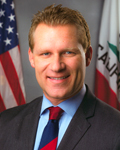
This measure would proclaim January 13, 2019, as Korean American Day.
This measure would honor the late Reverend Dr. Martin Luther King, Jr. and commemorate Dr. Martin Luther King, Jr. Day.
Existing law establishes various programs, including, among others, the Emergency Housing and Assistance Program, homeless youth emergency service pilot projects, and Housing First and the Homeless Coordinating and Financing Council, to provide assistance to homeless persons. Existing law establishes the council to oversee the implementation of the Housing First guidelines and regulations, and, among other things, identify resources, benefits, and services that can be accessed to prevent and end homelessness in California. This bill would require the council to assume additional responsibilities, including setting specific, measurable goals aimed at preventing and ending homelessness among youth in the state and defining outcome measures and gathering data related to those goals. The bill would also require the council, in order to coordinate a spectrum of funding, policy, and practice efforts related to young people experiencing homelessness, to coordinate with certain stakeholders and, to the extent that funding is made available, provide technical assistance and program development support.
Existing law establishes the procedure for a person to change his or her name. When a proceeding for a change of name is commenced by the filing of a petition, existing law requires the court to issue an order reciting the filing of the petition, the name of the person by whom it is filed, and the name proposed. Existing law provides that if a petition for a change of name establishes that the petitioner is an active participant in an address confidentiality program, as specified, and the petition alleges the reason for the change of name is to avoid domestic violence, stalking, or sexual assault, the action for a change of name is exempt from this publication requirement. This bill would add avoiding human trafficking as a reason to exempt an action for a change of name from the publication requirement. The bill would prohibit a court from charging a minor a court fee for a proceeding for a change of name if the action is exempt from the publication requirement. The bill would name this prohibition "Sydney's Law."
Existing law, the Mental Health Services Act (MHSA) , an initiative measure enacted by the voters by Proposition 63 at the November 2, 2004, statewide general election, establishes the continuously appropriated Mental Health Services Fund to fund various county mental health programs by imposing a tax of 1% on annual incomes above $1,000,000. The MHSA establishes the Mental Health Services Oversight and Accountability Commission to oversee various parts of the act, as specified. Under the MHSA, funds are distributed to counties to be expended pursuant to a local plan for specified purposes, including, but not limited to, prevention and early intervention. Existing law specifies that prevention and early intervention services include outreach, access, and linkage to medically necessary care, reduction in stigma, and reduction in discrimination. The MHSA permits amendment by the Legislature by a 23 vote of each house if the amendment is consistent with, and furthers the intent of, the MHSA. This bill would require the commission, on or before January 1, 2020, to establish priorities for the use of prevention and early intervention funds and to develop a statewide strategy for monitoring implementation of prevention and early intervention services, including enhancing public understanding of prevention and early intervention and creating metrics for assessing the effectiveness of how prevention and early intervention funds are used and the outcomes that are achieved. The bill would require the commission to establish a strategy for technical assistance, support, and evaluation to support the successful implementation of the objectives, metrics, data collection, and reporting strategy. The bill would amend the Mental Health Services Act by requiring the portion of the funds in the county plan relating to prevention and early intervention to focus on the priorities established by the commission. The bill would authorize a county to include other priorities, as determined through the stakeholder process, either in place of, or in addition to, the established priorities. If the county chooses to include other programs, the bill would require the plan to include a description of why those programs are included and metrics by which the effectiveness of those programs are to be measured. The bill would authorize counties to act jointly to meet specified requirements. The bill would require the commission to review the plans and approve them if they meet specified requirements. This bill would declare that its provisions further the intent of the MHSA. By requiring counties to include additional information in their local plans, this bill would impose a state-mandated local program. The California Constitution requires the state to reimburse local agencies and school districts for certain costs mandated by the state. Statutory provisions establish procedures for making that reimbursement. This bill would provide that, if the Commission on State Mandates determines that the bill contains costs mandated by the state, reimbursement for those costs shall be made pursuant to the statutory provisions noted above.
The existing federal Indian Gaming Regulatory Act of 1988 provides for the negotiation and execution of tribal-state gaming compacts for the purpose of authorizing certain types of gaming on Indian lands within a state. The California Constitution authorizes the Governor to negotiate and conclude tribal-state gaming compacts, subject to ratification by the Legislature. Existing law expressly ratifies a number of tribal-state gaming compacts, and amendments of tribal-state gaming compacts, between the State of California and specified Indian tribes. The California Environmental Quality Act (CEQA) requires a lead agency to prepare, or cause to be prepared, and certify the completion of, an environmental impact report on a project, as defined, that it proposes to carry out or approve that may have a significant effect on the environment, as defined, or to adopt a negative declaration if it finds that the project will not have that effect. This bill would ratify the tribal-state gaming compacts entered into between the State of California and the following Indian tribes: the La Jolla Band of Luiseño Indians, the Mechoopda Indian Tribe of Chico Rancheria, the San Pasqual Band of Mission Indians, the Torres-Martinez Desert Cahuilla Indians, and the Twenty-Nine Palms Band of Mission Indians. The bill would also ratify the amendment to the tribal-state gaming compact between the State of California and the Dry Creek Rancheria Band of Pomo Indians, executed on August 1, 2018, and the amendment to the tribal-state gaming compact between the State of California and the Karuk Tribe, executed on August 1, 2018. The bill would provide that, in deference to tribal sovereignty, certain actions related to these compacts and amended compacts are not projects for purposes of CEQA. This bill would declare that it is to take effect immediately as an urgency statute.
Existing law establishes the Medi-Cal program, administered by the State Department of Health Care Services, under which basic health care services are provided to qualified low-income persons. The Medi-Cal program is, in part, governed and funded by federal Medicaid program provisions. Existing law provides coverage for certain dental services, as specified, to Medi-Cal beneficiaries through either the Medi-Cal fee-for-service delivery system, which is also referred to as Denti-Cal, or the Medi-Cal dental managed care delivery system. Existing law requires the department to report to the Legislature, by October 1, 2017, on progress towards the goal of raising the Denti-Cal utilization rate among eligible child beneficiaries to 60% or greater and identify a date by which the department projects this utilization goal will be met. This bill, until January 1, 2023, would establish the Medi-Cal Dental Advisory Group in the department, as specified, for the purpose of studying the structure, policies, and priorities of the Medi-Cal dental fee-for-service program and the Medi-Cal dental managed care program with the goal of increasing dental utilization rates among eligible beneficiaries, as specified, and improving the oral health of the Medi-Cal eligible population, providing assistance and advice to the department, the Legislature, and the Governor to ensure that the Denti-Cal program is based on sound clinical evidence and scientific evidence, and studying and evaluating how the Medi-Cal dental fee-for-service and the Medi-Cal dental managed care program policies align with and support the implementation of the state oral health plan. The bill would prohibit the advisory group from taking a position on legislation. The bill would require the advisory group to report any of its findings to the Legislature, at least annually, and would require the department to post those findings on its Internet Web site. The bill would make related legislative findings and declarations.