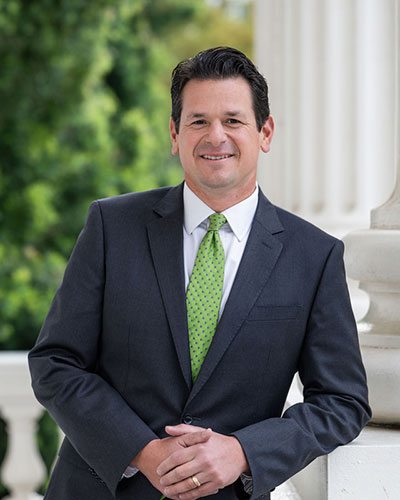
Photo of John Harabedian
D California Assembly · District 41 On the 2026 ballot

Asm. John Harabedian

Compare
Total votes
5,154
all sessions
Attendance
97%
108 missed
Near the chamber average
With party
100%
of cast votes
Near the chamber average
Bipartisan score
0%
crosses aisle rarely
Near the chamber average
Sponsored
455
bills & resolutions
Near the chamber average
Committees
15
assignments
455 bills and resolutions

Sponsored bills

Total
455
Primary
38
Co-sponsor
417
This page
455
matching current filters
Co-sponsor HR 71
Passed · California Assembly · Co-sponsor
Relative to National Fried Rice Day.

Maddy summaryThis symbolic resolution recognizes September 20, 2025, as National Fried Rice Day in California, highlighting the dish's cultural significance to Asian American communities and its connection to California's rice-growing economy (noting the state's status as the second-largest rice producer). It has no legal effect or policy changes - it serves solely to celebrate culinary traditions and community diversity. The resolution was adopted by the California Assembly with no opposing votes.

Passed Sep 4, 2025 1 co-sponsor
Primary HR 52
Passed · California Assembly · Lead sponsor
Relative to Kimchi Day.

Maddy summaryThis House Resolution (HR 52) designates November 22, 2025, as "Kimchi Day" in California. It symbolically recognizes kimchi's cultural significance in Korean heritage, its health benefits, and the contributions of Korean Americans to California. The resolution has no binding effect or funding provisions - it simply encourages public acknowledgment of kimchi through an official state designation. It directly affects California's official calendar and serves as a non-binding tribute to Korean American culture and cuisine.

Passed Sep 2, 2025 0 co-sponsors
Co-sponsor HR 65
Passed · California Assembly · Co-sponsor
Relative to Filipino American History Month.

Maddy summaryThis House Resolution designates a month as Filipino American History Month in California. It recognizes the historical contributions of Filipino Americans to the state, including early settlement (dating to 1587), agricultural labor, community building (such as "Little Manila" in Stockton), and military service during World War II. As a symbolic resolution, it does not create new laws, policies, or direct effects on any specific group.

Passed Sep 2, 2025 1 co-sponsor
Primary AB 597
Passed · California Assembly · Lead sponsor
Public insurance adjusters.

Existing law, the Public Insurance Adjusters Act, governs the regulation, licensing, and registration of public insurance adjusters and requires the Insurance Commissioner to administer the act. The act prohibits a licensee from acting as a public insurance adjuster without having first entered into a written contract and governs the form and content of the contract, including setting forth required and prohibited contract terms, including requiring a description of the services to be provided to the insured. Existing law prohibits a public adjuster from receiving a fee or other consideration in excess of the amount or percentage provided in the contract. A person who violates these provisions is guilty of a misdemeanor. This bill would require the contract between the public adjuster and the insured to include a description of the services to be provided, including the specific claim and coverages to which the services apply. The bill would prohibit a public adjuster contract from allowing a licensee's fee, commission, or other valuable consideration to be for, or based upon, (1) any amount paid to the insured prior to the date of the written contract with the public adjuster if the claim pertains to a catastrophic disaster or a state of emergency, or, (2) on an insurer's payment for specific claims or coverages to which the services do not apply. Existing law prohibits licensees from soliciting or attempting to solicit employment from a client during a loss-producing occurrence, or from soliciting a policyholder or initiating contact with a policyholder during specified hours. This bill would instead prohibit licensees from soliciting or attempting to solicit employment from a policyholder or their representative during a loss-producing occurrence and would prohibit a licensee from also soliciting or contacting a policyholder's representative during those specified hours. Existing law entitles an insured to rescind a contract without any time limit if the licensee misrepresents or conceals a material fact from the insured before the execution of the contract. Existing law authorizes an insured to cancel a contract with a public adjuster within 5 calendar days of signing it and being provided a copy of the signed contract if the loss is included in an area subject to catastrophic disaster. This bill would expand those provisions to entitle an insured to void or rescind the contract if the licensee misrepresents or conceals a material fact before the execution of the contract or solicits employment in violation of the provisions described above. The bill would also extend the ability to cancel a contract within 5 calendar days if a property loss is included in an area subject to a state of emergency. The bill would make conforming changes to a "Notice of Cancellation" form required to be included with each contract and other related disclosures. Because a violation of these provisions would be a crime, the bill would impose a state-mandated local program. The California Constitution requires the state to reimburse local agencies and school districts for certain costs mandated by the state. Statutory provisions establish procedures for making that reimbursement. This bill would provide that no reimbursement is required by this act for a specified reason. This bill would declare that it is to take effect immediately as an urgency statute.

Passed Aug 29, 2025 0 co-sponsors
Co-sponsor SB 433
Passed · California Senate · Co-sponsor
Residential care facilities for the elderly: assisted living waiver rental rate protection.

Existing law, the California Residential Care Facilities for the Elderly Act, regulates residential care facilities for the elderly. A violation of the act is a crime. Existing law provides for the Medi-Cal program, administered by the State Department of Health Care Services, under which qualified low-income persons are provided with health care services. The Medi-Cal program is, in part, governed and funded by federal Medicaid Program provisions. Existing law provides for the State Supplementary Program for the Aged, Blind and Disabled (SSP) , which requires the State Department of Social Services to contract with the United States Secretary of Health and Human Services to make payments to SSP recipients to supplement Supplemental Security Income (SSI) payments made available pursuant to the federal Social Security Act. Under existing regulation, residential facilities for the elderly are prohibited from charging recipients of SSI payments more than a specific set rate for basic services. Existing law requires an individual under these provisions to satisfy certain financial eligibility requirements to be eligible for Medi-Cal, including, among other things, that the individual's countable income does not exceed an income standard equal to a specified amount, plus an income disregard of specified amounts, subject to certain exceptions. This bill would prohibit a residential care facility for the elderly that is contracted to receive Medi-Cal reimbursement for services provided to a resident enrolled in Medi-Cal from charging that resident a room and board rate exceeding the difference between their income, as defined, and the personal and incidental needs allowance set by the department for recipients of SSI/SSP in nonmedical out-of-home care. By creating a new crime, this bill would impose a state-mandated local program. This bill would, for the purposes of determining Medi-Cal eligibility, exclude the difference between the resident's income and the rate charged by a residential care facility for the elderly and retained by the resident from countable income. The bill would state that the exclusion does not apply to the portion of the difference retained by the resident that exceeds the personal and incidental needs allowance set by the department for recipients of SSI/SSP in nonmedical out-of-home care. Because counties are required to make Medi-Cal eligibility determinations, and this bill would alter Medi-Cal eligibility by changing the income disregard amounts and would increase the responsibility of counties in determining Medi-Cal eligibility, the bill would impose a state-mandated local program. The California Constitution requires the state to reimburse local agencies and school districts for certain costs mandated by the state. Statutory provisions establish procedures for making that reimbursement. This bill would provide that with regard to certain mandates no reimbursement is required by this act for a specified reason. With regard to any other mandates, this bill would provide that, if the Commission on State Mandates determines that the bill contains costs so mandated by the state, reimbursement for those costs shall be made pursuant to the statutory provisions noted above.

Passed Aug 29, 2025 1 co-sponsor
Co-sponsor SB 256
Passed · California Senate · Co-sponsor
Electricity: electrical infrastructure: wildfire mitigation.

Existing law vests the Public Utilities Commission with regulatory authority over public utilities, including electrical corporations, while local publicly owned electric utilities are under the direction of their governing boards. Existing law requires electrical corporations, electrical cooperatives, and local publicly owned electric utilities to construct, maintain, and operate their electrical lines and equipment in a manner that will minimize the risk of catastrophic wildfire, as specified. Existing law requires electrical corporations to annually prepare and submit wildfire mitigation plans to the Office of Energy Infrastructure Safety for review and approval. Existing law also requires local publicly owned electric utilities and electrical cooperatives to annually prepare wildfire mitigation plans and submit the plans to the California Wildfire Safety Advisory Board, as specified. Existing law requires that each wildfire mitigation plan include, among other things, a description of the preventive strategies and programs to minimize the risk of its electrical lines and equipment causing catastrophic wildfires, and a description of the appropriate and feasible procedures for notifying a customer who may be impacted by the deenergizing of electrical lines, as provided. This bill would require the commission, on or before January 1, 2027, to update a general order to require each electrical corporation to remove all permanently abandoned facilities, as specified. The bill would require an electrical corporation, for areas affected by wildfire that require electrical distribution infrastructure to be rebuilt, to consider the undergrounding of electrical distribution infrastructure if it is determined to be cost effective compared to other wildfire mitigation strategies. This bill would require an electrical corporation, for the description in the wildfire mitigation plan of the preventative strategies and programs to minimize the risk of its electrical lines and equipment causing catastrophic wildfires, to include consideration of risks related to the wildland-urban interface. The bill would require an electrical corporation, for the description in the wildfire mitigation plan of the electrical corporation's appropriate and feasible procedures for notifying a customer who may be impacted by the deenergizing of electrical lines, to include consideration of enabling residents within a household who are not the customer of record to subscribe to receive notifications related to deenergization events and of communications with public safety partners, as provided. The bill would require that an electrical corporation's wildfire mitigation plan also include a description of the processes and procedures that the electrical corporation use to coordinate communications with local governments within the service area of the electric corporation, and include an accounting of all transmission facilities, including permanently abandoned facilities, and include a plan for how and when each permanently abandoned facility will be removed and the wildfire mitigation measures that are being implemented to prevent hazards, as provided. This bill would require local publicly owned electric utilities and electrical cooperatives, for the description in the wildfire mitigation plan of the preventative strategies and programs to minimize the risk of its electrical lines and equipment causing catastrophic wildfires, to include consideration of risks related to the wildland-urban interface. The bill would require a local publicly owned electric utility or electrical cooperative's wildfire mitigation plan to include a description of the processes and procedures by which the local publicly owned electric utility or electrical cooperative coordinates communication with local governments within the service area of the local publicly owned electric utility or electrical cooperative, as specified. Existing law, the California Emergency Services Act, establishes, within the office of the Governor, the Office of Emergency Services (OES) under the supervision of the Director of Emergency Services. Existing law requires OES to establish a standardized emergency management system for use by all emergency response agencies. This bill would require certain electrical corporations and local publicly owned electric utilities, in cooperation with OES and other emergency service agencies, to establish procedures for the coordination of efforts between electrical corporations and local publicly owned electric utilities and their representatives and those of emergency response agencies. The bill would require these electrical corporations and local publicly owned electric utilities to assign liaison representatives to work within each local operations center, as provided. Under existing law, a violation of any order, decision, rule, direction, demand, or requirement of the commission is a crime. Because a violation of a commission action implementing certain of this bill's requirements would be a crime, the bill would impose a state-mandated local program. Additionally, by imposing new duties on local publicly owned electric utilities, the bill would impose a state-mandated local program. The California Constitution requires the state to reimburse local agencies and school districts for certain costs mandated by the state. Statutory provisions establish procedures for making that reimbursement. This bill would provide that no reimbursement is required by this act for specified reasons.

Passed Aug 29, 2025 1 co-sponsor
Co-sponsor AB 954
Passed · California Assembly · Co-sponsor
Interregional transportation strategic plan: bicycle highways.

Existing law establishes the state transportation improvement program (STIP) process, pursuant to which the California Transportation Commission programs, on a biennial basis, available state and federal funds for transportation capital improvement projects, other than state highway rehabilitation and repair projects, for the 5-year period of the STIP, based on the interregional transportation improvement program (ITIP) prepared by the Department of Transportation and the regional transportation improvement programs (RTIP) prepared by regional transportation planning agencies. Existing law requires projects included in the ITIP to be consistent with the interregional transportation strategic plan (ITSP) . Existing law requires the department to submit the ITSP to the commission for approval and requires the ITSP, among other things, to be directed at achieving a high functioning and balanced interregional transportation system and consistent with the California Transportation Plan. This bill would require, to the extent feasible and consistent with the California Transportation Plan, the department to assess incorporating bicycle highways into strategic interregional corridors within the ITSP.

Passed Aug 29, 2025 1 co-sponsor
Co-sponsor AB 381
Passed · California Assembly · Co-sponsor
State contracts: certification process: forced labor and human trafficking.

Existing law requires a contract entered into by any state agency for the procurement or laundering of apparel, garments, or corresponding accessories, or the procurement of equipment, materials, or supplies, other than procurement related to a public works contract, to require that a contractor certify that nothing furnished to the state pursuant to the contract has been laundered or produced by certain types of labor, including forced labor, as defined. Existing law makes any person who falsely certifies pursuant to these provisions guilty of a misdemeanor. This bill would, for a contract entered into or renewed on or after January 1, 2026, revise the above contracting requirements to also require a contractor to certify that the contract complies with specified requirements relating to human trafficking, including certain prohibitions on contractors, contractor employees, subcontractors, subcontractor employees, and their agents. The bill would revise the definition of forced labor to mean knowingly providing or obtaining labor or services of a person by, among other things, threats of serious harm to, or physical restraint against, that person or another person. This bill would require contractors and subcontractors to notify employees of specified prohibited activities and the actions that may be taken against them for violations. The bill would provide that a contractor is ineligible for, and shall not bid on, or submit a proposal for, a contract under these provisions if the contractor has failed to certify its compliance. The bill would also require a contractor to exercise due diligence in ensuring that its subcontractors comply with those requirements, including requiring each subcontractor to sign a certification. By expanding the scope of a crime, the bill would impose a state-mandated local program. This bill would require, before a contract or subcontract is awarded, a proposed contractor or proposed subcontractor to provide a certification to the contracting officer or contractor, as applicable, that states the contractor or subcontractor has implemented a compliance plan, as specified, and has conducted due diligence that either (1) to the best of the contractor's or subcontractor's knowledge and belief, certain parties have not engaged in any specified prohibited activities or (2) if the contractor or subcontractor is aware of abuses relating to the specified prohibited activities, then certain parties have taken the appropriate remedial and referral actions. This bill would require a contractor or subcontractor to take specified actions to ensure compliance with the above-described provisions, including requiring the contractor or subcontractor to disclose to the contracting officer and the state agency with oversight information sufficient to identify the nature and extent of a violation of a prohibited activity. The bill would specify certain actions a contractor would be required to take if a contractor, contractor employee, subcontractor, subcontractor employee, or agent violates these provisions or specified provisions, including, among others, notifying its employees of the actions that will be taken against the employee or agent for violations. Existing law authorizes certain sanctions to be imposed if a contractor knew or should have known that the apparel, garments, corresponding accessories, equipment, materials, or supplies furnished to the state were laundered or produced in violation of specified conditions, including, among others, voiding the contract under which the prohibited apparel, garments, or corresponding accessories, equipment, materials, or supplies were laundered or provided at the option of the state agency and removing the contractor from the bidder's list for a period not to exceed 360 days. This bill would, for a contract entered into or renewed on or after January 1, 2026, authorize additional sanctions, including, among others, requiring a contractor to remove a contractor employee from the performance of the contract, requiring the contractor to terminate a subcontractor, and suspending contract payments until the contractor has taken appropriate remedial action. The bill would also specify that these requirements govern contracts and subcontracts entered into by a state agency, regardless of place of performance. Existing law authorizes a contractor to request a hearing before an administrative law judge when sanctions are imposed. Existing law requires the administrative law judge to consider any measures the contractor has taken to ensure compliance with the above-described provisions and authorizes the administrative law judge to waive any or all sanctions if it is determined that the contractor has acted in good faith. This bill would, for a contract entered into or renewed on or after January 1, 2026, authorize the administrative law judge to additionally consider mitigating factors and aggravating factors, as specified. Existing law authorizes a state agency that investigates a complaint against a contractor for violation of the above-described provisions to limit its investigation to evaluating the information provided by the person or entity submitting the complaint and information provided by the contractor. This bill would, for a contract entered into or renewed on or after January 1, 2026, authorize the state agency to limit its investigation to credible information. The bill would require the contracting officer, upon receipt of credible information regarding a violation of specified provisions, to promptly notify the state agency with oversight, the agency debarring and suspending official, and law enforcement officials with jurisdiction over the alleged offense, as specified. The bill would authorize the contracting officer to direct the contractor to take specific steps to abate the alleged violation or enforcement of the requirements of its compliance plan. The California Constitution requires the state to reimburse local agencies and school districts for certain costs mandated by the state. Statutory provisions establish procedures for making that reimbursement. This bill would provide that no reimbursement is required by this act for a specified reason.


Passed Aug 29, 2025 1 co-sponsor
Co-sponsor AB 380
Passed · California Assembly · Co-sponsor
Price gouging.

Under existing law, upon the proclamation of a state of emergency by the President of the United States or the Governor, or upon the declaration of a local emergency by the executive officer of any county, city, or city and county, and for 30 days or 180 days, as specified, following the proclamation or declaration of emergency, it is a misdemeanor, punishable by up to one year in county jail, a fine of $10,000, or both that imprisonment and fine, for a person, contractor, business, or other entity to sell or offer to sell certain goods or services for a price of more than 10% greater than the price charged by that person immediately prior to the proclamation or declaration of emergency. This bill would instead make that misdemeanor applicable, for those provisions for which the misdemeanor is applicable for a period of 30 days following the proclamation or declaration of emergency, for a period of 60 days. The bill would, for an entity or person other than a natural person, make that misdemeanor punishable by a fine of $25,000. By expanding the scope of a crime, this bill would impose a state-mandated local program. Under existing law, as described above, it is unlawful to increase the rental price for housing by more than 10%, or evict any residential tenant of residential housing, upon the proclamation or declaration of emergency. Existing law defines "housing" for purposes of these provisions as any rental housing with an initial lease term of no longer than one year. This bill would expand the definition of "housing" to include any rental housing without regard to the length of the initial lease term. The bill would make the prohibitions on increasing the rental price by more than 10% and eviction generally applicable to commercial real property. By expanding the scope of a crime, this bill would impose a state-mandated local program. The California Constitution requires the state to reimburse local agencies and school districts for certain costs mandated by the state. Statutory provisions establish procedures for making that reimbursement. This bill would provide that no reimbursement is required by this act for a specified reason.
Passed Aug 29, 2025 1 co-sponsor
Co-sponsor AB 1190
Passed · California Assembly · Co-sponsor
Department of Motor Vehicles: private industry partner fees.

Existing law authorizes the Department of Motor Vehicles to establish contracts for electronic programs that allow qualified private industry partners, including second-line business partners, to provide services that include processing and payment programs for vehicle registration and titling transactions. Existing law authorizes the department to establish the maximum amount that a qualified private industry partner may charge its customers, but requires the department to annually adjust that amount, as specified. The bill would, notwithstanding the above-described authorization to establish maximum charge amounts, require the department to limit the amount that any qualified second-line business partner may charge an individual customer for a vehicle registration renewal that is processed on the second-line business partner's internet website to no more than the maximum amount a first-line service provider may charge its customers. The bill would also direct the department to require all qualified second-line business partners to prominently display on their internet websites, in a clear and conspicuous manner, a working link to the department's internet website with a specified statement informing the public that consumers may obtain services from the department at no additional cost.

Passed Aug 29, 2025 1 co-sponsor
Showing 321 to 330 of 455 bills
Previous 1 … 32 33 34 … 46 Next