

Passed Feb 18, 2022
1 co-sponsor
Total votes
31,861
all sessions
Attendance
92%
1,849 missed
Lower than 90% of chamber peers
With party
99%
of cast votes
Higher than 90% of chamber peers
Bipartisan score
0%
crosses aisle rarely
Lower than 93% of chamber peers
Sponsored
2,051
bills & resolutions
Lower than 83% of chamber peers
Committees
0
assignments
2,051 bills and resolutions
Sponsored bills
Total
2,051
Primary
251
Co-sponsor
1,800
This page
2,051
matching current filters
Passed Feb 10, 2022
1 co-sponsor
Agricultural labor relations: labor representative elections: representation ballot card election.
Existing law, the Alatorre-Zenovich-Dunlap-Berman Agricultural Labor Relations Act of 1975, grants agricultural employees the right to form and join labor organizations and engage in collective bargaining with respect to wages, terms of employment, and other employment conditions, and authorizes employees to elect exclusive bargaining representatives for these purposes. Existing law requires the Agricultural Labor Relations Board to certify the results of an election conducted by secret ballot of employees in a collective bargaining unit to designate a collective bargaining representative, unless the board determines there are sufficient grounds to refuse to do so. Existing law further provides that if the board refuses to certify an election because of employer misconduct that would render slight the chances of a new election reflecting the free and fair choice of employees, the labor organization shall be certified as the bargaining representative for the bargaining unit. This bill would refer to the secret ballot election as a polling place election. This bill would also permit agricultural employees, as an alternative election procedure, to select their labor representatives through a representation ballot card election by submitting a petition to the board supported by representation ballot cards signed by a majority of employees in the bargaining unit. This bill would require the board to conduct an immediate investigation regarding the validity of the petition and the supporting representation ballot cards and, within 5 days after receiving a petition, to make an administrative decision as to whether the petition meets certain requirements and as to whether the labor organization submitted the requisite number of cards. The bill would require the board to certify the labor organization as the exclusive bargaining representative if the board determines that the labor organization has submitted the required number of representation ballot cards and the cards meet specified criteria. Existing law authorizes a person aggrieved by the final order of the board granting or denying in whole or in part the relief sought for an unfair labor practice, to obtain a review of the order in a specified court of appeal by filing in the court a written petition requesting that the order of the board be modified or set aside. This bill would require an employer who appeals or petitions for a writ of review of any order of the board involving make-whole, backpay, or other monetary awards to employees, to post an appeal bond in the amount of the entire economic value of the order, as specified, and would provide for the bond to be forfeited under specified conditions. This bill would state that its provisions are severable.
Vetoed Feb 3, 2022
1 co-sponsor
The Upward Mobility Act of 2021: boards and commissions: civil service: examinations: classifications.
Existing law provides that it is the policy of the State of California that the composition of state boards and commissions shall be broadly reflective of the general public, including ethnic minorities and women. This bill would require that, on or after January 1, 2022, all state boards and commissions consisting of one or more volunteer members have at least one board member or commissioner from an underrepresented community. The bill would define the term "board member or commissioner from an underrepresented community" as an individual who self-identifies as Black, African American, Hispanic, Latino, Asian, Pacific Islander, Native American, Native Hawaiian, or Alaska Native; who self-identifies as gay, lesbian, bisexual, or transgender; who is a veteran, as defined; or who has a disability, as defined. The bill would apply these requirements only as vacancies on state boards and commissions occur. The California Constitution establishes the State Personnel Board (board) and requires the board to, among other things, enforce the civil service statutes, prescribe probationary periods and classifications, adopt rules authorized by statute, and review disciplinary actions. The Constitution also requires the executive officer of the board to administer the civil service statutes under the rules of the board. Under existing law, the board is authorized to conduct audits and investigations of the personnel practices of the Department of Human Resources and appointing authorities to ensure compliance with civil service policies, procedures, and statutes. Existing law establishes the Department of Human Resources (department) and provides that, subject to the requirements of the California Constitution, it succeeds to and is vested with the duties, purposes, responsibilities, and jurisdiction exercised by the board as its designee with respect to the board's administrative and ministerial functions. This bill, among other things, would instead authorize the department, at the direction of and in conjunction with the State Personnel Board, to conduct audits and investigations of personnel practices of other departments and appointing authorities to ensure compliance with civil service policies, procedures, and statutes. The bill would require the department to oversee compliance with rules prescribed by the board consistent with a merit-based civil service system to govern appointments, classifications, examinations, probationary periods, disciplinary actions, and other matters related to the board's constitutional authority, and require the department, pursuant to a process established by the State Personnel Board, to investigate complaints filed by employees in a state department's equal employment opportunity program and personnel office, other civil service employees, applicants, and members of the public alleging violations of civil service laws and report findings to the board for adjudication. Existing law requires any state agency, board, or commission that directly or by contract collects demographic data as to the ancestry or ethnic origin of Californians to use separate collection categories and tabulations for major Asian and Pacific Islander groups, as specified. This bill would require any state agency, board, or commission that directly or by contract collects demographic data as to the ancestry or ethnic origin of Californians to use separate collection categories and tabulations for specified African American groups. The bill would distinguish between African Americans who are descendants of persons enslaved in the United States and African Americans who are not descendants of persons enslaved in the United States, as defined. Existing law requires that lists of eligible applicants for civil service positions be established as a result of free competitive examinations. Existing law, with regard to the requirements governing examinations for establishing employment lists, authorizes the department to designate an appointing power to design, announce, or administer examinations and requires the board to establish minimum qualifications for determining the fitness and qualifications of employees for each class of position. This bill would require instead that the board establish a process that includes diversity and best practices in each aspect of the design, announcement, and administration of the examinations and, in developing qualifications for determining the fitness and qualifications of employees, create standards for statements of qualifications used as examination criteria for the State of California in determining the fitness and qualifications of employees for each class of position. The bill would also require that examinations with an oral component be video and otherwise electronically recorded and all other examination materials be maintained for each examination, as specified. The bill would also require the announcement for an examination to include the core competencies, as defined, and the standard statement of qualifications, if applicable. Existing law requires all appointing authorities of state government to establish an effective program of upward mobility for employees in low-paying occupational groups. Existing law requires each upward mobility program to include annual goals for upward mobility and a timetable for when progress will occur, and requires the department to approve the goals and timetables. Existing law authorizes an appointing authority that determines that it will be unable to achieve the goals to ask the department for a reduction in the goals, as specified. This bill would repeal the authorization for an appointing authority to ask the department for a reduction in their annual upward mobility goals, and would instead require the appointing authority to submit a report explaining the failure to achieve the goals and what requirements are necessary to facilitate achieving the goals, as specified, and then submit the report to specified persons. The bill would, on or before July 1, 2022, require the department to develop model upward mobility goals that include race, gender, LGBTQ, veteran status, or physical or mental disability as factors, and to provide a report to the Legislature outlining the department workforce analysis used to develop those model goals. Existing law authorizes a state appointing power to take adverse action against state civil service employees for specified causes for discipline, and provides procedures for state civil service disciplinary proceedings. Existing law authorizes the board to hold hearings and make investigations concerning all matters relating to the enforcement and effect of the State Civil Service Act, as specified. This bill would require each appointing power to provide the Department of Human Resources with a report, no later than April 1 of each year, detailing certain information regarding adverse actions against state employees, including, but not limited to, the ethnicity, race, gender identity, or sexual orientation of each employee served with an adverse action in the preceding calendar year.
Vetoed Feb 3, 2022
0 co-sponsors
Passed Feb 3, 2022
1 co-sponsor
Passed Feb 3, 2022
1 co-sponsor
Collective bargaining: Legislature.
Existing law, the Ralph C. Dills Act (Dills Act) , governs collective bargaining between the state and recognized state public employee organizations. Existing law excludes certain employees from coverage under the Dills Act, including, among others, managerial employees, supervisory employees, and confidential employees, as defined. Existing law creates the Public Employment Relations Board and authorizes it, among other things, to determine appropriate state employee bargaining units, as specified. This bill would enact the Legislature Employer-Employee Relations Act, to provide employees of the Legislature, including some supervisory and managerial employees, the right to form, join, and participate in the activities of employee organizations of their own choosing for the purpose of representation on all matters of employer-employee relations. The bill would prescribe rights, duties, and prohibitions in this context that parallel those in the Dills Act. The bill would prohibit the Public Employment Relations Board from including employees of the Legislature in a bargaining unit that includes employees other than those of the Legislature. The bill would make it a misdemeanor for any person to willfully resist, prevent, impede, or interfere with any member of the board, or any of its agents, in the performance of duties pursuant to its provisions. By expanding the definition of a crime, this bill would impose a state-mandated local program. The bill would provide that the provisions of the Legislature Employer-Employee Relations Act are severable. The California Constitution requires the state to reimburse local agencies and school districts for certain costs mandated by the state. Statutory provisions establish procedures for making that reimbursement. This bill would provide that no reimbursement is required by this act for a specified reason.
died Feb 1, 2022
1 co-sponsor
Juvenile facilities: storage and use of chemical agents.
Existing law provides for the housing of juvenile wards of the court in juvenile facilities, including juvenile halls and forestry camps. Existing law requires the Board of State and Community Corrections to adopt minimum standards for the operation and maintenance of juvenile halls for the confinement of minors. Existing law requires the judge of the juvenile court of the county to annually inspect any jail or juvenile hall that was used for the confinement of any minor and to notify the operator of the jail or juvenile hall of any observed noncompliance with the minimum standards of the juvenile facility adopted by the board. This bill would prohibit the use or storage of a chemical agent, as defined, with the exception of oleoresin capsicum (OC) spray, inside, or on the grounds of, a juvenile facility. The bill would prohibit, commencing July 1, 2024, the use of a chemical agent against a juvenile who is under 18 years of age or in any space where a juvenile who is under 18 years of age is present. The bill would require an entity that manages, operates, or owns a juvenile facility to dispose of all chemical agents, with the exception of OC spray, in its possession on or before December 31, 2023, and to notify the board of that disposition. The bill would require the custodian of each juvenile facility to report quarterly to the board on the use of a chemical agent in the facility, as provided. The bill would require the Legislative Analyst's Office to submit to the Legislature a report on model practices and protocols for alternatives to the use of chemical agents in juvenile facilities, as specified. The bill would require the board to develop training, model practices, and regulations to implement the findings and recommendations of the report, as specified. By imposing new duties on local juvenile facilities, this bill would impose a state-mandated local program. The California Constitution requires the state to reimburse local agencies and school districts for certain costs mandated by the state. Statutory provisions establish procedures for making that reimbursement. This bill would provide that, if the Commission on State Mandates determines that the bill contains costs mandated by the state, reimbursement for those costs shall be made pursuant to the statutory provisions noted above.
died Feb 1, 2022
1 co-sponsor
State Department of Education: state school nurse consultant.
Existing law establishes in the state government a State Department of Education and the department is responsible for various ongoing activities involving the public schools. Existing law requires the Commission on Teacher Credentialing to, among other duties, establish standards for the issuance and renewal of credentials, certificates, and permits. Existing law sets forth the minimum requirements for a services credential with a specialization in health for a school nurse, as provided. Existing law requires the governing board of a school district to give diligent care to the health and physical development of pupils, and authorizes the governing board of a school district to employ properly certified persons for that work. Existing law authorizes a school nurse, subject to approval by the governing board of the school district, to perform various pupil health care services. This bill would require the department to appoint a state school nurse consultant to be housed within the department. The bill would require the state school nurse consultant to be a school nurse credentialed by the commission, as specified, who has a minimum of 5 years of experience in school health program management. The bill would require the state school nurse consultant to work with school districts and school nurses to promote quality school nursing services and school health programs that address the broad health needs of pupils, among other responsibilities. The bill would require the state school nurse consultant to annually report to the Governor and the Legislature a summary of the year's activities and specific recommendations, as provided. This bill would declare that it is to take effect immediately as an urgency statute.
Failed Feb 1, 2022
0 co-sponsors
School safety: aquatic and pool safety program: model policy.
Existing law requires the Division of Boating and Waterways, in cooperation with the State Department of Education and other appropriate entities involved with water safety, to develop an aquatic safety program to be made available for use at an appropriate grade level in public elementary schools at no expense to the schools. Existing law requires the division to notify schools and school districts of the availability of the aquatic safety program once it is developed. This bill would repeal those provisions and related legislative findings. The bill would require, on or before June 1, 2022, the division and the State Department of Public Health, in cooperation with the State Department of Education and other specified entities, to develop an aquatic and pool safety program to be made available for use at local educational agencies, defined as school districts, county offices of education, and charter schools that serve pupils in kindergarten or any of grades 1 to 12, inclusive, as a model policy at no expense to the local educational agencies. The bill would require the model policy, among other things, to be age appropriate, to address the needs of groups at a higher risk of drowning, and to include specified training materials. The bill would require the State Department of Education to notify local educational agencies of the availability of the aquatic and pool safety program model policy once it is developed and to establish a deadline for local educational agencies to adopt an aquatic and pool safety program that is based on the model policy. The bill would require the governing board or body of a local educational agency to review, at minimum every 4th year, its aquatic and pool safety program and, if necessary, update the program. By imposing additional requirements on school districts, county offices of education, and charter schools, the bill would impose a state-mandated local program. The bill would require the State Department of Education, by January 1, 2023, to submit a report to the Legislature identifying the number of local educational agencies that have adopted an aquatic and pool safety program. The California Constitution requires the state to reimburse local agencies and school districts for certain costs mandated by the state. Statutory provisions establish procedures for making that reimbursement. This bill would provide that, if the Commission on State Mandates determines that the bill contains costs mandated by the state, reimbursement for those costs shall be made pursuant to the statutory provisions noted above.
Failed Feb 1, 2022
0 co-sponsors
Ask Maddy
·
AI policy assistant
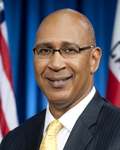
Ask Maddy about Chris Holden
Scope: CA
Hi! I can help you understand Chris Holden's legislative record. What would you like to know?
Try one of these
i
Maddy answers using official bill text and legislative records. Always verify before sharing.
Sources cited inline