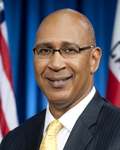
Photo of Chris Holden
D California Assembly · District 41 · Former member

Asm. Chris Holden

Contact Email
Compare
Total votes
31,861
all sessions
Attendance
92%
1,849 missed
Lower than 92% of chamber peers
With party
99%
of cast votes
Higher than 90% of chamber peers
Bipartisan score
0%
crosses aisle rarely
Lower than 93% of chamber peers
Sponsored
2,051
bills & resolutions
Lower than 83% of chamber peers
Committees
0
assignments
2,051 bills and resolutions

Sponsored bills

Total
2,051
Primary
251
Co-sponsor
1,800
This page
2,051
matching current filters
Co-sponsor ACR 166
Signed into law · California Assembly · Co-sponsor
Relative to Child Abuse Prevention Month.

This measure would acknowledge April 2022 as Child Abuse Prevention Month and encourage Californians to work together to support youth-serving child abuse prevention activities in their communities and schools.

Signed into law Jun 2, 2022 1 co-sponsor
Co-sponsor AB 2751
Passed · California Assembly · Co-sponsor
Affordable Internet and Net Equality Act of 2022.

Existing law requires all contracts for the acquisition of information technology goods and services related to information technology projects, as defined, to be made by or under the supervision of the Department of Technology, which also has the final authority in the determination of information technology procurement policy. This bill, the Affordable Internet and Net Equality Act of 2022, would require the Department of Technology, in coordination with the Public Utilities Commission and the Department of General Services, to develop and establish the Net Equality Program. The bill would require the state and state agencies, except the Department of Forestry and Fire Protection and the Office of Emergency Services, to only do business with an internet service provider offering affordable home internet service to households participating in certain public assistance programs, as specified. The bill would define affordable home internet service to mean internet service costing no more than $40 per month and that meets specified minimum speed requirements. The bill would require these internet service providers to establish a telephone number to sign up eligible households and would require these providers to advertise the availability of affordable home internet service, among other requirements placed on these providers. The bill would also make its provisions severable.

Passed Jun 1, 2022 1 co-sponsor
Co-sponsor SCR 96
Signed into law · California Senate · Co-sponsor
Relative to anniversary of Los Angeles Riots.

This measure would recognize the 30th anniversary of the Los Angeles Riots on April 29, 2022, as a time of building and reflection for the citizens of Los Angeles and the citizens of California.

Signed into law May 27, 2022 1 co-sponsor
Co-sponsor SCR 99
Signed into law · California Senate · Co-sponsor
Relative to Take Our Daughters And Sons To Work Day.

This measure would declare April 28, 2022, as Take Our Daughters and Sons to Work Day, and would recognize the goals of introducing our daughters and sons to the workplace and commend all participants of Take Our Daughters And Sons To Work Day.

Signed into law May 27, 2022 1 co-sponsor
Co-sponsor SCR 88
Signed into law · California Senate · Co-sponsor
Relative to California Wines: Down to Earth Month.

This measure would proclaim, in perpetuity, the month of April as California Wines: Down to Earth Month, to celebrate the sustainable leadership of California wineries and winegrape growers throughout the month of April.

Signed into law May 24, 2022 1 co-sponsor
Co-sponsor AB 35
Signed into law · California Assembly · Co-sponsor
Civil damages: medical malpractice.

Existing law, referred to as the Medical Injury Compensation Reform Act of 1975 (MICRA) , prohibits an attorney from contracting for or collecting a contingency fee for representing any person seeking damages in connection with an action for injury or damage against a health care provider based upon alleged professional negligence in excess of specified limits. This bill would recast those provisions and base the amount of contingency fee that may be contracted for upon whether recovery is pursuant to settlement agreement and release of all claims executed before a civil complaint or demand for arbitration is filed, or pursuant to settlement, arbitration, or judgment after a civil complaint or demand for arbitration is filed, as specified. The bill would add and revise definitions for these purposes. Existing law provides that in any action against a health care provider based upon professional negligence, the injured plaintiff is entitled to recover noneconomic losses to compensate for pain, suffering, inconvenience, physical impairment, disfigurement, and other nonpecuniary damage. Existing law limits the amount of damages for noneconomic losses in an action for injury against a health care provider based on professional negligence to $250,000. This bill would remove the $250,000 limit on noneconomic damages and expand the recast provisions to include an action for injury against a health care institution, as defined. The bill would increase the applicable limitation based upon whether the action for injury involved wrongful death. The bill would specify that these limitations would increase by $40,000 each January 1st for 10 years and beginning on January 1, 2034, the applicable limitations on noneconomic damages for personal injury and for wrongful death would be adjusted for inflation on January 1st of each year by 2%. Existing law specifies that in any action for injury or damages against a provider of health care services, a superior court shall, at the request of either party, enter a judgment ordering that money damages or its equivalent for future damages of the judgment creditor be paid in whole or in part by periodic payments rather than by a lump-sum payment if the award equals or exceeds $50,000. This bill would increase the minimum amount of the judgment required to request periodic payments to $250,000. Existing law makes statements, writings, or benevolent gestures expressing sympathy or a general sense of benevolence relating to the pain, suffering, or death of a person involved in an accident and made to that person, or to the family of that person, inadmissible as evidence of an admission of liability in a civil action. This bill would specify that statements, writings, or benevolent gestures expressing sympathy, regret, a general sense of benevolence, or suggesting, reflecting, or accepting fault relating to the pain, suffering, or death of a person, or to an adverse patient safety event or unexpected health care outcome, as specified, shall be confidential, privileged, protected, not subject to subpoena, discovery, or disclosure, and shall not be used or admitted into evidence in any civil, administrative, regulatory, licensing, or disciplinary board, agency, or body action or proceeding, and shall not be used or admitted in relation to any sanction, penalty, or other liability, as evidence of an admission of liability or for any other purpose.


Signed into law May 23, 2022 1 co-sponsor
Co-sponsor AB 2753
In committee · California Assembly · Co-sponsor
Communications: Digital Equity Bill of Rights.

Existing law vests the Public Utilities Commission with regulatory authority over public utilities, including telephone corporations. Existing law requires the commission to develop, implement, and administer the California Advanced Services Fund to encourage deployment of high-quality advanced communications services to all Californians that will promote economic growth, job creation, and the substantial social benefits of advanced information communications technologies, as specified. This bill, the Digital Equity Bill of Rights, would state that it is the policy of the state, to ensure digital equity for all residents of the state, that residents shall have the right to broadband that meets specific requirements, and that broadband internet subscribers benefit from equal access to broadband internet service. The bill would provide any person or entity the right to petition the state for relief on or after January 1, 2027, if the state fails to act in good faith and pursue all reasonable measures to effectuate the Digital Equity Bill of Rights, as specified. The bill would require the commission, on or before January 1, 2025, to adopt rules to facilitate equal access to broadband internet service, as specified, and require that any rules adopted by the commission promote equal access to robust broadband internet service by prohibiting deployment discrimination, as specified. The bill would require the commission to develop model policies and best practices that local governmental entities may use to ensure that broadband internet service providers do not engage in digital discrimination and would require the commission to revise its public complaint process to accept complaints from consumers or other members of the public that relate to digital discrimination. Under existing law a violation of the Public Utilities Act is a crime. Because the provisions of the bill would be codified in the act, a violation of which would be a crime, this bill would impose a state-mandated local program. The California Constitution requires the state to reimburse local agencies and school districts for certain costs mandated by the state. Statutory provisions establish procedures for making that reimbursement. This bill would provide that no reimbursement is required by this act for a specified reason.

In committee May 19, 2022 1 co-sponsor
Showing 591 to 600 of 2,051 bills
Previous 1 … 59 60 61 … 206 Next