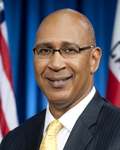
Photo of Chris Holden
D California Assembly · District 41 · Former member

Asm. Chris Holden

Contact Email
Compare
Total votes
31,861
all sessions
Attendance
92%
1,849 missed
Lower than 92% of chamber peers
With party
99%
of cast votes
Higher than 90% of chamber peers
Bipartisan score
0%
crosses aisle rarely
Lower than 93% of chamber peers
Sponsored
2,051
bills & resolutions
Lower than 83% of chamber peers
Committees
0
assignments
2,051 bills and resolutions

Sponsored bills

Total
2,051
Primary
251
Co-sponsor
1,800
This page
2,051
matching current filters
Co-sponsor SJR 5
Signed into law · California Senate · Co-sponsor
Relative to Social Security benefits.

This measure would urge the United States Congress to amend the United States Social Security Administration's index of earnings to ensure that a decline in aggregate wages due to COVID-19 does not result in decreased benefits.

Signed into law Sep 13, 2022 1 co-sponsor
Co-sponsor AJR 26
Signed into law · California Assembly · Co-sponsor
Student loan debt repayment.

This measure would urge the United States Secretary of Education to establish and submit to the United States Congress for approval a monthly student loan payment plan for federal student loans, based on the personal savings rate as published by the federal Bureau of Economic Analysis.

Signed into law Sep 6, 2022 1 co-sponsor
Co-sponsor ACR 208
Signed into law · California Assembly · Co-sponsor
Relative to the Senior Master Sergeant John James Paoletti Memorial Highway.

This measure would designate the portion of State Route 5 from El Horno Street, at postmile 10.001, to Crown Valley Parkway, at postmile 13.776, in the County of Orange as the Senior Master Sergeant John James Paoletti Memorial Highway. The measure would request that the Department of Transportation determine the cost of appropriate signs showing this special designation and, upon receiving donations from nonstate sources covering that cost, erect those signs.

Signed into law Sep 6, 2022 1 co-sponsor
Co-sponsor ACR 211
Signed into law · California Assembly · Co-sponsor
Relative to Corporal Luis Carlos Ruan Memorial Highway.

This measure would designate a portion of State Route 119, between E Kern Street, postmile 0.34, and Cedar Street, postmile 1.300, in the County of Kern as the Corporal Luis Carlos Ruan Memorial Highway. The measure would request the Department of Transportation to determine the cost of appropriate signs showing this special designation and, upon receiving donations from nonstate sources covering that cost, to erect those signs.

Signed into law Sep 6, 2022 1 co-sponsor
Primary AB 257
Signed into law · California Assembly · Lead sponsor
Food facilities and employment.

Existing law prescribes various protections for employees and generally charges the Labor Commissioner with the enforcement of labor laws. Existing law establishes the powers and responsibilities of the Division of Occupational Safety and Health and the Division of Labor Standards and Enforcement, which are within the Department of Industrial Relations. This bill would enact the Fast Food Accountability and Standards Recovery Act or FAST Recovery Act. The bill would establish, until January 1, 2029, the Fast Food Council (council) within the Department of Industrial Relations, to be composed of 10 members to be appointed by the Governor, the Speaker of the Assembly, and the Senate Rules Committee, and would prescribe its powers. The purpose of the council would be to establish sectorwide minimum standards on wages, working hours, and other working conditions related to the health, safety, and welfare of, and supplying the necessary cost of proper living to, fast food restaurant workers, as well as effecting interagency coordination and prompt agency responses in this regard. The bill would define the characteristics of a fast food restaurant, including that the establishment be part of a set of fast food restaurants consisting of 100 or more establishments nationally that share a common brand, or that are characterized by standardized options for decor, marketing, packaging, products, and services. This bill would require the council to promulgate minimum fast food restaurant employment standards, including standards on wages, working conditions, and training, and to issue, amend, and repeal any other rules and regulations, as necessary to carry out its duties, subject to a petition signed by 10,000 fast food restaurant employees approving the creation of the council, as specified. Under the bill, if a conflict exists between council's standards, rules, or regulations and those issued by another state agency, the standards, rules, or regulations issued by the council would apply to fast food restaurant workers and fast food restaurant franchisees and franchisors, and the conflicting rules or regulations of the other state agency would not have force or effect with respect to these parties. The bill would except from this application proposed standards within the jurisdiction of the Occupational Safety and Health Standards Board and would prescribe a process for the council to petition the board to adopt, amend, or repeal a standard. This bill would require the council to submit a report to the Legislature, as specified, for a standard, or repeal or amendment of a standard, to become effective, and would specify that a standard, repeal, or amendment shall not take effect before October 15 of the same year. The bill would also require the council to provide information as requested by the appropriate committees of the Legislature on labor to facilitate a review of the council's performance and standards, as specified. This bill would require the council to conduct a full review of the adequacy of minimum fast food restaurant health, safety, and employment standards at least once every 3 years. The bill would require the council, following that review, to issue, amend, or repeal, or make recommendations to issue, amend, or repeal, any fast food employment, health or safety standard applicable to fast food restaurants, as appropriate. The bill would require the council to hold meetings or hearings no less than every 6 months that would be open to the public, as specified, and would authorize the council to coordinate with and authorize local agencies to hold such meetings. The bill would authorize a county, or a city with a population greater than 200,000, to establish a Local Fast Food Council, and would prescribe its powers and requirements for its composition. The bill would authorize a Local Fast Food Council to provide recommendations to the council. This bill would require standards for minimum wages, maximum hours of work, and other working conditions fixed by the council to be the minimum standards for fast food restaurant employees, absent a valid collective bargaining agreement, as specified, and would require that they be enforced by the commissioner, as specified, and the Division of Labor Standards Enforcement. By expanding the application of crimes associated with those enforcement procedures, this bill would impose a state-mandated local program. The bill would require the Labor Commissioner and the commissioner's deputies to take assignments of violations of standards issued by the council upon the filing of a claim in writing by an employee or an employee's authorized representative. This bill would prohibit a fast food restaurant operator from discharging or in any manner discriminating or retaliating against any fast food restaurant employee for specified reasons and would create a cause of action and right to reinstatement for employees in this connection, as well as a presumption of unlawful discrimination and retaliation in certain circumstances. The California Constitution requires the state to reimburse local agencies and school districts for certain costs mandated by the state. Statutory provisions establish procedures for making that reimbursement. This bill would provide that no reimbursement is required by this act for a specified reason.


Signed into law Sep 5, 2022 0 co-sponsors
Primary AB 13
Signed into law · California Assembly · Lead sponsor
California Victim Compensation Board: payment of claims.

Existing law requires the California Victim Compensation Board, in cases in which evidence shows that a crime with which a claimant was charged was either not committed at all, or not committed by the claimant, to approve payment for the purpose of indemnifying the claimant if sufficient funds are available, upon appropriation by the Legislature. This bill would appropriate $2,497,600 from the General Fund to the executive officer of the board for payment of claims for specified individuals. This bill would declare that it is to take effect immediately as an urgency statute.

Signed into law Sep 2, 2022 0 co-sponsors
Co-sponsor SJR 7
Passed · California Senate · Co-sponsor
Relative to Dr. Martin Luther King, Jr. and the FBI surveillance tapes.

This measure would urge the National Archives and Records Administration to destroy the FBI surveillance tapes that were obtained immorally on Dr. Martin Luther King, Jr., and would urge the Congress of the United States to work with President Joseph R. Biden to prevent similar abuses of power from being perpetrated for immoral and defamatory reasons.

Passed Aug 31, 2022 1 co-sponsor
Co-sponsor SB 17
Passed · California Senate · Co-sponsor
Racial Equity Commission.

Existing law establishes an Office of Health Equity in the State Department of Public Health for purposes of aligning state resources, decisionmaking, and programs to accomplish certain goals related to health equity and protecting vulnerable communities. Existing law requires the office to develop department-wide plans to close the gaps in health status and access to care among the state's diverse racial and ethnic communities, women, persons with disabilities, and the lesbian, gay, bisexual, transgender, queer, and questioning communities, as specified. Existing law requires the office to work with the Health in All Policies Task Force to assist state agencies and departments in developing policies, systems, programs, and environmental change strategies that have population health impacts by, among other things, prioritizing building cross-sectoral partnerships within and across departments and agencies to change policies and practices to advance health equity. Existing law establishes the Task Force to Study and Develop Reparation Proposals for African Americans, with a Special Consideration for African Americans Who are Descendants of Persons Enslaved in the United States to, among other things, identify, compile, and synthesize the relevant corpus of evidentiary documentation of the institution of slavery that existed within the United States and the colonies. Existing law requires the task force to submit a written report of its findings and recommendations to the Legislature. This bill, until January 1, 2030, would establish in state government a Racial Equity Commission. The bill would require the commission to be staffed by the Office of Planning and Research. The bill would require the commission to develop resources, best practices, and tools for advancing racial equity by, among other things, developing a statewide Racial Equity Framework that includes methodologies and tools that can be employed to advance racial equity and address structural racism in California. The bill would require the commission to prepare an annual report that summarizes feedback from public engagement with communities of color, provides data on racial inequities and disparities in the state, and recommends best practices on tools, methodologies, and opportunities to advance racial equity and to submit that report, on or after December 1, 2025, and annually thereafter, to the Governor and the Legislature, as specified.

Passed Aug 31, 2022 1 co-sponsor
Co-sponsor AB 1395
Failed · California Assembly · Co-sponsor
The California Climate Crisis Act.

The California Global Warming Solutions Act of 2006 designates the State Air Resources Board as the state agency charged with monitoring and regulating sources of emissions of greenhouse gases. The state board is required to approve a statewide greenhouse gas emissions limit equivalent to the statewide greenhouse gas emissions level in 1990 to be achieved by 2020 and to ensure that statewide greenhouse gas emissions are reduced to at least 40% below the 1990 level by 2030. The act requires the state board to prepare and approve a scoping plan for achieving the maximum technologically feasible and cost-effective reductions in greenhouse gas emissions and to update the scoping plan at least once every 5 years. This bill, the California Climate Crisis Act, would declare the policy of the state both to achieve net zero greenhouse gas emissions as soon as possible, but no later than 2045, and achieve and maintain net negative greenhouse gas emissions thereafter, and to ensure that by 2045, statewide anthropogenic greenhouse gas emissions are reduced to at least 90% below the 1990 levels. The bill would require the state board to work with relevant state agencies to ensure that updates to the scoping plan identify and recommend measures to achieve these policy goals and to identify a variety of policies and strategies that support carbon dioxide removal solutions, carbon capture and storage technologies, and nature-based climate solutions in California, as specified. The bill would require the state board to work with relevant agencies to establish criteria for the use of carbon dioxide removal technologies and carbon capture and storage technologies for purposes of achieving these policy goals. The bill would require the state board to identify interim 5-year greenhouse gas emission reduction goals that begin on January 1, 2025, and submit an annual report, as specified. The bill would impose other requirements on state agencies, as specified.

Failed Aug 31, 2022 1 co-sponsor
Co-sponsor AB 937
Failed · California Assembly · Co-sponsor
Immigration enforcement.

Existing law, the California Values Act, prohibits a California law enforcement agency from providing a person's release date, or responding to a request for notification of a release date, unless that information is available to the public, and prohibits the transfer of an individual to immigration authorities, as specified, unless the person has been convicted of specified crimes or arrested for a serious or violent felony. This bill would prohibit any state or local agency from arresting or assisting with the arrest, confinement, detention, transfer, interrogation, or deportation of an individual for an immigration enforcement purpose, except as specified. The bill would additionally prohibit state or local agencies or courts from using immigration status as a factor to deny or to recommend denial of probation or participation in any diversion, rehabilitation, mental health program, or placement in a credit-earning program or class, or to determine custodial classification level, to deny mandatory supervision, or to lengthen the portion of supervision served in custody. The bill would authorize a person to bring an action for equitable or declaratory relief in a court of competent jurisdiction against a state or local agency or state or local official that violates these provisions, and would make those agencies or officials liable for actual and general damages and reasonable attorney's fees. Existing law requires the Department of Corrections and Rehabilitation to implement and maintain procedures to identify inmates serving terms in state prison who are undocumented felons subject to deportation. Existing law requires the department to annually report to the Legislature the number of persons identified as undocumented aliens, as specified. This bill would repeal those provisions. Existing law requires all basic information stored in state or local criminal offender record information systems to be recorded in the form of specified standard data elements, including, among other things, place of birth. This bill would no longer require that information to include place of birth.

Failed Aug 31, 2022 1 co-sponsor
Showing 441 to 450 of 2,051 bills
Previous 1 … 44 45 46 … 206 Next