

Passed Feb 6, 2023
1 co-sponsor
Total votes
31,861
all sessions
Attendance
92%
1,849 missed
Lower than 92% of chamber peers
With party
99%
of cast votes
Higher than 90% of chamber peers
Bipartisan score
0%
crosses aisle rarely
Lower than 93% of chamber peers
Sponsored
2,051
bills & resolutions
Lower than 83% of chamber peers
Committees
0
assignments
2,051 bills and resolutions
Sponsored bills
Total
2,051
Primary
251
Co-sponsor
1,800
This page
2,051
matching current filters
Passed Feb 2, 2023
1 co-sponsor
Passed Feb 2, 2023
1 co-sponsor
Passed Jan 30, 2023
1 co-sponsor
Passed Jan 23, 2023
1 co-sponsor
State highways: relinquishment: infrastructural barriers.
Existing law vests the Department of Transportation with full possession and control of all state highways. Existing law describes the authorized routes in the state highway system and establishes a process for adoption of a highway on an authorized route by the California Transportation Commission. Existing law also provides for the commission to relinquish to local agencies state highway segments that have been deleted from the state highway system by legislative enactment or have been superseded by relocation, and in certain other cases. This bill would authorize the commission to relinquish a portion of a state highway that constitutes an infrastructural barrier, as defined, to a county or city, if the department and the applicable county or city have entered into an agreement providing for the relinquishment of the portion of the state highway. The bill would prohibit a relinquishment under this provision unless certain conditions are met, including, among others, that the commission determines the relinquishment is in the best interest of the state, the purposes of the relinquishment are restorative economic and social justice, the infrastructural barrier is removed or retrofit in a manner that enhances community connectivity, and the city or county determines that the construction of the infrastructural barrier had a significant impact on a disadvantaged community, as specified.
Signed into law Sep 30, 2022
0 co-sponsors
Pupil attendance at community colleges: College and Career Access Pathways partnerships: county offices of education.
Existing law authorizes the governing board of a school district to authorize a pupil who meets specified criteria to attend community college. Existing law limits the number of pupils a principal is authorized to recommend for a community college summer session pursuant to those provisions to 5% of the total number of pupils in any grade level, as specified. Existing law, until January 1, 2027, exempts from the 5% limitation pupils who meet specified requirements, prohibits the Board of Governors of the California Community Colleges from including enrollment growth attributable to pupils enrolled pursuant to these provisions as part of its annual budget request for the California Community Colleges, and requires the Chancellor of the California Community Colleges to report to the Department of Finance the number of pupils who enrolled and received a passing grade in a community college summer session course under these provisions. This bill would extend those provisions indefinitely. Existing law, until January 1, 2027, authorizes the governing board of a community college district to enter into a College and Career Access Pathways (CCAP) partnership with the governing board of a school district or the governing body of a charter school with the goal of developing seamless pathways from high school to community college for career technical education or preparation for transfer, improving high school graduation rates, or helping high school pupils achieve college and career readiness. Existing law requires a CCAP partnership agreement to, among other things, certify that any remedial course taught by community college faculty at a partnering high school campus to be offered only to high school pupils who do not meet their grade level standard in mathematics, English, or both on an interim assessment in grade 10 or 11, as determined by the partnering school district or county office of education, and to involve a collaborative effort between high school and community college faculty to deliver an innovative remediation course as an intervention in the pupil's junior or senior year to ensure that the pupil is prepared for college-level work upon graduation. Existing law limits the statewide number of full-time equivalent students claimed as special admits to 10% of the total number of full-time equivalent students claimed statewide. This bill would specify that "high school," for purposes of a CCAP partnership, includes a community school, juvenile court school, or adult education program, as specified. The bill would authorize county offices of education to enter into CCAP partnerships with the governing boards of community college districts in accordance with these provisions. The bill would require the above-described certification requirement for certain remedial courses to instead apply to certain pretransfer-level courses, as provided. The bill would extend the provisions authorizing CCAP partnerships indefinitely and would remove the statewide limit for full-time equivalent students claimed as special admits. The bill would also make nonsubstantive conforming changes. This bill would incorporate additional changes to Section 76004 of the Education Code proposed by AB 2973 to be operative only if this bill and AB 2973 are enacted and this bill is enacted last.
Signed into law Sep 30, 2022
0 co-sponsors
Stops: notification by peace officers.
Existing law requires each state and local agency that employs peace officers to annually report to the Attorney General data on all stops conducted by the agency's peace officers, and requires that data to include specified information, including the time, date, and location of the stop, and the reason for the stop. This bill would, beginning on January 1, 2024, require each state and local agency to include in its annual report the reason given to the person stopped at the time of the stop. By imposing new duties on local agencies, the bill would impose a state-mandated local program. Existing law authorizes specified peace officers, including agents of the Department of the California Highway Patrol, county sheriffs, and city police officers, to require a driver to stop and submit to an inspection in specified circumstances. Existing law requires the Department of Motor Vehicles to publish a synopsis or summary of the laws regulating the operation of vehicles and the use of the highways, known as the California Driver's Handbook, and requires the department to include specified information in the handbook, including a person's civil rights during a traffic stop. This bill would, beginning on January 1, 2024, require a peace officer making a traffic or pedestrian stop, before engaging in questioning related to a criminal investigation or traffic violation, to state the reason for the stop, unless the officer reasonably believes that withholding the reason for the stop is necessary to protect life or property from imminent threat. The bill would, beginning on January 1, 2024, require the officer to document the reason for the stop on any citation or police report resulting from the stop. By requiring a higher level of service from local law enforcement, this bill would impose a state-mandated local program. The bill would, beginning on January 1, 2024, require the department to include information regarding the duty of a peace officer to state the reason for the stop in the handbook at the earliest opportunity when the handbook is otherwise revised or reprinted. The California Constitution requires the state to reimburse local agencies and school districts for certain costs mandated by the state. Statutory provisions establish procedures for making that reimbursement. This bill would provide that, if the Commission on State Mandates determines that the bill contains costs mandated by the state, reimbursement for those costs shall be made pursuant to the statutory provisions noted above.
Signed into law Sep 29, 2022
0 co-sponsors
Segregated confinement.
Existing law establishes the state prisons under the jurisdiction of the Department of Corrections and Rehabilitation. Existing law places county jails under the jurisdiction of the sheriff for the confinement of persons sentenced to imprisonment for the conviction of a crime. This bill would require every jail, prison, public or privately operated detention facility, and a facility in which individuals are subject to confinement or involuntary detention to develop and follow written procedures governing the management of segregated confinement, as specified. The bill would require those facilities to document the use of segregated confinement by, among other things, providing written orders of that confinement to the individual confined, as specified. The bill would prohibit those facilities from involuntarily placing an individual in segregated confinement if the individual belongs to a special population, including, among others, that the individual has a mental or physical disability or that the individual is under 26 years of age or over 59 years of age. The bill would require the facility to periodically check on the individual and have a medical or mental health professional periodically assess the individual. This bill would require a facility to offer out-of-cell programming to individuals in segregated confinement for at least 4 hours per day, not including time spent on housekeeping or in paid employment. The bill would also authorize a facility to use segregated confinement to help treat and protect against the spread of communicable disease, under certain circumstances. This bill would prohibit a facility from holding an individual in segregated confinement for more than 15 consecutive days and no more than 45 days in a 180-day period, as specified. This bill would also prohibit a facility from imposing limitations on services, treatment, or basic needs; conducting out-of-cell programming opportunities in a smaller cage or therapy module; placing an individual in segregated confinement on the basis of confidential information, as specified; using specified restraints when an individual is in segregated confinement; and using segregated confinement as a means of protecting an individual. This bill would require a facility administrator or chief physician to conduct a secondary review of a person in segregated confinement's dispute regarding qualification in the special populations category. This bill would require facilities to create and publish monthly, semiannual, and annual reports, as specified. The bill would require the Office of the Inspector General and the Board of State and Community Corrections to assess each facility's compliance with the act, as specified. This bill would require local and state authorities to promulgate regulations or directives to implement the act, where applicable. The bill would declare these provisions to be severable. By imposing additional duties on county jails, this bill would create a state-mandated local program. The California Constitution requires the state to reimburse local agencies and school districts for certain costs mandated by the state. Statutory provisions establish procedures for making that reimbursement. This bill would provide that, if the Commission on State Mandates determines that the bill contains costs mandated by the state, reimbursement for those costs shall be made pursuant to the statutory provisions noted above.
Vetoed Sep 29, 2022
0 co-sponsors
Franchises.
(1) Existing law, the California Franchise Relations Act, sets forth certain requirements related to the termination, nonrenewal, and transfer of franchises between a franchisor, subfranchisor, and franchisee, as those terms are defined. Existing law provides that the act applies to any franchise when either the franchisee is domiciled in this state or the franchised business is or has been operated in this state. This bill would additionally specify that any provision of a franchise agreement requiring the franchisee to waive specified provisions of law are contrary to public policy and are void and unenforceable. Existing law authorizes a franchisor, upon the termination or nonrenewal of a franchise, to offset any amounts owed to the franchisee against any amounts owed by the franchisee to the franchisor. This bill would recast that provision to authorize the offset only if the franchisee agrees to the amount owed or the franchisor has received a final adjudication of any amounts owed. Existing law requires a franchisee, before the sale, assignment, or transfer of a franchise, as specified, to another person, to notify, in writing, the franchisor of the franchisee's intent to sell, transfer, or assign the franchise. Existing law requires this notice of transfer to include specified information and meet certain criteria. This bill would prohibit a franchisor from modifying a franchise agreement, or requiring a general release, in exchange for any assistance related to a declared state or federal emergency. This bill would limit the application of the above changes to a franchise agreement entered into, amended, except as specified, or renewed on or after January 1, 2023, or to franchises of an indefinite duration that may be terminated without cause. (2) Existing law, the Franchise Investment Law, provides that an offer or sale of a franchise is made in this state when an offer to sell is made in this state, or an offer to buy is accepted in this state, or, if the franchisee is domiciled in this state, the franchised business is or will be operated in this state. This bill would instead provide that an offer or sale of a franchise is made in this state when an offer to sell is made in this state, or an offer to buy is accepted in this state, or if the franchise business is intended to or will be operated in this state. Existing law authorizes the Commissioner of Business Oversight to summarily issue a stop order denying the effectiveness of or suspending or revoking effectiveness of any registration if the commissioner finds certain things, including, but not limited to, that there has been a failure to comply with the Franchise Investment Law or the rules of the commissioner pertaining to that law. Existing law renamed the Department of Business Oversight as the Department of Financial Protection and Innovation and renamed the commissioner of the department as the Commissioner of Financial Protection and Innovation. This bill would clarify that the Commissioner of Financial Protection and Innovation has the authority described above, consistent with the renaming of the Department of Business Oversight to the Department of Financial Protection and Innovation. The bill would also authorize the commissioner to summarily issue a stop order if the commissioner finds the franchisor's method of business includes or would include activities that are or would be illegal where performed or if the commissioner finds that the franchise agreement contains a provision that is contrary to law. Existing law prohibits a person from offering or selling any franchise in this state unless the offer has been registered, as specified. Existing law prohibits the sale of a franchise in this state that is subject to registration without first providing certain information to the prospective franchisee. Existing law makes it a crime to, among other things, willfully violate any provision of the Franchise Investment Law. This bill would require a prospective franchisee seeking to buy an existing franchise, all or substantially all of the assets of an existing franchise business, or an interest in an existing franchise business to provide specified information and documentation to the franchisor. The bill would also require the franchisor to notify the prospective franchisee in writing of any additional information or documentation necessary to complete the application, as specified, and require the franchisor to notify and provide certain information to the prospective franchisee of the decision to approve or disapprove the application, as specified. The bill would make it a violation of the Franchise Investment Law for any franchisor, directly or indirectly, through any officer, agent or employee, to violate these provisions. By expanding the scope of a crime, this bill would impose a state-mandated local program. Existing law prohibits a person from effecting or attempting to effect a sale of a franchise, except as specified. Existing law, the Unruh Civil Rights Act, provides that all persons within the jurisdiction of the state are entitled to certain protections regardless of certain specified characteristics. This bill would prohibit a franchisor from refusing to grant a franchise or refusing to provide financial assistance to a franchisee or prospective franchisee based solely on those characteristics, as specified. Existing law provides that a person who violates certain provisions of the Franchise Investment Law shall be civilly liable, as specified. Existing law provides that, except as explicitly provided, no civil liability in favor of any private party shall arise against any person by implication from or as a result of the violation of any provision of this law or any rule or order. This bill would remove the provision protecting against civil liability by implication from or as a result of the violation of any provision of this law or any rule or order. Existing law provides that any condition, stipulation, or provision purporting to bind any person acquiring any franchise to waive compliance with any provision of the Franchise Investment Law or any rule or order under that law is void. This bill would specify that disclaimers of representations and similar disclaimers are contrary to public policy and are void. The California Constitution requires the state to reimburse local agencies and school districts for certain costs mandated by the state. Statutory provisions establish procedures for making that reimbursement. This bill would provide that no reimbursement is required by this act for a specified reason.
Signed into law Sep 29, 2022
0 co-sponsors
Ask Maddy
·
AI policy assistant
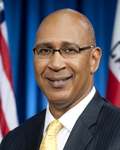
Ask Maddy about Chris Holden
Scope: CA
Hi! I can help you understand Chris Holden's legislative record. What would you like to know?
Try one of these
i
Maddy answers using official bill text and legislative records. Always verify before sharing.
Sources cited inline