

Passed Apr 21, 2016
1 co-sponsor
Total votes
31,861
all sessions
Attendance
92%
1,849 missed
Lower than 92% of chamber peers
With party
99%
of cast votes
Higher than 90% of chamber peers
Bipartisan score
0%
crosses aisle rarely
Lower than 93% of chamber peers
Sponsored
2,051
bills & resolutions
Lower than 83% of chamber peers
Committees
0
assignments
2,051 bills and resolutions
Sponsored bills
Total
2,051
Primary
251
Co-sponsor
1,800
This page
2,051
matching current filters
Passed Apr 21, 2016
1 co-sponsor
Relative to the Month of the Military Child.
This measure would declare the month of April 2016 as the Month of the Military Child.
Signed into law Apr 19, 2016
1 co-sponsor
Relative to Women and Girls in STEM Week.
This measure would designate April 3, 2016, to April 9, 2016, inclusive, as Women and Girls in STEM Week and would encourage all citizens and community organizations to support the observance of California Women and Girls in STEM Week by encouraging and celebrating women in the STEM fields.
Signed into law Apr 19, 2016
1 co-sponsor
Relative to Multiple Sclerosis Awareness Week.
This measure would declare the week of March 7, 2016, through March 13, 2016, as Multiple Sclerosis Awareness Week.
Signed into law Apr 19, 2016
1 co-sponsor
Securities: qualification: period of effectiveness.
Existing law, the Corporate Securities Law of 1968, requires securities offered or sold in this state in an issuer transaction to be qualified through an application filed with the Commissioner of Business Oversight, unless exempt from the qualification requirements, and generally provides that every qualification under these provisions is effective for 12 months from its effective date. This law makes it a crime for a person to willfully violate any of its provisions. This bill would increase that effective period for a qualification eligible for a Small Corporate Offering Registration, as specified, from 12 months to 36 months, unless an issuer makes a change to its board members, directors, officers, partners, members, or trustees, in which case the qualification would become ineffective. The bill would reinstate effectiveness for the remainder of the 36-months qualification period if the offering is requalified, as specified. By modifying the period and conditions under which an offering is effective, this bill would modify the application of criminal provisions in existing law and thereby impose a state-mandated local program. The California Constitution requires the state to reimburse local agencies and school districts for certain costs mandated by the state. Statutory provisions establish procedures for making that reimbursement. This bill would provide that no reimbursement is required by this act for a specified reason.
In committee Apr 18, 2016
0 co-sponsors
California Transportation Commission: membership.
Existing law creates the California Transportation Commission, with various powers and duties relative to the programming of transportation capital projects and allocation of funds to those projects pursuant to the state transportation improvement program and various other transportation funding programs. Existing law provides that the commission consists of 13 members, including 11 voting members, of which 9 are appointed by the Governor subject to Senate confirmation and 2 are appointed by the Senate Committee on Rules and the Speaker of the Assembly. In addition, 2 members of the Legislature are appointed as nonvoting ex officio members. This bill would expand the membership of the commission to 15 members by providing for the Senate Committee on Rules and the Speaker of the Assembly to each appoint an additional member, who shall be a person who works directly with communities that are most significantly burdened by, and vulnerable to, high levels of pollution, including, but not limited to, communities with diverse racial and ethic populations and communities with low-income populations.
Failed Apr 18, 2016
1 co-sponsor
Transportation funding: complete streets.
Existing law provides that the Department of Transportation has full possession and control over the highways of the state and is responsible for preparing the state highway operation and protection program for the expenditure of transportation funds for major capital improvements that are necessary to preserve and protect the state highway system. Existing law requires the department to submit a draft 5-year interregional transportation improvement program that consists of, among other things, projects to improve state highways. Existing law also creates the California Transportation Commission, with specified powers and duties relative to the programming of transportation capital improvement projects and the allocation of state transportation funds for state transportation improvement projects. Existing law requires the department, in consultation with the commission, to prepare an asset management plan to guide selection of projects for the state highway operation and protection program consistent with any applicable state and federal requirements. Existing law requires the commission, in connection with the asset management plan, to adopt targets and performance measures reflecting state transportation goals and objectives. This bill would require the department to increase the annual number of complete street projects undertaken by the department by 20% over the 2016 baseline by the year 2020 and increase accessibility for low-income and disadvantaged communities by increasing multimodal transportation proximity to employment, jobs, housing, and recreation areas. The bill would establish department goals to reduce by 10% based on the 2016 baseline the number of transit, pedestrian, and bicyclist fatalities, and reduce by 15% statewide per capita the vehicle miles traveled by the year 2020, and to increase travel by nonautomobile modes of travel, as specified. This bill would require the draft 5-year interregional transportation program to include projects to implement complete streets, as defined, and the state highway operation and protection program to include capital improvements relative to multiuse, including complete streets. The bill would require the department to hold at least one public hearing in each of its districts on state highway operation and protection program projects and would require the hearing to be accessible by public transit, held at times that are convenient for disadvantaged community residents, and upon request, provide translation services. The bill would require the commission, no later than July 1, 2017, in connection with the asset management plan, to also adopt targets and performance measures that reflect state transportation goals and objectives that, among other things, improve mobility, access, and safety for nonmotorized users in disadvantaged communities by requiring not less than 35% of state highway operation and protection program projects be located in urban and rural disadvantaged communities. The bill would also require that funds in the State Highway Account in the State Transportation Fund be programmed for specified safety improvements that would reduce fatalities and the number and severity of injuries to pedestrians.
In committee Apr 18, 2016
1 co-sponsor
Relative to Grand Jury Awareness Month.
This measure would proclaim the month of March 2016 as Grand Jury Awareness Month in California, recognize those who volunteer in a grand jury, and encourage all Californians to learn about its role in the judicial system.
Signed into law Apr 14, 2016
1 co-sponsor
Passed Apr 14, 2016
1 co-sponsor
Ask Maddy
·
AI policy assistant
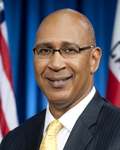
Ask Maddy about Chris Holden
Scope: CA
Hi! I can help you understand Chris Holden's legislative record. What would you like to know?
Try one of these
i
Maddy answers using official bill text and legislative records. Always verify before sharing.
Sources cited inline