

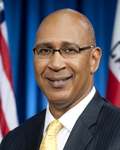
Existing law prescribes various duties for the Department of General Services in connection with development and maintenance of the park around the State Capitol Building. This bill would authorize the Mervyn Dymally Memorial Capitol Foundation, upon establishment, in consultation with the Department of General Services, to plan a bust of Mervyn Dymally to be placed in the State Capitol Building Annex. The bill would require the Department of General Services and the Mervyn Dymally Memorial Capitol Foundation to approve the design and any other aspect of the bust. The bill would require that the planning, construction, and maintenance of the bust be funded with private donations through the Mervyn Dymally Memorial Capitol Foundation. The bill would prohibit construction of the bust until the Joint Committee on Rules has approved and adopted the plan for the bust, and the Joint Committee on Rules and the Department of Finance have determined that sufficient private funding is available to construct and maintain the bust. The bill would provide legislative findings in support of these provisions.
Sponsored bills
Existing law makes it a misdemeanor for a person to (a) install, reinstall, rewire, tamper with, alter, or modify for compensation, a vehicle's computer system or supplemental restraint system, otherwise referred to as an airbag, so that it falsely indicates the supplemental restraint system is in proper working order; or (b) knowingly distribute or sell a previously deployed airbag or component that will no longer meet the original equipment manufacturing form or function for proper operation. This bill would repeal these provisions and instead make it a misdemeanor for any person to knowingly and intentionally manufacture, import, install, reinstall, distribute, sell, or offer for sale any device intended to replace a supplemental restraint system component, as defined, in any motor vehicle if the device is a counterfeit supplemental restraint system component or a nonfunctional airbag, as defined, or does not meet specified federal safety requirements. The bill would also make it a misdemeanor to knowingly and intentionally sell, install, or reinstall in a vehicle any device that causes the vehicle's diagnostic systems to fail to warn when the vehicle is equipped with a counterfeit supplemental restraint system component or nonfunctional airbag, or when no airbag is installed. The bill would provide that its provisions do not affect any duties, rights, or remedies otherwise available at law or preclude prosecution under any other law. By creating new crimes, the bill would impose a state-mandated local program. The California Constitution requires the state to reimburse local agencies and school districts for certain costs mandated by the state. Statutory provisions establish procedures for making that reimbursement. This bill would provide that no reimbursement is required by this act for a specified reason.
Existing law provides for the Medi-Cal program, administered by the State Department of Health Care Services, under which basic health care services are provided to qualified low-income persons. The Medi-Cal program is, in part, governed and funded by federal Medicaid provisions. Existing law provides for a schedule of benefits under the Medi-Cal program. Existing law requires that preventive services assigned a grade of A or B by the United States Preventive Services Task Force be provided to Medi-Cal beneficiaries without any cost sharing by the beneficiary in order for the state to receive increased federal contributions for those services, as specified. This bill would provide that, only to the extent that federal financial participation is available and not otherwise jeopardized, and any necessary federal approvals have been obtained, tobacco cessation services are covered benefits, subject to utilization controls, under the Medi-Cal program and would require those services to include all intervention recommendations, as periodically updated, assigned a grade A or B by the United States Preventive Services Task Force, and include quit attempts based upon medical necessity, as specified. The bill also would require, only to the extent consistent with the recommendations of the United States Preventive Services Task Force, tobacco cessation services to include at least 4 counseling sessions per quit attempt and a treatment regimen of any medication approved by the federal Food and Drug Administration and that is a covered Medi-Cal benefit for tobacco cessation. The bill would require the department to seek any federal approvals necessary to implement its provisions.
Existing law governs the procurement process for contracts of specified public entities. Existing law, the Unruh Civil Rights Act, states that all persons within this state are free and equal and, no matter what their sex, race, color, religion, ancestry, national origin, disability, medical condition, genetic information, marital status, sexual orientation, citizenship, primary language, or immigration status, are entitled to full and equal accommodations, advantages, facilities, privileges, or services in all business establishments. Existing law, the California Fair Employment and Housing Act, protects and safeguards the right and opportunity of all persons to seek, obtain, and hold employment without discrimination, abridgment, or harassment on account of race, religious creed, color, national origin, ancestry, physical disability, mental disability, medical condition, genetic information, marital status, sex, gender, gender identity, gender expression, age, sexual orientation, or military and veteran status. This bill would, with certain exceptions, require a person that submits a bid or proposal to, or otherwise proposes to enter into or renew a contract with, a state agency with respect to any contract in the amount of $100,000 or more to certify, under penalty of perjury, at the time the bid or proposal is submitted or the contract is renewed that they are in compliance with the Unruh Civil Rights Act and the California Fair Employment and Housing Act, and that any policy that they have adopted against any sovereign nation or peoples recognized by the government of the United States, including, but not limited to, the nation and people of Israel, is not used to discriminate in violation of the Unruh Civil Rights Act or the California Fair Employment and Housing Act. By requiring a person to certify under penalty of perjury, this bill would expand the definition of a crime, thereby imposing a state-mandated local program. The California Constitution requires the state to reimburse local agencies and school districts for certain costs mandated by the state. Statutory provisions establish procedures for making that reimbursement. This bill would provide that no reimbursement is required by this act for a specified reason.
Existing property tax law specifies that all taxes on personal property and half of the taxes on real property are due and payable each November 1 and provides that these taxes are delinquent if not paid by each December 10. Existing property tax law specifies that the second half of taxes on real property is due each February 1 and provides that these taxes are delinquent if not paid by each April 10. This bill would authorize a county board of supervisors to implement a Monthly Property Tax Payment Program to authorize qualified taxpayers, as defined, to pay the property tax owed on the qualified taxpayer's principal place of residence in monthly installments. The bill would authorize the ordinance or resolution implementing the program to set forth specific procedures for purposes of determining delinquency and default, as specified. The bill would require the monthly property tax payment to be allocated among the county, cities, special districts, and school entities in proportion to the amounts of ad valorem property tax revenue otherwise allocated among these entities. The bill would exclude from its provisions property for which an escrow account is established, as provided.
Existing law authorizes the governing board of a school district to authorize a pupil who meets specified criteria to attend community college. Existing law limits the number of pupils a principal is authorized to recommend for community college summer session pursuant to those provisions to 5% of the total number of pupils in any grade level, as specified. This bill, until January 1, 2020, would exempt from the 5% limitation pupils who meet specified requirements and who enroll in certain community college courses. The bill would require the Chancellor of the California Community Colleges to annually report to the Department of Finance the number of pupils who enrolled and received a passing grade in a community college summer session course. This bill would declare that it is to take effect immediately as an urgency statute.
(1) Existing law requires the California State University and each community college district, and requests the University of California, with respect to each campus in their respective jurisdictions that administers a priority enrollment system, to grant priority for registration for enrollment to foster youth or former foster youth, as defined. Existing law repeals these requirements on January 1, 2017. This bill would revise the definition of foster youth or former foster youth for these provisions. This bill would extend the operation of these provisions indefinitely. By extending the operation of requirements relating to student eligibility for priority registration at community college districts, the bill would impose a state-mandated local program. (2) Existing law requires each community college district, with respect to each campus in its jurisdiction that administers a priority enrollment system, to grant priority for registration for enrollment to students in the Community College Extended Opportunity Programs and Services program and to disabled students who are determined to be eligible for disabled student programs and services, as provided. Existing law repeals these requirements on January 1, 2017. This bill would extend the operation of those provisions indefinitely. By extending the operation of requirements relating to student eligibility for priority registration at community college districts, the bill would impose a state-mandated local program. (3) This bill would incorporate additional changes in Section 66025.9 of the Education Code, proposed by AB 801, to be operative only if AB 801 and this bill are both chaptered and become effective on or before January 1, 2017, and this bill is chaptered last. (4) The California Constitution requires the state to reimburse local agencies and school districts for certain costs mandated by the state. Statutory provisions establish procedures for making that reimbursement. This bill would provide that, if the Commission on State Mandates determines that the bill contains costs mandated by the state, reimbursement for those costs shall be made pursuant to these statutory provisions.
Existing law requires the adopted course of study for grades 7 to 12, inclusive, to include, among other subjects, the social sciences. Existing law requires the State Board of Education, with the assistance of the Superintendent of Public Instruction, to establish a list of textbooks and other instructional materials that highlight the contributions of minorities in the development of California and the United States. Existing law establishes the Instructional Quality Commission and requires the commission to, among other things, recommend curriculum frameworks to the state board. This bill would require the Instructional Quality Commission to develop, and the state board to adopt, modify, or revise, a model curriculum in ethnic studies, and would encourage each school district and charter school that maintains any of grades 9 to 12, inclusive, that does not otherwise offer a standards-based ethnic studies curriculum to offer a course of study in ethnic studies based on the model curriculum.
Existing law establishes the California Community Colleges, under the administration of the Board of Governors of the California Community Colleges, as one of the segments of public postsecondary education in this state. Existing law establishes community college districts throughout the state, and authorizes them to operate campuses and provide instruction to students. Existing law authorizes community college districts to admit nonresident students, and requires that nonresident students be charged a nonresident tuition fee unless an exemption is applicable. Existing law authorizes a community college district to exempt from all or parts of the fee a special part-time student admitted pursuant to a specified concurrent or dual enrollment program. This bill instead would require a community college district to exempt a special part-time student, other than a nonimmigrant alien, as defined, from paying all or parts of the fee if that student is admitted pursuant to one of additionally specified concurrent or dual enrollment programs. Because the bill would require community college districts to determine whether students qualify for exemption from nonresident tuition, it would constitute a state-mandated local program. The California Constitution requires the state to reimburse local agencies and school districts for certain costs mandated by the state. Statutory provisions establish procedures for making that reimbursement. This bill would provide that, if the Commission on State Mandates determines that the bill contains costs mandated by the state, reimbursement for those costs shall be made pursuant to these statutory provisions.
(1) Existing law, the Medical Practice Act, provides for the licensure and regulation of physicians and surgeons by the Medical Board of California. Existing law authorizes an applicant for a physician's and surgeon's license who is otherwise eligible for a license but is unable to practice some aspects of medicine safely due to a disability to receive a limited license if the applicant pays the license fee and signs an agreement agreeing to limit his or her practice in the manner prescribed by the reviewing physician and agreed to by the board. Existing law makes any person who knowingly provides false information in this agreement subject to any sanctions available to the board. Existing law authorizes the board to require the applicant to obtain an independent clinical evaluation of his or her ability to practice medicine safely as a condition of receiving the limited license. Violation of specified provisions of the act is a crime. Existing law establishes the Contingent Fund of the Medical Board of California, a continuously appropriated fund. This bill would specify that a licensee who is otherwise eligible for a license but is unable to practice some aspects of medicine safely due to a disability is authorized to receive the limited license if the above-described conditions are met, including payment of the appropriate fee. By adding fees for deposit into the Contingent Fund of the Medical Board of California, this bill would make an appropriation. This bill would also authorize the board to deny a postgraduate training authorization to an applicant who is guilty of unprofessional conduct or of any cause for revocation or suspension of a license. (2) Existing law authorizes a licensee who demonstrates that he or she is unable to practice medicine due to a disability to request a waiver of the license renewal fee. Under existing law, a licensee granted that waiver is prohibited from practicing medicine until he or she establishes that the disability no longer exists or signs an agreement, under penalty of perjury, agreeing to limit his or her practice in the manner prescribed by the reviewing physician. This bill would require the board to agree to this limit, would authorize the board to require an independent clinical evaluation, and would subject a person who knowingly provides false information in the agreement to sanctions. By modifying the scope of the crime of perjury, this bill would impose a state-mandated local program. (3) Existing law authorizes the board, in any investigation that involves the death of a patient, to inspect and copy the medical records of the deceased patient without the authorization of the beneficiary or personal representative of the deceased patient or a court order solely to determine the extent to which the death was the result of the physician and surgeon's violation of the Medical Practice Act, if the board provides a written request to the physician and surgeon that includes a declaration that the board has been unsuccessful in locating or contacting the deceased patient's beneficiary or personal representative after reasonable efforts. This bill would authorize the board to provide the written request to the facility where the medical records are located or the care to the deceased patient was provided. (4) Existing law, the Licensed Midwifery Practice Act of 1993, provides for the licensing and regulation of midwives by the Medical Board of California. Under the act, the board is authorized to suspend or revoke the license of a midwife for specified conduct, including unprofessional conduct consisting of, among other things, incompetence or gross negligence in carrying out the usual functions of a licensed midwife. A violation of the act is a crime. This bill would authorize the board to place a license on probation and establish a fee for monitoring a licensee on probation. The bill would also authorize a person whose license has been voluntarily surrendered while under investigation or while charges are pending or whose license has been suspended, revoked, or placed on probation to petition the board for reinstatement or modification of penalty, as specified. The bill would require the revocation of a license for a person required to register as a sex offender, except as specified. (5) Existing law relating to research psychoanalysts authorizes certain students and graduates in psychoanalysis to engage in psychoanalysis under prescribed circumstances if they register with the Medical Board of California and present evidence of their student or graduate status. Existing law authorizes that board to suspend or revoke the exemption of those persons from licensure for unprofessional conduct, as specified. The bill would include within the definition of unprofessional conduct, among other things, the use of any controlled substance, or the use of any dangerous drugs, as specified, or of alcoholic beverages, as specified. The bill would also require the revocation of a registration for a person required to register as a sex offender, except as specified. (6) Existing law prohibits a person from using the title "certified polysomnographic technologist" or engaging in the practice of polysomnography unless he or she is registered as a certified polysomnographic technologist, is supervised and directed by a licensed physician and surgeon, and meets certain other requirements. Existing law requires polysomnographic technologists to apply to and register with the Medical Board of California and to pay specified fees to be fixed by the board at no more than $100 each, and to renew their registration biennially for a fee of no more than $150. Existing law requires the deposit of those fees in the Contingent Fund of the Medical Board of California. Existing law authorizes a registration to be suspended, revoked, or otherwise subject to discipline for specified conduct. This bill would also authorize a registration to be placed on probation if a registrant engages in that conduct and would establish a fee for monitoring a registrant on probation. By increasing fees for deposit into the Contingent Fund, this bill would make an appropriation. The bill would authorize a person whose registration has been voluntarily surrendered while under investigation or while charges are pending or whose registration has been suspended, revoked, or placed on probation to petition the board for reinstatement or modification of penalty, as specified. The bill would require the revocation of a registration for a person required to register as a sex offender, except as specified. The bill would authorize the suspension or revocation of a registration for unprofessional conduct, as defined. (7) The California Constitution requires the state to reimburse local agencies and school districts for certain costs mandated by the state. Statutory provisions establish procedures for making that reimbursement. This bill would provide that no reimbursement is required by this act for a specified reason.