

Passed Feb 1, 2018
1 co-sponsor
Total votes
31,861
all sessions
Attendance
92%
1,849 missed
Lower than 90% of chamber peers
With party
99%
of cast votes
Higher than 90% of chamber peers
Bipartisan score
0%
crosses aisle rarely
Lower than 93% of chamber peers
Sponsored
2,051
bills & resolutions
Lower than 83% of chamber peers
Committees
0
assignments
2,051 bills and resolutions
Sponsored bills
Total
2,051
Primary
251
Co-sponsor
1,800
This page
2,051
matching current filters
Public postsecondary education: hiring policy: socioeconomic diversity.
(1) Existing law establishes the University of California, under the administration of the Regents of the University of California, the California State University, under the administration of the Trustees of the California State University, and the California Community Colleges, under the administration of the Board of Governors of the California Community Colleges, as the 3 segments of public postsecondary education in this state. Existing law, known as the Donahoe Higher Education Act, among other things, sets forth the missions and functions of these segments. Provisions of the Donahoe Higher Education Act apply to the University of California only to the extent that the regents act, by resolution, to make them applicable. This bill would require the trustees and the governing board of each community college district, and request the regents, to ensure that, when filling faculty or athletic coaching positions, consideration is given to candidates with socioeconomic backgrounds that are underrepresented among existing faculty or athletic coaching staff on the campus for which the position is to be filled. To the extent that the bill would impose new duties on community college districts, it would constitute a state-mandated local program. (2) The California Constitution requires the state to reimburse local agencies and school districts for certain costs mandated by the state. Statutory provisions establish procedures for making that reimbursement. This bill would provide that, if the Commission on State Mandates determines that the bill contains costs mandated by the state, reimbursement for those costs shall be made pursuant to the statutory provisions noted above.
Failed Feb 1, 2018
1 co-sponsor
Passed Feb 1, 2018
1 co-sponsor
Prisoners: trauma-focused programming.
Existing law authorizes the Board of Parole Hearings to establish and enforce rules and regulations under which inmates committed to state prisons may be allowed to go upon parole outside the prison buildings and enclosures when eligible for parole. Existing law requires the board to meet with each inmate before the inmate's minimum eligible parole date, as specified, for the purposes of reviewing and documenting the inmate's activities and conduct pertinent to parole eligibility. Existing law charges the Department of Corrections and Rehabilitation with administering the state prisons. This bill would require the department to implement a 4-year pilot program at 4 state prisons to offer trauma-focused programming, which includes, among other things, programs that provide tools for coping and dealing with trauma and individual therapy, to qualified incarcerated persons during the 5 years preceding his or her parole date. The bill would require the department, by July 1, 2018, to convene a stakeholder group, as specified, and develop trauma-focused programming for use in the pilot program. The bill would authorize the department to contract with a nonprofit organization to provide trauma-focused programming if a state prison participating in the pilot program does not have a clinical social worker, psychologist, or other qualified professional to provide trauma-focused programming. The bill would authorize the board to consider a qualified incarcerated person's participation in and completion of trauma-focused programming as a performance milestone for purposes of credit reductions from the incarcerated person's term of confinement. The bill would repeal these provisions on January 1, 2023.
Failed Feb 1, 2018
0 co-sponsors
Route 66 Centennial Commission.
Existing law authorizes the State Office of Historic Preservation within the Department of Parks and Recreation to initiate, negotiate, and participate in agreements for the preservation and management of historical resources under its control with public agencies, nonprofit organizations, private entities, or individuals, and to enter into any other agreements authorized by state law. Existing law also authorizes the office to encourage and support historical resource preservation through education activities, including publications and training, and to enter into contracts with public agencies, nonprofit organizations, or private entities for this purpose. This bill would require the office to establish, on or before January 1, 2021, the Route 66 Centennial Commission to work in conjunction with local and federal governmental entities to commemorate the 100th anniversary of California Historic State Route 66 and foster preservation projects. This bill would make this provision inoperative on July 1, 2027, and would repeal it as of January 1, 2028.
Failed Feb 1, 2018
0 co-sponsors
Student loans: financial education for students regarding loans.
Existing law establishes the University of California, under the administration of the Regents of the University of California, the California State University, under the administration of the Trustees of the California State University, the California Community Colleges, under the administration of the Board of Governors of the California Community Colleges, independent institutions of higher education, and private postsecondary educational institutions as the segments of postsecondary education in this state. The California Finance Lenders Law generally provides for the licensure and regulation of persons who are engaged in the business of making consumer or commercial loans by the Commissioner of Business Oversight, as specified, and makes a willful violation of its provisions a crime. This bill would express findings and declarations of the Legislature relating to student loans. The bill would require, in addition to any information required to be provided under the California Finance Lenders Law, that a lender, before entering into a loan agreement for purposes of financing the costs of a student's postsecondary education, disclose the student's options for financing his or her postsecondary education, the student's repayment options, and any other information relevant to the proposed loan agreement that is reasonably requested by the student.
Failed Feb 1, 2018
0 co-sponsors
Personal income taxes: deductions: qualified teacher: professional development expenses.
The Personal Income Tax Law, in modified conformity with federal income tax laws, allows various deductions from gross income in computing adjusted gross income under that law, including deductions for payments to individual retirement accounts, alimony payments, and interest on educational loans. That law also allows an itemized deduction for unreimbursed employee expenses, including those of a teacher, that exceed 2% of adjusted gross income. This bill, for each taxable year beginning on or after January 1, 2018, and before January 1, 2023, would allow as a deduction from gross income an amount equal to the amount paid or incurred, up to $2,500, for teacher professional development expenses by a qualified taxpayer during the taxable year for no more than 3 taxable years. The bill also would require the Legislature to review the deduction before January 1, 2023. This bill would take effect immediately as a tax levy.
Failed Feb 1, 2018
0 co-sponsors
Election day holiday.
Existing law requires congressional and state elective offices to be elected at an election held on the first Tuesday after the first Monday in November of each even-numbered year. Existing law requires a presidential general election to be held on the first Tuesday after the first Monday in November in any year that is evenly divisible by the number 4. Existing law designates specific days as holidays in this state. Existing law designates holidays on which community colleges and public schools are required to close. Existing law entitles state employees, with specified exceptions, to be given time off with pay for specified holidays. Existing law designates optional bank holidays. This bill would add the day on which a statewide general election is held, which is the first Tuesday after the first Monday in November of any even-numbered year, to these lists of holidays. The bill would require community colleges and public schools to close on any day on which a statewide general election is held. The bill would require that state employees, with specified exceptions, be given time off with pay for days on which a statewide general election is held. By increasing the duties of local officials, this bill would impose a state-mandated local program. The California Constitution requires the state to reimburse local agencies and school districts for certain costs mandated by the state. Statutory provisions establish procedures for making that reimbursement. This bill would provide that, if the Commission on State Mandates determines that the bill contains costs mandated by the state, reimbursement for those costs shall be made pursuant to the statutory provisions noted above.
Failed Feb 1, 2018
1 co-sponsor
Greenhouse gases, criteria air pollutants, and toxic air contaminants.
The California Global Warming Solutions Act of 2006 designates the State Air Resources Board as the state agency charged with monitoring and regulating sources of emissions of greenhouse gases. The act authorizes the state board to include the use of market-based compliance mechanisms. The act requires the state board to approve a statewide greenhouse gas emissions limit equivalent to the statewide greenhouse gas emissions level in 1990 to be achieved by 2020 and to ensure that statewide greenhouse gas emissions are reduced to at least 40% below the 1990 level by 2030. The act requires the state board, when adopting rules and regulations to achieve greenhouse gas emissions reductions beyond the statewide greenhouse gas emissions limit and to protect the state's most impacted and disadvantaged communities, to follow specified requirements, consider the social costs of the emissions of greenhouse gases, and prioritize specified emission reduction rules and regulations. This bill would additionally require the state board to consider and account for the social costs of the emissions of greenhouse gases when adopting those rules and regulations. The bill would authorize the state board to adopt or amend regulations that establish a market-based compliance mechanism, applicable from January 1, 2021, to December 31, 2030, to complement direct emissions reduction measures in ensuring that statewide greenhouse gas emissions are reduced to at least 40% below the 1990 level by 2030. The bill would authorize the state board to adopt no-trade zones or facility-specific declining greenhouse gas emissions limits where facilities' emissions contribute to a cumulative pollution burden that creates a significant health impact. This bill would require the state board, in consultation with affected air pollution control and air quality management districts, to adopt air pollutant emissions standards for emissions of criteria air pollutants and toxic air contaminants at industrial facilities that are subject to a market-based compliance mechanism. The bill would prohibit the state board from allocating allowances as part of a market-based compliance mechanism to industrial facilities that do not meet the air pollutant emissions standards for criteria air pollutants and toxic air contaminants. This bill would require the state board, in ensuring that statewide greenhouse gas emissions are reduced to at least 40% below the 1990 level by 2030, to adopt the most effective and equitable mix of emissions reduction measures and ensure that emissions reduction measures collectively and individually support achieving air quality and other environmental and public health goals.
died Feb 1, 2018
1 co-sponsor
Presidential elections: none of the above voting option.
Existing law requires that at the general election in each leap year, or at any other time prescribed by the laws of the United States, the voters of the state choose as many electors of the President and Vice President of the United States as the state is then entitled to. Under existing law, the electors who receive the highest number of votes statewide are certified as the state's presidential electors. Existing law does not require a voter to cast a vote for the presidential electors. This bill would require the ballot for presidential electors to provide voters with the option of voting for "None of the Above." The bill would prohibit counting any vote cast for "None of the Above" for purposes of determining which presidential electors received the highest number of votes, but would require that the total number of votes for "None of the Above" be listed in the statement of the vote and in other official listings of the election results. The bill would also make conforming changes. By imposing new requirements on county elections officials, this bill would create a state-mandated local program. The California Constitution requires the state to reimburse local agencies and school districts for certain costs mandated by the state. Statutory provisions establish procedures for making that reimbursement. This bill would provide that, if the Commission on State Mandates determines that the bill contains costs mandated by the state, reimbursement for those costs shall be made pursuant to the statutory provisions noted above.
Failed Feb 1, 2018
0 co-sponsors
Ask Maddy
·
AI policy assistant
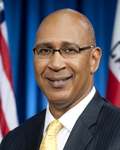
Ask Maddy about Chris Holden
Scope: CA
Hi! I can help you understand Chris Holden's legislative record. What would you like to know?
Try one of these
i
Maddy answers using official bill text and legislative records. Always verify before sharing.
Sources cited inline