

Existing law creates within the Governor's Office of Business and Economic Development the Office of Small Business Advocate, which is led by the Small Business Advocate, to advocate the causes of small business and to provide small businesses with the information they need to survive in the marketplace. Existing law requires the advocate to, among other duties, collaborate with the Office of Small Business and Disabled Veteran Business Enterprise Services in their activities under the Small Business Procurement and Contract Act, including promoting small business certification. This bill would also require the advocate to collaborate with local agencies on the development and implementation of local strategies to increase small business participation in local procurement opportunities, as specified. In this connection, the bill would authorize a local agency, as defined, to establish a Small Business Utilization Program (SBUP) to increase small businesses' participation in local agency procurement opportunities. The bill would require an SBUP, to facilitate the participation of small businesses in the provision of goods, information technology, and services to the local agency, to establish a small business certification process. As part of this process, the bill would require the SBUP, to the extent feasible, to include all of specified criteria, including, among other things, a minimum goal of 25% procurement participation for small businesses certification. The bill would authorize a local agency to submit information on its small business procurement participation to the Office of Small Business Advocate, including progress toward meeting utilization goals. The bill would require the Office of Small Business Advocate, subject to funding being available, and upon appropriation by the Legislature for these purposes, to issue its first data call to local agencies on or before November 15, 2026, as specified. The bill would include related legislative findings.
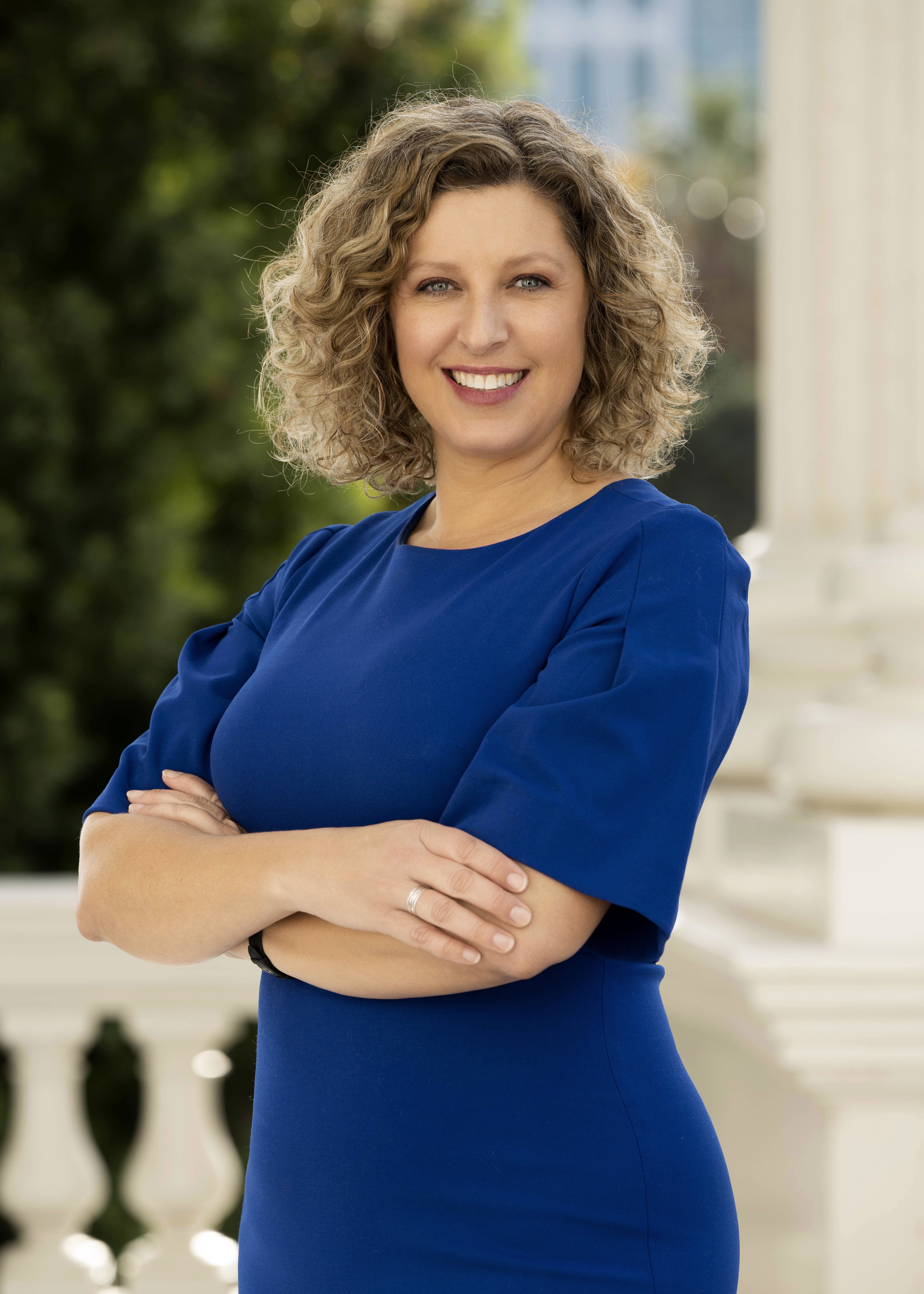
Asm. Pilar Schiavo
Sponsored bills
(1) Existing law, the Early Education Act, among other things, requires the Superintendent of Public Instruction to administer all California state preschool programs, including, but not limited to, part-day and full-day age and developmentally appropriate programs for 3- and 4-year-old children. Existing law, the Child Care and Development Services Act, administered by the State Department of Social Services, establishes a system of child care and development services for children up to 13 years of age. Existing law requires the department, in collaboration with the State Department of Education, to implement a reimbursement system plan that establishes reasonable standards and assigned reimbursement rates, as specified. Existing law requires the state and Child Care Providers United - California to establish a Joint Labor Management Committee to develop recommendations for a single reimbursement rate structure that has specified characteristics, and requires the Joint Labor Management Committee to present those recommendations to the Department of Finance no later than November 15, 2022. Existing law also requires the department, in consultation with the State Department of Education, to convene a working group to assess the existing quality standards for childcare and development and preschool programs and the methodology for establishing reimbursement rates for those programs, and requires the working group to provide recommendations relating to specified topics to a specified Joint Labor Management Committee, the Department of Finance, and the Joint Legislative Budget Committee no later than August 15, 2022. This bill would require the State Department of Social Services, in collaboration with the State Department of Education, to develop an alternative methodology for calculating subsidy payment rates for child care and development services and California state preschool program services that build upon and align with the recommendations of the working group and Joint Labor Management Committee, and that uses a cost estimation model, as specified. The bill would require the department to develop an interim transition plan, if necessary, to implement the alternative methodology, as specified, and to seek preapproval from the United States Department of Health and Human Services to amend the state's current Child Care and Development Fund State Plan to change its current methodology for determining childcare and development and preschool subsidy payment rates to the alternative methodology. The bill would require the State Department of Social Services and the State Department of Education to implement the alternative methodology upon notice, in writing, to the Legislature that the alternative methodology has been adopted, as specified. (2) Existing law requires the State Department of Social Services, in consultation with the State Department of Education, to establish a fee schedule for families using preschool and child care and development services and requires families who utilize those services to be assessed a family fee that is based on income, certified family need for full-time or part-time care services, and enrollment. Existing law prohibits those family fees from exceeding 10% of the family's monthly income and prohibits family fees from being collected for the 2022–23 fiscal year. The bill would require the State Department of Social Services, in consultation with the State Department of Education, to develop an equitable sliding scale for the payment of family fees, and would suspend the collection of family fees until the new equitable sliding scale is implemented. (3) The Early Education Act requires the Superintendent of Public Instruction to adopt rules, regulations, and guidelines to facilitate the funding and reimbursement required by the act. Existing law requires, for the 2022–23 fiscal year only, contracting agencies operating a California state preschool to be reimbursed 100% of the contract maximum reimbursable amount or net reimbursable program costs, whichever is less, if they meet specified criteria. This bill would delete the requirement that the above-described reimbursement rate apply only during the 2022–23 fiscal year, thereby extending that reimbursement rate for contracting agencies operating a California state preschool indefinitely. The bill would also delete the requirement of meeting specified criteria in order to obtain that reimbursement rate. Existing law requires reimbursement for full-day and part-day California state preschool family childcare home education network providers for the 2022–23 fiscal year to be based on the maximum certified hours of care for all families, including families certified for a variable schedule, regardless of attendance. This bill would delete the requirement that the above-described reimbursement provision apply during the 2022–23 fiscal year, thereby extending that reimbursement provision for full-day and part-day California state preschool family childcare home education network providers indefinitely. (4) Existing law requires the State Department of Social Services to contract with local contracting agencies for alternative payment programs for childcare services to be provided throughout the state. Existing law requires the alternative payment program to reimburse childcare providers based upon specified criteria, including the actual days and hours of attendance for those families with variable schedules. Existing law also requires the department to administer general childcare and development programs, as specified. This bill would instead require the alternative payment program to reimburse childcare providers based on the maximum certified hours of care, as specified. The bill would require contracting agencies operating those general childcare and development programs to be reimbursed the lesser of 100% of the contract maximum reimbursable amount or net reimbursable program costs.
Existing law establishes the Medi-Cal program, which is administered by the State Department of Health Care Services and under which qualified low-income individuals receive health care services, including certain dental services. The Medi-Cal program is, in part, governed and funded by federal Medicaid program provisions. Under existing law, early and periodic screening, diagnostic, and treatment (EPSDT) services are covered under Medi-Cal for an individual under 21 years of age in accordance with certain federal provisions. Under existing law, for persons 21 years of age or older, laboratory-processed crowns on posterior teeth are a covered benefit when medically necessary to restore a posterior tooth back to normal function based on the criteria specified in the Medi-Cal Dental Manual of Criteria. This bill, The Smile Act, for purposes of the above-described Medi-Cal coverage for laboratory-processed crowns, would remove the condition that the tooth be posterior and would apply the coverage to persons 13 years of age or older. The bill would also add, as a covered Medi-Cal benefit for persons of any age, subject to prior authorization, a dental implant if tooth extraction or removal is medically necessary or if the corresponding tooth is missing. The bill would condition this coverage on there being no other covered functional alternatives for prosthetic replacement to correct the person's dental condition, as specified, on the person being without medical conditions for which dental implant surgery would be contraindicated, on receipt of any necessary federal approvals, and on the availability of federal financial participation. Under the bill, the above-described provisions would not be construed to exclude Medi-Cal coverage for laboratory-processed crowns on teeth or dental implants if otherwise required under EPSDT services.
Existing law requires the Labor Commissioner to issue a civil wage and penalty assessment to a contractor or subcontractor, or both, if, after an investigation, the commissioner determines there has been a violation of the laws regulating public works contracts, including the payment of prevailing wages. Existing law requires the assessment to be served not later than 18 months after the filing of a valid notice of completion in the office of the county recorder in each county in which the public work or some part thereof was performed, or not later than 18 months after acceptance of the public work, whichever occurs last. This bill would extend the above-described time period to 24 months, and would authorize an extension of an additional 18 months for good cause, including ongoing investigation and assessment.
Maddy summaryThis California Assembly resolution encourages the U.S. Congress to pass legislation creating a National Infrastructure Bank to fund critical repairs and upgrades for roads, bridges, dams, and other public works. The bill cites reports from the American Society of Civil Engineers highlighting billions of dollars in investment gaps and poor conditions affecting California's transportation and water systems. It advocates for a financing model that uses existing federal debt rather than new taxes, aiming to stimulate the economy, create jobs, and prioritize projects in disadvantaged communities. The resolution formally requests that federal leaders adopt this approach to address the state's urgent infrastructure needs.
Maddy summaryThis California House Resolution condemns the July 13, 2024, assassination attempt on former President Donald J. Trump and calls for an end to political violence. The measure highlights the event where Trump was wounded while speaking at a rally in Butler, Pennsylvania, and notes that one attendee died and others were injured while trying to protect him. It urges the state to foster a political environment based on respectful discourse and nonviolence. The resolution is a formal statement of the Assembly's stance and does not create new laws or change existing policies.
This measure would recognize the importance of California Native American Day, celebrated this year on September 27, 2024, and the annual California Indian Cultural Awareness Conference, to the enhancement of awareness of California Indian culture.
Maddy summaryThis bill establishes Filipino American History Month to recognize the long-standing contributions of Filipinos to California and the United States. It directly affects state officials and the public by designating a specific month for commemoration and education. The resolution highlights historical milestones, including early Spanish-era interactions, the development of Filipino communities in cities like Stockton and San Francisco, and the significant roles Filipinos played in agriculture, shipbuilding, and military service during World War II. By formally acknowledging these events, the bill aims to promote awareness of Filipino American heritage within the state.
Maddy summaryThis bill designates November 22, 2024, as Kimchee Day in California to honor the traditional Korean dish and its cultural significance. It acknowledges the long history of kimchee, the contributions of Korean Americans, and the dish's recognized health benefits and growing popularity in the United States. The resolution directs the Assembly's Chief Clerk to send copies of the document to the author for distribution.
Maddy summaryThis bill establishes Transgender History Month in California to recognize the state's significant contributions to transgender history and activism. The resolution highlights key historical figures and events, such as early Indigenous gender variance, the Cooper Do-nuts and Compton's Cafeteria riots, and the founding of major support organizations. By formally acknowledging these milestones, the measure aims to educate the public about the long-standing presence and struggles of transgender people in California.