

Passed Mar 2, 2017
1 co-sponsor
Total votes
8,283
all sessions
Attendance
92%
588 missed
Lower than 95% of chamber peers
With party
96%
of cast votes
Lower than 84% of chamber peers
Bipartisan score
3%
crosses aisle rarely
Higher than 88% of chamber peers
Sponsored
685
bills & resolutions
Near the chamber average
Committees
0
assignments
685 bills and resolutions
Sponsored bills
Total
685
Primary
61
Co-sponsor
624
This page
685
matching current filters
Relative to Korean-American Day.
This measure would proclaim January 13, 2017, and January 13, 2018, as Korean-American Day.
Signed into law Feb 24, 2017
1 co-sponsor
Relative to Fred Korematsu Day of Civil Liberties and the Constitution.
This measure would designate that January 30, 2017, be observed as Fred Korematsu Day of Civil Liberties and the Constitution.
Signed into law Feb 24, 2017
1 co-sponsor
Relative to India Republic Day.
This measure would proclaim January 26, 2017, as India Republic Day, and would urge all Californians to join in celebrating India Republic Day.
Signed into law Feb 24, 2017
1 co-sponsor
Relative to the Lunar New Year Celebration.
This measure would recognize the Lunar New Year Celebration.
Signed into law Feb 24, 2017
1 co-sponsor
Passed Feb 2, 2017
1 co-sponsor
Relative to Martin Luther King, Jr. Day.
This measure would designate that January 16, 2017, be observed as the official memorial of the late Dr. Martin Luther King, Jr.'s birth and commemorate Martin Luther King, Jr. Day and the work of Dr. King and the Civil Rights Movement in changing public policy in California and in the United States of America.
Signed into law Jan 19, 2017
1 co-sponsor
Disability access: construction-related accessibility claims: demand letters.
Existing law prohibits discrimination on the basis of various specified personal characteristics, including disability. The Construction-Related Accessibility Standards Compliance Act establishes standards for making new construction and existing facilities accessible to persons with disabilities and provides for construction-related accessibility claims for violations of those standards. Existing law requires that a copy of the demand letter and the complaint be sent to the California Commission on Disability Access. This bill would, in addition, require that information about the demand letter and the complaint be submitted to the commission in a standard format specified by the commission on the commission's Internet Web site. The bill would require the commission to post a new standard format on its Internet Web site at least 30 days before requiring information be in the new standard format.
Signed into law Sep 30, 2016
1 co-sponsor
Unmanned aircraft systems.
(1) Existing law provides certain individuals with immunity from civil liability under specific circumstances, including, among others, limiting the civil liability of a person who in good faith, and not for compensation, renders emergency medical or nonmedical care at the scene of an emergency, as specified. This bill would further limit the exposure to civil liability of an emergency responder, defined as a paid or an unpaid volunteer or private entity acting within the scope of authority implicitly or expressly provided by a local public entity or a public employee of a local public entity to provide emergency services, for damage to an unmanned aircraft or unmanned aircraft system, if the damage was caused while the emergency responder was performing specific emergency services and the unmanned aircraft or unmanned aircraft system was interfering with the provision of those emergency services. (2) The Government Claims Act sets forth the general procedure for the presentation of a claim as a prerequisite to the commencement of an action for money or damages against a "public entity," "local public entity," or a "public employee," and defines those terms for its purposes. The act prohibits liability against a public entity or public employee for, among other things, certain acts relating to the provision of fire protection and police and correctional activities, as specified. This bill would further limit the exposure to civil liability of a local public entity or public employee of a local public entity for damage to an unmanned aircraft or unmanned aircraft system, if the damage was caused while the local public entity or public employee of a local public entity was performing specific emergency services and the unmanned aircraft or unmanned aircraft system was interfering with the provision of those emergency services. The bill would specify that this immunity is in addition to any other immunity provided to a local public entity or public employee of a local public entity under law.
Signed into law Sep 29, 2016
1 co-sponsor
Personal income taxes: earned income credit: credit percentage: phaseout percentage.
The Personal Income Tax Law allows various credits against the taxes imposed by that law, including certain credits that are allowed in modified conformity to credits allowed by federal income tax laws. Federal income tax laws allow a refundable earned income tax credit for certain low-income individuals who have earned income from specified sources and who meet certain other requirements. The Personal Income Tax Law, for taxable years beginning on or after January 1, 2015, in modified conformity with federal income tax laws, allows an earned income credit against personal income tax, and a payment from the Tax Relief and Refund Account for an allowable credit in excess of tax liability, to an eligible individual in an amount determined in accordance with federal law as applicable for federal income tax purposes for the taxable year, multiplied by the earned income tax credit adjustment factor, as specified. Existing law creates the Tax Relief and Refund Account, which is continuously appropriated, and provides that required payments to be made to taxpayers or other persons from the Personal Income Tax Fund are to be paid from that account, including amounts allowable as an earned income credit in excess of any tax liability. The Personal Income Tax Law provides that the amount of the credit is calculated as a percentage of the eligible individual's earned income and is phased out above a specified amount as income increases. Under existing law, the credit percentage and the phaseout percentage is based on the number of qualifying children of the eligible individual. Existing law provides, in modified conformity with federal income tax law, in the case of an eligible individual with 3 or more qualifying children, for taxable years beginning before January 1, 2016, the credit percentage and phaseout percentage is 45%, and for taxable years beginning on or after January 1, 2016, the credit percentage and phaseout percentage is the same as for an eligible individual with 2 or more children, which is 40%. This bill, for taxable years beginning on and after January 1, 2016, would instead provide that, in the case of an eligible individual with 3 or more qualifying children, the credit percentage and phaseout percentage is 45%, thereby increasing the credit percentage and the phaseout percentage for those eligible individuals for taxable years beginning on and after January 1, 2016. By increasing the allowable credit amount, this bill would authorize new payments from the Tax Relief and Refund Account for additional amounts in excess of personal income tax liabilities, thereby making an appropriation.
Signed into law Sep 27, 2016
1 co-sponsor
Ask Maddy
·
AI policy assistant
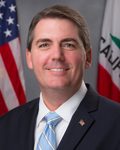
Ask Maddy about Marc Steinorth
Scope: california
Hi! I can help you understand Marc Steinorth's legislative record. What would you like to know?
Try one of these
i
Maddy answers using official bill text and legislative records. Always verify before sharing.
Sources cited inline