

Passed Feb 12, 2024
1 co-sponsor
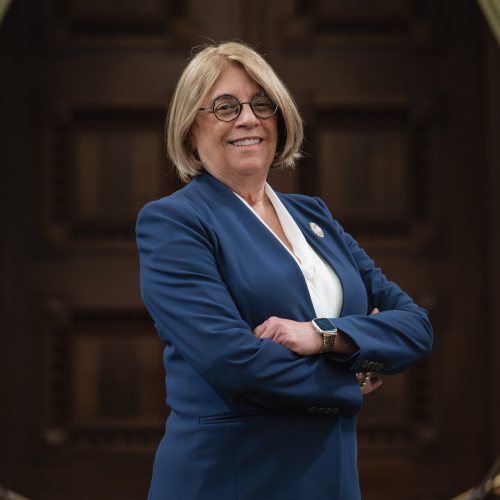
Asm. Cecilia Aguiar-Curry
Total votes
22,547
all sessions
Attendance
96%
805 missed
Higher than 95% of chamber peers
With party
99%
of cast votes
Higher than 82% of chamber peers
Bipartisan score
0%
crosses aisle rarely
Lower than 87% of chamber peers
Sponsored
2,169
bills & resolutions
Near the chamber average
Committees
13
assignments
2,169 bills and resolutions
Sponsored bills
Total
2,169
Primary
236
Co-sponsor
1,933
This page
2,169
matching current filters
Passed Feb 8, 2024
1 co-sponsor
Department of Food and Agriculture: research funding: winegrapes: smoke exposure.
Existing law establishes the Department of Food and Agriculture, under the control of the Secretary of Food and Agriculture, to promote and protect the agricultural industry of the state. Existing law authorizes the department to expend in accordance with law all money that is made available for its use. This bill would require the department, upon appropriation by the Legislature in the Budget Act of 2023, to provide funding for research to investigate accurate measurement of smoke compounds in winegrapes and wine, methods to mitigate the damage to winegrapes and wine that can occur from exposure to smoke, and methods to prevent smoke damage to winegrapes and wine. The bill would require the department to establish an advisory committee of specified members appointed by the secretary to provide recommendations to the secretary for funding research proposals submitted to the department under these provisions. The bill would make these provisions inoperative on January 1, 2029, or when all funds appropriated by the Legislature pursuant to the Budget Act of 2023 for these provisions have been disbursed, whichever is later.
Failed Feb 1, 2024
0 co-sponsors
Forest biomass: management: emissions: energy.
(1) Existing law establishes in the Natural Resources Agency the Department of Forestry and Fire Protection (CAL-FIRE) , and requires CAL-FIRE to be responsible for, among other things, fire protection and prevention, as provided. Existing law establishes the State Board of Forestry and Fire Protection in CAL-FIRE to represent the state's interest in the acquisition and management of state forests and requires the board to maintain an adequate forest policy. The former Governor, Edmund G. Brown Jr., issued Executive Order No. B-52-18 that, among other things, established a Forest Management Task Force, now known as the Wildfire and Forest Resilience Task Force, involving specified state agencies to create the action plan for wildfire and forest resilience. The executive order also established a Joint Institute for Wood Products Innovation, to be located within the state board. This bill would establish the Forest Biomass Waste Utilization Program to be administered by the state board's Joint Institute for Wood Products Innovation to develop an implementation plan to meet the goals and recommendations of, and the comprehensive framework to align with the state's wood utilization policies and priorities and focused market strategy of, specified statewide forest management plans, and to develop a workforce training program to complement the workforce needs associated with the implementation plan. The bill would require the state board, in coordination with the Wildfire and Forest Resilience Task Force, to submit an annual report to the Legislature, beginning January 1, 2025, on the progress made on implementing the implementation plan. This bill would require the Natural Resources Agency, in furtherance of the program, to facilitate the integration of recommendations for forest biomass waste utilization in relevant, state climate adaptation plans. (2) The Warren-Alquist State Energy Resources Conservation and Development Act establishes the State Energy Resources Conservation and Development Commission (Energy Commission) and requires the Energy Commission to undertake various actions in furtherance of meeting the state's clean energy and pollution reduction objectives. Existing law requires the Energy Commission, in consultation with specified state and federal agencies and at least every 2 years, to conduct assessments and forecasts of all aspects of energy industry supply, production, transportation, delivery and distribution, demand, and prices. Existing law requires the Energy Commission, in consultation with specified entities, to adopt a biennial integrated energy policy report containing certain information. This bill would require the Energy Commission, in furtherance of the Forest Biomass Waste Utilization Program, to prepare and submit a report to the Legislature, on or before December 31, 2024, that evaluates innovative bioenergy technologies that use forest biomass waste, as specified. The bill would also require the Energy Commission to include, as part of the 2025 edition of the integrated policy report, an assessment of the potential for forest biomass waste energy to provide firm renewable power. (3) The California Global Warming Solutions Act of 2006 designates the State Air Resources Board (state air board) as the state agency charged with monitoring and regulating sources of emissions of greenhouse gases. The act requires the state air board to adopt a statewide greenhouse gas emissions limit, as specified, and to adopt rules and regulations in an open public process to achieve the maximum technologically feasible and cost-effective greenhouse gas emission reductions. The act requires the state air board to develop, on or before December 31, 2020, and every 5 years thereafter, a report that assesses greenhouse gas emission associated with wildfire and forest management activities. This bill would require the state air board, in the report developed on or before December 31, 2025, and every 5 years thereafter, to include, among other things, a methodology to quantify the greenhouse gas and short-lived climate pollutant emissions from wildfire, pile burning, and forest management activities, as specified. (4) Under existing law, the Public Utilities Commission (PUC) has regulatory authority over public utilities, including electrical corporations. The California Renewables Portfolio Standard Program requires every electrical corporation to file with the PUC a standard tariff for electricity generated by an electric generation facility, as defined, that qualifies for the tariff, is owned and operated by a retail customer of the electrical corporation, and is located within the service territory of, and developed to sell electricity to, the electrical corporation. The PUC refers to this requirement as the renewable feed-in tariff. The renewable feed-in tariff law, in part, requires the PUC to direct the electrical corporations, collectively, to procure at least 250 megawatts of cumulative rated generating capacity from developers of bioenergy projects that commence operation on or after June 1, 2013. Pursuant to this requirement, the PUC has established and revised the Bioenergy Market Adjusting Tariff (BioMAT) program. Existing law authorizes a community choice aggregator to submit eligible projects for cost recovery pursuant to the BioMAT program, as specified. This bill would require the PUC to continue the BioMAT program until the implementation of the provisions authorizing community choice aggregators to participate in the program has been resolved as specified, and adequate time is given to community choice aggregators to participate in the program. Under existing law, a violation of the Public Utilities Act or any order, decision, rule, direction, demand, or requirement of the commission is a crime. Because certain provisions of this bill would be a part of the act and because a violation of a commission action implementing the bill's requirements would be a crime, the bill would impose a state-mandated local program. (5) The California Constitution requires the state to reimburse local agencies and school districts for certain costs mandated by the state. Statutory provisions establish procedures for making that reimbursement. This bill would provide that no reimbursement is required by this act for a specified reason.
Failed Feb 1, 2024
0 co-sponsors
Flood control: City of Woodland: Lower Cache Creek.
Existing law provides for state cooperation with the federal government in the construction of specified flood control projects. For certain flood control projects authorized on or after January 1, 2002, or for small flood management projects for which specified findings have been made on or after that date, existing law requires the state to pay 50% of specified nonfederal costs. Existing law authorizes the state to pay up to 70% of those nonfederal costs upon the recommendation of the Department of Water Resources or the Central Valley Flood Protection Board if either entity determines that the project will advance one of several specified objectives. Existing law authorizes a plan of improvement for flood control and water conservation on Cache Creek, including Clear Lake, in the Counties of Yolo and Lake. This bill would specifically adopt and approve the Lower Cache Creek Flood Risk Management Project, as provided. The bill would also authorize the state to provide funds, up to 99% of the costs, as specified, for the project for flood control on the Lower Cache Creek in the County of Yolo, and would authorize the City of Woodland to receive funds for these purposes under specified conditions. The bill would also authorize the state to authorize funding, upon appropriation by the Legislature, to be used for planning, engineering, designing, mitigation, and constructing the project if the Director of Water Resources makes specified findings. This bill would make legislative findings and declarations as to the necessity of a special statute for the City of Woodland.
Failed Feb 1, 2024
0 co-sponsors
Emergency Fairgrounds Communications Grant Act.
The Emergency Services Act establishes in state government, within the office of the Governor, the Office of Emergency Services and makes the office responsible for the state's emergency and disaster response services for natural, technological, or man-made disasters and emergencies, as specified. This bill would enact the Emergency Fairgrounds Communications Grant Act and would require, on or before January 1, 2025, the office to establish a grant program to provide fairgrounds with grant funding for the purpose of building and upgrading communication and internet infrastructure on fairgrounds. The bill would require the office to establish standards to determine the awarding of grant funding that award funding based on a fairground's need for internet capabilities in order to service an emergency response operation. The bill would authorize the office to prioritize the order of grant disbursements based on prescribed criteria. The bill would also require the office to consult with the Department of Technology and the Department of Food and Agriculture to coordinate the statewide building and upgrading of communication and internet infrastructure on fairgrounds. The bill would provide that the program is operative only upon an appropriation by the Legislature for its purposes.
Failed Feb 1, 2024
1 co-sponsor
State Department of Public Health: pregnancy care and abortion services awareness campaign.
Existing law provides for the licensure and regulation of clinics and health facilities, including, but not limited to, primary care and specialty clinics, by the State Department of Public Health. Under existing law, the department is also responsible for the statewide administration of various programs and policies relating to personal health, including maternal, child, and adolescent health. Existing law requires the department to develop a coordinated state strategy for addressing the health-related needs of women, including implementation of goals and objectives for women's health, as specified. This bill would require the department to conduct an awareness campaign to communicate with local health departments, health care providers, and the public regarding facilities that provide health care services, including, but not limited to, primary care and specialty clinics. The bill would require the awareness campaign to include information about the services the facilities offer, and the activities of the department, relating to pregnancy care and abortion. The bill would require the campaign to make that information available to, among others, health care professional associations and societies and health care employers. The bill would authorize the department to award grants or enter into contracts to perform the functions required to conduct the awareness campaign, as specified. The bill would repeal these provisions on January 1, 2025.
Failed Feb 1, 2024
1 co-sponsor
Medi-Cal: reimbursement for abortion.
Existing law establishes the Medi-Cal program, which is administered by the State Department of Health Care Services, under which qualified low-income individuals receive health care services. The Medi-Cal program is, in part, governed and funded by federal Medicaid program provisions. Existing law provides that abortion is a covered benefit under Medi-Cal. Existing regulation authorizes reimbursement for specified medications used to terminate a pregnancy through the 70th day from the first day of the recipient's last menstrual period. This bill would require the department, by March 1, 2024, to review and update Medi-Cal coverage policies for medication abortion to align with current evidence-based clinical guidelines. After the initial review, the bill would require the department to update its Medi-Cal coverage policies for medication abortion as needed to align with evidence-based clinical guidelines. The bill would require the department to allow flexibility for providers to exercise their clinical judgment when services are performed in a manner that aligns with one or more evidence-based clinical guidelines.
Vetoed Feb 1, 2024
1 co-sponsor
Product safety: menstrual products: perfluoroalkyl and polyfluoroalkyl substances.
Existing law prohibits, beginning January 1, 2025, a person or entity from manufacturing, selling, delivering, holding, or offering for sale in commerce any cosmetic product that contains intentionally added perfluoroalkyl and polyfluoroalkyl substances (PFAS) , as defined. Existing law similarly prohibits, beginning January 1, 2025, any person from manufacturing, distributing, selling, or offering for sale in the state any new, not previously owned, textile articles that contain regulated PFAS, except as specified, and requires a manufacturer to use the least toxic alternative when removing regulated PFAS in textile articles to comply with these provisions. This bill would, beginning January 1, 2025, similarly prohibit any person from manufacturing, distributing, selling, or offering for sale in the state any menstrual products that contain regulated PFAS, and requires a manufacturer to use the least toxic alternative when removing regulated PFAS in menstrual products to comply with these provisions. The bill would require a manufacturer of a menstrual product to provide persons that offer the product for sale or distribution in the state with a certificate of compliance stating that the menstrual product is in compliance with these provisions and does not contain any regulated PFAS. The bill would make a violation of these provisions punishable by a civil penalty not to exceed $10,000 per day for each violation, as specified, and would authorize the Attorney General, a city prosecutor, a city or county attorney, a county counsel, or a district attorney to bring an action to enforce these provisions.
Vetoed Feb 1, 2024
1 co-sponsor
CalWORKs: eligibility: income exclusions.
Existing law provides for the California Work Opportunity and Responsibility to Kids (CalWORKs) program under which each county provides cash assistance and other benefits to qualified low-income families. Under existing law, certain types of payments received by recipients of aid under the CalWORKs program, including income from a college work-study program, as specified, are exempt from consideration as income for purposes of determining eligibility and aid amount. This bill would, commencing January 1, 2025, or on the date that the State Department of Social Services notifies the Legislature that the California Statewide Automated Welfare System can perform the necessary automation to implement this change, additionally exempt income up to 200% of the federal poverty level that is received by an apprentice or preapprentice for performing work as part of a specified apprenticeship program or preapprenticeship program from consideration as income for purposes of determining eligibility or calculating grant amounts under the CalWORKs program. The bill would require the State Department of Social Services to implement these provisions through an all-county letter or similar instruction until regulations are adopted. By expanding the scope of eligibility for CalWORKs, the bill would impose a state-mandated local program. Existing law continuously appropriates moneys from the General Fund to defray a portion of county costs under the CalWORKs program. This bill would instead provide that the continuous appropriation would not be made for purposes of implementing the above provisions. This bill would incorporate additional changes to Section 11157 of the Welfare and Institutions Code proposed by AB 274 to be operative only if this bill and AB 274 are enacted and this bill is enacted last. The California Constitution requires the state to reimburse local agencies and school districts for certain costs mandated by the state. Statutory provisions establish procedures for making that reimbursement. This bill would provide that, if the Commission on State Mandates determines that the bill contains costs mandated by the state, reimbursement for those costs shall be made pursuant to the statutory provisions noted above.
Vetoed Jan 29, 2024
1 co-sponsor
Ask Maddy
·
AI policy assistant
Ask Maddy about Cecilia Aguiar-Curry
Scope: CA
Hi! I can help you understand Cecilia Aguiar-Curry's legislative record. What would you like to know?
Try one of these
i
Maddy answers using official bill text and legislative records. Always verify before sharing.
Sources cited inline