

(1) Existing law, the Early Education Act, among other things, requires the Superintendent of Public Instruction to administer all California state preschool programs, including, but not limited to, part-day and full-day age and developmentally appropriate programs for 3- and 4-year-old children. Existing law, the Child Care and Development Services Act, administered by the State Department of Social Services, establishes a system of child care and development services for children up to 13 years of age. Existing law requires the department, in collaboration with the State Department of Education, to implement a reimbursement system plan that establishes reasonable standards and assigned reimbursement rates, as specified. Existing law requires the state and Child Care Providers United - California to establish a Joint Labor Management Committee to develop recommendations for a single reimbursement rate structure that has specified characteristics, and requires the Joint Labor Management Committee to present those recommendations to the Department of Finance no later than November 15, 2022. Existing law also requires the department, in consultation with the State Department of Education, to convene a working group to assess the existing quality standards for childcare and development and preschool programs and the methodology for establishing reimbursement rates for those programs, and requires the working group to provide recommendations relating to specified topics to a specified Joint Labor Management Committee, the Department of Finance, and the Joint Legislative Budget Committee no later than August 15, 2022. This bill would require the State Department of Social Services, in collaboration with the State Department of Education, to develop an alternative methodology for calculating subsidy payment rates for child care and development services and California state preschool program services that build upon and align with the recommendations of the working group and Joint Labor Management Committee, and that uses a cost estimation model, as specified. The bill would require the department to develop an interim transition plan, if necessary, to implement the alternative methodology, as specified, and to seek preapproval from the United States Department of Health and Human Services to amend the state's current Child Care and Development Fund State Plan to change its current methodology for determining childcare and development and preschool subsidy payment rates to the alternative methodology. The bill would require the State Department of Social Services and the State Department of Education to implement the alternative methodology upon notice, in writing, to the Legislature that the alternative methodology has been adopted, as specified. (2) Existing law requires the State Department of Social Services, in consultation with the State Department of Education, to establish a fee schedule for families using preschool and child care and development services and requires families who utilize those services to be assessed a family fee that is based on income, certified family need for full-time or part-time care services, and enrollment. Existing law prohibits those family fees from exceeding 10% of the family's monthly income and prohibits family fees from being collected for the 2022–23 fiscal year. The bill would require the State Department of Social Services, in consultation with the State Department of Education, to develop an equitable sliding scale for the payment of family fees, and would suspend the collection of family fees until the new equitable sliding scale is implemented. (3) The Early Education Act requires the Superintendent of Public Instruction to adopt rules, regulations, and guidelines to facilitate the funding and reimbursement required by the act. Existing law requires, for the 2022–23 fiscal year only, contracting agencies operating a California state preschool to be reimbursed 100% of the contract maximum reimbursable amount or net reimbursable program costs, whichever is less, if they meet specified criteria. This bill would delete the requirement that the above-described reimbursement rate apply only during the 2022–23 fiscal year, thereby extending that reimbursement rate for contracting agencies operating a California state preschool indefinitely. The bill would also delete the requirement of meeting specified criteria in order to obtain that reimbursement rate. Existing law requires reimbursement for full-day and part-day California state preschool family childcare home education network providers for the 2022–23 fiscal year to be based on the maximum certified hours of care for all families, including families certified for a variable schedule, regardless of attendance. This bill would delete the requirement that the above-described reimbursement provision apply during the 2022–23 fiscal year, thereby extending that reimbursement provision for full-day and part-day California state preschool family childcare home education network providers indefinitely. (4) Existing law requires the State Department of Social Services to contract with local contracting agencies for alternative payment programs for childcare services to be provided throughout the state. Existing law requires the alternative payment program to reimburse childcare providers based upon specified criteria, including the actual days and hours of attendance for those families with variable schedules. Existing law also requires the department to administer general childcare and development programs, as specified. This bill would instead require the alternative payment program to reimburse childcare providers based on the maximum certified hours of care, as specified. The bill would require contracting agencies operating those general childcare and development programs to be reimbursed the lesser of 100% of the contract maximum reimbursable amount or net reimbursable program costs.
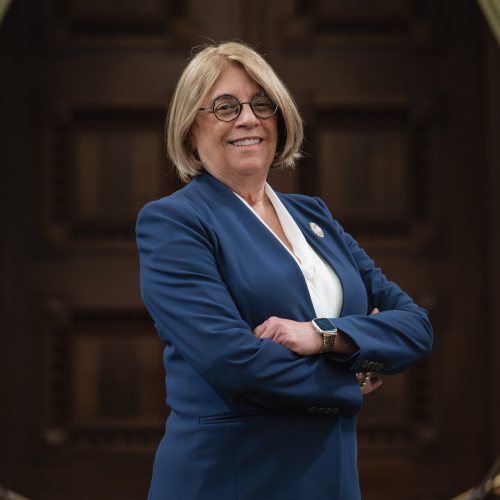
Asm. Cecilia Aguiar-Curry
Sponsored bills
Existing law revives certain claims seeking to recover damages suffered as a result of a sexual assault that occurred on or after the plaintiff's 18th birthday when one or more entities are legally responsible for damages and the entity or their agents engaged in a cover up, as defined, that would otherwise be barred prior to January 1, 2023, solely because the applicable statute of limitations has or had expired. Existing law authorizes a cause of action for any such claim to proceed if already pending in court on January 1, 2023, or, if not filed by that date, to be commenced between January 1, 2023, and December 31, 2023. Existing law revives such claims brought by a plaintiff to who alleges all of the following: (1) the plaintiff was sexually assaulted, (2) one or more entities are legally responsible for damages arising out of the assault, and (3) the entity or entities engaged in a cover up or attempted cover up, as defined, of a previous instance or allegations of sexual assault. This bill would extend the eligibility period for revival of claims of the type described above to include claims that would otherwise be barred prior to January 1, 2025, because the applicable statute of limitations has or had expired. The bill would instead require a revived claim to allege that the plaintiff was sexually assaulted and that (1) one or more entities or persons are legally responsible for damages arising out of sexual assault by an alleged perpetrator against the plaintiff, and (2) an entity or entities, including their specified representatives, engaged in a cover up or attempted a cover up of a previous instance or allegations of sexual assault by an alleged perpetrator. The bill would specify that failure to allege a cover up as to one entity does not affect revival of a claim or claims against any other entity or person, including the perpetrator. The bill would permit a cause of action for any such claim to proceed if already pending in court on the effective date of the bill or, if not filed by that date, to be commenced between January 1, 2025, and December 31, 2026. The bill would make conforming changes.
Existing law requires the Department of Food and Agriculture, headed by the Secretary of Food and Agriculture, to promote and protect the agricultural industry of the state. Existing law authorizes the department to expend in accordance with law all money that is made available for its use. This bill would find and declare that it is a primary goal of the state to prevent the introduction, and suppress the spread, of invasive species within its borders. The bill would require, in carrying out this goal, the department, in collaboration with relevant state agencies and stakeholders, to develop and implement strategies to detect, control, monitor, and eradicate invasive species to protect the state's agriculture, environment, and natural resources. The bill would require the department, in consultation with other relevant state agencies, to allocate funds, if available, to implement and enforce these provisions.
The Control, Regulate and Tax Adult Use of Marijuana Act of 2016 (AUMA) , an initiative measure approved as Proposition 64 at the November 8, 2016, statewide general election, authorizes a person who obtains a state license under AUMA to engage in commercial adult-use cannabis activity pursuant to that license and applicable local ordinances. The Medicinal and Adult-Use Cannabis Regulation and Safety Act (MAUCRSA) , among other things, consolidates the licensure and regulation of commercial medicinal and adult-use cannabis activities and requires the Department of Cannabis Control to administer its provisions. Existing law governs the cultivation of industrial hemp in this state and establishes a registration program administered by county agricultural commissioners and the Department of Food and Agriculture for growers of industrial hemp, hemp breeders, and established agricultural research institutions, as defined. The Sherman Food, Drug, and Cosmetic Law, among other things, regulates the labeling of food, beverages, and cosmetics and makes it a crime to distribute in commerce any food, drug, device, or cosmetic if its packaging or labeling does not conform to these provisions. Existing law establishes a process for the embargo, condemnation, and destruction of a food, drug, device, or cosmetic that is adulterated, misbranded, or falsely advertised, gives the authority to place items under embargo to authorized agents of the State Department of Public Health, and requires the department to take specified actions. Violation of the Sherman Food, Drug, and Cosmetic Law is a misdemeanor. Existing law also requires hemp manufacturers who produce specified products that include industrial hemp or who produce raw hemp extract, as defined, to complete a registration process, under the State Department of Public Health, and to meet various requirements for testing and labeling on products. Existing law, as part of the registration process, requires the department to assess specified fees, including an oversight and authorization enrollment fee, to cover the actual reasonable costs of implementing the regulatory program. Existing law exempts industrial hemp, as defined, from the definition of cannabis and from MAUCRSA, but requires the Department of Cannabis Control to prepare a report, on or before July 1, 2022, to the Governor and the Legislature outlining the steps necessary to allow for the incorporation of hemp cannabinoids into the cannabis supply chain. This bill would state that MAUCRSA does not prohibit a licensee from manufacturing, processing, distributing, or selling products that contain industrial hemp or cannabinoids, extracts, or derivatives from industrial hemp if the product complies with all applicable state laws and regulations. The bill would authorize a licensed manufacturer or microbusiness to obtain industrial hemp from a person registered with the State Department of Public Health, as specified, and would require industrial hemp purchased by a licensee to be tracked as a separate batch through the manufacturing process. The bill would require a licensee that manufactures, distributes, or sells products that contain industrial hemp to record all transactions and specified data in the state track and trace system. The bill would prohibit a licensed manufacturer from incorporating THC or comparable cannabinoid, as defined, that has been converted from a hemp-derived cannabinoid and would also prohibit licensed retailers and distributors from selling or distributing cannabis or hemp products that contain converted THC or comparable cannabinoid. The bill would require the department to implement a process by which any licensee that is also a registered hemp manufacturer may use the same premises. This bill would revise and recast the provisions of the Sherman Food, Drug, and Cosmetic Law regulating industrial hemp to redefine certain terms, expand the prohibition that raw hemp extract not exceed 0.3% of a tetrahydrocannabinol or comparable cannabinoid, limit the level of total THC that can be in an industrial hemp final form product, and prohibit the manufacture, distribution, or sale of an industrial hemp product that contains a synthetically derived cannabinoid, as defined, unless authorized by the department in regulation. The bill would prohibit an industrial hemp food and beverage product from being labeled, marketed, or advertised as a product intended to create an intoxicating effect. The bill would require that industrial hemp human food and beverage final form products meet specified guidelines and would specify that violations of the act are grounds for revocation of an industrial hemp enrollment and oversight authorization. The bill would require an out-of-state hemp manufacturer who produces certain products such as industrial hemp food, beverages, or cosmetics for importation or sale in this state to register with the department. The bill would establish a separate process for the embargo, condemnation, and destruction of industrial hemp products and would give authority to seize or embargo those products to a peace officer or a state official who possesses seizure authority in specified circumstances and would require the peace officer or state official who began the embargo to seek voluntary condemnation from the owner or commence proceedings for condemnation. The bill would make a violation of provisions regarding the retail sale of industrial hemp a misdemeanor and would impose a civil penalty. By creating a new crime, this bill would impose a state-mandated local program. Existing law authorizes the California Department of Tax and Fee Administration (CDTFA) or a law enforcement agency to seize cannabis or cannabis products not contained in secure packaging to seize cannabis or cannabis products possessed, stored, owned, or sold by an unlicensed person or that were not reported in the track and trace system, as specified, and provides that seized cannabis or cannabis products are deemed forfeited, as specified. This bill would, in certain circumstances, establish a presumption that any product containing or purporting to contain any cannabinoid is a cannabis product, unless there is reasonable cause to believe that the product is authorized to be distributed or sold as an industrial hemp product. The California Constitution requires the state to reimburse local agencies and school districts for certain costs mandated by the state. Statutory provisions establish procedures for making that reimbursement. This bill would provide that no reimbursement is required by this act for a specified reason.
Existing law, the Child Care and Development Services Act, administered by the State Department of Social Services, establishes a system of childcare and development services for children up to 13 years of age. Existing law requires the department to contract with local contracting agencies for alternative payment programs for childcare services to be provided throughout the state. Existing law establishes a payment schedule for those programs. Existing law requires a childcare provider to submit to the alternative payment program a monthly attendance record or invoice, maintained in the unaltered original format in which it was created, for each child who received services. Existing law requires the alternative payment program to reimburse childcare providers based upon specified criteria, including the actual days and hours of attendance for those families with variable schedules. This bill would remove the requirement that alternative payment programs reimburse childcare providers based on specified criteria and the requirement that an invoice be maintained in the unaltered original format in which it was created. The bill would require the department to ensure that childcare providers are reimbursed at the applicable regional market rate ceiling. The bill would also require that, commencing on April 30, 2026, alternative payment programs provide payment to childcare providers prior to the day the childcare begins for the child and require the department to issue guidance for prospective payments to the alternative payment programs that reimburse childcare providers for the provision of state-funded subsidized childcare and development services no later than April 30, 2025.
Maddy summaryThis California Assembly resolution encourages the U.S. Congress to pass legislation creating a National Infrastructure Bank to fund critical repairs and upgrades for roads, bridges, dams, and other public works. The bill cites reports from the American Society of Civil Engineers highlighting billions of dollars in investment gaps and poor conditions affecting California's transportation and water systems. It advocates for a financing model that uses existing federal debt rather than new taxes, aiming to stimulate the economy, create jobs, and prioritize projects in disadvantaged communities. The resolution formally requests that federal leaders adopt this approach to address the state's urgent infrastructure needs.
Maddy summaryThis California House Resolution condemns the July 13, 2024, assassination attempt on former President Donald J. Trump and calls for an end to political violence. The measure highlights the event where Trump was wounded while speaking at a rally in Butler, Pennsylvania, and notes that one attendee died and others were injured while trying to protect him. It urges the state to foster a political environment based on respectful discourse and nonviolence. The resolution is a formal statement of the Assembly's stance and does not create new laws or change existing policies.
Maddy summaryThis bill officially designates September 2024 as California Wine Month to honor the state's wine industry. It directly affects wineries, grape growers, and related businesses by celebrating their economic and cultural contributions. The measure uses a formal resolution to proclaim the month, highlighting the industry's role in jobs, tourism, and sustainability. No new laws or regulations are created; the change is purely symbolic and commemorative.
This measure would recognize the importance of California Native American Day, celebrated this year on September 27, 2024, and the annual California Indian Cultural Awareness Conference, to the enhancement of awareness of California Indian culture.
Maddy summaryThis bill establishes Filipino American History Month to recognize the long-standing contributions of Filipinos to California and the United States. It directly affects state officials and the public by designating a specific month for commemoration and education. The resolution highlights historical milestones, including early Spanish-era interactions, the development of Filipino communities in cities like Stockton and San Francisco, and the significant roles Filipinos played in agriculture, shipbuilding, and military service during World War II. By formally acknowledging these events, the bill aims to promote awareness of Filipino American heritage within the state.