

Existing law makes it unlawful to take white sharks for recreational or commercial purposes except under a permit issued by the Department of Fish and Wildlife for scientific or educational purposes or if taken incidentally by commercial fishing operations using certain types of nets. For purposes of these prohibitions, existing law defines "take" to mean to hunt, pursue, catch, capture, or kill, or to attempt to hunt, pursue, catch, capture, or kill. Existing law makes a violation of these prohibitions a crime. This bill would also make it unlawful, except as provided, to use any shark bait, shark lure, or shark chum, as defined, to attract any white shark; to place any shark bait, shark lure, or shark chum into the water within one nautical mile of any shoreline, pier, or jetty when a white shark is either visible or known to be present; or to place any shark bait, shark lure, or shark chum into the water for the purpose of viewing any shark when a white shark is visible or known to be present. Because a violation of these prohibitions would be a crime, this bill would impose a state-mandated local program. The California Constitution requires the state to reimburse local agencies and school districts for certain costs mandated by the state. Statutory provisions establish procedures for making that reimbursement. This bill would provide that no reimbursement is required by this act for a specified reason.
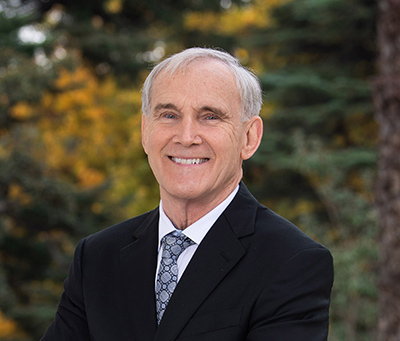
Asm. Steve Bennett
Sponsored bills
Existing law, the Control, Regulate and Tax Adult Use of Marijuana Act (AUMA) , an initiative measure approved as Proposition 64 at the November 8, 2016, statewide general election, authorizes a person who obtains a state license under AUMA to engage in commercial adult-use cannabis activity pursuant to that license and applicable local ordinances. The Medicinal and Adult-Use Cannabis Regulation and Safety Act (MAUCRSA) , among other things, consolidates the licensure and regulation of commercial medicinal and adult-use cannabis activities, including retail commercial cannabis activity. Existing law places specified requirements on the packaging and labeling of cannabis and cannabis products, and places various advertising and marketing restrictions on licensees. This bill would, commencing July 1, 2024, require the advertisement and marketing of a cannabis cartridge and an integrated cannabis vaporizer to prominently display a specified message to properly dispose of a cannabis cartridge and an integrated cannabis vaporizer as hazardous waste, and would also prohibit the package, label, advertisement, and marketing from indicating that the cannabis cartridge or integrated cannabis vaporizer is disposable or implying that it may be thrown in the trash or recycling streams. This bill would incorporate additional changes to Section 26120 of the Business and Professions Code proposed by AB 1646 to be operative only if this bill and AB 1646 are enacted and this bill is enacted last.
Existing law establishes the Medi-Cal program, which is administered by the State Department of Health Care Services (department) , under which qualified low-income individuals receive health care services. The Medi-Cal program is, in part, governed and funded by federal Medicaid program provisions. Under existing law, specialty mental health services include federal Early and Periodic Screening, Diagnostic, and Treatment (EPSDT) services provided to eligible Medi-Cal beneficiaries under 21 years of age. Existing law requires each local mental health plan to establish a procedure to ensure access to outpatient specialty mental health services, as required by the EPSDT program standards, for youth in foster care who have been placed outside their county of adjudication, as described. Existing law requires the department to issue policy guidance concerning the conditions for, and exceptions to, presumptive transfer of responsibility for providing or arranging for specialty mental health services to a foster youth from the county of original jurisdiction to the county in which the foster youth resides, as prescribed. Under this bill, commencing July 1, 2023, in the case of placement of foster children in short-term residential therapeutic programs, community treatment facilities, or group homes, or in the case of admission of foster children to children's crisis residential programs, the presumptive transfer provisions would apply only if certain circumstances exist. These circumstances would include (1) that the case plan for the foster child specifies that the child will transition to a less restrictive placement in the same county as the facility in which the child has been placed, or (2) that the placing agency determines, as specified, that the child will be negatively impacted if responsibility for providing or arranging for specialty mental health services is not transferred to the same county as the facility in which the child has been placed. The bill would impose various notification and documentation requirements on the placing agency. By creating new duties for county agencies with regard to processing requests for presumptive transfer, the bill would impose a state-mandated local program. The bill would require the department and the State Department of Social Services to adopt regulations by July 1, 2027, to implement these provisions, as specified, and would authorize those departments to implement the provisions through county letters, information notices, or similar written instructions until regulations are adopted. The bill would condition implementation of these provisions on the availability of federal financial participation and receipt of all necessary federal approvals. The bill would require the department to make a request for any necessary federal approvals no later than July 1, 2024. In cases of no transfer of responsibility for the foster child's specialty mental health services, the bill would authorize the mental health plan in the county of original jurisdiction and the specialty mental health services provider to utilize an existing contract or to establish one, in order to ensure timely payment for the services provided to the foster child, as specified, or else payment for the services would be made by the mental health plan in the county of original jurisdiction or through an agreement between the mental health plans in the 2 counties. The bill would require the department and the State Department of Social Services to collect data on the receipt of specialty mental health services by foster children who are placed outside of their county of original jurisdiction. The bill would require the inclusion of these data in the department's Medi-Cal specialty mental health services performance dashboard, as specified. The bill would define "foster children" for purposes of the above-described provisions to mean Medi-Cal eligible children younger than 21 years of age who have been placed into foster care by a county child welfare agency or a county probation department. The California Constitution requires the state to reimburse local agencies and school districts for certain costs mandated by the state. Statutory provisions establish procedures for making that reimbursement. This bill would provide that no reimbursement is required by this act for a specified reason.
Existing law requires the State Water Resources Control Board to formulate and adopt state policy for water quality control. Existing law requires the regional boards to prescribe requirements as to the nature of any proposed discharge, existing discharge, or material change in an existing discharge, except discharges into a community sewer system, with relation to the conditions existing in the disposal area or receiving waters upon, or into which, the discharge is made or proposed. Existing law also authorizes the state board or a regional board to waive these requirements as to a specific discharge or type of discharge if the state board or a regional board determines, after any necessary state board or regional board meeting, that the waiver is consistent with any applicable state or regional water quality control plan and is in the public interest. This bill would, among other things, specify that the state board and each regional board need to begin outreach to identify issues of environmental justice as early as possible in planning, policy, and permitting processes. The bill would require the state board and each regional board to engage in equitable, culturally relevant community outreach to promote meaningful civic engagement from potentially impacted communities of proposed discharges of waste that may have disproportionate impacts on water quality in disadvantaged communities or tribal communities and ensure that outreach and engagement shall continue throughout the waste discharge planning, policy, and permitting processes. The bill would require the state board and each regional board, contingent upon an appropriation, to hire environmental justice and tribal community coordinator positions for specified purposes. The bill would require the state board, contingent upon a specific appropriation, to establish a community capacity-building stipend program to promote meaningful civic engagement by disadvantaged communities and tribal communities in the state board and regional board decisionmaking processes, among other activities. The bill would require the state board and each regional board to make a finding, as specified, on potential environmental justice, tribal impact, and racial equity considerations when adopting water quality control plans or state policies for water quality control, and when issuing or reissuing waste discharge requirements or waivers of waste discharge requirements. The bill would also set forth related findings and declarations.
Existing law authorizes a county sheriff to discharge a person from a county jail at any time on the last day that the person may be confined that the sheriff considers to be in the best interests of that person. Existing law additionally authorizes a sheriff to offer a voluntary program to a person, upon completion of a sentence served or a release ordered by the court to be effected the same day, that would allow the person to stay in jail for up to 16 additional hours or until normal business hours, whichever is shorter, in order to offer the person the ability to be discharged to a treatment center or during daytime hours, as specified. Existing law authorizes the person to revoke consent and be discharged as soon as possible and practicable. Existing law requires a sheriff offering this program to, whenever possible, allow the person to make a telephone call to arrange for transportation or to notify a bail agent, as specified. This bill would require a sheriff to make the release standards, release processes, and release schedules of a county jail available to incarcerated persons, as specified. The bill would also grant a person incarcerated in, or recently released from, a county jail up to 3 free telephone calls from a telephone in the county jail to plan for a safe and successful release. By requiring a higher level of service from county sheriffs, this bill would impose a state-mandated local program. The California Constitution requires the state to reimburse local agencies and school districts for certain costs mandated by the state. Statutory provisions establish procedures for making that reimbursement. This bill would provide that, if the Commission on State Mandates determines that the bill contains costs mandated by the state, reimbursement for those costs shall be made pursuant to the statutory provisions noted above.
Existing law authorizes various local governmental entities, subject to certain limitations and approval requirements, to levy a transactions and use tax for general purposes, in accordance with the procedures and requirements set forth in the Transactions and Use Tax Law, including a requirement that the combined rate of all taxes that may be imposed in accordance with that law in the county not exceed 2%. This bill would authorize the Ventura County Transportation Commission to impose a transactions and use tax for the support of countywide transportation programs at a rate of no more than 0.5% that would, in combination with other transactions and use taxes, exceed the above-described combined rate limit of 2%, if the ordinance proposing the tax is approved by the voters, subject to applicable voter approval requirements, as specified. The bill would provide that a transactions and use tax rate imposed pursuant to the bill will not be considered for purposes of that combined rate limit described above. This bill would make legislative findings and declarations as to the necessity of a special statute for the County of Ventura.
Existing law, the California Coastal Act of 1976, requires any person wishing to perform or undertake any development in the coastal zone, as defined, in addition to obtaining any other permit required by law from any local government or from any state, regional, or local agency, to obtain a coastal development permit, as provided. The act further provides for the certification of local coastal programs by the California Coastal Commission. The act prohibits the commission, except as provided, from exercising its coastal development permit review authority, as specified, over any new development within the area to which the certified local coastal program, or any portion thereof, applies. Existing law requires a local government, if it has been delegated authority to issue coastal development permits, to recover any costs incurred from fees charged to individual permit applicants. Existing law authorizes the local government to elect to not levy fees, as provided. This bill would, at the request of an applicant, as defined, for a coastal development permit, authorize a city or county to waive or reduce the permit fee for specified projects. The bill would authorize the applicant, if a city or county rejects a fee waiver or fee reduction request, to submit the coastal development permit application directly to the commission.
This measure would proclaim the month of September 2022 as Prostate Cancer Awareness Month.
This measure would designate a specified portion of State Highway Route 44, near Oak Run in the County of Shasta, as the Stan Statham Memorial Highway. This measure would request the Department of Transportation to determine the cost of appropriate signs showing this special designation and, upon receiving donations from nonstate sources covering that cost, to erect those signs.
This measure would designate the East End Complex-Block 171 in Sacramento as the Mario Obledo Building, and would request the Department of General Services to determine the cost of erecting appropriate plaques and markers showing the designation and, upon receiving donations from nonstate sources, to cover that cost to erect signage.