

Passed May 5, 2022
1 co-sponsor
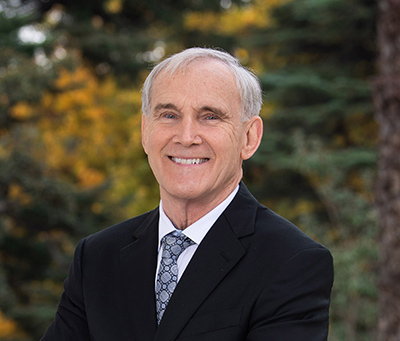
Asm. Steve Bennett
Total votes
13,616
all sessions
Attendance
96%
491 missed
Near the chamber average
With party
99%
of cast votes
Near the chamber average
Bipartisan score
0%
crosses aisle rarely
Near the chamber average
Sponsored
1,250
bills & resolutions
Near the chamber average
Committees
6
assignments
1,250 bills and resolutions
Sponsored bills
Total
1,250
Primary
102
Co-sponsor
1,148
This page
1,250
matching current filters
Passed May 3, 2022
1 co-sponsor
Passed May 2, 2022
1 co-sponsor
California Building Standards Commission: recycled water: nonpotable water systems.
(1) The California Building Standards Law provides for the adoption of building standards by state agencies by requiring all state agencies that adopt or propose adoption of any building standard to submit the building standard to the California Building Standards Commission for approval and adoption. Existing law requires the commission to conduct research to assist in the development of mandatory green building standards for the installation of recycled water systems for newly constructed commercial and public buildings, in consultation with the State Water Resources Control Board and other interested parties. This bill would require, commencing January 1, 2024, all newly constructed nonresidential buildings be constructed with dual plumbing to allow the use of recycled water for all applicable nonpotable water demands, as defined, if that building is located within an existing or planned recycled water service area, as specified. This bill would require, commencing January 1, 2024, all newly constructed nonresidential buildings with a total gross floor area of 100,000 square feet or more be constructed with dual plumbing to allow the use of nonpotable water sources for all applicable nonpotable water demands and provide for the collection, onsite treatment, and reuse of available onsite rainwater, graywater, and foundation drainage. The bill would establish exemptions to these requirements, including waiver by the board on a project-by-project basis if the board finds that strict compliance would have a significant adverse impact on public health, downstream water rights, water quality, operation of a sewer collection or treatment system, or plant life, fish, or wildlife. This bill would require the commission to adopt, if necessary, regulations related to, and consistent with the intent of, these requirements. (2) Existing law requires the State Water Resources Control Board to establish uniform statewide recycling criteria for each varying type of use of recycled water where the use involves the protection of public health. Existing law requires the board, in consultation with the California Building Standards Commission and the Department of Housing and Community Development, to adopt regulations for risk-based water quality standards for the onsite treatment and reuse of nonpotable water, as provided. Existing law requires a local jurisdiction that elects to establish a program for onsite treated nonpotable water systems to, among other things, adopt, through ordinance, a local program that includes the risk-based water quality standards established by the board. Existing law prohibits the board from administering a local jurisdiction's program in place of a local jurisdiction that is unable to effectively implement its program while protecting public health or that decides to terminate its program. This bill would delete that prohibition. The bill would require the board, on or before January 1, 2025, to establish a program for large onsite treated nonpotable water systems, as defined, for local jurisdictions that do not have a local program for onsite treated nonpotable water systems. The bill would authorize the board to establish a reasonable schedule of fees for reimbursement of its costs of establishing and operating the program.
In committee Apr 26, 2022
0 co-sponsors
Living Organ Donor Reimbursement Act.
Existing law, the Michelle Maykin Memorial Donation Protection Act, requires an employer to grant an employee an unpaid leave of absence, as specified, for the purpose of organ donation. Existing law establishes the State Department of Health Care Services within the California Health and Human Services Agency. Existing law sets forth the department's powers and duties relating to, among other things, public health, licensing and certification of certain health facilities, and the state Medi-Cal program. This bill, the Living Organ Donor Reimbursement Act, would establish the Living Organ Donor Reimbursement Program in the State Department of Health Care Services to reduce financial barriers for living organ donors. The bill would authorize living organ donors, as defined, to apply to the department for reimbursement of qualified donation expenses, as defined, that were not, or will not, otherwise be reimbursed, including travel and lodging expenses, lost wages, child care costs, and copayments and deductibles for prescription and over-the-counter medications needed as a result of the donation. The bill would limit the total reimbursement costs awarded to each living organ donor to $10,000 per organ donation. The bill would create the Living Organ Donor Reimbursement Fund within the State Treasury. The bill would authorize the Controller to accept donations to the fund from private entities, and would continuously appropriate these moneys for purposes of the program. The bill would require the Controller to allocate other moneys in the fund, upon appropriation by the Legislature, for purposes of the program. The bill would require the department to report specified information to the Legislature on or before January 1, 2026, relating to the implementation of the program. The bill would repeal the provisions of the bill on January 1, 2027. This bill would also make findings and declarations related to a gift of public funds.
In committee Apr 26, 2022
1 co-sponsor
Passed Apr 25, 2022
1 co-sponsor
Relative to Sudden Unexplained Death in Childhood Awareness Month.
This measure would recognize March 2022 as Sudden Unexplained Death in Childhood Awareness Month.
Signed into law Apr 22, 2022
1 co-sponsor
Traumatic Brain Injury Awareness Month.
This measure would proclaim the month of March 2022 as Traumatic Brain Injury Awareness Month.
Signed into law Apr 22, 2022
1 co-sponsor
Relative to the Girl Scouts of the USA.
This measure would resolve that the Legislature declares March 12, 2022, as National Girl Scout Day.
Signed into law Apr 22, 2022
1 co-sponsor
Relative to Bleeding Disorders Awareness Month.
This measure would proclaim the month of March 2022 as Bleeding Disorders Awareness Month in California.
Signed into law Apr 19, 2022
1 co-sponsor
Ask Maddy
·
AI policy assistant
Ask Maddy about Steve Bennett
Scope: california
Hi! I can help you understand Steve Bennett's legislative record. What would you like to know?
Try one of these
i
Maddy answers using official bill text and legislative records. Always verify before sharing.
Sources cited inline