

Passed Aug 15, 2022
1 co-sponsor
Total votes
27,298
all sessions
Attendance
92%
1,511 missed
Near the chamber average
With party
99%
of cast votes
Higher than 90% of chamber peers
Bipartisan score
0%
crosses aisle rarely
Lower than 93% of chamber peers
Sponsored
2,006
bills & resolutions
Near the chamber average
Committees
0
assignments
2,006 bills and resolutions
Sponsored bills
Total
2,006
Primary
262
Co-sponsor
1,744
This page
2,006
matching current filters
Relative to California Emergency Preparedness Month.
This measure would declare the month of September 2022 as California Emergency Preparedness Month.
Passed Aug 15, 2022
1 co-sponsor
Extreme Heat and Community Resilience Program: Extreme Heat and Health Reporting System.
(1) Existing law establishes the Office of Planning and Research in state government in the Governor's office. Existing law establishes the Integrated Climate Adaptation and Resiliency Program (ICARP) , to be administered by the office, to coordinate regional and local efforts with state climate adaptation strategies to adapt to the impacts of climate change, as prescribed. Existing law establishes within the office an advisory council comprised of members from a range of disciplines, in order to provide scientific and technical support, and from regional and local governments and entities. Existing law requires the advisory council to support the office's identified goals to facilitate coordination among state, regional, and local agency efforts to adapt to the impacts of climate change. This bill would establish the Extreme Heat and Community Resilience Program in the office, to be administered by the office through ICARP, for the purpose of coordinating state efforts and supporting local and regional efforts to prevent or mitigate the impacts of, and reduce the public health risks of, heat. The bill would require the office to coordinate with other state agencies to implement the program and update the Extreme Heat Action Plan. The bill would require the Director of State Planning and Research to appoint a Chief Heat Officer to coordinate state activities and funding to address heat and oversee the implementation of the program. The bill would require the advisory council to, among other things, advise and provide input to the office on actions to improve the effectiveness of the program. The bill would require the office, when making appointments to the advisory council, to ensure that the advisory council is comprised of members with the necessary expertise to advise on the implementation of the program. Upon appropriation by the Legislature, the bill would require the office, as part of the program, to award grants and provide technical assistance to eligible entities, as defined, that support local and regional efforts to mitigate the impacts and reduce the public health risks of heat. The bill would require the office, in the awarding of grants, to prioritize projects that serve disadvantaged or vulnerable communities, as specified, that demonstrate participation in a regional climate collaborative program, or that are a component of a comprehensive heat action plan. The bill would authorize the director to make advance payments, not to exceed 25% of the total award amount, from a grant awarded pursuant to the program. The bill would require the office, in administering the program, to review and consider climate science research and publications, as specified, and to minimize greenhouse gas emissions and electricity grid stress, avoid maladaptation, and maximize job growth and other cobenefits, as provided. The bill would require the office to draft and adopt guidelines for awarding grants pursuant to the program to eligible entities. The bill would require projects awarded a grant to consider, and be informed by, the most recent California Climate Change Assessment. The bill would also exempt guidelines established by the office pursuant to the program from provisions of the Administrative Procedure Act. The bill would require the office, on or before July 1, 2024, and every 2 years thereafter, to update the Extreme Heat Action Plan to promote comprehensive, coordinated, and effective state and local government action on heat, as provided. The bill would require all state agencies identified in the Extreme Heat Action Plan to coordinate with the office to assist in the implementation of the plan. The bill would also require the office to post the plan and subsequent updates on the office's internet website and to provide the plan and subsequent updates to the relevant policy and fiscal committees of the Legislature. The bill would establish the Extreme Heat and Community Resilience Fund in the State Treasury. The bill would provide that moneys in the fund shall be available upon appropriation by the Legislature to the office for the sole purpose of implementing the program. (2) Existing law establishes the State Department of Public Health, which is responsible for various programs relating to the health and safety of people in the state, including licensing health facilities, regulating food and drug safety, and monitoring and preventing communicable and chronic diseases. This bill would require the department, on or before July 1, 2024, and upon appropriation by the Legislature, to establish and maintain the Extreme Heat and Health Reporting System, a syndromic surveillance system, to receive notice and data from local health departments, clinics, emergency rooms, hospitals, and other sources on illnesses, including emergency room visits, and deaths resulting from exposure to extreme heat, as specified. The bill would require the department to publish the data on its internet website as near to real-time as possible, including data identifying neighborhoods and subgroups in need of priority interventions, and to publish on its internet website an annual report on heat illness and deaths that includes findings regarding individual and community and neighborhood risk factors. The bill would require all personal information obtained or maintained by the system to be confidential, the system and this information to be exempt from disclosure except as provided, and only deidentified aggregate patient or other consumer data to be included in the data and annual report published on the department's internet website. Existing constitutional provisions require that a statute that limits the right of access to the meetings of public bodies or the writings of public officials and agencies be adopted with findings demonstrating the interest protected by the limitation and the need for protecting that interest. This bill would make legislative findings to that effect.
Passed Aug 11, 2022
1 co-sponsor
Electricity: transmission facilities: study.
Existing law establishes the State Energy Resources Conservation and Development Commission (Energy Commission) and requires the Energy Commission to undertake a continuing assessment of trends in the consumption of electrical energy and other forms of energy and to analyze the social, economic, and environmental consequences of these trends, and to carry out, or cause to be carried out, under contract or other arrangements, research and development into alternative sources of energy, improvements in energy generation, transmission, and siting, fuel substitution, and other topics related to energy supply, demand, public safety, ecology, and conservation that are of particular statewide importance. This bill would require the Energy Commission, in consultation with the California Infrastructure and Economic Development Bank, the Governor's Office of Business and Economic Development, the Independent System Operator, and the Public Utilities Commission, to conduct a study to review potential lower cost ownership and alternative financing mechanisms for new transmission facilities needed to meet the state's clean energy and climate targets, as specified, and to submit a report to the Governor and the Legislature, on or before September 30, 2023, with findings and recommendations related to the study.
Passed Aug 11, 2022
0 co-sponsors
Energy: firm renewable energy resources and firm zero-carbon resources: procurement.
Existing law requires the State Energy Resources Conservation and Development Commission (Energy Commission) , in consultation with the Public Utilities Commission, the Independent System Operator, and the State Air Resources Board, on or before December 31, 2023, to submit to the Legislature an assessment of the firm zero-carbon resources that support a clean, reliable, and resilient electrical grid in California and will achieve the policy of the state that eligible renewable energy resources and zero-carbon resources supply 100% of all retail sales of electricity to California end-use customers and 100% of electricity procured to serve all state agencies by December 31, 2045, as specified. Existing law requires the Energy Commission to prepare an integrated energy policy report every 2 years and to timely incorporate firm zero-carbon resources into the integrated energy policy report. Existing law requires the commission to adopt a process for each load-serving entity, as defined, to file an integrated resource plan and a schedule for periodic updates to the plan to ensure that load-serving entities accomplish specified objectives. This bill would require the Energy Commission to additionally include firm renewable energy resources in the above-described assessment and to incorporate firm renewable energy resources into the integrated energy policy report. The bill would require the Public Utilities Commission to include the findings and recommendations related to the availability and need for procurement of firm renewable energy resources and firm zero-carbon resources made in the above-described assessment in the above-described integrated resource plan process no later than 6 months from the time the assessment is presented to the Legislature. The bill would authorize the Public Utilities Commission, as part of including the findings and recommendations, to consider whether to adopt additional programs, measures, and requirements to increase the procurement and deployment of firm renewable energy resources and firm zero-carbon resources, and to consider emerging technologies, as specified. Under existing law, a violation of the Public Utilities Act or any order, decision, rule, direction, demand, or requirement of the Public Utilities Commission is a crime. Because the provisions of this bill would be a part of the act and because a violation of an order, decision, rule, direction, demand, or requirement of the Public Utilities Commission implementing the bill's requirements would be a crime, the bill would impose a state-mandated local program by creating a new crime. The California Constitution requires the state to reimburse local agencies and school districts for certain costs mandated by the state. Statutory provisions establish procedures for making that reimbursement. This bill would provide that no reimbursement is required by this act for a specified reason.
Passed Aug 11, 2022
0 co-sponsors
Department of Parks and Recreation: grants: playgrounds and play structures: disability access.
Existing law establishes within the Natural Resources Agency the Department of Parks and Recreation, which controls the state park system. Existing law provides a process for the establishment of recreation and park districts. Existing law authorizes a recreation and park district to accept any revenue, money, grants, goods, or services from any federal, state, regional, or local agency or from any person for any lawful purpose of the district. This bill would, to the extent not in conflict with the terms of an existing park grant program or applicable bond act, or the requirements of any other funding source, for any grant application submitted on and after January 1, 2023, prohibit the Department of Parks and Recreation, or any other state agency, from awarding any grant funds to a grant applicant for purposes of constructing or rehabilitating a playground or play structure, unless the playground or play structure that is proposed for construction or rehabilitation complies with the United States Department of Justice's 2010 ADA Standards for Accessible Design. The bill would, to the extent not in conflict with the terms of an existing park grant program or applicable bond act, or the requirements of any other funding source, for any grant application submitted on and after January 1, 2024, prohibit the Department of Parks and Recreation, or any other state agency, from awarding any grant funds to a grant applicant for purposes of constructing or rehabilitating a playground or play structure, unless the playground or play structure that is proposed for construction or rehabilitation complies with the United States Department of Justice's 2010 ADA Standards for Accessible Design and the standards to be adopted by the Department of Parks and Recreation on or before January 1, 2024, as provided.
Passed Aug 11, 2022
0 co-sponsors
Community colleges: California College Promise: fee waiver eligibility.
Existing law establishes the California College Promise, under the administration of the Chancellor of the California Community Colleges, to provide funding, upon appropriation by the Legislature, to each community college meeting prescribed requirements. Existing law authorizes a community college to use that funding to waive some or all of the fees for 2 academic years for certain first-time students at the college who are enrolled in 12 or more semester units or the equivalent, or less for students certified as "full time," as specified, and who complete and submit either a Free Application for Federal Student Aid or a California Dream Act application, except for students who have previously earned a degree or certificate from a postsecondary educational institution. This bill would make returning students, as defined, also eligible for the fee waiver.
Passed Aug 11, 2022
1 co-sponsor
Office of Planning and Research: regional climate networks: regional climate adaptation and resilience action plans.
Existing law requires, by July 1, 2017, and every 3 years thereafter, the Natural Resources Agency to update, as prescribed, the state's climate adaptation strategy, known as the Safeguarding California Plan. Existing law establishes the Office of Planning and Research in state government in the Governor's office. Existing law establishes the Integrated Climate Adaptation and Resiliency Program to be administered by the office to coordinate regional and local efforts with state climate adaptation strategies to adapt to the impacts of climate change, as prescribed. This bill would authorize eligible entities, as defined, to establish and participate in a regional climate network, as defined. The bill would require the office, through the program, to encourage the inclusion of eligible entities with land use planning and hazard mitigation planning authority into regional climate networks. The bill would authorize a regional climate network to engage in activities to address climate change, as specified. The bill would authorize a regional climate network to develop a regional climate adaptation and resilience action plan. The bill would require the office, through the program, to develop and publish on its internet website guidelines on how eligible entities may establish regional climate networks and how governing boards may be established within regional climate networks. The bill would require the office, through the program, to provide technical assistance to regions seeking to establish a regional climate network, facilitate coordination between regions, and encourage regions to incorporate as many eligible entities into one network as feasible.
Passed Aug 11, 2022
1 co-sponsor
Preschools, child daycare facilities, and Trustline providers: meals.
Existing federal law establishes the Child and Adult Care Food Program (CACFP) to provide aid to childcare institutions and family or group daycare homes for the provision of nutritious foods that contribute to the wellness, healthy growth, and development of young children. Existing law, the California Child Day Care Facilities Act, administered by the State Department of Social Services, provides for the licensure and regulation of child daycare facilities, as defined. Existing law requires childhood nutrition training for certain licensees, and requires that training to include information about reimbursement rates for the CACFP. Existing law generally prohibits a person, firm, partnership, association, or corporation from operating, establishing, managing, conducting, or maintaining a child daycare facility in this state without a current valid license. Existing law requires the department to establish and continuously update a trustline registry of persons who provide childcare and who are not required to be licensed. Under existing law, a provider who is registered pursuant to these provisions is known as a Trustline provider. Existing law, the Early Education Act, requires the Superintendent of Public Instruction, to, among other things, provide an inclusive and cost-effective preschool program, and declares the policy of the state that no child shall be hungry while in attendance in a preschool facility and that preschool programs have an obligation to provide for the nutritional needs of children in attendance. Existing law requires a school district or county superintendent of schools maintaining a kindergarten or any of grades 1 to 12, inclusive, to provide a needy pupil with one nutritionally adequate free or reduced-price meal during each schoolday, and two school meals free of charge during each schoolday to any pupil who requests a meal without consideration of the pupil's eligibility for a federally funded free or reduced-price meal, and sets the reimbursement rate for meals served by family daycare homes at 75 percent of the meals served. This bill would, subject to an appropriation for these purposes, require the department to provide funding for (1) a supplemental state meal reimbursement for preschool facilities, child daycare facilities, and Trustline providers for up to 2 daily meals per child served through the CACFP at a rate equivalent to the state meal reimbursement for local educational agencies; (2) reimbursement of up to 2 daily meals per child served through the CACFP at a specified rate in order to establish a free meal program for all children receiving care from those facilities and providers; and (3) grants to those facilities and providers, and sponsors of the CACFP, to encourage their participation in and expansion of the CACFP. This bill would also increase the reimbursement rate for meals served in family daycare homes to 100 percent of the meals served.
Passed Aug 11, 2022
1 co-sponsor
Pupil meals.
(1) Existing law establishes a system of public elementary and secondary schools in this state. This system comprises local educational agencies throughout the state that provide instruction to pupils in kindergarten and grades 1 to 12, inclusive, at schoolsites operated by these agencies. Existing law requires the governing board of a school district and the county superintendent of schools to make applications for free or reduced-price meals available to pupils at all times during each regular schoolday. Existing law authorizes the governing boards of school districts and county superintendents of schools to make applications for free or reduced-price meals electronically available online. Existing law specifies requirements to be met by the governing boards of school districts, county offices of education, and school food authorities that choose to provide access to an online application. This bill would require applications for free or reduced-price meals made electronically available online by school district governing boards or county offices of education to comply with specified requirements, including provisions prohibiting the misuse of information provided online by applicants. The bill would require applications for free and reduced-price meals, which are authorized to be submitted at any time during a schoolday, to be processed within 10 days of submission. To the extent that this provision would impose new duties on local educational agencies, it would constitute a state-mandated local program. The bill would make private third-party vendors who violate its provisions subject to specified civil penalties. The bill would specify that its provisions would not prevent the use of information provided by a school meal applicant from being used by a governmental entity to increase access to a government-administered anti-hunger program. The bill would authorize each school district and county superintendent of schools to establish a secured internet website providing access to an online data collection form as part of the annual enrollment process, and would require the department to host a sample application by July 1, 2024, unless the Superintendent of Public Instruction determines that use of the form would negatively impact the local control funding formula. (2) Existing law provides for the federal Supplemental Nutrition Assistance Program (SNAP) , administered in California as CalFresh, under which each county distributes nutrition assistance benefits provided by the federal government to eligible households. Existing law establishes the California Work Opportunity and Responsibility to Kids (CalWORKs) program, under which each county provides cash assistance and other benefits to qualified low-income families using federal, state, and county funds. Existing law establishes the Medi-Cal program, which is administered by the State Department of Health Care Services and under which qualified low-income persons receive health care benefits. Existing federal law provides for the Pandemic Electronic Benefit Transfer (P-EBT) program, under which the Secretary of Agriculture of the United States is authorized to approve state plans to provide eligible children with temporary emergency nutrition assistance benefits during fiscal years 2020 and 2021 in any case in which a school is closed or has reduced the number of days or hours that students attend the school during a public health emergency designation during which the school would otherwise be in session. This bill would establish the Better Out of School Time (BOOST) Nutrition EBT Program, to be administered by the State Department of Social Services, to provide benefits to eligible pupils during regularly scheduled summer breaks. The bill would make eligible pupils who receive benefits under Medi-Cal, CalFresh, or CalWORKs, or are in foster care. The bill would make implementation of the BOOST Nutrition EBT Program contingent upon an appropriation in the annual Budget Act or another statute for its purposes. The bill would require the department to seek all available funding for, and maximize participation in, the P-EBT program. The bill would also require the department to issue BOOST Nutrition EBT benefits to any pupil who was eligible to receive benefits under the P-EBT program, as of July 1, 2021, for the 5-month period following the end of the P-EBT program, and any child who was eligible to receive benefits under the P-EBT program, as of July 1, 2021, for the 5-month period following the end of the P-EBT program and who also receives benefits under Medi-Cal, CalFresh, or CalWORKs, or is in foster care. By imposing new duties on local educational agencies, the bill would impose a state-mandated local program. (3) The California Constitution requires the state to reimburse local agencies and school districts for certain costs mandated by the state. Statutory provisions establish procedures for making that reimbursement. This bill would provide that, if the Commission on State Mandates determines that the bill contains costs mandated by the state, reimbursement for those costs shall be made pursuant to the statutory provisions noted above.
Passed Aug 11, 2022
1 co-sponsor
Ask Maddy
·
AI policy assistant
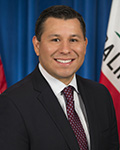
Ask Maddy about Eduardo Garcia
Scope: CA
Hi! I can help you understand Eduardo Garcia's legislative record. What would you like to know?
Try one of these
i
Maddy answers using official bill text and legislative records. Always verify before sharing.
Sources cited inline