

Passed Feb 1, 2018
1 co-sponsor
Total votes
27,298
all sessions
Attendance
92%
1,511 missed
Near the chamber average
With party
99%
of cast votes
Higher than 90% of chamber peers
Bipartisan score
0%
crosses aisle rarely
Lower than 93% of chamber peers
Sponsored
2,006
bills & resolutions
Near the chamber average
Committees
0
assignments
2,006 bills and resolutions
Sponsored bills
Total
2,006
Primary
262
Co-sponsor
1,744
This page
2,006
matching current filters
Crowdsourcing and Citizen Science Act of 2017.
Existing law establishes the California Environmental Protection Agency under the supervision of the Secretary for Environmental Protection, consisting of various boards, offices, and departments, and vests the agency with authority over various environmental matters. This bill would establish the Crowdsourcing and Citizen Science Act of 2017, which would authorize the Secretary for Environmental Protection and the heads of the various boards, offices, and departments within the California Environmental Protection Agency to use crowdsourcing and citizen science approaches to conduct activities designed to advance the mission of the California Environmental Protection Agency. This bill would impose specified duties with regard to crowdsourcing and citizen science projects, including promoting these projects. The bill would require the California Environmental Protection Agency to provide the Legislature with a summary of each crowdsourcing and citizen science project conducted by the California Environmental Protection Agency during the 2 previous fiscal years, which shall include specified information, including a description of the proposed goals of each crowdsourcing and citizen science project.
Failed Feb 1, 2018
0 co-sponsors
Community engagement: gun violence prevention: grants.
Under existing law, the Office of Emergency Services contracts for and regulates specified programs addressing community violence prevention and conflict resolution. This bill would create the Community Engagement and Gun Violence Prevention Grant Program to provide grants to local law enforcement agencies to allow those agencies to subscribe to gunshot detection technologies designed to aid law enforcement in responding to and preventing gun violence. The Office of Emergency Services would implement and maintain the grant program, as provided.
Failed Feb 1, 2018
0 co-sponsors
Sport fishing licenses: age requirement.
Existing law requires every person 16 years of age or older who takes any fish, reptile, or amphibian for any purpose other than profit to first obtain a sport fishing license for that purpose, with specified exceptions, and to have that license on his or her person or in his or her immediate possession when engaged in carrying out any activity authorized by the license. This bill would raise the age at which a person is required to obtain a sport fishing license to 18 years of age or older and would make other conforming changes.
Failed Feb 1, 2018
1 co-sponsor
Communications infrastructure.
Under existing law, the Public Utilities Commission has regulatory authority over public utilities, including telephone corporations. Pursuant to its existing authority, the commission supervises administration of the state's telecommunications universal service programs. Existing law, the Digital Infrastructure and Video Competition Act of 2006, establishes a procedure for the issuance of state franchises for the provision of video service, defined to include cable service and open-video systems, administered by the commission. This bill would state the intent of the Legislature to enact legislation to improve communications infrastructure and access and to specifically address the resources servicing low-income and disadvantaged communities.
died Feb 1, 2018
0 co-sponsors
Office of Outdoor Recreation and Public Lands Enhancement.
Existing law establishes the Governor's Office of Business and Economic Development in state government. Existing law requires that the office serve the Governor as the lead entity for economic strategy and the marketing of California on issues relating to business development, private sector investment, and economic growth. This bill would establish the Office of Outdoor Recreation and Public Lands Enhancement in the Governor's Office of Business and Economic Development for specified purposes, including promoting active healthy lifestyles and improving the quality of life for all Californians, and would require the director of the Governor's Office of Business and Economic Development to administer the Office of Outdoor Recreation and Public Lands Enhancement. The bill would require the Office of Outdoor Recreation and Public Lands Enhancement to create an advisory group to offer advice, expertise, support, and service to it, without compensation.
Failed Feb 1, 2018
0 co-sponsors
Greenhouse gases, criteria air pollutants, and toxic air contaminants.
The California Global Warming Solutions Act of 2006 designates the State Air Resources Board as the state agency charged with monitoring and regulating sources of emissions of greenhouse gases. The act authorizes the state board to include the use of market-based compliance mechanisms. The act requires the state board to approve a statewide greenhouse gas emissions limit equivalent to the statewide greenhouse gas emissions level in 1990 to be achieved by 2020 and to ensure that statewide greenhouse gas emissions are reduced to at least 40% below the 1990 level by 2030. The act requires the state board, when adopting rules and regulations to achieve greenhouse gas emissions reductions beyond the statewide greenhouse gas emissions limit and to protect the state's most impacted and disadvantaged communities, to follow specified requirements, consider the social costs of the emissions of greenhouse gases, and prioritize specified emission reduction rules and regulations. This bill would additionally require the state board to consider and account for the social costs of the emissions of greenhouse gases when adopting those rules and regulations. The bill would authorize the state board to adopt or amend regulations that establish a market-based compliance mechanism, applicable from January 1, 2021, to December 31, 2030, to complement direct emissions reduction measures in ensuring that statewide greenhouse gas emissions are reduced to at least 40% below the 1990 level by 2030. The bill would authorize the state board to adopt no-trade zones or facility-specific declining greenhouse gas emissions limits where facilities' emissions contribute to a cumulative pollution burden that creates a significant health impact. This bill would require the state board, in consultation with affected air pollution control and air quality management districts, to adopt air pollutant emissions standards for emissions of criteria air pollutants and toxic air contaminants at industrial facilities that are subject to a market-based compliance mechanism. The bill would prohibit the state board from allocating allowances as part of a market-based compliance mechanism to industrial facilities that do not meet the air pollutant emissions standards for criteria air pollutants and toxic air contaminants. This bill would require the state board, in ensuring that statewide greenhouse gas emissions are reduced to at least 40% below the 1990 level by 2030, to adopt the most effective and equitable mix of emissions reduction measures and ensure that emissions reduction measures collectively and individually support achieving air quality and other environmental and public health goals.
died Feb 1, 2018
1 co-sponsor
State public retirement systems: divestiture: border wall construction companies.
The California Constitution provides that the Legislature may, by statute, prohibit retirement board investments if it is in the public interest to do so and providing that the prohibition satisfies specified fiduciary standards. Existing law prohibits the Public Employees' Retirement System and the State Teachers' Retirement System from investing public employee retirement funds in a company with active business operations in Sudan, the energy sector of Iran, and thermal coal companies, subject to specified requirements, limitations, and procedures. This bill would prohibit the boards of the Public Employees' Retirement System and the State Teachers' Retirement System from making new investments or renewing existing investments of public employee retirement funds in a border wall construction company, as defined. The bill would require the boards to liquidate investments in a border wall construction company within 12 months of the company contracting or subcontracting to provide work or material for a border wall, as defined. The bill would require the boards, in making a determination to liquidate investments, to constructively engage with a border wall construction company to establish whether the company is transitioning its business model away from activities related to a border wall. The bill would provide that it does not require a board to take any action unless the board determines in good faith that the action is consistent with the board's fiduciary responsibilities established in the California Constitution. The bill would make related legislative findings and declarations. This bill would require, on or before January 1, 2019, that these boards file reports with the Legislature and the Governor, containing specified information, including a list of companies of which they have liquidated their investments. The bill would provide that board members and other officers and employees shall be held harmless and be eligible for indemnification in connection with actions taken pursuant to the bill's requirements, as specified.
Failed Feb 1, 2018
1 co-sponsor
Transportation funding: low-income communities.
Existing law establishes the state transportation improvement program process, pursuant to which the California Transportation Commission generally programs and allocates available state and federal funds for transportation capital improvement projects, other than state highway rehabilitation and repair projects, over a multiyear period based on estimates of funds expected to be available. Existing law provides funding for these interregional and regional transportation capital improvement projects through the state transportation improvement program process, with 25% of funds available for interregional projects selected by the Department of Transportation through preparation of an interregional transportation improvement program and 75% for regional projects selected by transportation planning agencies through preparation of a regional transportation improvement program. Existing law requires each transportation planning agency, on a biennial basis, to prepare and submit to the commission a regional transportation improvement program containing transportation capital projects identified for funding through the next cycle of the 5-year state transportation improvement program. This bill would require, beginning January 1, 2020, each regional transportation improvement program to allocate a minimum of 25% of available funds to projects or programs that provide direct, meaningful, and assured benefits to low-income individuals who live in certain identified communities or to riders of transit service that connects low-income residents to critical amenities and services. The bill would require the department, in consultation with residents of low-income communities and specified state agencies, to adopt guidelines for this allocation no later than January 1, 2018, to define and map low-income communities that are disadvantaged with respect to transportation, to identify communities that would benefit from the allocation requirements, and to specify criteria for determining whether certain investments benefit low-income residents of the identified communities. The bill would require the department to provide financial support, upon appropriation by the Legislature, to low-income residents of low-income communities for specified purposes generally relating to enabling their participation in the development of these guidelines and the selection of transportation projects and programs.
Failed Feb 1, 2018
0 co-sponsors
Sustainable Groundwater Management Act: Desert Water Agency: Coachella Valley Groundwater Basin.
Existing law, the Sustainable Groundwater Management Act, requires all groundwater basins designated as high- or medium-priority basins by the Department of Water Resources that are designated as basins subject to critical conditions of overdraft to be managed under a groundwater sustainability plan or coordinated groundwater sustainability plans by January 31, 2020, and requires all other groundwater basins designated as high- or medium-priority basins to be managed under a groundwater sustainability plan or coordinated groundwater sustainability plans by January 31, 2022, except as specified. The act authorizes any local agency or combination of local agencies overlying a groundwater basin to decide to become a groundwater sustainability agency for that basin. The act deems the Desert Water Agency the exclusive local agency within its respective statutory boundaries with powers to comply with the act. This bill, on or before January 1, 2020, would require the Desert Water Agency to determine the feasibility of forming a joint powers agreement with specified entities for the purpose of managing the Coachella Valley Groundwater Basin and to report its findings to certain entities. By imposing additional duties on local officials, this bill would create a state-mandated local program. The California Constitution requires the state to reimburse local agencies and school districts for certain costs mandated by the state. Statutory provisions establish procedures for making that reimbursement. This bill would provide that, if the Commission on State Mandates determines that the bill contains costs mandated by the state, reimbursement for those costs shall be made pursuant to the statutory provisions noted above.
Failed Feb 1, 2018
0 co-sponsors
Ask Maddy
·
AI policy assistant
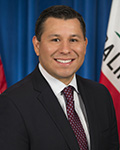
Ask Maddy about Eduardo Garcia
Scope: CA
Hi! I can help you understand Eduardo Garcia's legislative record. What would you like to know?
Try one of these
i
Maddy answers using official bill text and legislative records. Always verify before sharing.
Sources cited inline