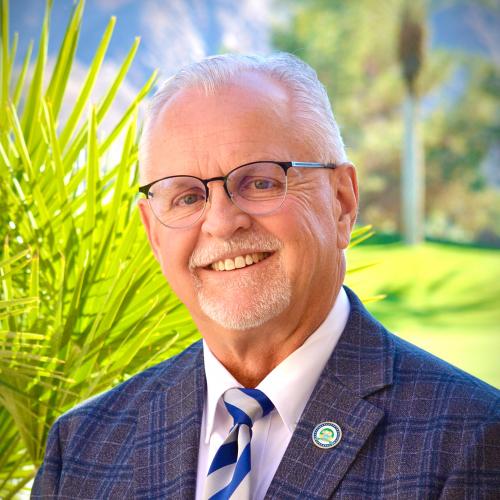
Photo of Tom Lackey
R California Assembly · District 34

Asm. Tom Lackey

Compare
Total votes
27,218
all sessions
Attendance
91%
2,152 missed
Lower than 95% of chamber peers
With party
97%
of cast votes
Near the chamber average
Bipartisan score
1%
crosses aisle rarely
Near the chamber average
Sponsored
2,638
bills & resolutions
Near the chamber average
Committees
11
assignments
2,638 bills and resolutions

Sponsored bills

Total
2,638
Primary
235
Co-sponsor
2,403
This page
2,638
matching current filters
Co-sponsor AB 2051
Passed · California Assembly · Co-sponsor
Pupil instruction: financial literacy: instructional materials: professional development.

Existing law requires the State Board of Education to adopt basic instructional materials for use in kindergarten and grades 1 to 8, inclusive, for governing boards of school districts in specified subjects and any other subject, discipline, or interdisciplinary area for which the state board determines the adoption of instructional materials to be necessary or desirable, and requires the governing board of each school district maintaining one or more high schools to adopt instructional materials for use in the high schools under its control, consistent with specified conditions. Existing law requires the adopted course of study for grades 1 to 6, inclusive, and for grades 7 to 12, inclusive, to offer instruction in specified areas of study, including social sciences. Existing law establishes the Instructional Quality Commission and requires the commission to, among other things, recommend curriculum frameworks to the state board. Existing law requires the state board, concurrently with, but not before, the next revision of textbooks or curriculum frameworks in the social sciences, health, and mathematics curricula, to ensure that these academic areas integrate components of, among other things, financial literacy. Notwithstanding that requirement on the state board, existing law requires the commission, when the history-social science curriculum framework is revised after January 1, 2017, to consider including age-appropriate information for kindergarten and grades 1 to 12, inclusive, regarding certain topics on financial literacy. This bill would require the Superintendent of Public Instruction, subject to an appropriation of one-time funds for this purpose in the annual Budget Act or another statute, to allocate funding for the purchase of standards-aligned instructional materials in financial literacy for kindergarten and grades 1 to 12, inclusive, and for professional development in that content, as provided. The bill would require the Superintendent to allocate these funds to school districts, county offices of education, charter schools, and the state special schools on the basis of an equal amount per unit of average daily attendance, as those numbers were reported at the time of the first principal apportionment for the 2019–20 fiscal year. The bill would require a school district, county office of education, charter school, or state special school to expend allocated funds for professional development or instructional materials in financial literacy that is aligned to the history-social science curriculum framework adopted by the state board and the financial literacy subject matter recommended considered by the commission, as provided.


Passed Aug 11, 2022 1 co-sponsor
Co-sponsor SB 21
Passed · California Senate · Co-sponsor
Specialized license plates: mental health awareness.

Under existing law, a state agency is authorized to apply to the Department of Motor Vehicles (DMV) to sponsor a specialized license plate program, and the DMV is required to issue those license plates if the agency meets certain requirements. Existing law also requires the DMV to charge specified fees for certain services related to the issuance of those plates. This bill would require the State Department of Education to apply to the DMV to sponsor a mental health awareness license plate program, and would require the DMV to issue the license plates if the State Department of Education meets certain requirements. The bill would also establish the Mental Health Awareness Fund in the State Treasury and would require the revenue generated from the license plates to be deposited in the fund for use, upon appropriation by the Legislature to the State Department of Education, for mental health services in public schools.

Passed Aug 11, 2022 1 co-sponsor
Co-sponsor SB 1481
Passed · California Senate · Co-sponsor
Preschools, child daycare facilities, and Trustline providers: meals.

Existing federal law establishes the Child and Adult Care Food Program (CACFP) to provide aid to childcare institutions and family or group daycare homes for the provision of nutritious foods that contribute to the wellness, healthy growth, and development of young children. Existing law, the California Child Day Care Facilities Act, administered by the State Department of Social Services, provides for the licensure and regulation of child daycare facilities, as defined. Existing law requires childhood nutrition training for certain licensees, and requires that training to include information about reimbursement rates for the CACFP. Existing law generally prohibits a person, firm, partnership, association, or corporation from operating, establishing, managing, conducting, or maintaining a child daycare facility in this state without a current valid license. Existing law requires the department to establish and continuously update a trustline registry of persons who provide childcare and who are not required to be licensed. Under existing law, a provider who is registered pursuant to these provisions is known as a Trustline provider. Existing law, the Early Education Act, requires the Superintendent of Public Instruction, to, among other things, provide an inclusive and cost-effective preschool program, and declares the policy of the state that no child shall be hungry while in attendance in a preschool facility and that preschool programs have an obligation to provide for the nutritional needs of children in attendance. Existing law requires a school district or county superintendent of schools maintaining a kindergarten or any of grades 1 to 12, inclusive, to provide a needy pupil with one nutritionally adequate free or reduced-price meal during each schoolday, and two school meals free of charge during each schoolday to any pupil who requests a meal without consideration of the pupil's eligibility for a federally funded free or reduced-price meal, and sets the reimbursement rate for meals served by family daycare homes at 75 percent of the meals served. This bill would, subject to an appropriation for these purposes, require the department to provide funding for (1) a supplemental state meal reimbursement for preschool facilities, child daycare facilities, and Trustline providers for up to 2 daily meals per child served through the CACFP at a rate equivalent to the state meal reimbursement for local educational agencies; (2) reimbursement of up to 2 daily meals per child served through the CACFP at a specified rate in order to establish a free meal program for all children receiving care from those facilities and providers; and (3) grants to those facilities and providers, and sponsors of the CACFP, to encourage their participation in and expansion of the CACFP. This bill would also increase the reimbursement rate for meals served in family daycare homes to 100 percent of the meals served.

Passed Aug 11, 2022 1 co-sponsor
Co-sponsor SB 1329
Passed · California Senate · Co-sponsor
Publicly available hydrogen-fueling stations: electric vehicle charging stations.

Existing law requires the State Air Resources Board, on or before June 30, 2014, and until January 1, 2024, to annually aggregate and make available specified information regarding hydrogen-fueled vehicles and, based on that information, evaluate the need for additional publicly available hydrogen-fueling stations, as specified, and report those findings to the State Energy Resources Conservation and Development Commission. Existing law requires the commission to allocate $20,000,000 annually to fund the number of publicly available hydrogen-fueling stations identified by the state board, not to exceed 20% of the moneys appropriated by the Legislature from the Alternative and Renewable Fuel and Vehicle Technology Fund, until there are at least 100 publicly available hydrogen-fueling stations in operation in the state. Existing law requires the commission and the state board, on an annual basis, to jointly review and report progress toward establishing a hydrogen-fueling network that provides the coverage and capacity to fuel vehicles requiring hydrogen fuel that are being placed into operation in the state. Existing law requires the commission and the state board to consider certain information while conducting this review and determine the remaining cost and timing to establish a network of 100 publicly available hydrogen-fueling stations in operation in the state and whether funding from the Clean Transportation Program remains necessary to achieve this goal. This bill would delete the requirement that the state board aggregate and make available specified information and report to the commission on or before June 30, 2014. The bill would instead require the state board, on or before June 30, 2023, and annually thereafter, to determine the number of publicly available hydrogen-fueling stations that are necessary to provide a publicly available hydrogen-fueling station network, taking into consideration the state board's 2020 Mobile Source Strategy and specified goals, recommendations, and data. The bill would delete the requirement that the commission allocate $20,000,000 annually to fund the number of publicly available hydrogen-fueling stations identified by the state board. The bill would instead require the commission to annually allocate from the moneys annually appropriated by the Legislature from the fund an amount determined appropriate by the commission to achieve the goal established by the state board of providing a publicly available hydrogen-fueling station network and to build the number of electric vehicle or "EV" charging stations estimated by the commission its biennial statewide assessment of electric vehicle charging infrastructure, as provided. The bill would require the commission to ensure that certain requirements are met regarding expenditures of the moneys allocated by the commission. The bill would require the commission and the state board, as part of their annual joint review and report, to determine the remaining cost and timing to establish a network of 200 statewide publicly available hydrogen-fueling stations, instead of 100 stations.

Passed Aug 11, 2022 1 co-sponsor
Co-sponsor SB 1427
Passed · California Senate · Co-sponsor
Homeless and Mental Health Court and Transitioning Home Grant Programs.

Existing law establishes the Board of State and Community Corrections. Existing law charges the board with providing the statewide leadership, coordination, and technical assistance to promote effective state and local efforts and partnerships in California's adult and juvenile criminal justice system. Under existing law, the board administers several grant programs, including a mentally ill offender crime reduction grant program, a medication-assisted treatment grant program, and a violence intervention and prevention grant program. This bill would establish two new grant programs: the Homeless and Mental Health Court Grant Program that would, subject to an appropriation by the Legislature, be administered by the Judicial Council and provide grants to counties for the purpose of establishing or expanding homeless courts and mental health courts, as specified; and the Transitioning Home Grant Program that would, subject to an appropriation by the Legislature, be administered by the board and provide grants to county sheriffs and jail administrators to fund programs aimed at reducing homelessness among inmates released from custody, as specified. The bill would require the board and council to prepare and submit reports to the Legislature, as specified, regarding the impacts of the grant program under their jurisdiction.

Passed Aug 11, 2022 1 co-sponsor
Co-sponsor AB 254
Passed · California Assembly · Co-sponsor
Contraband in state prisons.

Existing law requires the Department of Corrections and Rehabilitation (CDCR) to develop policies related to its contraband interdiction efforts for individuals entering CDCR detention facilities, including, but not limited to, the establishment of unpredictable, random search efforts and methods, as specified. This bill would require the policies developed by CDCR to include searches of all persons entering CDCR adult facilities instead of random search efforts and methods, as specified. The bill would make these requirements inapplicable to a facility subject to closure as of January 1, 2022. The bill would require CDCR to conduct an evaluation of its contraband interdiction policy and provide an annual report to the Legislature on January 1 each year, as specified.

Passed Aug 11, 2022 1 co-sponsor
Co-sponsor AB 1828
Passed · California Assembly · Co-sponsor
CalFresh: income eligibility: basic allowance for housing.

Existing federal law provides for the federal Supplemental Nutrition Assistance Program (SNAP) , known in California as CalFresh, under which supplemental nutrition assistance benefits allocated to the state by the federal government are distributed to eligible individuals by each county. Existing federal law establishes eligibility requirements, including specified income eligibility standards, for receipt of CalFresh benefits. This bill would require the State Department of Social Services, on or before July 1, 2023, and annually thereafter, to submit a request for a federal waiver to exclude the basic allowance for housing provided to specified uniformed service members from countable income in the determination of eligibility and benefit level for purposes of receiving CalFresh benefits. The bill would, upon federal approval of the waiver, require the department, in consultation with the County Welfare Directors Association of California, advocates for CalFresh recipients, and the Military Department, to issue an all-county letter instructing counties on updated eligibility requirements and benefit calculations for uniformed service members receiving a basic allowance for housing. To the extent the bill would expand the duties of counties, the bill would impose a state-mandated local program. The California Constitution requires the state to reimburse local agencies and school districts for certain costs mandated by the state. Statutory provisions establish procedures for making that reimbursement. This bill would provide that, if the Commission on State Mandates determines that the bill contains costs mandated by the state, reimbursement for those costs shall be made pursuant to the statutory provisions noted above.

Passed Aug 11, 2022 1 co-sponsor
Co-sponsor SB 1062
Passed · California Senate · Co-sponsor
The Fixing the Firefighter Shortage Act of 2022.

Existing law establishes the Department of Forestry and Fire Protection in the Natural Resources Agency to provide fire protection and prevention services, as specified. This bill would require the department to maintain a standard minimum level of staffing for each of its engines, as specified, without the regular practice of forcing overtime on its personnel. The bill would require the department to increase its existing firefighter fuel crews, as specified. The bill would require the department, on or before January 1, 2024, to provide to the Legislature a long-term staffing plan to meet the new era of wildfire firefighting.

Passed Aug 11, 2022 1 co-sponsor
Showing 981 to 990 of 2,638 bills
Previous 1 … 98 99 100 … 264 Next