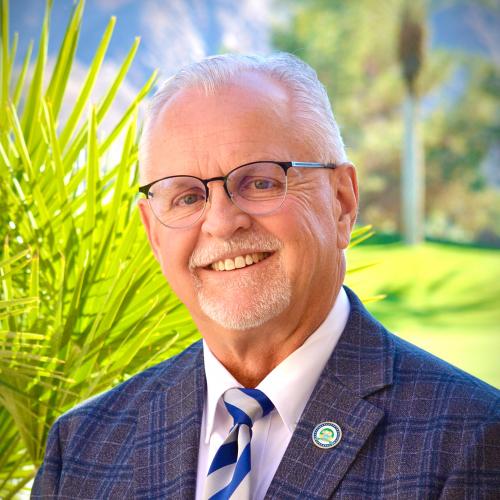
Photo of Tom Lackey
R California Assembly · District 34

Asm. Tom Lackey

Compare
Total votes
27,091
all sessions
Attendance
91%
2,122 missed
Lower than 85% of chamber peers
With party
97%
of cast votes
Near the chamber average
Bipartisan score
2%
crosses aisle rarely
Near the chamber average
Sponsored
2,638
bills & resolutions
Higher than 86% of chamber peers
Committees
11
assignments
2,638 bills and resolutions

Sponsored bills

Total
2,638
Primary
235
Co-sponsor
2,403
This page
2,638
matching current filters
Co-sponsor ACR 214
Signed into law · California Assembly · Co-sponsor
Relative to India's Independence Day.

Maddy summaryThis bill recognizes August 15, 2024, as India's Independence Day and encourages all Californians to participate in celebrations honoring the occasion. It directly affects the residents of California, particularly the state's large Indian American community, by formally acknowledging the historical significance of the date when India gained independence from British rule. The measure does not create new laws or change government operations; instead, it serves as a symbolic gesture to highlight the cultural contributions of Indian Americans and the shared values of democracy and nonviolence between the two nations.

Signed into law Aug 19, 2024 1 co-sponsor
Co-sponsor ACR 209
Signed into law · California Assembly · Co-sponsor
Relative to the 2024 International Day of Yoga.

Maddy summaryThis bill officially recognizes June 21, 2024, as the 2024 International Day of Yoga within the state of California. It does not create new laws or change existing regulations but serves as a formal acknowledgment of the global event. The measure is intended to highlight the history and benefits of yoga as a wellness practice.

Signed into law Aug 19, 2024 1 co-sponsor
Co-sponsor AB 1972
Signed into law · California Assembly · Co-sponsor
Regional property crimes task force.

Existing law authorizes the Governor to appoint and commission individuals designated by a railroad company to serve as police officers. Existing law, until January 1, 2026, requires the Department of the California Highway Patrol to coordinate with the Department of Justice to convene a regional property crimes task force to identify geographic areas experiencing increased levels of property crimes and assist local law enforcement with resources, such as personnel and equipment. This bill would require the task force to assist railroad police and would specify cargo theft as a property crime for consideration by the regional property crimes task force. This bill would declare that it is to take effect immediately as an urgency statute.

Signed into law Aug 16, 2024 1 co-sponsor
Co-sponsor SB 916
Passed · California Senate · Co-sponsor
Public postsecondary education: waiver of tuition and fees: veterans: extended education courses.

Existing law establishes the University of California, administered by the Regents of the University of California, the California State University administered by the Trustees of the California State University, and the California Community Colleges, administered by the Board of Governors of the California Community Colleges, as the 3 segments of public postsecondary education in the state. The Donahoe Higher Education Act prohibits the campuses of those segments from charging mandatory systemwide tuition or fees to specified students who apply for a waiver, including a child of any veteran of the United States military who has a service-connected disability, has been killed in service, or has died of a service-connected disability, an undergraduate student who is a recipient of a Medal of Honor, or an undergraduate student who is a child of a recipient of a Medal of Honor and who is no more than 27 years of age, if certain requirements are satisfied. This bill would additionally prohibit the campuses of the University of California and California State University from charging tuition or fees for specified students who enroll in an extended education course if certain requirements are satisfied and the extended education course is being used to meet the requirements of an undergraduate degree program. The bill would apply to the campuses of the University of California only to the extent that the Regents of the University of California, by appropriate resolution, make it apply.

Passed Aug 15, 2024 1 co-sponsor
Co-sponsor SB 402
Passed · California Senate · Co-sponsor
Involuntary commitment.

Existing law, the Lanterman-Petris-Short Act, authorizes the involuntary commitment and treatment of persons with specified mental disorders. Under the act, when a person, as a result of a mental health disorder, is a danger to self or others, or gravely disabled, the person may, upon probable cause, be taken into custody by specified individuals, including, among others, by peace officers and designated members of a mobile crisis team, and placed in a facility designated by the county and approved by the State Department of Health Care Services for up to 72 hours for evaluation and treatment. This bill would additionally authorize, until January 1, 2030, a person to be taken into custody, pursuant to those provisions, by a licensed mental health professional, as defined. The bill would require a licensed mental health professional who is not direct staff of, or contracted by, a county to complete a specified training prior to exercising that authority and would prohibit those licensed mental health professionals from transporting a person taken into custody pursuant to the above-described provisions unless specifically authorized by the county to do so. Existing law requires the State Department of Health Care Services to collect and publish annually quantitative information concerning the operation of various provisions relating to community mental health services, including the number of persons admitted for evaluation and treatment for certain periods, transferred to mental health facilities, and for whom certain conservatorships are established, as specified. Existing law requires each county behavioral health director, each designated and approved facility, and each other entity, as specified, to provide accurate and complete data as prescribed by the department. This bill would require county behavioral health directors to provide, and would require the State Department of Health Care Services to collect and publish, additional information, including, among other things, the number of individuals designated by each county to perform specified functions, their profession, and the number of holds initiated per profession, as specified. The bill would require each law enforcement agency to provide accurate and complete data to the department regarding the number of holds initiated by a peace officer. By increasing the duties on county behavioral health directors and law enforcement agencies, this bill would impose a state-mandated local program. The California Constitution requires the state to reimburse local agencies and school districts for certain costs mandated by the state. Statutory provisions establish procedures for making that reimbursement. This bill would provide that, if the Commission on State Mandates determines that the bill contains costs mandated by the state, reimbursement for those costs shall be made pursuant to the statutory provisions noted above.

Passed Aug 15, 2024 1 co-sponsor
Co-sponsor SB 73
Passed · California Senate · Co-sponsor
Employment policy: voluntary veterans' preference.

Under existing law, the California Fair Employment and Housing Act (FEHA) , it is an unlawful employment practice for an employer, unless based upon a bona fide occupational qualification or applicable security regulations established by the United States or the State of California, to refuse to hire or employ a person or to refuse to select a person for a training program leading to employment, or to bar or discharge a person from employment or a training program leading to employment, or to discriminate against a person in compensation or in terms, conditions, or privileges of employment because of the race, religious creed, color, national origin, ancestry, physical disability, mental disability, medical condition, genetic information, marital status, sex, gender, gender identity, gender expression, age, sexual orientation, or military and veteran status of that person. FEHA provides that nothing in that act relating to discrimination on account of sex affects the right of an employer to use veteran status as a factor in employee selection or to give special consideration to Vietnam-era veterans. FEHA is enforced by the Civil Rights Department, which is in the Business, Consumer Services, and Housing Agency, and is under the direction of an executive officer known as the Director of Civil Rights. This bill would enact the Voluntary Veterans' Preference Employment Policy Act to authorize a private employer to establish and maintain a written veterans' preference employment policy, to be applied uniformly to hiring decisions, to give a voluntary preference for hiring a veteran over another qualified applicant. The bill would require a private employer with a veterans' preference employment policy to annually report to the Civil Rights Department the number of veterans hired under the preference policy and any demographic information about those veterans that the employer obtained in response to the department's reporting requirements. Under the bill, failure to submit that report would render any preference granted by the employer ineligible for the protections provided by this bill. The bill would require the department to report that information, in addition to the number of discrimination claims received based on an employer's veterans' preference employment policy, to specified legislative policy committees by July 1, 2026, and July 1, 2028. This bill would provide that the granting of a veterans' preference pursuant to the bill, in and of itself, shall be deemed not to violate any local or state equal employment opportunity law or regulation, including, but not limited to, the antidiscrimination provisions of FEHA. The bill would require the Department of Veterans Affairs to assist any private employer in determining if an applicant is a veteran, to the extent permitted by law. The bill would prohibit a veterans' preference employment policy from being established or applied for the purpose or with the effect of unlawfully discriminating against an employment applicant on the basis of a protected classification, as specified. The bill would repeal these provisions on January 1, 2029.


Passed Aug 15, 2024 1 co-sponsor
Co-sponsor SB 1175
Passed · California Senate · Co-sponsor
Organic waste: reduction goals: local jurisdictions: waivers.

Existing law requires the State Air Resources Board to approve and begin implementing a comprehensive short-lived climate pollutant strategy to achieve a certain reduction in statewide emissions of methane, including a goal of a 75% reduction in the level of the statewide disposal of organic waste from the 2014 level by 2025. Existing law requires the Department of Resources Recycling and Recovery, in consultation with the state board, to adopt regulations that achieve those targets for reducing organic waste in landfills that may include, among other things, different levels of requirements for local jurisdictions and phased timelines based upon their progress in meeting the organic waste reduction goals, and penalties to be imposed by the department for noncompliance. The department's regulations authorize low-population and elevation waivers for a local jurisdiction, based on, among other things, a consideration of the jurisdiction's census tracts, that exempt the jurisdiction from all or some of the department's organic waste collection requirements. This bill would require the department to revise the regulations to require the department to consider, in addition to census tracts, alternatives to those census tracts, as provided, when deciding the geographic boundaries of a low-population or elevation waiver, as specified. The bill would prohibit the department from considering those alternatives when deciding the boundaries for those waivers until it adopts the revised regulations.

Passed Aug 15, 2024 1 co-sponsor
Co-sponsor AB 46
Passed · California Assembly · Co-sponsor
Personal income taxes: exclusion: Military Services Retirement and Surviving Spouse Benefit Payment Act.

The Personal Income Tax Law imposes a tax on individual taxpayers measured by the taxpayer's taxable income for the taxable year, but excludes certain items of income from the computation of tax, including an exclusion for combat-related special compensation. This bill, for taxable years beginning on or after January 1, 2024, and before January 1, 2034, would exclude from gross income retirement pay received by a taxpayer from the federal government for service performed in the uniformed services, as defined, during the taxable year. The bill, for taxable years beginning on or after January 1, 2024, and before January 1, 2034, would also exclude from gross income annuity payments received by a qualified taxpayer, as defined, pursuant to a United States Department of Defense Survivor Benefit Plan during the taxable year. The bill would make related findings and declarations. Existing law requires any bill authorizing a new tax expenditure to contain, among other things, specific goals, purposes, and objectives that the tax expenditure will achieve, detailed performance indicators, and data collection requirements. This bill also would include additional information required for any bill authorizing a new tax expenditure. The bill would require the Franchise Tax Board and the Department of Veterans Affairs to provide any data requested by the Legislative Analyst to write the report, as provided, and would make taxpayer information received by the Legislative Analyst subject to limitation on the collection and use of that information. By expanding the scope of a crime, this bill would impose a state-mandated local program. The California Constitution requires the state to reimburse local agencies and school districts for certain costs mandated by the state. Statutory provisions establish procedures for making that reimbursement. This bill would provide that no reimbursement is required by this act for a specified reason. This bill would take effect immediately as a tax levy.

Passed Aug 15, 2024 1 co-sponsor
Showing 421 to 430 of 2,638 bills
Previous 1 … 42 43 44 … 264 Next