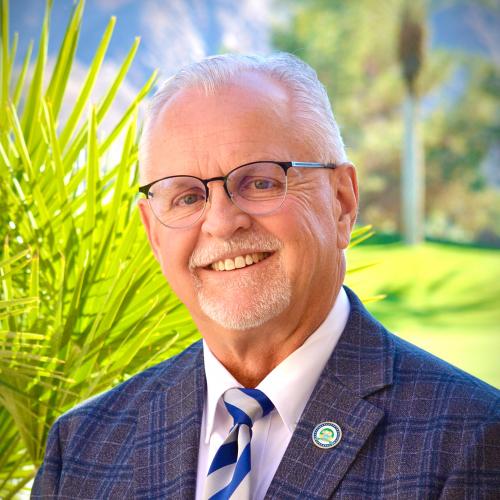
Photo of Tom Lackey
R California Assembly · District 34

Asm. Tom Lackey

Compare
Total votes
27,091
all sessions
Attendance
91%
2,122 missed
Lower than 85% of chamber peers
With party
97%
of cast votes
Near the chamber average
Bipartisan score
2%
crosses aisle rarely
Near the chamber average
Sponsored
2,638
bills & resolutions
Higher than 86% of chamber peers
Committees
11
assignments
2,638 bills and resolutions

Sponsored bills

Total
2,638
Primary
235
Co-sponsor
2,403
This page
2,638
matching current filters
Co-sponsor SCR 91
Signed into law · California Senate · Co-sponsor
Relative to India Republic Day.

This measure would proclaim January 26, 2016, as India Republic Day, and would urge all Californians to join in celebrating India Republic Day.

Signed into law Feb 1, 2016 1 co-sponsor
Primary AB 262
Failed · California Assembly · Lead sponsor
Sex offenders.

Existing law, subject to exceptions, prohibits a person who is released on parole after having served a term of imprisonment in state prison for any offense for which registration as a sex offender is required from residing in a single family dwelling with another person also required to register as a sex offender. Existing law also prohibits a person for whom registration is required from residing within 2,000 feet of a public or private school, or park where children regularly gather. This bill would provide that a person who has been convicted and adjudicated as a sexually violent predator may only reside in a dwelling or abode that is within 10 miles of a permanent physical police or sheriff station that has jurisdiction over the location and has 24-hour-a-day peace officer staffing on duty and available to respond to calls for service. The bill would also prohibit a person convicted and adjudicated as a sexually violent predator from leasing, renting, or otherwise residing in a dwelling or other abode, and would prohibit a dwelling or other abode from being leased or rented on behalf of a sexually violent predator for purposes of residence by that person, if that dwelling or other abode is occupied or owned in whole or in part by a felon convicted of a serious or violent felony.

Failed Feb 1, 2016 0 co-sponsors
Co-sponsor AB 1405
Failed · California Assembly · Co-sponsor
Developmental centers: closure.

Existing law vests in the State Department of Developmental Services jurisdiction over state hospitals, referred to as developmental centers, for the provision of residential care to individuals with developmental disabilities. Existing law requires the State Department of Developmental Services to comply with procedural requirements when closing a developmental center, including submitting a detailed plan to the Legislature and holding at least one public hearing. Under existing law, the department allocates funds to private nonprofit entities known as regional centers, which are required to provide, or arrange for the provision of, services and supports for persons with developmental disabilities. This bill would require the department to close the Sonoma Developmental Center no later than December 31, 2018, and the Fairview Developmental Center no later than December 31, 2021. The bill would require the department to submit a plan, as specified, to the Legislature prior to the closure of the Sonoma Developmental Center or the Fairview Developmental Center. Existing law requires the Director of General Services to lease specified property located at the Sonoma Developmental Center only for an agricultural or open-space purpose consistent with specified requirements. Existing provisions of the California Constitution, approved by the voters at the November 4, 2014, statewide general election, establish the Budget Stabilization Account in the General Fund and require the Controller, commencing with the 2015–16 fiscal year and each fiscal year thereafter, to transfer from the General Fund to the account a specified percentage of estimated General Fund revenues. The bill would additionally require the director to lease all or part of the parcels at the Sonoma Developmental Center and the Fairview Developmental Center, as specified. The bill would require any use of these parcels to be ratified by a vote of the appropriate state and local government agencies with the authority over those local land use decisions, as specified. The bill would also require 50% of the net proceeds received by the state from the lease of these properties to go to the Budget Stabilization Account until the state's debts to which that fund is obligated are paid and, after that time, to the General Fund and the rest to be deposited in the Lanterman Act Community-Based Services Fund, which is created by the bill. The bill would require all moneys in the Lanterman Act Community-Based Services Fund to be continuously appropriated without regard to fiscal years to the State Department of Developmental Services to augment existing purchase of services funds used by regional centers to purchase services and supports for persons with developmental disabilities. By creating a continuously appropriated fund, the bill would make an appropriation. This bill would also state the intent of the Legislature to transfer current funding for the operations of the Fairview Developmental Center and the Sonoma Developmental Center to fund purchase of services at regional centers. This bill would declare that it is to take effect immediately as an urgency statute.

Failed Feb 1, 2016 1 co-sponsor
Co-sponsor AB 1044
Failed · California Assembly · Co-sponsor
School employees: reduction in workforce.

(1) Under existing law, when school employees are terminated pursuant to a reduction in workforce, a school district is required to terminate the employees in order of seniority. Existing law authorizes a school district to deviate from the order of seniority for those purposes for specified reasons. This bill would make these provisions inoperative on July 1, 2018, and would repeal them as of January 1, 2019. (2) Existing law authorizes the governing board of a school district to terminate the services of any permanent or probationary certificated employees of the school district during the time period between 5 days after the enactment of the Budget Act and August 15 of the fiscal year to which the Budget Act applies if the governing board of the school district determines that its total revenue limit per unit of average daily attendance for the fiscal year of that Budget Act has not increased by at least 2%, and if the governing board of the school district determines it is therefore necessary to decrease the number of permanent employees in the school district. This bill would make these provisions inoperative on July 1, 2018, and would repeal them as of January 1, 2019. (3) Existing law provides that, when the services of permanent or probationary employees are terminated pursuant to a reduction in workforce, those terminated employees have a preferred right to reappointment and an opportunity for substitute service in order of seniority, as specified. This bill would make these provisions inoperative on July 1, 2018, and would repeal them as of January 1, 2019. (4) Existing law prohibits, for purposes of complying with those procedures, a school district from including time spent employed in an administrative position by a certificated employee, who transfers to a teaching position and who was initially employed in an administrative position on or after July 1, 1983, in determining seniority, except in the case of a schoolsite administrator, as specified. This bill would make these provisions inoperative on July 1, 2018, and would repeal them as of January 1, 2019. (5) Existing law prohibits a school district from counting as a part of the service required as a condition precedent to the classification of the employee as a permanent employee of the school district the period of absence for certain terminated probationary employees. This bill would make these provisions inoperative on July 1, 2018, and would repeal them as of January 1, 2019. (6) Existing law extends the effective period of specified rights, and provides additional rights to certain permanent certificated employees, as specified. This bill would make these provisions inoperative on July 1, 2018, and would repeal them as of January 1, 2019. (7) Existing law provides that certain statutory layoff provisions are inapplicable to certain probationary certificated employees who are covered by a collective agreement which contains provisions for the layoff and reassignment of those employees. This bill would make these provisions inoperative on July 1, 2018, and would repeal them as of January 1, 2019. (8) This bill would require, by July 1, 2018, each governing board of a school district, in consultation with the exclusive representative of the certificated staff, if any, to adopt policies regarding the dismissal of permanent and probationary employees when a reduction in workforce is required due to declining enrollment or insufficient funding to be used commencing with the 2018–19 school year. The bill would require those adopted policies to include as a significant factor in determining the order of dismissal the evaluation rating of certificated employees, as specified. The bill would permit a school district to deviate from using the evaluation rating of certificated employees as a significant factor in determining the order of dismissal of certificated employees if the school district demonstrates specified conditions. By requiring school districts to perform additional duties, this bill would impose a state-mandated local program. The bill would provide that, to the extent these provisions conflict with any provision of a collective bargaining agreement entered into before January 1, 2016, by a public school employer and an exclusive bargaining representative, the provisions shall not apply to the school district until the expiration or renewal of that collective bargaining agreement. (9) The California Constitution requires the state to reimburse local agencies and school districts for certain costs mandated by the state. Statutory provisions establish procedures for making that reimbursement. This bill would provide that, if the Commission on State Mandates determines that the bill contains costs mandated by the state, reimbursement for those costs shall be made pursuant to these statutory provisions.


Failed Feb 1, 2016 1 co-sponsor
Co-sponsor SB 234
In committee · California Senate · Co-sponsor
Wildlife management areas: payments.

Existing law requires the Department of Fish and Wildlife, when income is derived directly from real property acquired and operated by the state as a wildlife management area, as defined, to pay annually to the county in which the property is located an amount equal to the county taxes levied upon the property at the time title to the property was transferred to the state, and any assessments levied upon the property by any irrigation, drainage, or reclamation district. This bill would appropriate $19,000,000 from the General Fund to the department to make payments to counties for unpaid amounts under these provisions. This bill would declare that it is to take effect immediately as an urgency statute.

In committee Feb 1, 2016 1 co-sponsor
Co-sponsor AB 1041
Failed · California Assembly · Co-sponsor
Personal income taxes: education savings accounts.

The Personal Income Tax Law, in modified conformity with federal income tax laws, allows various deductions in computing the income that is subject to the taxes imposed by that law. This bill would allow a deduction in computing adjusted gross income for those amounts contributed to a Coverdell education savings account, up to $750 per taxable year, as provided. This bill would take effect immediately as a tax levy.

Failed Feb 1, 2016 1 co-sponsor
Co-sponsor AB 1021
Failed · California Assembly · Co-sponsor
Sales and use taxes: smartphones: bundled transactions.

The Sales and Use Tax Law imposes a tax on retailers measured by the gross receipts from the sale of tangible personal property sold at retail in this state, or on the storage, use, or other consumption in this state of tangible personal property purchased from a retailer for storage, use, or other consumption in this state. Under existing sales and use tax regulations, gross receipts from a retail sale of a smartphone sold in a bundled transaction with wireless telecommunication service is generally equal to the amount of the unbundled sales price of the smartphone. This bill would, instead, limit the gross receipts from a retail sale of a smartphone sold in a bundled transaction with wireless telecommunication service to the bundled sales price of the smartphone. The Bradley-Burns Uniform Local Sales and Use Tax Law authorizes counties and cities to impose local sales and use taxes in conformity with the Sales and Use Tax Law, and existing law authorizes districts, as specified, to impose transactions and use taxes in accordance with the Transactions and Use Tax Law, which generally conforms to the Sales and Use Tax Law. Amendments to state sales and use taxes are incorporated into these laws. Section 2230 of the Revenue and Taxation Code provides that the state will reimburse counties and cities for revenue losses caused by the enactment of sales and use tax exemptions. This bill would provide that, notwithstanding Section 2230 of the Revenue and Taxation Code, no appropriation is made and the state shall not reimburse any local agencies for sales and use tax revenues lost by them pursuant to this bill. This bill would take effect immediately as a tax levy.

Failed Feb 1, 2016 1 co-sponsor
Co-sponsor AB 1078
Failed · California Assembly · Co-sponsor
Teachers: evaluations.

(1) Existing law requires the State Board of Education to develop guidelines that school districts may use in the development of teacher evaluation procedures, and distribute such guidelines to every school district. This bill would require the state board to revise, update, and adopt guidelines that school districts may use in the development of teacher evaluation procedures by July 1, 2016. The bill would also require that the updated guidelines include a determination of a teacher's overall performance, as specified. (2) Existing law authorizes the governing board of a school district or a county board of education, as specified, after a public hearing on the matter, to request the state board to waive all or part of any section of the Education Code or any regulation adopted by the state board that implements a provision of the Education Code that may be waived, except for specified provisions. This bill would prohibit the state board from granting any waiver request by a governing board of a school district if the state board finds that the governing board of the school district is out of compliance with specified requirements relating to teacher evaluation. (3) Existing law states the intent of the Legislature that governing boards of school districts establish a uniform system of evaluation and assessment of the performance of all certificated personnel within each school district of the state. Existing law requires the governing board of each school district to establish standards of expected pupil achievement at each grade level in each area of study and to evaluate and assess certificated employee performance on a continuing basis as it reasonably relates to the progress of pupils toward the established standards and, if applicable, the state adopted academic content standards as measured by state adopted criterion referenced assessments, the instructional techniques and strategies used by the employee, the employee's adherence to curricular objectives, and the establishment and maintenance of a suitable learning environment, within the scope of the employee's responsibilities. Existing law authorizes school district governing boards to develop and adopt additional evaluation and assessment guidelines or criteria. This bill would encourage the governing board of a school district to use peer observation and surveys of parents and pupils as part of the evaluation and assessment guidelines and criteria. (4) Existing law requires that an evaluation and assessment of the performance of a certificated employee be made on a continuing basis, as provided. This bill would instead require an annual evaluation and assessment of the performance of a certificated employee. The bill would require the evaluation and assessment to include a determination of the teacher's performance, as specified. By requiring school districts to perform additional duties, this bill would impose a state-mandated local program. The bill would provide that, to the extent these provisions conflict with any provision of a collective bargaining agreement entered into before January 1, 2016, by a public school employer and an exclusive bargaining representative, the provisions shall not apply to the school district until the expiration or renewal of that collective bargaining agreement. (5) This bill would update cross-references and would make other nonsubstantive changes. (6) The California Constitution requires the state to reimburse local agencies and school districts for certain costs mandated by the state. Statutory provisions establish procedures for making that reimbursement. This bill would provide that, if the Commission on State Mandates determines that the bill contains costs mandated by the state, reimbursement for those costs shall be made pursuant to these statutory provisions.
Failed Feb 1, 2016 1 co-sponsor
Co-sponsor AB 1327
Failed · California Assembly · Co-sponsor
Foster care: transitional housing.

Existing law requires the State Department of Social Services to license and regulate transitional housing placement providers. Existing law requires transitional housing providers to provide supervised transitional housing services to foster children who are at least 16 years of age and not more than 18 years of age, nonminor dependents, or both. Existing law provides that transitional housing includes, among others, programs in which a participant lives independently in certain types of housing owned or leased by the provider either with an adult employee of the provider or in a building in which one or more adult employees of the provider reside and provide supervision. Transitional housing may, if the State Department of Social Services provides approval, include programs in which a participant lives independently in certain types of housing owned or leased by provider under the supervision of the provider. This bill would delete the requirement that the housing be owned or leased by the provider and would instead require that a provider be responsible for the payment of any contracted rental fees and any penalties for late payment to the property owner. The bill would also, with regards to the latter program described above, delete the requirement that the department provide approval for the program and delete the requirement that participants live under the supervision of the provider.

Failed Feb 1, 2016 1 co-sponsor
Co-sponsor AB 476
Failed · California Assembly · Co-sponsor
Taxation: homeowners' exemption and renters' credit.

Existing property tax law provides, pursuant to the authority of a specified provision of the California Constitution, for a homeowners' exemption in the amount of $7,000 of the full value of a "dwelling," as defined, and authorizes the Legislature to increase this exemption. This bill, beginning with the lien date for the 2016–17 fiscal year, would increase the homeowners' exemption from $7,000 to $25,000 of the full value of a dwelling. This bill would also require, for the 2017–18 fiscal year and for each fiscal year thereafter, the county assessor to adjust the amount of the homeowners' exemption by the percentage change in the House Price Index for California for the first 3 quarters of the prior calendar year, as specified. The California Constitution requires the Legislature, whenever it increases the homeowners' property tax exemption, to provide a comparable increase in benefits to qualified renters. The Personal Income Tax Law authorizes various credits against the taxes imposed by that law, including a credit for qualified renters in the amount of $120 for married couples filing joint returns, heads of household, and surviving spouses if adjusted gross income is $50,000 or less, and in the amount of $60 for other individuals if adjusted gross income is $25,000 or less. Existing law requires the Franchise Tax Board to annually adjust for inflation these adjusted gross income amounts. This bill would, for taxable years beginning on and after January 1, 2016, increase this credit for a qualified renter to $428 for married couples filing joint returns, heads of household, and surviving spouses if adjusted gross income is $50,000 or less, as adjusted for inflation, and to an amount equal to $214 for other individuals if adjusted gross income is $25,000 or less, as adjusted for inflation. The bill would also require, for taxable years beginning on or after January 1, 2017, the Franchise Tax Board to annually adjust for inflation, based upon the California Consumer Price Index, the amount of these credits. The bill would also make technical, nonsubstantive changes to the renters' credit. The California Constitution requires the Legislature, in each fiscal year, to reimburse local governments for the revenue losses incurred by those governments in that fiscal year as a result of the homeowners' property tax exemption. This bill would provide that, if the Commission on State Mandates determines that the bill contains costs mandated by the state, reimbursement for those costs shall be made pursuant to these statutory provisions. This bill would take effect immediately as a tax levy.

Failed Feb 1, 2016 1 co-sponsor
Showing 2,441 to 2,450 of 2,638 bills