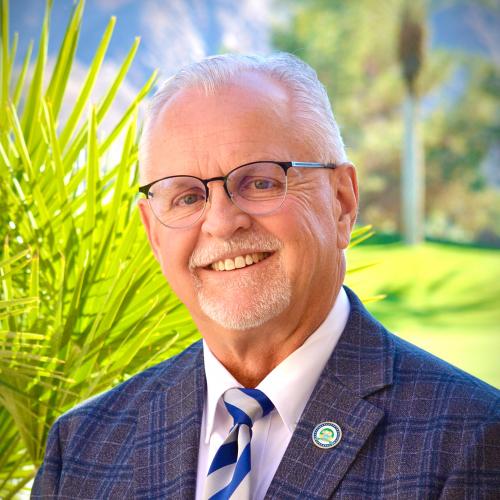
Photo of Tom Lackey
R California Assembly · District 34

Asm. Tom Lackey

Compare
Total votes
27,091
all sessions
Attendance
91%
2,122 missed
Lower than 85% of chamber peers
With party
97%
of cast votes
Near the chamber average
Bipartisan score
2%
crosses aisle rarely
Near the chamber average
Sponsored
2,638
bills & resolutions
Higher than 86% of chamber peers
Committees
11
assignments
2,638 bills and resolutions

Sponsored bills

Total
2,638
Primary
235
Co-sponsor
2,403
This page
2,638
matching current filters
Co-sponsor SCR 103
Signed into law · California Senate · Co-sponsor
Teen Dating Violence Awareness and Prevention Month.

This measure would proclaim the month of February 2016 as Teen Dating Violence Awareness and Prevention Month, and would encourage all Californians to observe Teen Dating Violence Awareness and Prevention Month with programs and activities that raise awareness about teen dating violence.

Signed into law Jun 1, 2016 1 co-sponsor
Co-sponsor AB 2666
Failed · California Assembly · Co-sponsor
Firearms: felons in possession.

Existing law provides that any person convicted of a felony under the laws of the United States, the State of California, or any other state or country, and who owns, purchases, receives, or has in possession or under custody or control any firearm is guilty of a felony. Existing law prescribes the punishment for that felony as imprisonment for a term of 16 months, or 2 or 3 years in the state prison. This bill would provide that the punishment for subsequent convictions of that felony would be imprisonment for a term of 4, 5, or 6 years in the state prison. By creating a new crime, this bill would impose a state-mandated local program. The bill would also make additional technical, nonsubstantive changes. The California Constitution requires the state to reimburse local agencies and school districts for certain costs mandated by the state. Statutory provisions establish procedures for making that reimbursement. This bill would provide that no reimbursement is required by this act for a specified reason.

Failed May 27, 2016 1 co-sponsor
Co-sponsor AB 2114
In committee · California Assembly · Co-sponsor
Prisoners: support services.

Existing law requires the Department of Corrections and Rehabilitation to contract with a private nonprofit agency or agencies to establish and operate a visitor center outside each state adult prison in California that has a population of more than 300 inmates. Under existing law, those visitor centers are required to provide minimum services to prison visitors, including, among other services, assistance with transportation between public transit terminals and prisons, child care for visitors' children, and referral to other agencies and services. This bill would appropriate $1,500,000 from the General Fund to the Department of Corrections and Rehabilitation for allocation to the Counties of Alameda, Los Angeles, Monterey, Riverside, and Santa Clara to implement pilot programs in those counties to provide reentry services and support to persons who are, or who are scheduled to be, released from a county jail. The bill would require the pilot programs to include specified components, including support services for parents and a mentorship program. The bill would require each county that elects to implement one or more pilot programs pursuant to these provisions to conduct a study and submit to the Legislature on or before January 1, 2022, a report evaluating the effectiveness of the pilot programs in the county. The bill would also include a statement of legislative findings and declarations.

In committee May 27, 2016 1 co-sponsor
Primary AB 2694
In committee · California Assembly · Lead sponsor
Taxation: renters' credit.

The Personal Income Tax Law authorizes various credits against the taxes imposed by that law, including a credit for qualified renters in the amount of $120 for married couples filing joint returns, heads of household, and surviving spouses if adjusted gross income is $50,000, as adjusted, or less, and in the amount of $60 for other individuals if adjusted gross income is $25,000, as adjusted, or less. This bill would, for taxable years beginning on and after January 1, 2016, and before January 1, 2020, increase this credit for a qualified renter to $140 for married couples filing joint returns, heads of household, and surviving spouses and to an amount equal to $70 for other individuals. This bill would take effect immediately as a tax levy.

In committee May 27, 2016 0 co-sponsors
Primary AB 2066
In committee · California Assembly · Lead sponsor
Service stations: petroleum supply and pricing.

Existing law requires every service station in this state to display at a conspicuous place on, at, or near the dispensing apparatus, or at or near the point of sale, at least one clearly visible sign showing a list of applicable state and federal fuel taxes per gallon of motor vehicle fuel sold from the dispensing apparatus. A violation of this provision is an infraction. Existing law establishes the State Energy Resources Conservation and Development Commission in the Natural Resources Agency, and specifies the powers and duties of the commission with respect to energy resources in the state. Under existing law, various provisions regulate petroleum supply and pricing. The California Global Warming Solutions Act of 2006 designates the State Air Resources Board as the state agency charged with monitoring and regulating sources of emissions of greenhouse gases. The act authorizes the state board to include the use of market-based compliance mechanisms. This bill would require every service station to also display the average per-gallon cost of gasoline and diesel fuel, as annually calculated by the commission in consultation with the Legislative Analyst's Office, across the industry of refiners producing transportation fuels as a result of their compliance with a market-based compliance mechanism. Because a violation of this requirement would be a crime, this bill would impose a state-mandated local program. The California Constitution requires the state to reimburse local agencies and school districts for certain costs mandated by the state. Statutory provisions establish procedures for making that reimbursement. This bill would provide that no reimbursement is required by this act for a specified reason.

In committee May 27, 2016 0 co-sponsors
Co-sponsor AB 1595
In committee · California Assembly · Co-sponsor
Employment: human trafficking training: mass transportation employers.

Existing law establishes the Division of Labor Standards Enforcement in the Department of Industrial Relations for the enforcement of labor laws, and establishes certain obligations on an employer, including, requiring an employer to post specified wage and hour information in a location where it can be viewed by employees. Under existing law, any person who deprives or violates the personal liberty of another with the intent to obtain forced labor or services is guilty of the crime of human trafficking. This bill would require a private or public employer that provides mass transportation services, as specified, in the state to train its employees, who are likely to interact or come into contact with victims of human trafficking, in recognizing the signs of human trafficking and how to report those signs to the appropriate law enforcement agency. The bill would require the Department of justice to develop guidelines for the training, including, but not limited to, guidance on how to report human trafficking. The bill would require that, by January 1, 2018, the training be incorporated into the initial training process for all new employees and that all existing employees receive the training.

In committee May 27, 2016 1 co-sponsor
Co-sponsor SB 893
In committee · California Senate · Co-sponsor
Postsecondary education: tuition and fees.

Existing law requires the Regents of the University of California, the Board of Directors of the Hastings College of the Law, the Trustees of the California State University, and the governing board of each community college district to collect fees from students attending those postsecondary education institutions. This provision is applicable to the Regents of the University of California only if the regents, by resolution, make it applicable. This bill would prohibit the regents, the trustees, and the governing board of each community college district from collecting any fees or tuition of any kind from a student in an undergraduate program who is the surviving dependent, as defined, of any individual killed in the terrorist attack in San Bernardino on December 2, 2015, if the dependent meets the financial need requirements of the Cal Grant A Program and either the dependent was a resident of California on December 2, 2015, or the individual killed in the attack was a resident of California on that date. The bill would require the governing board of each community college district to waive fee requirements for any student in an undergraduate program who is a surviving dependent. The bill would require the California Victim Compensation and Government Claims Board to identify all persons who are eligible for tuition and fee waivers pursuant to the bill, to notify these persons or their parents or guardians of that eligibility, and, if requested by the public segments of postsecondary education in the state, on a case-by-case basis, to confirm the eligibility of persons requesting the waiver of tuition and fees. The bill would apply to the University of California only if the regents, by resolution, make it applicable. To the extent that the bill would impose new duties on community college districts, it would constitute a state-mandated local program. The California Constitution requires the state to reimburse local agencies and school districts for certain costs mandated by the state. Statutory provisions establish procedures for making that reimbursement. This bill would provide that, if the Commission on State Mandates determines that the bill contains costs mandated by the state, reimbursement for those costs shall be made pursuant to these statutory provisions. This bill would declare that it is to take effect immediately as an urgency statute.

In committee May 27, 2016 1 co-sponsor
Co-sponsor AB 2058
In committee · California Assembly · Co-sponsor
CalWORKs: education incentives.

Existing law requires each county to provide cash assistance and other social services to needy families through the California Work Opportunity and Responsibility to Kids (CalWORKs) program using federal, state, and county funds. Under existing law, a recipient of CalWORKs is required to participate in welfare-to-work activities for a specified number of hours each week as a condition of eligibility for aid. Existing law authorizes certain welfare-to-work participants to engage in adult basic education in satisfaction of these work requirements. Existing law establishes the Cal-Learn Program, under which a recipient of CalWORKs aid who is under 19 years of age and who does not have a high school diploma or its equivalent is required to participate in the program as a student attending school on a full-time basis. Existing law provides for a supplement to, or a reduction in, a Cal-Learn participant's aid grant based on his or her performance in school. This bill would create the CalWORKs Educational Opportunity and Attainment Program to provide CalWORKs recipients with a monthly education incentive grant of $100 for attainment of a high school diploma or its equivalent, $200 for attainment of an associate's degree or career technical education program, or $300 for attainment of a bachelor's degree, if the educational program was completed while the recipient was receiving CalWORKs assistance. The bill would require the education incentive grant to be provided on an ongoing basis if the recipient meets certain eligibility criteria. The bill would require a recipient, when applying for an education bonus, to submit evidence of completion of the educational program to the county. The bill would require the county, upon verification of completion of the educational program, to certify that the recipient is eligible for an education incentive grant and ensure that the recipient's monthly cash grant is increased. By imposing additional administrative duties on counties, this bill would impose a state-mandated local program. Existing law establishes the CalWORKs Recipients Education Program in the California Community Colleges. Existing law requires, to the extent that funding is provided in the annual Budget Act, a community college district to receive funding for purposes of providing special services for CalWORKs recipients, including job placement and workstudy. This bill would appropriate $20,000,000 from the General Fund to the Board of Governors of the California Community Colleges to fund services provided under that program. The California Constitution requires the state to reimburse local agencies and school districts for certain costs mandated by the state. Statutory provisions establish procedures for making that reimbursement. This bill would provide that, if the Commission on State Mandates determines that the bill contains costs mandated by the state, reimbursement for those costs shall be made pursuant to these statutory provisions.

In committee May 27, 2016 1 co-sponsor
Co-sponsor SB 1081
In committee · California Senate · Co-sponsor
Hunting and sport fishing: free and reduced license fees: veterans.

(1) Under existing law, a hunting license grants the privilege to take birds and mammals. Existing law requires the Department of Fish and Wildlife to issue a hunting license for a term of one year, as provided, upon payment of a fee, to eligible residents and nonresidents. Existing law requires the department to issue a reduced fee hunting license for a term of one year, as provided, upon payment of a reduced fee, to a disabled veteran or recovering service member, as specified. Existing law requires these fees to be adjusted annually according to a specified index. Under existing law, the department issues tags, validations, and other entitlements upon payment of specified fees that are required in addition to a valid hunting license to take specified birds and mammals for purposes other than commercial purposes. This bill would instead require the department to issue a free hunting license, upon application to the department, to a disabled veteran or recovering service member and would require the department to issue a reduced fee hunting license, upon application and payment of a fee of $5, to a veteran of the Armed Forces of the United States who was honorably discharged. The bill would prohibit the reduced hunting license fee from being adjusted pursuant to the specified index. The bill would require the department to reduce the fee required for a tag, validation, or other entitlement by 50% for a person who receives a reduced fee hunting license for veterans and would prohibit the department from charging a person who receives a free hunting license for disabled veterans or recovering service members a fee for these entitlements. (2) Existing law requires every person 16 years of age or older who takes any fish, reptile, or amphibian for any purpose other than profit to first obtain a sport fishing license for that purpose and to have that license on his or her person or in his or her immediate possession when engaged in carrying out any activity authorized by the license. Existing law requires the department to issue a sport fishing license for the period of a calendar year, as provided, upon payment of a specified fee, to eligible residents and nonresidents. Existing law requires the department to issue a reduced fee sport fishing license for the period of a calendar year upon payment of a reduced fee to a disabled veteran or recovering service member, as specified. Existing law requires these fees to be adjusted annually according to a specified index. Under existing law, the department issues sport fishing report cards and validations upon payment of specified fees that authorize various activities relating to the taking and possession of amphibians, reptiles, and fish for purposes other than profit. This bill would instead require the department to issue a free sport fishing license, upon application to the department, to a disabled veteran or recovering service member and would require the department to issue a reduced fee sport fishing license, upon application and payment of a fee of $5, to a veteran of the Armed Forces of the United States who was honorably discharged. The bill would prohibit this reduced fishing license fee from being adjusted pursuant to the specified index. The bill would require the department to reduce the fee required to obtain a sport fishing report card, validation, or other entitlement by 50% for a person who receives a reduced fee sport fishing license for veterans and would prohibit the department from charging a person who receives a free sport fishing license for disabled veterans or recovering service members a fee for these entitlements.


In committee May 27, 2016 1 co-sponsor
Showing 2,331 to 2,340 of 2,638 bills