

Passed Feb 7, 2019
1 co-sponsor
Total votes
27,218
all sessions
Attendance
91%
2,152 missed
Lower than 95% of chamber peers
With party
97%
of cast votes
Near the chamber average
Bipartisan score
1%
crosses aisle rarely
Near the chamber average
Sponsored
2,638
bills & resolutions
Near the chamber average
Committees
11
assignments
2,638 bills and resolutions
Sponsored bills
Total
2,638
Primary
235
Co-sponsor
2,403
This page
2,638
matching current filters
Passed Feb 4, 2019
1 co-sponsor
Passed Jan 28, 2019
1 co-sponsor
Employment discrimination: limitation of actions.
Existing law, the California Fair Employment and Housing Act, makes specified employment and housing practices unlawful, including discrimination against or harassment of employees and tenants, among others. Existing law authorizes a person claiming to be aggrieved by an alleged unlawful practice to file a complaint with the Department of Fair Employment and Housing within one year from the date upon which the unlawful practice occurred, unless otherwise specified. This bill would extend the above-described period to 3 years for complaints alleging employment discrimination, as specified. The bill would make conforming changes in provisions that grant a person allegedly aggrieved by an unlawful practice who first obtains knowledge of the facts of the alleged unlawful practice after the expiration of the limitations period, as specified. This bill would state that its changes shall not be interpreted to revive lapsed claims.
Vetoed Sep 30, 2018
1 co-sponsor
Industrial hemp.
(1) Existing law governs the growth of industrial hemp and imposes specified procedures and requirements on a person who grows industrial hemp, not including an established agricultural research institution, as defined. Existing law defines "industrial hemp" to be the same as that term is defined in the California Uniform Controlled Substances Act, which defines that term as a fiber or oilseed crop, or both, that is limited to types of the plant Cannabis sativa L. with a tetrahydrocannabinol (THC) content that does not exceed a specified THC limit, the plant's seeds or resin, and specified substances and mixtures of the plant or its seeds or resin. Existing law requires that industrial hemp only be grown if it is on the list of approved hemp seed cultivars, which includes industrial hemp seed cultivars certified on or before January 1, 2013, by specific organizations, except as specified. Existing law requires industrial hemp to be grown only as a densely planted fiber or oilseed crop, or both. Existing law, the Control, Regulate and Tax Adult Use of Marijuana Act (AUMA) , added by Proposition 64 at the November 8, 2016, statewide general election, requires this crop to be grown in minimum acreages of 110 of an acre, except as specified. Existing law prohibits the ornamental and clandestine cultivation of industrial hemp plants, and, except under specified circumstances, pruning and tending of individual industrial hemp plants and culling of industrial hemp. Existing law requires sampling and laboratory testing of industrial hemp, as provided, to determine compliance with THC limits and destruction of industrial hemp that exceeds those limits. Existing law establishes timeframes for sampling of industrial hemp and, if applicable, destruction of industrial hemp that exceeds THC limits. Existing law requires a grower of industrial hemp for commercial purposes and a seed breeder, as defined, to register with the county agricultural commissioner and to pay a registration or renewal fee, as specified. Existing law exempts established agricultural institutions from these registration requirements. Existing law requires that registration fees be deposited into the Department of Food and Agriculture Fund and continuously appropriated for use in the administration and enforcement of these provisions. Existing law requires that an application for registration include information about the approved seed cultivar to be grown and whether the seed cultivar will be grown for its grain or fiber, or as a dual purpose crop, or, in the case of a seed breeder, for seed production. Under existing law, a registration issued pursuant to these provisions is valid for 2 years. This bill would delete the requirement that industrial hemp seed cultivars be certified on or before January 1, 2013, in order to be included on the list of approved hemp seed cultivars. The bill would authorize industrial hemp to be produced by clonal propagation, as provided, of industrial hemp that is on the list of approved seed cultivars. The bill would also delete the prohibitions on ornamental cultivation of industrial hemp plants, pruning and tending of individual industrial hemp plants, and culling of industrial hemp. By removing limitations on the types of industrial hemp seed cultivars that may be cultivated, the means by which industrial hemp may be produced, and the purposes for which industrial hemp may be cultivated, with payment of a registration or renewal fee, the bill would establish new sources of revenue for a continuously appropriated fund, thereby making an appropriation. The bill would authorize a county agricultural commissioner or a county, as appropriate, to retain the amount of a registration or renewal fee necessary to reimburse direct costs incurred by the commissioner in the collection of the fee. The bill would also authorize the board of supervisors of a county to establish a registration or renewal fee to cover other costs of the county agricultural commissioner and the county of implementing, administering, and enforcing these provisions, as provided. Under the bill, "industrial hemp" would no longer be defined in the California Uniform Controlled Substances Act as a fiber or oilseed crop. The bill would delete the requirement that industrial hemp be grown as a densely planted fiber or oilseed crop. By modifying the characterization of a crop for which AUMA sets a minimum acreage, the bill would amend AUMA. The bill would also delete the requirement that an application for registration include information about whether a seed cultivar is being grown for its grain or fiber, or as a dual purpose crop. However, the bill would require that an application include the seed cultivar's state or county of origin. Under the bill, a registration issued pursuant to these provisions would be valid for one year instead of 2 years. The bill would require a sample of industrial hemp collected for THC testing to be taken with the grower or seed breeder present, and would require the Department of Food and Agriculture to establish, by regulation, procedures for sampling of industrial hemp, as provided. The bill would require a laboratory test report on the sample to be issued by a department-approved laboratory, and would require the sample to be tested using a department-approved testing method. The bill would require THC content to be measured on a dry-weight basis for purposes of determining whether a sample exceeds THC limits. The bill would establish new timeframes for sampling of industrial hemp and, if applicable, destruction of industrial hemp that exceeds THC limits. The bill would require established agricultural research institutions, before cultivating industrial hemp, to provide the Global Positioning System coordinates of the planned cultivation site to the county agricultural commissioner of the county in which the site is located. (2) Existing federal law, the Agricultural Act of 2014, authorizes an institution of higher education, as defined, or a state department of agriculture, as defined, to grow or cultivate industrial hemp under an agricultural pilot program, as defined, under certain conditions, including the condition that a state department of agriculture is authorized to promulgate regulations to carry out the pilot program in accordance with specified purposes. This bill would also authorize the Department of Food and Agriculture, as part of the industrial hemp registration program, to establish and carry out, by regulation, an agricultural pilot program pursuant to the federal Agricultural Act of 2014 in accordance with those specified purposes. (3) The Control, Regulate and Tax Adult Use of Marijuana Act, an initiative measure, authorizes the Legislature to amend the act to further the purposes and intent of the act with a 23 vote of the membership of both houses of the Legislature, except as provided. This bill would declare that its provisions further specified purposes and intent of the Control, Regulate and Tax Adult Use of Marijuana Act.
Signed into law Sep 30, 2018
1 co-sponsor
Sexual assault: investigations.
Existing law establishes the "Sexual Assault Victims' DNA Bill of Rights" which prescribes requirements for law enforcement agencies and crime labs regarding the processing of forensic evidence in sexual assault cases and requires certain notifications to be made to the victim. This bill would require all law enforcement agencies, medical facilities, crime laboratories, and any other facilities that receive, maintain, store, or preserve sexual assault evidence kits to conduct an audit of all untested sexual assault evidence kits in their possession and report certain data to the Department of Justice by no later than July 1, 2019. The bill would also require the Department of Justice to prepare and submit a report to the Legislature regarding the results of these audits by no later than July 1, 2020. By requiring local government entities to complete an audit and submit a report, this bill would impose a state-mandated local program. The California Constitution requires the state to reimburse local agencies and school districts for certain costs mandated by the state. Statutory provisions establish procedures for making that reimbursement. This bill would provide that, if the Commission on State Mandates determines that the bill contains costs mandated by the state, reimbursement for those costs shall be made pursuant to the statutory provisions noted above.
Signed into law Sep 30, 2018
1 co-sponsor
Cannabis: distribution: deliveries: violations.
The Control, Regulate and Tax Adult Use of Marijuana Act of 2016 (AUMA) , an initiative measure approved as Proposition 64 at the November 8, 2016, statewide general election, authorizes a person who obtains a state license under AUMA to engage in commercial adult-use cannabis activity pursuant to that license and applicable local ordinances. The Medicinal and Adult-Use Cannabis Regulation and Safety Act (MAUCRSA) , among other things, consolidates the licensure and regulation of commercial medicinal and adult-use cannabis activities. MAUCRSA imposes duties on the Bureau of Cannabis Control in the Department of Consumer Affairs, the Department of Food and Agriculture, and the State Department of Public Health with respect to the creation, issuance, denial, suspension, and revocation of licenses issued pursuant to MAUCRSA. MAUCRSA authorizes these licensing authorities to suspend, revoke, place on probation with terms and conditions, or otherwise discipline licenses issued by that licensing authority and fine a licensee, after proper notice and hearing to the licensee, if the licensee is found to have committed any of the acts or omissions constituting grounds for disciplinary action, which includes failure to comply with MAUCRSA. MAUCRSA requires a licensed distributor, during transportation, to maintain a physical copy of a shipping manifest and a licensee receiving the shipment to maintain each electronic shipping manifest, and requires those manifests to be made available upon request to agents of the Department of Consumer Affairs and law enforcement officers. Under MAUCRSA, transporting, or arranging for or facilitating the transport of, cannabis or cannabis product in violation of MAUCRSA is grounds for disciplinary action against the licensee. This bill would prohibit a licensed distributor from transporting an amount of cannabis or cannabis products in excess of the amount stated on the shipping manifest. This bill would prohibit a law enforcement officer from seizing cannabis or cannabis products for a violation of MAUCRSA, unless the seizure is otherwise authorized by law and the officer has probable cause to believe a criminal cannabis violation has occurred. The bill would also clarify that transportation for purposes of sale with a counterfeit shipping manifest is subject to existing provisions of criminal law relating to the unlawful transportation of cannabis and disciplinary action by the bureau. MAUCRSA requires a licensee authorized to make deliveries to maintain a copy of the delivery request during deliveries and requires those delivery requests to be made available upon request of the licensing authority and law enforcement officers. This bill would specify that the copy of the delivery request be physical or electronic. This bill would authorize the bureau to prescribe citations that may be issued for the violations described above, and would prescribe the content of the citations and the method for challenging a citation. The bill would authorize the Department of the California Highway Patrol and local law enforcement agencies to issue those citations. AUMA authorizes the Legislature to amend, by a majority vote, certain provisions of the act to implement specified substantive provisions, provided that the amendments are consistent with and further the purposes and intent of the act. This bill would declare that its provisions implement specified substantive provisions of, and further the purposes and intent of AUMA.
Vetoed Sep 30, 2018
0 co-sponsors
State parks: visitors: animals: dogs.
Under existing law, the Department of Parks and Recreation administers and manages the state park system. Existing law permits visitors to bring animals into units of the state park system when the Director of Parks and Recreation determines that it is in the public interest, subject to certain conditions. This bill would require the department to establish and maintain on its Internet Web site a comprehensive, up-to-date list of each unit with information on whether the unit or a portion of the unit allows dogs and additional specified information.
Signed into law Sep 29, 2018
1 co-sponsor
CalWORKs: housing assistance.
Existing law establishes the California Work Opportunity and Responsibility to Kids (CalWORKs) program under which, through a combination of federal, state, and county funds, each county provides cash assistance and other benefits to qualified low-income families. The CalWORKs program also provides a nonrecurring special needs benefit for permanent housing assistance to pay for last month's rent and security deposits, up to 2 months of rent arrearages, or standard costs of deposits for utilities, as specified. Existing law requires payments to providers for temporary shelter and permanent housing and utilities to be made on behalf of the families requesting these payments. Existing law prohibits payments from being made to a housing provider unless it is a commercial establishment, shelter, or person in the business of renting properties who has a history of renting properties. This bill, commencing July 1, 2019, would remove the requirement that a person in the business of renting properties have a history of renting properties in order to receive payments and would additionally authorize payments to a housing provider with which the families requesting assistance have executed a valid lease, sublease, or shared housing agreement. Because this bill would increase the administrative duties of counties, it would impose a state-mandated local program. This bill would authorize the State Department of Social Services to implement these provisions through an all-county letter or similar instruction from the Director of Social Services until final regulations are adopted, and would require the department to adopt emergency regulations on or before July 1, 2020. The California Constitution requires the state to reimburse local agencies and school districts for certain costs mandated by the state. Statutory provisions establish procedures for making that reimbursement. This bill would provide that, if the Commission on State Mandates determines that the bill contains costs mandated by the state, reimbursement for those costs shall be made pursuant to the statutory provisions noted above. Existing law continuously appropriates moneys from the General Fund to defray a portion of county costs under the CalWORKs program. This bill would, instead, provide that the continuous appropriation would not be made for purposes of implementing the bill.
Vetoed Sep 29, 2018
1 co-sponsor
Youth mental health and substance use disorder services.
Existing law establishes the Investment in Mental Health Wellness Act of 2013. Existing law provides that funds appropriated by the Legislature to the California Health Facilities Financing Authority and the Mental Health Services Oversight and Accountability Commission for the purposes of the act be made available to selected counties or counties acting jointly, except as otherwise provided, and used to provide, among other things, a complete continuum of crisis services for children and youth 21 years of age and under regardless of where they live in the state. The act requires the commission to allocate funds to triage personnel, as specified. This bill would require the commission, when making these funds available on and after July 1, 2021, to allocate at least 12 of those funds to local educational agency and mental health partnerships, as specified. The bill would require this funding to be made available to support prevention, early intervention, and direct services, as determined by the commission. The bill would require the commission, in consultation with the Superintendent of Public Instruction, to consider specified criteria when determining grant recipients. The bill would require the commission to provide a status report to the fiscal and policy committees of the Legislature, as specified, no later than March 1, 2022.
Vetoed Sep 29, 2018
1 co-sponsor
Ask Maddy
·
AI policy assistant
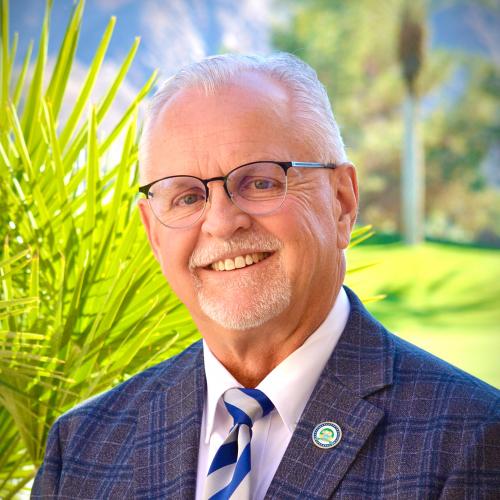
Ask Maddy about Tom Lackey
Scope: CA
Hi! I can help you understand Tom Lackey's legislative record. What would you like to know?
Try one of these
i
Maddy answers using official bill text and legislative records. Always verify before sharing.
Sources cited inline