

Relative to Valley Fever Awareness Month.
This measure would declare August 2019 as Valley Fever Awareness Month.
Signed into law Sep 5, 2019
1 co-sponsor
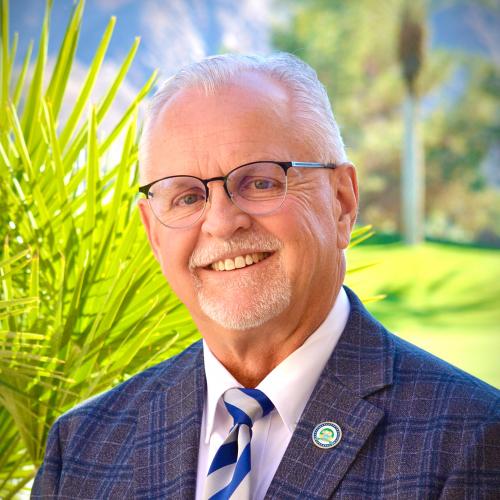
This measure would declare August 2019 as Valley Fever Awareness Month.
This measure would call for groups and organizations across the United States who act under the banner of Antifa to be designated as domestic terrorist organizations, would unequivocally condemn the violent actions of Antifa groups as unacceptable acts for anyone in the United States, would express the need for peaceful communication of varied ideas, and would urge any group or organization in the United States to voice its opinions without using violence or threatening the health, safety, or well-being of other persons, groups, or law enforcement officers in the United States. The measure would further call upon the President of the United States, the United States Congress, and the Governor to redouble efforts, using all available and appropriate tools, to combat the spread of all forms of domestic terrorism, including White supremacist terrorism.
This measure would endorse activities in public schools that instruct pupils in upholding and sustaining American democracy, encourage, in the strongest terms, California schools to pursue certain recognized designations that reflect specified ethos and values, and encourage publicly elected officials to conduct themselves in ways that strengthen civic engagement and participation in civil society.
Existing law establishes the Homeless Coordinating and Financing Council and requires the council to set and measure progress toward goals to prevent and end homelessness among youth in California by setting specific, measurable goals aimed at preventing and ending homelessness among youth in the state and defining outcome measures and gathering data related to the goals. This bill would require the council to develop and administer a grant program to support young people experiencing homelessness and prevent and end homelessness. The program would be funded by a combination of funds provided to the council by the State Department of Health Care Services from the Youth Education, Prevention, Early Intervention and Treatment Account, funds appropriated by the Legislature, and gifts and donations made to the council for that purpose. The bill would specify the entities eligible to apply for grant funding and identify specific information to be included in the grant application. The bill would require preference for funding to be given to entities with certain characteristics, including those that participate in the development of a local, youth-centered, coordinated entry system. The bill would require grant funds to be used both to provide supportive services, as specified, and to establish or expand housing programs. The bill would require a grant recipient to submit data and annual progress reports to the council and agree to meet quality improvement goals, accept technical assistance, and submit to annual site monitoring visits by the council, as specified. The bill would require the council, by January 10, 2021, and each January 10 thereafter, to submit a report to the Legislature on the data received from grant recipients.
(1) Existing law establishes a low-income housing tax credit program pursuant to which the California Tax Credit Allocation Committee (CTCAC) provides procedures and requirements for the allocation, in modified conformity with federal law, of state insurance, personal income, and corporation tax credit amounts to qualified low-income housing projects that have been allocated, or qualify for, a federal low-income housing tax credit, and farmworker housing. Existing law limits the total annual amount of the state low-income housing credit for which a federal low-income housing credit is required to the sum of $70,000,000, as increased by any percentage increase in the Consumer Price Index for the preceding calendar year, any unused credit for the preceding calendar years, and the amount of housing credit ceiling returned in the calendar year, and authorizes CTCAC, for calendar years beginning in 2020, to allocate an additional $500,000,000 to specified low-income housing projects and, for calendar years beginning in 2021, requires this additional amount only to be available for allocation pursuant to an authorization in the annual Budget Act or related legislation, and specified regulatory action by CTCAC. This bill would remove the requirement that, beginning in the 2021 calendar year, the above-described additional $500,000,000 allocation only be available pursuant to an authorization in the annual Budget Act or related legislation, and specified regulatory action by CTCAC. (2) This bill would take effect immediately as a tax levy.
The Bagley-Keene Open Meeting Act requires that all meetings of a state body, as defined, be open and public and that all persons be permitted to attend and participate in a meeting of a state body, subject to certain conditions and exceptions. This bill would specify that the definition of "state body" includes an advisory board, advisory commission, advisory committee, advisory subcommittee, or similar multimember advisory body of a state body that consists of 3 or more individuals, as prescribed, except a board, commission, committee, or similar multimember body on which a member of a body serves in their official capacity as a representative of that state body and that is supported, in whole or in part, by funds provided by the state body, whether the multimember body is organized and operated by the state body or by a private corporation. This bill would declare that it is to take effect immediately as an urgency statute.
Existing law states the policy of the state that all minors and nonminors in foster care have specified rights, including, among others, the right to attend school and participate in extracurricular, cultural, and personal enrichment activities, consistent with the child's age and developmental level, with minimal disruptions to school attendance and educational stability. This bill would require the State Department of Social Services, to establish, on or before January 1, 2020, the California Foster Youth Enrichment Grant Pilot Program, upon appropriation by the Legislature of funds for that purpose, to provide grants of $500 or less to qualified foster youth to enable them to participate in activities designed to enhance the foster youth's skills, abilities, self-esteem, or overall well-being. The bill would require the department, on or before July 1, 2020, to allocate funds appropriated for these purposes, up to a total of $12,500,000, to 4 county child welfare agencies that submit a 2-year plan by a request for proposal developed by the department. The bill would require the department to select 2 rural counties and 2 urban counties to participate in the pilot program. The bill would require a child welfare agency to indicate its interest in participating in the pilot program by submitting a 2-year plan on or before May 1, 2020, and would specify the required components of the plan. The bill would require the department to develop a grant application form and grant approval instructions for participating county child welfare agencies for purposes of the pilot program. The bill would authorize a specified caregiver to submit an application on behalf of a foster child or youth, and would authorize a foster youth to receive a maximum of $1,000 annually through the pilot program. The bill would prohibit funds provided for purposes of the pilot program from being used for administrative activities. The bill would require the department, on or before October 1, 2022, to submit a report to the Legislature that includes annual data required to be submitted to the department by participating counties. The bill would repeal these provisions on January 1, 2023.
Existing law establishes various programs, including, among others, the Emergency Housing and Assistance Program, to provide assistance to homeless persons. Existing law requires a state agency or department that funds, implements, or administers a state program that provides housing or housing-related services to people experiencing homelessness or at risk of homelessness, except as specified, to revise or adopt guidelines and regulations to include enumerated Housing First policies. Existing law establishes the Homeless Coordinating and Financing Council to oversee the implementation of the Housing First guidelines and regulations and, among other things, to identify resources, benefits, and services that can be accessed to prevent and end homelessness in California. This bill would require the Homeless Coordinating and Financing Council, by July 1, 2021, to develop and implement a statewide strategic plan for addressing homelessness in the state, as specified. The bill would require the council, by January 1, 2021, to implement strategic plans to assist federal Housing and Urban Development Continuum of Care lead agencies in better implementing Housing and Urban Development recommended activities and meeting Housing and Urban Development requirements.
Existing law requires the Commission on Peace Officer Standards and Training, among other duties, to adopt rules establishing minimum standards relating to physical, mental, and moral fitness that govern the recruitment of specified peace officers, including city police officers, peace officer members of a county sheriff's office, and marshals or deputy marshals. Existing law provides that a local agency is not prohibited from establishing selection and training standards that exceed the minimum standards established by the commission. This bill would require the commission, on or before April 1, 2021, to submit a report to the Legislature and Governor with specified data relating to students' completion of training at academies for peace officers and the availability of remedial training, including, among other things, the number of students who received one or more opportunities for remedial training for a learning domain. The bill would also require the report to include, among other things, a review of academies' practices regarding remedial training and a discussion of whether the commission finds that minimum standards for an appropriate level of remedial training should be established. The bill would repeal these provisions on January 1, 2024. The existing California Public Records Act requires state and local agencies to make their records available for public inspection, unless an exemption from disclosure applies. This bill would make information that identifies the testing results of a particular student of a regular basic course of peace officer training confidential and would prohibit that information from being released to the public unless otherwise subject to disclosure, as specified. Existing constitutional provisions require that a statute that limits the right of access to the meetings of public bodies or the writings of public officials and agencies be adopted with findings demonstrating the interest protected by the limitation and the need for protecting that interest. This bill would make legislative findings to that effect.